

Not exactly. A woman is born with all the eggs she will ever have, and both their number and their quality decline with age, slowly at first and faster from the mid-thirties. There is no single expiry date, but your ovarian reserve falls steadily over time, which is why age is the strongest signal of natural fertility.
Ovarian reserve is the number of eggs you have left at a given point in life. It is estimated, not counted directly, using three tests: AMH (anti-Mullerian hormone, a blood test that reflects the size of your remaining follicle pool), AFC (antral follicle count, an ultrasound scan of the small resting follicles in the ovaries), and, less often, FSH (follicle-stimulating hormone, a day-three blood test). Each estimates egg quantity. None of them measures egg quality, and none reliably predicts whether you will conceive naturally this year. The table below summarises what each test does and where it falls short.
Unlike sperm, eggs are not made fresh. A baby girl carries her peak number of eggs before she is even born, roughly one to two million, which falls to about three to four hundred thousand by puberty. Only around four to five hundred are ever ovulated; the rest are lost through a natural process called atresia. By about age 30, a woman has roughly 12% of her starting pool left, and by 40, around 3%. Just as importantly, egg quality declines too: as you age, a larger share of eggs carry the wrong number of chromosomes, which is why miscarriage and difficulty conceiving rise after the mid-thirties. Regular periods do not guarantee a high reserve, and a good reserve does not guarantee good egg quality. The reassuring part is that conception needs only one healthy egg.
Ovarian reserve tests are useful, but they are routinely oversold. Here is the honest read on each.
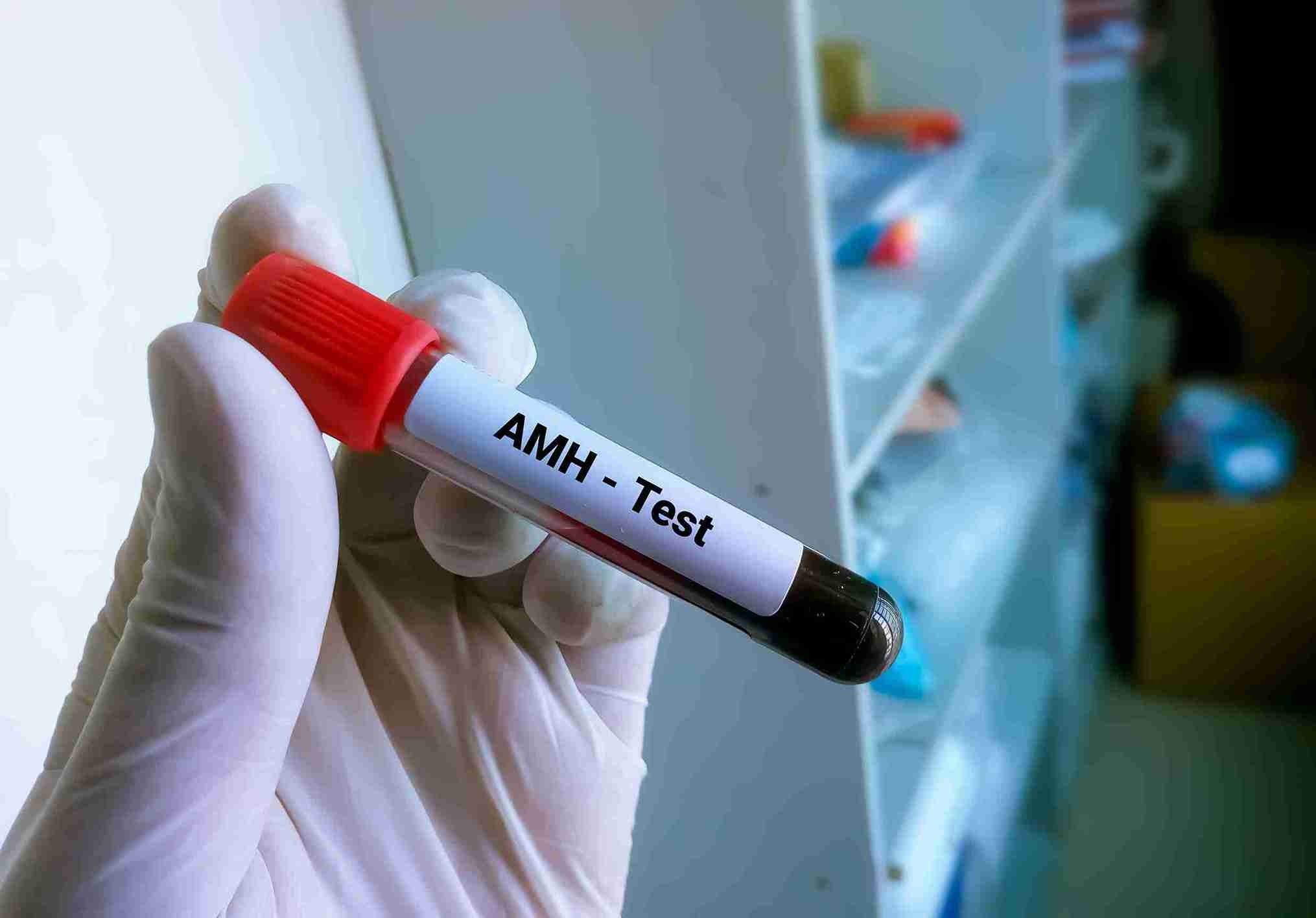
AMH reflects how many follicles remain, and it falls with age. As a rough guide, median values are near 3.3 ng/mL at 25, 2.5 ng/mL at 30, 1.4 ng/mL at 35, and 0.5 ng/mL at 40, but the spread at every age is very wide. A common cut-off for diminished reserve is about 1.2 ng/mL, and a "low" result is more common than most people expect: roughly a quarter of 30-year-olds and most 40-year-olds fall below it. The single most important point: in women with regular cycles and no history of infertility, a low AMH does not predict a lower chance of conceiving naturally. A landmark 2017 study in JAMA found no meaningful difference in conception over 6 to 12 months between women with low and normal AMH, and professional bodies now advise against using AMH to predict natural fertility. What AMH does predict well is how your ovaries will respond to stimulation in IVF. It also cannot be meaningfully raised by supplements. For a deeper look, see what an AMH test can and cannot tell you.
An antral follicle count uses a transvaginal ultrasound to count the small resting follicles in both ovaries. It tracks closely with AMH and adds a visual check of the ovaries and uterus. Because it depends on the sonographer and the day of the cycle, it is best read alongside AMH rather than on its own.
A high FSH level early in the cycle suggests the brain is working harder to stimulate ovaries with fewer eggs, so it can flag reduced reserves. But FSH varies from cycle to cycle and only becomes informative at high levels, making it a weaker, older marker than AMH or AFC.
Reserves vary widely between women of the same age. The main factors that lower it are:
If you are thinking of delaying pregnancy, a reserve assessment gives you context, not a verdict. Combined with your age, it helps you plan timing and, if relevant, consider egg freezing while your eggs are younger. If that is on your mind, read about egg freezing costs in India and the egg freezing process step by step. The one rule that holds across the evidence: if you are going to act, earlier is better, because both egg number and quality favour younger years.
Be sceptical of supplements marketed to "boost" or "raise" your AMH. AMH simply reflects the follicle pool you already have; no supplement creates new eggs or reverses ovarian ageing. Products such as DHEA and CoQ10 have been studied mainly for egg-quality support during IVF in women with diminished reserve, not as a way to improve natural fertility, and DHEA in particular carries real hormonal risks and should never be self-prescribed. Correcting a genuine vitamin D deficiency is reasonable, and not smoking genuinely protects your ovaries. But no pill will move a healthy woman’s AMH in a way that changes her natural conception odds. Age remains the factor that matters most.
Ovarian reserve tests are usually billed individually and vary by city and laboratory. Always confirm current pricing with your chosen Cloudnine Fertility centre.

A reserve assessment is worth booking in specific situations rather than as a routine test for everyone. Consider seeing a specialist if any of the following apply.
If any of these apply, you can book a fertility consultation at a Cloudnine Fertility centre for a personalised read of your ovarian reserve and realistic timelines. A family history of early menopause is also a reason to read about premature ovarian insufficiency.
The honest bottom line: your reserve number guides IVF planning far more than it predicts natural odds. Use the table as a translation guide, always alongside your age and cycle regularity.


