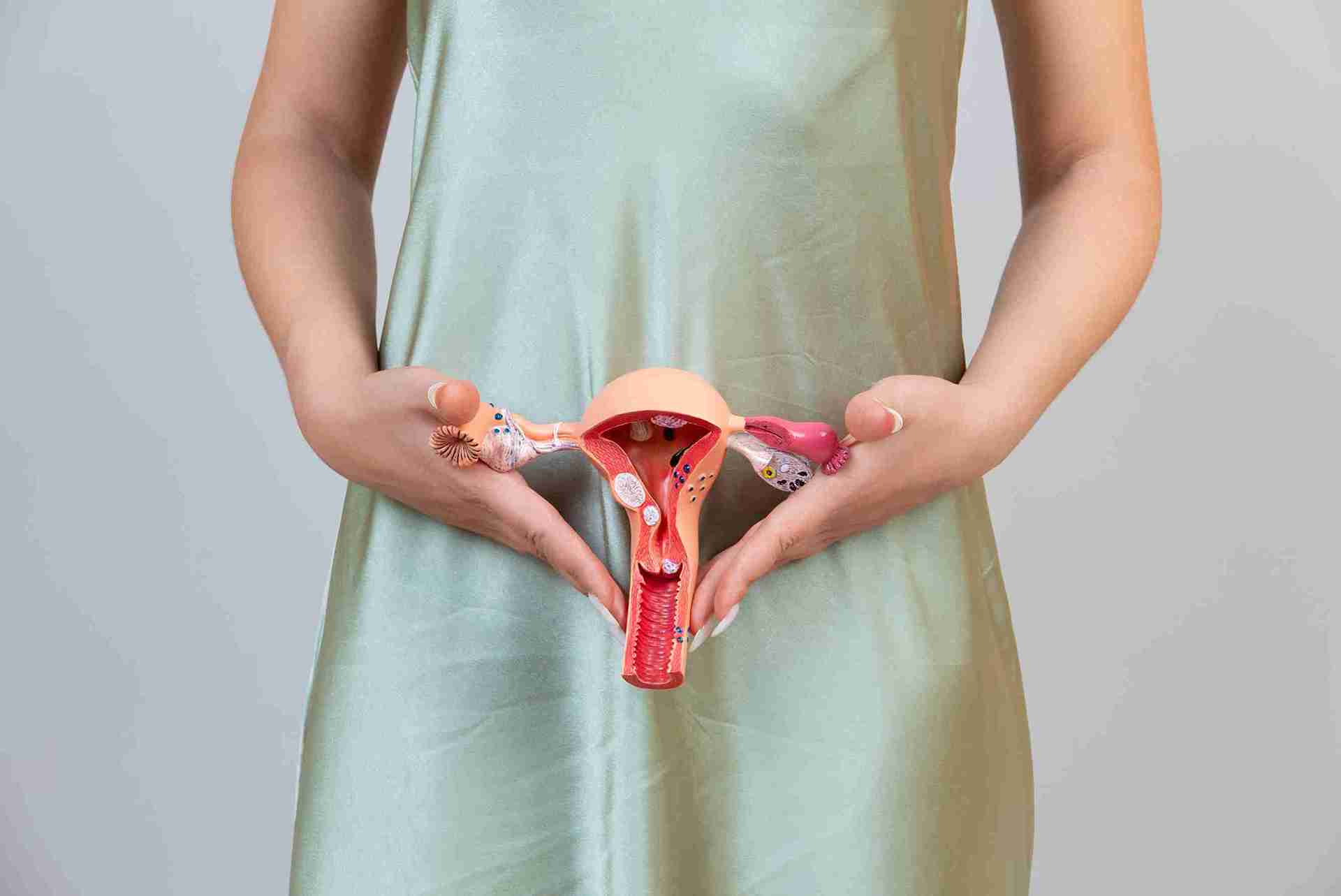
Getting a fertility diagnosis that points to the uterus can feel disorienting. The uterus is, after all, where pregnancy is supposed to happen. When it becomes the reason pregnancy is not happening, it raises questions that can be hard to sit with.
The good news is that uterine-related infertility is one of the more treatable categories of fertility problems. Many of the conditions involved, fibroids, polyps, adhesions, a thin uterine lining, or a structural abnormality, have medical or surgical solutions that meaningfully improve the chances of conception. The key is getting the right diagnosis first, and then matching it to the right treatment.
What is Uterine-Related Infertility?
The uterus plays two critical roles in reproduction. It must allow an embryo to implant in its lining, and it must provide a healthy environment for that embryo to grow for the next nine months. When something interferes with either of these functions, pregnancy does not occur or does not continue.
Uterine-related infertility refers to any condition affecting the structure, lining, or cavity of the uterus that prevents conception or causes recurrent pregnancy loss. It accounts for a significant proportion of infertility cases in women, and in India, where conditions like fibroids and PCOS are highly prevalent, uterine factors are frequently identified during fertility investigations.
Common Uterine Conditions That Cause Infertility and Treatment Options
Fibroids
Uterine fibroids are non-cancerous muscle growths that develop inside or around the uterus. As these cause no symptoms, they go undetected for years. The location of the fibroid is critical to understand if it affects fertility.
● Submucosal fibroids that push into the uterine cavity are the most problematic, distorting the space where an embryo needs to implant.
● Intramural fibroids within the uterine wall can also interfere if they grow large enough.
● Subserosal fibroids on the outer surface rarely affect conception directly.
When removal is necessary, a myomectomy takes out the fibroid while preserving the uterus. This can be done hysteroscopically, laparoscopically, or through open surgery depending on the fibroid's size and position. For many women, conception becomes possible once the fibroid is no longer in the picture.
Endometrial Polyps
Polyps are small, fleshy growths on the inner uterine lining. Many women do not know they have them until a scan picks them up. When a polyp sits inside the uterine cavity, it can interfere with implantation by occupying space or changing the quality of the surrounding lining.
Removal is straightforward through hysteroscopy, where a thin camera is passed through the cervix and the polyp is removed directly, no external cut, quick recovery. Clearing polyps before an IVF or IUI cycle has been shown to improve pregnancy rates, making it a step worth completing before the first transfer.
Intrauterine Adhesions (Asherman's Syndrome)
Asherman’s syndrome is when the scar tissue develops inside the uterine cavity. This can happen after a dilation and curettage (D&C) procedure done after a miscarriage, delivery or any infection in the uterine cavity. These adhesions may cover the cavity, either partially or fully, thereby preventing any implantation and also reducing or stopping menstrual flow.
Uterine infertility treatment options can be hysteroscopy and hormonal therapy. The results depend on the extent of the scarring. Many women who have had mild to moderate adhesions have a high possibility to conceive after the treatment.
Uterine Septum
A uterine septum is a condition in which a wall of tissue divides the uterine cavity either partially or entirely. It is the most common structural uterine abnormality and is closely linked to recurrent miscarriage, as the septum has poor blood supply and cannot support implantation adequately.
Most women discover it only after one or more pregnancy losses. Treatment is hysteroscopic resection, where the dividing tissue is removed and the cavity is restored. Pregnancy possibility improves considerably after surgery, particularly for women with a history of recurrent loss.
Thin Endometrium: When the Lining is Not Ready
Think of the uterine lining as the soil in which a seed needs to root. If it is too thin, too shallow, the embryo has nowhere to settle. Most fertility specialists look for a lining of at least 7 millimetres at the time of embryo transfer. Below that, the chances of successful implantation drop noticeably, though the exact threshold does vary between clinics and individual cases.
A thin lining is one of the more frustrating problems in fertility medicine because it does not always respond predictably to treatment. The causes vary. Low oestrogen is one of the most common. Poor blood supply to the uterus is another. Previous uterine surgery that left scar tissue, or prolonged use of certain medications, can also be responsible. Thin Endometrium Treatment options are:
● Higher doses of oestrogen supplementation to stimulate lining growth.
● Sildenafil, a medication that improves blood flow to the uterine lining, and is administered vaginally. This is used when poor vascularity is the reason.
● Low-dose aspirin to improve uterine blood flow.
Upcoming options:
● Platelet-rich plasma, or PRP therapy in which doctors inject a concentration of the patient's own platelets into the uterine cavity to stimulate lining regeneration. This is a newer approach used in cases that have not responded to standard treatment.
● Granulocyte colony-stimulating factor, or G-CSF, infused into the uterine cavity, is another emerging option.
For many women with uterine conditions, surgical correction of the underlying problem is followed by natural conception or IUI. But when the uterine issue is more complex, when the woman is older, when there are additional fertility factors involved, or when prior treatments have not resulted in pregnancy, IVF for uterine infertility becomes the right way forward.
IVF allows the fertilisation process to happen in the laboratory, bypassing many of the steps where uterine problems might otherwise interfere. The embryo is then transferred directly into the uterus at a point when the lining has been carefully prepared and confirmed to be receptive.
Advances such as ERA testing, the endometrial receptivity analysis, can identify the precise window of implantation for individual women, which is particularly useful for those who have had repeated implantation failures despite apparently good embryos and a reasonable lining thickness. This level of personalisation in IVF protocols has improved outcomes for women with uterine-related infertility considerably.
Conclusion
Uterine-related infertility is not a dead end. Most conditions that affect the uterus are treatable, and the range of fertility treatments for uterine problems available today, from straightforward hysteroscopic procedures to advanced IVF protocols, means that the majority of women with a uterine diagnosis have a genuine path forward. The first step is always an accurate diagnosis, and that begins with asking the right questions at your next appointment.
Want to consult the best fertility in india? Please find the links below.
What is uterine-related infertility and how does it affect pregnancy?
Uterine-related infertility refers to conditions affecting the uterus that prevent implantation or the continuation of a healthy pregnancy. These include structural problems such as fibroids, polyps, and a septum, as well as lining issues like a thin endometrium or adhesions. The uterus must provide both a physically normal cavity and a receptive lining for an embryo to implant successfully. When either is compromised, fertility is affected.
What are the common uterine conditions that cause infertility?
The most common uterine conditions linked to infertility include submucosal fibroids, endometrial polyps, intrauterine adhesions from Asherman's syndrome, a uterine septum, and a thin or unreceptive endometrial lining. Each affects fertility through different mechanisms, either by distorting the uterine cavity, disrupting lining quality, or preventing the hormonal and physical conditions needed for implantation. Most are detectable through ultrasound, hysteroscopy, or an MRI.
How do fibroids affect fertility and what treatments are available?
Fibroids affect fertility primarily based on their location. Those that grow into the uterine cavity, called submucosal fibroids, are the most disruptive to implantation. Uterine infertility treatment for fibroids typically involves myomectomy, the surgical removal of the fibroid while preserving the uterus. This can be done hysteroscopically, laparoscopically, or through open surgery, depending on the size and position. Many women conceive successfully after myomectomy.
Can a thin uterine lining prevent implantation?
Yes. A uterine lining that is too thin does not provide adequate support for an embryo to implant. Most fertility specialists consider a lining below 7 millimetres at the time of transfer to be insufficient. Thin endometrium treatment options include oestrogen supplementation, medications to improve uterine blood flow, such as sildenafil or low-dose aspirin, and newer approaches like PRP therapy or G-CSF infusion for cases that do not respond to standard treatment.
Schedule your consultation Today!
Book your consultation with our fertility experts the first step toward your parenthood journey.