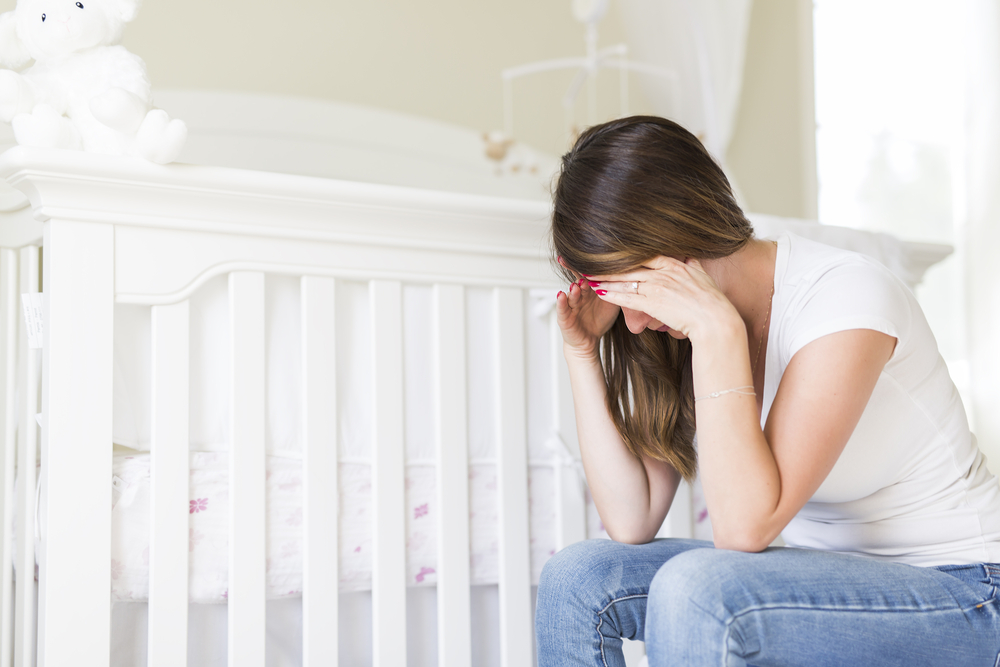
If you are Rh-negative and have just lost a pregnancy, please hear this first: your blood type almost certainly did not cause your miscarriage. Most early miscarriages happen because of chance problems in the embryo, and Rh-related issues usually do not affect a first, unsensitised pregnancy at all.
What an Rh-negative blood type actually is
Every blood type carries a positive or negative sign. That sign is the Rh (Rhesus) factor, a protein found on the surface of red blood cells. If the protein is present, you are Rh-positive; if it is absent, you are Rh-negative. Being Rh-negative is simply an inherited variant of normal. It does not affect your everyday health, and on its own, it does not harm a pregnancy. It becomes relevant in only one situation: when an Rh-negative mother carries an Rh-positive baby and the two blood supplies mix. Three terms are often muddled together, so it helps to keep them separate:
Term
What it actually means
Rh-negative blood type
A common, inherited blood-group variant, your red cells simply lack the Rh (D) protein. Harmless in everyday life.
Rh sensitisation (alloimmunisation)
When an Rh-negative person’s immune system has already made anti-D antibodies (defence proteins) after being exposed to Rh-positive blood. This is not present by default; it has to be triggered.
Haemolytic disease of the fetus and newborn (HDFN)
When those antibodies cross into a future Rh-positive baby and affect its red blood cells, causing anaemia (low red-cell count) and jaundice (yellowing). This is not an early miscarriage; it is the problem that prevention is designed to avoid.
How common is Rh-negative blood, and how common is miscarriage?
Rh-negative blood is uncommon in India. Around 5-7% of people in India are Rh-negative (some regional studies report lower), compared with roughly 15% in white European populations. Miscarriage, by contrast, is common: about one in eight clinically recognised pregnancies ends in an early loss, and the great majority of these have nothing to do with blood group. Put those two facts together, and the picture becomes clearer; a miscarriage in an Rh-negative woman is, in almost every case, a common event happening to someone who happens to have a less common blood type. It is rarely cause and effect.
So, did being Rh-negative cause my miscarriage?
Does being Rh-negative cause miscarriage?
No, not on its own. Being Rh-negative is a blood-group variant, not a disease, and it does not make a pregnancy more likely to end in an early loss. The fear is understandable because an Rh-negative status is something doctors check carefully during pregnancy. But the reason it is checked is to protect future pregnancies, not because it causes miscarriage.
What actually causes most early miscarriages
Roughly half of all first-trimester miscarriages, and up to around 60% in some studies, are caused by chance chromosomal problems in the embryo: the egg and sperm simply did not combine their genetic material correctly. These events are random, are not inherited from a “faulty” blood type, and are not something you did or did not do. For most women, an early miscarriage is a one-off, and the chance of a healthy pregnancy next time remains high.
Why is a first pregnancy usually protected?
For an Rh-negative mother’s immune system to act against a baby at all, it must first be “sensitised”; it has to have already made anti-D antibodies after an earlier exposure to Rh-positive blood. In a first, unsensitised pregnancy, your body has not had the chance to build up these antibodies, so the pregnancy is generally unaffected. This is why the serious Rh problems people worry about are, overwhelmingly, a concern for later pregnancies rather than a first one.
How sensitisation actually happens
Sensitisation (also called alloimmunisation) occurs when a small amount of the baby’s Rh-positive blood enters the mother’s Rh-negative bloodstream. Her immune system sees the Rh protein as foreign and begins making antibodies against it. The two blood supplies can mix during:
• Childbirth, or later stages of pregnancy
• Miscarriage, ectopic pregnancy (a pregnancy outside the womb), or termination
• Invasive prenatal tests, such as amniocentesis (taking a sample of the fluid around the baby)
• Abdominal injury or bleeding during pregnancy
Even when mixing occurs, sensitisation can usually be prevented, which is the whole point of the care described further down.
What can Rh disease cause in a future pregnancy, and why is it preventable
It is worth being clear about what Rh disease actually does, because the answer is reassuring: these are problems of a later, Rh-positive pregnancy in a mother who has already become sensitised, and modern care is designed to stop them happening. They are not causes of an early miscarriage. If sensitisation is not prevented, the risks in a future pregnancy can include:
• Haemolytic anaemia: the baby’s red blood cells are broken down faster than they can be replaced.
• Jaundice and kernicterus, the breakdown of red cells produces bilirubin (a yellow pigment), which can cause severe jaundice and, very rarely and only if untreated, a form of brain injury called kernicterus.
• Hydrops fetalis, extensive fluid build-up, and swelling in the baby.
• Organ strain, an enlarged liver or spleen, and extra strain on the baby’s circulation.
The key point: with timely testing and preventive treatment, these complications are very largely avoidable. Knowing you are Rh-negative is what makes that prevention possible.
What does, and doesn’t, cause an early miscarriage
If you are searching for a reason, it helps to see where blood type sits among the recognised factors:
• Chance chromosomal problems, the single most common cause of first-trimester loss, are entirely random.
• Maternal age: the chance of a chromosomal problem rises gradually with age.
• Certain hormonal, uterine, or clotting conditions are recognised contributors that a doctor can investigate, particularly after repeated losses.
• Some infections and poorly controlled chronic illnesses can play a role and are worth reviewing.
• NOT your Rh-negative blood type by itself, an Rh-negative blood group is not a cause of an early, first-pregnancy loss.
• Rh sensitisation matters for a future baby’s health (HDFN) and is not the usual cause of this early loss.
What to do next if you are Rh-negative
Confirm your blood group, Rh status, and antibody screen
Two simple blood tests give you the full picture. A blood group and Rh(D) typing test confirms whether you are Rh-negative. A red-cell antibody screen, also called an indirect antiglobulin test or indirect Coombs test, shows whether you have already become sensitised (that is, whether your body has already made anti-D antibodies). Together, they tell your doctor exactly what, if anything, needs to be done to protect a future pregnancy.
Ask your doctor whether anti-D immunoglobulin is right for you
Anti-D immunoglobulin is a preventive injection (sometimes simply called the anti-D injection) that prevents an unsensitised Rh-negative person from producing anti-D antibodies. It is usually offered during the later part of pregnancy and again within 72 hours of any event where the two blood supplies might mix, for example, after the birth of an Rh-positive baby. After a pregnancy loss, whether it is needed depends on the circumstances: it is generally indicated after surgical management of a miscarriage, after an ectopic or molar pregnancy, after a termination, and after bleeding from around 12 weeks onwards.
An honest note on timing: current UK and international guidance does not consider anti-D necessary after a straightforward, complete, spontaneous miscarriage before 12 weeks where there was no surgical procedure. Clinical practice in India can be more cautious. Rather than applying a blanket rule, the right step is to share your exact situation with your treating doctor, who will advise you on what is appropriate for you.
How much do Rh-related blood tests and an anti-D injection cost in India?
If you are arranging testing or prevention, the relevant costs are for the two blood tests and, where indicated, the anti-D injection. Prices vary by city and centre. The figures below are being confirmed against audited Cloudnine pricing and will be updated before publication
Test/procedure
Setting
Indicative cost (India)
Blood group & Rh(D) typing
Outpatient blood test
₹500-1500*
Red-cell antibody screen (indirect Coombs test)
Outpatient blood test
₹600-1000*
Anti-D immunoglobulin (preventive injection)
Day-care / out-patient
₹2200-5600*
Costs are indicative and depend on the city, centre and your individual care plan. Please confirm current pricing with your chosen Cloudnine centre.
When to see a doctor
It is always reasonable to speak to a clinician for reassurance after a loss. The situations below are worth timely review:
If you would like to talk any of this through with a specialist, you can book a fertility consultation at a Cloudnine centre near you.
What does this mean for your future pregnancies?
The outlook for Rh-negative women is, in general, very reassuring with modern care:
Your situation
Typical outlook
Rh-negative, not sensitised, after an early loss
Future pregnancies are generally unaffected, with anti-D given when it is indicated to keep it that way.
Rh-negative and already sensitised
Pregnancy is monitored more closely by a specialist, and outcomes are still frequently good with today’s management.
Rh-negative carrying an Rh-negative baby
No Rh-related risk arises at all; there is nothing for the antibodies to react to.
Want to consult the best fertility in india? Please find the links below.
Find clear, trusted answers to the most common questions about IVF—designed to guide and support you every step of the way.
Does being Rh-negative cause miscarriage?
No. An Rh-negative blood group does not, by itself, cause an early miscarriage. Most early losses are caused by chance chromosomal problems in the embryo, which are unrelated to blood type.
Can I have a healthy baby if I am Rh-negative?
Yes. The large majority of Rh-negative women go on to have healthy babies. The role of knowing your Rh status is simply to ensure you receive preventive care when needed.
Did my first pregnancy get affected by my Rh-negative blood?
Almost certainly not. First, an unsensitised pregnancy is generally protected because the body has not had the chance to build up the antibodies that would be needed to cause a problem.
Do I need an anti-D injection after a miscarriage?
It depends on the circumstances. Anti-D is generally indicated after surgical management of a miscarriage, after an ectopic or molar pregnancy, after a termination, and after bleeding from around 12 weeks. For a straightforward early spontaneous miscarriage without a procedure, current guidance does not consider it necessary, but your treating doctor should advise based on your situation.