A fertility-friendly Indian diet is built around folate, iron, zinc, omega-3 fats, antioxidants and protein: leafy greens, dal, nuts and seeds, makhana, paneer, curd, whole grains and fish. These foods support hormone balance, egg and sperm quality and ovulation. Food supports fertility, but it does not cure a medical cause of infertility.
What makes a food a fertility food?
A fertility food is simply a whole food that is dense in the nutrients your reproductive system relies on, rather than a single ingredient with special powers. The nutrients that matter most before conception are folate, iron, zinc, omega-3 fatty acids, antioxidants such as vitamin C and vitamin E, protein, vitamin D, vitamin B12 and selenium. The Indian kitchen already contains good sources of every one of these. The table below maps each nutrient to its importance and everyday Indian sources.
Nutrient
Why It Matters for Fertility
Indian Food Sources
Folate
Supports healthy egg development and early pregnancy and helps prevent neural tube defects.
Supports healthy cell division. Low levels are common in vegetarian diets.
Dairy products, eggs, fish; vegetarians may require supplementation if advised by a healthcare provider.
Selenium and Iodine
Support sperm motility and thyroid function, both of which influence fertility.
Sunflower seeds, eggs, fish, iodised salt
Can food really increase fertility?
This is where honest guidance matters. The best evidence supports not a single "superfood" but a balanced, consistent eating pattern. Studies consistently associate a whole-food, Mediterranean-style pattern, rich in vegetables, pulses, whole grains, nuts, and healthy fats, and low in processed foods, with higher pregnancy rates, most clearly among couples undergoing IVF. That evidence is largely observational, which means it shows an association rather than proving that food alone raises your chance of a baby. There is currently no official preconception diet that is guaranteed to work.
It's important to clarify the role of supplements. Large reviews of antioxidant supplements for both women and men have found the evidence for higher live-birth rates to be of low to very low quality and uncertain. So the sensible position is this: eat these nutrients from whole foods as part of a balanced pattern, reach a healthy weight, and treat any product that promises to boost fertility with caution. Food prepares your body well. It does not open blocked tubes, reverse severe sperm problems or replace treatment when a medical cause is present.
Best Indian foods to support fertility
You do not need imported superfoods. The most useful fertility foods are the desi staples already on most Indian plates. Aim for variety and colour across the week rather than fixating on any one item.
Leafy greens and folate
Palak (spinach), methi (fenugreek), and moringa (drumstick) leaves are among the richest everyday sources of folate and iron, the nutrients most closely linked to healthy ovulation and early pregnancy. A daily portion of cooked greens, or methi folded into dal or roti, is an easy habit to adopt.
Dal, beans and whole grains
Pulses such as moong, masoor, chana, and rajma provide plant protein, iron, and folate together. Swapping refined flour (maida) and white rice for millets such as bajra, ragi and jowar, or for brown rice and oats, gives slower-release energy that helps keep blood sugar steady, which is particularly useful for women with polycystic ovary syndrome (PCOS, a common hormonal condition affecting ovulation).
Nuts, seeds and makhana
A small daily handful of almonds and walnuts, plus seeds such as pumpkin, sunflower, sesame (til), and flax (alsi), provides zinc, selenium, vitamin E, and plant-based omega-3 fats. Makhana (fox nuts) is a light, high-protein, low-fat Indian snack that fits well into this group. These foods are genuinely nutritious, but treat claims that any single seed or nut boosts fertility on its own with healthy scepticism.
Fruit and antioxidants
Amla (Indian gooseberry), guava, oranges, lemon and pomegranate are inexpensive, high in vitamin C and easy to add to the day. Amla, in particular, is one of the richest sources of vitamin C available in India. Antioxidant-rich fruit helps protect eggs and sperm from oxidative stress as part of a varied diet.
Dairy, eggs and fish
Paneer, curd (dahi) and eggs supply protein, calcium and, in eggs, choline and vitamin D. Some observational studies suggest that consuming full-fat dairy daily may lower the risk of ovulatory infertility, although this finding is not yet conclusive. For those who eat fish, oily varieties such as sardines and mackerel provide omega-3 fats; choose smaller fish and limit large predatory fish, which can carry more mercury.
Foods and habits to limit when trying to conceive
What you cut back on matters as much as what you add. The clearest evidence points to a handful of things worth limiting:
Trans fats: found in vanaspati, deep-fried street food and many packaged bakery items; linked in studies with a higher risk of ovulatory infertility.
Ultra-processed and sugary foods: biscuits, namkeen, sweets and sugar-sweetened drinks can drive blood-sugar and insulin swings that unsettle hormones.
Refined carbohydrates: large amounts of maida and white rice raise a meal's glycaemic load; wholegrain swaps are steadier.
Excess caffeine: keep to roughly one to two cups of coffee or tea a day; high intakes are best avoided while trying to conceive.
Alcohol: there is no established safe level when trying to conceive or in pregnancy, so it is best avoided.
High-mercury fish: limit large predatory fish such as sharks, swordfish and king mackerel; smaller oily fish are a safer choice.
How to build an Indian fertility diet
A fertility diet does not need to be restrictive. A simple, balanced Indian thali already covers most of what matters when the proportions are right.
A simple daily framework
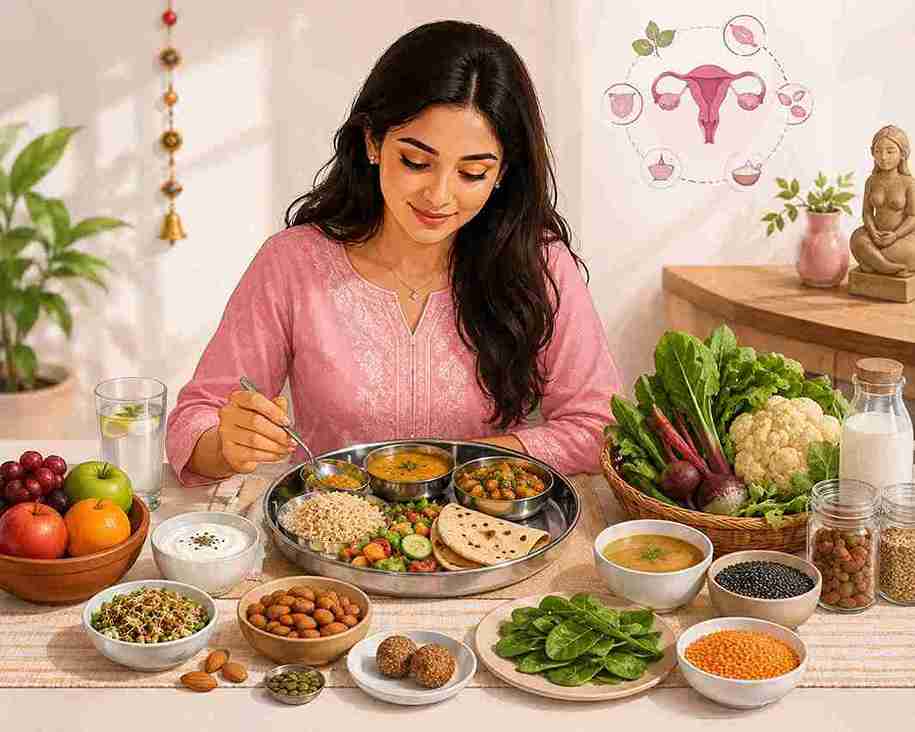
Aim to fill roughly half your plate with vegetables and fruit, one quarter with protein (dal, paneer, curd, egg, fish or chicken) and one quarter with a wholegrain such as millet roti or brown rice. Add a small daily portion of nuts and seeds, stay hydrated, and keep meals regular. A folic acid supplement is routinely advised before conception and in early pregnancy; ask your doctor about the right one for you rather than self-prescribing. The sample day below shows how this looks in practice for both vegetarian and non-vegetarian eaters.
Time of Day
Vegetarian Day
Non-Vegetarian Day
Early Morning
Warm water, 5 soaked almonds, 2 walnuts, and 2 dates
Warm water, 5 soaked almonds, 2 walnuts, and 2 dates
Breakfast
Vegetable oats or moong dal chilla with curd
2 eggs (boiled or bhurji) with wholegrain toast and curd
Mid-Morning
A vitamin C-rich fruit such as guava, orange, or amla
A vitamin C-rich fruit such as guava, orange, or amla
Lunch
Millet or wholegrain roti, dal, spinach sabzi, salad, and curd
Brown rice, grilled fish or chicken, vegetable sabzi, and salad
Evening Snack
Roasted makhana or sprouts chaat with lemon
Roasted makhana or one boiled egg
Dinner
Paneer with mixed vegetables and 1–2 whole wheat rotis
Grilled fish or chicken with vegetables and 1–2 whole wheat rotis
Bedtime
Warm milk with a pinch of turmeric
Warm milk with a pinch of turmeric
This is a general template, not a prescription. Portion sizes and any changes for conditions such as PCOS, diabetes or thyroid problems are best set with a dietitian.
Book an online appointment with for Pregnancy & Gynecology related issues.
Foods for the male partner
Fertility is a two-person project, and diet advice for men is often an afterthought. Because sperm take roughly three months to mature, dietary changes are best started at least three months before trying. The useful foods are the same whole-food groups: zinc and selenium from seeds, eggs and fish; antioxidants from fruit and vegetables; and healthy fats from nuts. Being clear about the limits of the evidence is important here too: reviews of antioxidant supplements for men show uncertain, low-quality evidence for higher live-birth rates. A balanced diet, a healthy weight, not smoking and limiting alcohol are the changes with the firmest footing.
When food is not enough: see a fertility specialist
Diet is a supporting player, not a treatment. If any of the situations below apply, a fertility evaluation is more useful than waiting and changing your diet, because time matters and food cannot fix a structural or medical cause.
Situation
What It May Point To
What to Do Next
Trying to conceive for 12 months without pregnancy (under 35 years)
A fertility issue affecting one or both partners that requires evaluation.
Book a comprehensive fertility assessment.
Trying to conceive for 6 months without pregnancy (woman aged 35 years or older)
Age-related decline in fertility, making earlier assessment beneficial.
Arrange a fertility evaluation without further delay.
Irregular or absent menstrual periods
May indicate an ovulation disorder such as PCOS or a thyroid condition.
Consult a fertility specialist. Diet alone is unlikely to restore ovulation.
Known male-factor infertility or abnormal semen analysis
Low sperm count, reduced motility, or abnormal sperm morphology.
Repeat or review semen analysis and seek specialist advice.
Painful periods, chronic pelvic pain, or a history of pelvic infection
May suggest endometriosis or damage to the fallopian tubes.
Seek specialist assessment, as dietary changes cannot treat blocked tubes or advanced endometriosis.
Wherever you are in India, you can book a fertility consultation at Cloudnine Fertility for an honest assessment and a tailored plan for your situation.
What to realistically expect from diet changes
Setting expectations honestly is part of good guidance. Here is what the evidence suggests different changes can and cannot do.
Dietary Change
What the Evidence Suggests
Strength of Evidence
Adopt a whole-food, Mediterranean-style diet
Associated with modest improvements in pregnancy rates, particularly among women undergoing IVF.
Observational evidence
Achieve and maintain a healthy weight if underweight or overweight
May help restore ovulation in some women and improve the response to fertility treatment.
Stronger evidence
Reduce trans fats and sugary, ultra-processed foods
Associated with a lower risk of ovulatory infertility and better overall reproductive health.
Moderate evidence
Rely on individual "superfoods" or antioxidant supplements
There is no reliable evidence that these alone increase the chance of conception.
Low-quality evidence
Use diet alone for structural or severe medical causes of infertility
Diet cannot correct underlying conditions such as blocked fallopian tubes, severe endometriosis, or severe male-factor infertility.
Not applicable
Want to consult the best fertility in india? Please find the links below.
Find clear, trusted answers to the most common questions about IVF—designed to guide and support you every step of the way.
What Indian food is good for fertility?
The most useful Indian fertility foods are everyday staples: leafy greens such as palak and methi, pulses such as dal, rajma and chana, wholegrains such as millets and brown rice, nuts and seeds, makhana, curd and paneer, vitamin C fruit such as amla and guava, and, for those who eat it, oily fish. Variety across the week matters more than any single item.
Which foods increase fertility in females?
For women, foods rich in folate, iron, antioxidants and protein are the priority: spinach, methi, dal, chickpeas, eggs, curd, berries, citrus and nuts. These support egg development, ovulation and a healthy uterine lining as part of a balanced diet. They work best alongside a healthy weight and regular meals rather than as isolated cures.
Which foods help male fertility and sperm count?
Men benefit from the same whole-food groups, with a focus on zinc and selenium from seeds, eggs, and fish; antioxidants from fruit and vegetables; and healthy fats from nuts. Because sperm take about three months to mature, changes are best made at least three months ahead. Not smoking, limiting alcohol and reaching a healthy weight are the steps with the strongest evidence.
Does makhana, drumstick or methi really boost fertility?
These are nutritious foods: makhana is a good low-fat protein snack, drumstick leaves, and methi are rich in folate and iron. That makes them worthwhile additions to a fertility diet. However, no single food has been shown to increase your chance of conceiving on its own. Think of them as helpful parts of an overall pattern rather than fertility treatments.