
Most Indian couples achieve pregnancy within 2 to 3 IVF cycles. The first cycle has a live birth rate of 40 to 55% for women under 35, rising to a cumulative rate of 75 to 85% across three cycles. How many cycles you specifically need depends on your age, egg reserve, sperm quality, embryo development, and uterine health not on a fixed number.

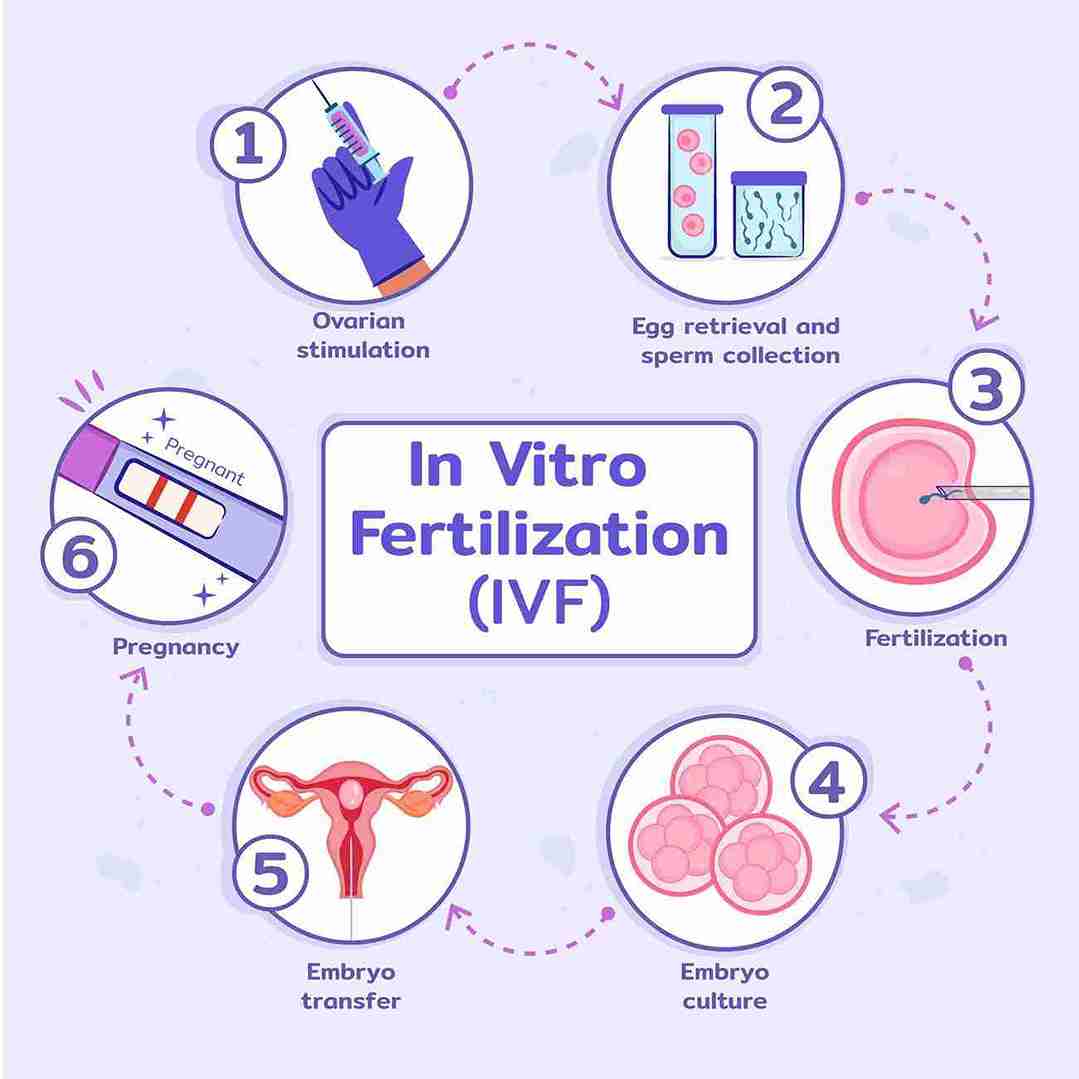
Before discussing how many cycles are needed, it is important to be precise about what one IVF cycle actually means. A single IVF cycle covers the complete sequence from the start of ovarian stimulation to the pregnancy test result not just the embryo transfer. Many couples are surprised to learn that a cycle spans several weeks and involves multiple steps, each of which generates clinical data that guides the next attempt.
One complete IVF cycle includes:
A cycle that ends in egg retrieval but no transfer for example, if no blastocysts develop still counts as one cycle in terms of the data gathered and the cost involved, even though no embryo has been transferred. Surplus embryos that are frozen and transferred later are counted as frozen embryo transfer (FET) cycles, separate from the original stimulation cycle.
The question of how many IVF cycles are needed is one of the most emotionally loaded questions in fertility medicine and one of the most frequently oversimplified. A single national average hides an enormous range of individual outcomes. A 28-year-old woman with unexplained infertility and a good egg reserve has a fundamentally different probability profile from a 40-year-old woman with diminished reserve and two prior failed cycles. What a specialist can tell you after a thorough evaluation your age, AMH level, egg count, sperm health, and uterine status is far more valuable than any population average. The data below gives you the framework; your own test results give you the real answer.
The most honest and clinically useful way to answer this question is through cumulative live birth rates, the probability of achieving a successful pregnancy across multiple cycles. Single-cycle success rates, while commonly quoted, significantly understate the overall odds for couples who pursue IVF persistently. The table below reflects cumulative live birth rates at ICMR-accredited centres in India, stratified by age, across up to five cycles.
For a woman under 35 who completes three IVF cycles, the cumulative probability of a live birth is 80 to 90%. This means that if 100 women in this age group each completed three cycles, 80 to 90 of them would have a baby. The individual chance in any given cycle is lower but persistence dramatically changes the overall outcome. This is the single most important statistical insight Indian couples should understand before starting IVF: the question is not whether IVF works for you, but whether you have the resources and resilience to complete enough cycles.
The first IVF cycle is simultaneously a treatment attempt and a diagnostic exercise. Even with the most thorough pre-cycle testing, there are variables your specialist cannot measure until stimulation begins, most importantly, how your ovaries actually respond to medication, how many eggs mature properly, and how many fertilise and develop to the blastocyst stage. For women under 35, approximately 40 to 55% achieve a live birth from their first cycle. This means 45 to 60% do not, and this is neither a failure nor a reason to abandon IVF. A first cycle that does not result in pregnancy still produces essential data that directly shapes the protocol for cycle 2.
By the second cycle, your specialist has concrete data on your specific ovarian response, your embryo quality, and how your uterus behaved during the first attempt. Stimulation protocols are adjusted dose, drug type, and timing of the trigger shot to improve egg yield and maturity. If the first cycle produced good embryos but implantation failed, the second cycle investigation shifts toward uterine preparation and receptivity. Success rates in the second cycle are comparable to the first for most patients, and cumulative rates after two cycles reach 52 to 80%, depending on age. Many couples who did not succeed in cycle 1 conceive in cycle 2 with a modified approach.
By the third cycle, your specialist has the fullest possible picture of your individual biology, your stimulation response, fertilisation patterns, embryo development trajectory, and uterine behaviour across two prior attempts. Protocols are now precisely calibrated. If cycles 1 and 2 produced good embryos but transfers have repeatedly failed, this is the point at which advanced uterine investigations are typically introduced. Cumulative success rates after three cycles reach 62 to 90%, depending on age, which is why the international medical consensus recommends planning for three cycles as a realistic treatment course rather than approaching IVF one cycle at a time.
Success rates do not continue to rise indefinitely with additional cycles. After four to five unsuccessful cycles, the marginal benefit of another identical cycle with one's own eggs decreases, and this is the point at which a specialist review is essential rather than optional. The question changes from 'should we do another cycle?' to 'should we do a different kind of cycle, or a different treatment altogether?' This is not a dead end. Donor egg IVF, which resets live birth rates to 60 to 70% per cycle regardless of recipient age, is the most common and effective pivot at this stage. Modified protocols, natural IVF cycles, or investigation of immunological factors are other avenues. A treatment review after three failed cycles with the same protocol is always warranted.
.jpg)
No two IVF journeys are identical because no two patients bring the same biological starting point into treatment. These are the variables that most directly determine whether you are likely to need one cycle or several.
• Age at the time of treatment: The single most powerful predictor. Women under 35 have a realistic chance of success in cycle 1 or 2. Women between 38 and 40 are more likely to need 3 to 4 cycles. Women above 42 using their own eggs face very low per-cycle odds, regardless of how many cycles they attempt. Making a specialist review after 2 to 3 failed cycles is a clinical priority rather than a personal decision.
• Egg reserve: A lower egg reserve means fewer eggs retrieved per cycle, which means fewer embryos and therefore fewer chances within each cycle. Couples where the woman has a low egg reserve are statistically more likely to need multiple cycles or a protocol change to achieve adequate egg yield. This is assessed before starting treatment.
• Embryo development quality: Some patients retrieve eggs and achieve fertilisation but consistently produce no blastocysts, a pattern that emerges clearly by cycle 2. When embryo development is persistently poor despite protocol changes, this signals an underlying issue that requires specialist investigation rather than simply repeating stimulation.
• Sperm health: The quality of sperm, including factors beyond those visible on a standard semen analysis, directly affects fertilisation rates and embryo quality. Poor embryo development despite adequate egg numbers is sometimes rooted in sperm health. This can often be identified and addressed before or between cycles.
• Uterine receptivity: A proportion of couples produce good-quality embryos but experience repeated implantation failure; the embryo does not successfully attach to the uterine lining despite good conditions. This pattern, when it emerges across two or more transfers, points to uterine factors that require targeted investigation.
• Diagnosis of infertility: The underlying cause of infertility significantly affects how many cycles are likely needed. Couples with a single, clearly identified and correctable cause, such as blocked tubes or a specific male factor, often respond well within 2 to 3 cycles. Couples with unexplained infertility or multiple simultaneous factors may require more cycles and more protocol iterations.
• Previous pregnancy history: A prior live birth is a positive prognostic sign but does not guarantee IVF success or eliminate the need for multiple cycles, particularly if significant time has passed or circumstances have changed. A prior pregnancy with a different partner, or a pregnancy that ended in miscarriage, provides limited predictive information.
• Clinic laboratory standards: The embryology laboratory environment, air quality, incubator performance, embryologist experience, and embryo monitoring technology directly affect how many viable blastocysts develop from a given retrieval. Two clinics retrieving the same number of eggs from the same patient may produce different numbers of usable embryos. This is one reason why cycles at experienced, accredited centres statistically require fewer attempts.
While the number of cycles needed is largely determined by biology, the actions below can meaningfully improve the quality of eggs, sperm, and embryos going into each attempt and help ensure that the uterine environment is as receptive as possible. These are specifically applicable to Indian couples and should be discussed with your specialist before starting.
• Ask your specialist for a pre-cycle optimisation plan: Most leading fertility centres now offer a structured 8 to 12 week preparation programme before the first IVF cycle. This typically includes nutritional guidance, a review of existing test results, and specific actions for both partners. Starting a cycle without this preparation is common but suboptimal, particularly for women over 35 or those with any identified risk factor.
• Ensure both partners are assessed, not just the woman: Male factor infertility contributes to IVF outcomes in a significant proportion of cases, and standard semen analysis does not capture all relevant sperm quality parameters. Ask your specialist whether a comprehensive sperm assessment is appropriate before starting. Improvements in sperm health can take 2 to 3 months to materialise, so assessment early is important.
• Work towards a healthy weight over 3 to 6 months, not in a rush: Body weight affects ovarian response to stimulation, egg quality, and uterine receptivity. A gradual, sustained improvement in the months before starting is clinically meaningful. Crash dieting or rapid weight loss immediately before a cycle is counterproductive and can impair ovarian response.
• Stop smoking both partners at least 3 months before egg retrieval: Smoking directly accelerates the biological ageing of the ovaries, reduces egg count, and increases chromosomal error rates in embryos. The effect applies to both active smoking and regular passive smoke exposure, and it affects both partners. Three months is the minimum needed for meaningful biological recovery.
• Discuss any nutritional deficiencies with your specialist before starting: Certain nutritional deficiencies, which are extremely common in the Indian population, are independently associated with poorer IVF outcomes. A pre-cycle blood panel can identify what needs correcting. Your specialist or a fertility nutritionist will advise on appropriate supplementation based on your individual results.
Before starting IVF, ask your fertility specialist for a pre-IVF optimisation plan. Most leading centres now offer a structured 8 to 12 week preparation programme covering nutrition, lifestyle adjustments, and partner health, giving both of you the best possible biological starting point for your first cycle.

• Request a detailed cycle review from your specialist before starting the next attempt: A failed cycle is not simply a setback; it is clinical data. Before repeating, ask your specialist to walk you through what the cycle showed about your stimulation response, fertilisation rate, embryo development, and any implantation factors. The next cycle protocol should be meaningfully different from the last, not identical.
• Allow your body adequate recovery time: Most specialists recommend waiting at least one full menstrual cycle and often two between a failed cycle and the start of the next stimulation. This allows the ovaries to recover fully and gives time for any protocol adjustments to be properly planned. Starting a new stimulation cycle too quickly, under financial or emotional pressure, can compromise the outcome.
• Address emotional well-being actively, not as an afterthought: The psychological stress of repeated IVF cycles is clinically significant, not just emotionally difficult. Chronic stress elevates cortisol, which disrupts the hormonal environment needed for implantation. Access to counselling, peer support groups, or a structured mindfulness programme between cycles is a legitimate clinical recommendation, not a supplementary luxury.
• Consider whether frozen embryo transfer (FET) is the right next step: If you have surplus frozen embryos from a previous retrieval, a frozen embryo transfer in a natural or mildly prepared cycle is often the next appropriate step, not a full new stimulation cycle. FET is significantly less physically demanding and costly than a new retrieval, and success rates at accredited centres are comparable to or better than fresh transfers.
Knowing when to continue IVF, when to change the approach, and when to consider a different path entirely is one of the most important and underserved conversations in Indian fertility care. The table below provides a clinical decision framework:
A second opinion after two or more failed cycles is not an admission of defeat it is a clinically sound step. Different specialists bring different perspectives on protocol design, laboratory approach, and investigative priorities. Many couples who had repeated failures at one clinic have gone on to succeed elsewhere following a protocol or laboratory change.
A basic fertility evaluation takes less than a week and gives your specialist everything needed to tell you honestly what your realistic chances are, what a sensible treatment plan looks like, and at what point a pivot makes more clinical sense than another identical cycle.
One of the most significant barriers to completing enough IVF cycles in India is the financial reality of self-funding treatment. Unlike the UK, Australia, or parts of Europe, IVF in India is almost entirely self-funded there is no insurance coverage for most couples and no public funding mechanism. Understanding the true cost of a multi-cycle plan before starting is essential to avoid making the most consequential decision in the treatment stopping for financial rather than clinical reasons.
The most important financial planning insight: if you are likely to need three cycles, budgeting for one and hoping for the best creates enormous pressure at the worst possible moment. Most leading Indian fertility centres offer multi-cycle packages that reduce the per-cycle cost by 15 to 25%, and some offer guaranteed outcome programmes. Ask specifically about these options before starting. The decision to stop IVF after one or two cycles for financial reasons when biology suggests you may have succeeded in a third is one of the most common and least discussed sources of regret in Indian fertility patients.
