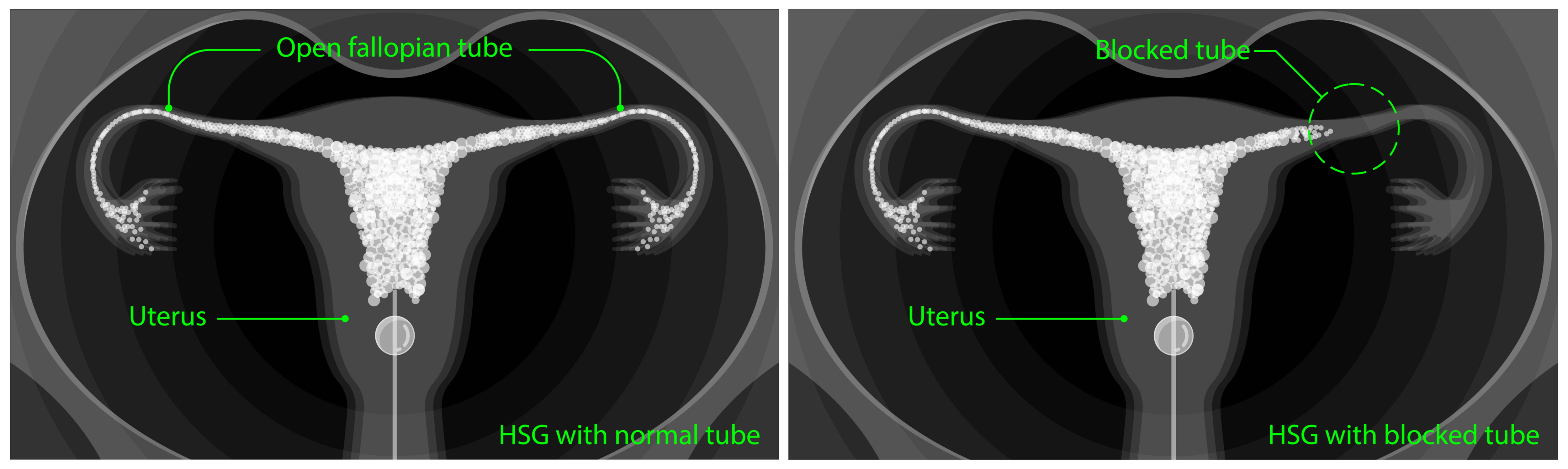
An HSG (hysterosalpingogram) is a 5-10-minute X-ray test that checks whether your fallopian tubes are open and whether your uterus is normally shaped. It is one of the most common fertility tests in India, generally priced at ₹2,500-₹6,000, and recovery takes hours, not days. Most women return to normal activity the same day.
What is an HSG Test?
HSG stands for hysterosalpingogram. It is an X-ray procedure used to see whether your fallopian tubes are patent (open) and whether the inside of your uterus is normally shaped. A small amount of iodine-based contrast (a liquid that shows up white on X-ray) is gently passed into the uterus through the cervix. As the contrast flows into the fallopian tubes and spills out at the ends, the radiologist or fertility specialist captures images to determine whether the tubes are open, partially blocked, or fully blocked, and whether the uterus has any abnormalities, such as adhesions or a structural issue.
Term
Plain-language meaning
HSG (hysterosalpingogram)
X-ray test of the uterus and fallopian tubes using contrast dye
Fallopian tubes
Two thin tubes connecting the ovaries to the uterus, where eggs and sperm meet
Patent tubes
Open tubes that allow eggs and sperm to pass through
Tubal blockage
A closure or narrowing of one or both fallopian tubes
Contrast/dye
A liquid (usually iodine-based) that shows up on X-ray
Uterine cavity
The inside space of the uterus where a pregnancy implants
Hydrosalpinx
A blocked tube filled with fluid - visible on HSG
Why an HSG is Often the First Tube Test Your Doctor Recommends
The HSG itself is short, but the experience involves a few moving parts - preparation, the procedure, and a few hours of mild cramping. Knowing what each stage looks like makes the test much less stressful.
Before the test: timing and preparation
HSG is done in the first half of your menstrual cycle, usually between Day 7 and Day 12 - after your period has ended but before ovulation. This timing rules out an early pregnancy and gives the clearest images. Most centres ask you to take a mild pain reliever, such as ibuprofen, about an hour before the test to reduce cramping, and some prescribe a short course of antibiotics if there is any risk of infection. You can eat normally and do not need to fast. Bring a sanitary pad - light spotting afterwards is common - and ideally have a family member or friend with you for the journey home.
During the test: what actually happens
You will lie on an X-ray table, similar to a routine pelvic exam. A speculum is placed in the vagina, the cervix is gently cleaned, and a thin cannula (a small tube) is positioned at the cervical opening. The fertility specialist or radiologist then slowly injects a small amount of contrast dye into the uterus while the X-ray fluoroscope captures real-time images. As the dye fills the uterus and flows into the tubes, you can usually see the images on a monitor. The whole procedure takes 5-10 minutes.
Will it hurt?
This is the most common worry, and the honest answer is: most women feel cramping similar to a strong period for a few minutes during the dye injection, and that settles within 5-30 minutes. A small group experiences sharper pain, especially if the tubes are blocked, and the dye has to push against resistance. Pain relief taken before the test makes a meaningful difference. You will not be put to sleep - HSG is done while you are awake, but the discomfort is short and self-limiting.
After the test: recovery, spotting, and resuming activity
You can usually walk out of the clinic within 15-20 minutes of the test ending. Light spotting and mild cramping for 1-2 days are normal. Most women return to work the same day or the next, and household activity, walking, and light exercise are all fine. Your specialist may ask you to avoid intercourse, swimming pools, and tub baths for 2-3 days while the cervix settles. If you develop a fever, heavy bleeding, or worsening pain after 24 hours, contact your specialist promptly - this is uncommon but worth taking seriously.
How HSG results are interpreted
Results usually come the same day or within 24 hours. A normal HSG shows contrast filling a regularly shaped uterus and spilling freely from both fallopian tubes. An abnormal result may show one or both tubes blocked, a hydrosalpinx (fluid-filled blocked tube), filling defects in the uterus from polyps or adhesions, or a structural variant such as a uterine septum or bicornuate (heart-shaped) uterus. The next step depends on what is found.
Risks and Side Effects of HSG
HSG is considered a very safe outpatient test. Serious complications happen in fewer than 1 in 100 cases. The recognised side effects and risks include:
• Cramping: the most common side effect - usually 5-30 minutes, similar to strong period pain, manageable with mild pain relief.
• Light spotting: can last 1-2 days after the test; heavy bleeding is unusual and should be reported.
• Pelvic infection: rare, occurring mostly in women with a history of pelvic infections or chlamydia. Antibiotic cover and sterile technique further reduce this risk.
• Faintness or dizziness: a small number of women feel light-headed during or just after the test; resting briefly resolves this.
• Iodine allergy: rare. Tell your specialist in advance if you are allergic to iodine, contrast dyes, or seafood; a non-iodine alternative or a different test can be arranged.
• Radiation exposure: very low - less than a routine kidney or bowel X-ray. It has not been shown to cause harm to a future pregnancy.
• Vaso-vagal response: a brief drop in heart rate causing nausea or sweating, which settles quickly with rest.
How to Prepare for an HSG and What to Do After
Steps to take before your HSG
A little preparation makes the test smoother and more comfortable:
• Schedule the test between Day 7 and Day 12 of your cycle - after your period ends and before ovulation.
• Avoid intercourse from Day 1 of your cycle until the test, to rule out an early pregnancy.
• Take the pain-relief medication your specialist recommends about an hour before the procedure.
• Wear loose, comfortable clothing and bring a sanitary pad for after the test.
• Tell your specialist about any iodine allergy, asthma, kidney issues, or pelvic infection history before the day of the test.
• Arrange for someone to accompany you home if you tend to feel light-headed after medical procedures.
• Eat a light meal beforehand - fasting is not needed and may make you feel weaker.
Steps to take after your HSG
Recovery is usually straightforward, but a few small habits help:
• Use sanitary pads, not tampons or a menstrual cup, for the first 2-3 days while the cervix settles.
• Avoid intercourse, swimming pools, and tub baths for 2-3 days, or as long as your specialist advises.
• Resume normal activity, walking, and light exercise the same day or the next; there is no required bed rest.
• Take simple pain relief if cramping persists for a few hours - this is normal.
• Watch for warning signs - fever, heavy bleeding, foul-smelling discharge, or worsening pain after 24 hours - and contact your specialist immediately if they appear.
• Discuss the report with your fertility specialist within a week so the next step is clear, whether that is timed intercourse, IUI, IVF, or further evaluation.
An HSG is not aroutine screening test. Your fertility specialist will recommend it when thereis a reason to evaluate your tubes or uterus.
Your situation
Recommended action
Trying to conceive for 12 months without success (under 35)
HSG is usually included in the initial fertility workup
Trying to conceive for 6 months without success (35 or older)
HSG, along with AMH and partner semen analysis
Past pelvic infection, chlamydia, or pelvic surgery
HSG is often recommended, even if trying for less time
Suspected endometriosis or known fibroids
HSG plus pelvic ultrasound, sometimes laparoscopy
Recurrent miscarriages (two or more)
HSG to assess uterine cavity shape
Before starting IUI (intrauterine insemination)
HSG to confirm at least one open tube
Before some IVF cycles
HSG or saline sonohysterogram to evaluate uterine cavity
If you havebeen trying to conceive without success or your specialist has suggested anHSG, you can book a fertility consultationat a Cloudnine Fertility centre to plan the test, the timing, and the stepsthat follow.
What Different HSG Results Mean for Your Next Step
An HSG gives astructural answer, not a verdict. The table below shows how typical findingstranslate into next steps in fertility care.
HSG finding
What it usually means
Typical next step
Both tubes open, uterus normal
Healthy structural picture
Continue trying naturally; consider IUI if other factors are present
One tube blocked, the other open
Tubal factor present, but pregnancy is possible
Continue trying or consider IUI; IVF if no conception within the agreed window
Find clear, trusted answers to the most common questions about IVF—designed to guide and support you every step of the way.
Can an HSG test damage fallopian tubes?
No, an HSG does not damage healthy fallopian tubes. The contrast dye is gentle, the volume is small, and the pressure used is low. The only setting where damage is possible is when there is an active or unresolved pelvic infection, which is why specialists ask about your infection history and sometimes prescribe preventive antibiotics. In rare cases, an unrecognised infection at the time of HSG can spread, which is why fever or worsening pain afterwards should always be reported.
Can one get pregnant immediately after an HSG?
Yes, you can try to conceive in the same cycle as your HSG. There is even some evidence - particularly with oil-based contrast dye - that pregnancy rates are slightly higher in the 3 months following a normal HSG. The flushing effect may help clear minor mucus or debris from otherwise healthy tubes. Most specialists in India use water-based dye, which is safer and more widely available, with a smaller but still real fertility benefit.
Which test is best for evaluating the fallopian tubes?
HSG is the most widely used first-line test because it is quick, outpatient, and gives clear images of both the tubes and the uterine cavity. Alternatives include sonohysterosalpingogram (SHG, or saline sonogram), which uses ultrasound and saline instead of X-ray and dye, and laparoscopy with chromopertubation, a surgical procedure used when more detail is needed or when surgery is being planned anyway. For most women starting a fertility evaluation, HSG is the preferred test.
How many days of rest are required after an HSG?
Most women need no formal rest after an HSG. You can return to work, normal household activity, walking, and light exercise the same day or the next. What is usually advised is to avoid intercourse, swimming, and tub baths for 2-3 days while the cervix settles, and to use pads rather than tampons during this window. If you feel particularly crampy on the day, give yourself the rest of that day off - but a multi-day bed rest is not necessary.