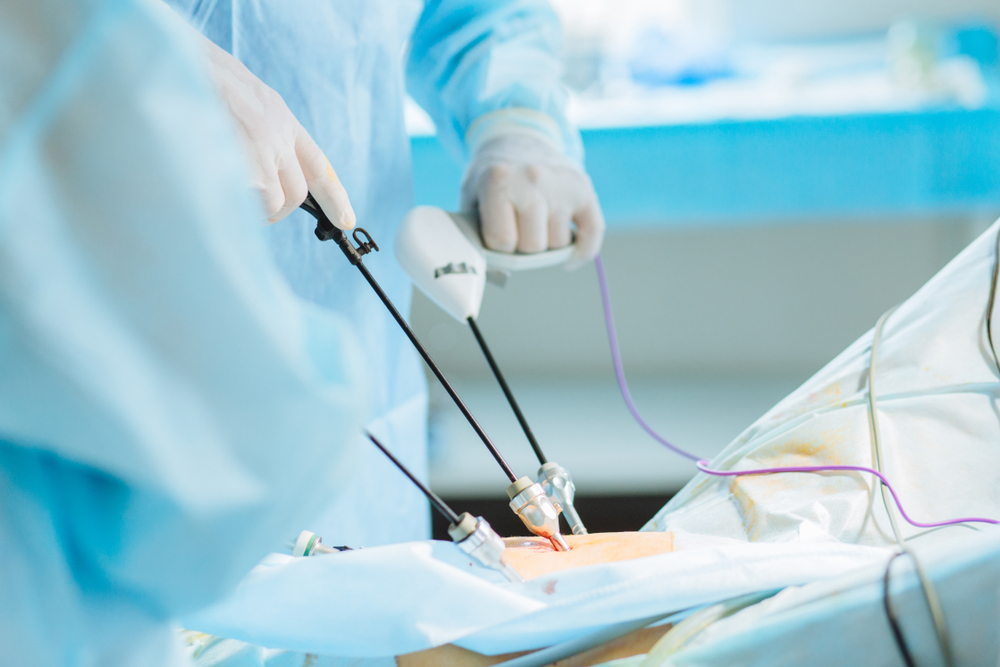
Diagnostic laparoscopy is keyhole surgery that examines the outside of the uterus, tubes, and ovaries, and can treat problems such as endometriosis, adhesions, or a damaged tube in the same sitting. It is not a routine step before IVF. It is worth doing in specific cases - symptomatic endometriosis, a hydrosalpinx to treat, or pelvic pain - where it will change your plan.
What Laparoscopy Is - and How It Differs from Hysteroscopy
Laparoscopy (keyhole surgery to view the pelvic organs) uses a thin camera passed through one or two tiny cuts near the navel, so the surgeon can see the outside of the uterus, the fallopian tubes, the ovaries, and the pelvis around them. It is easy to confuse with hysteroscopy, but they look at different things:
Laparoscopy
Hysteroscopy
What it views
Outside the uterus - tubes, ovaries, pelvic surfaces
Polyps, fibroids in the cavity, scar tissue, and septum
Anaesthesia
General anaesthesia
Local, sedation, or short general
The two are often done together when a complete picture is needed, a single anaesthetic, and both the inside and outside of the uterus are checked and treated. If your question is mainly about the cavity, a hysteroscopy alone may be enough.
“Is My Doctor Just Being Cautious?” - the Indian Context
In India, laparoscopy is sometimes offered more readily than guidelines strictly require, partly because it can diagnose and treat in one sitting. That makes it reasonable to ask a fair question: is this recommended because something specific has been found, or as a precaution? A good answer should point to a concrete reason, a suspicious scan, significant pain, a suspected hydrosalpinx, or symptoms of endometriosis. It is performed as a day-care or short-stay keyhole procedure under general anaesthesia, frequently combined with a hysteroscopy. The cuts are small (usually under a centimetre), so visible scarring is minimal. Knowing why it is being advised, and what would change depending on the findings helps you decide with your specialist rather than agreeing to surgery by default.
When Laparoscopy is Worth Doing Before IVF and When It Isn’t
When it is worth doing
Laparoscopy earns its place when the findings genuinely change your treatment. The clearest indications are:
• A hydrosalpinx (a fluid-filled, blocked tube): removing or clipping it before IVF measurably improves success, because the fluid otherwise lowers implantation.
• Symptomatic or significant endometriosis: where there is pain, or large lesions, or cysts blocking access to the ovaries for egg collection.
• Persistent pelvic pain or a suspicious mass that needs a diagnosis and may need treating in its own right.
When it usually isn’t
Routine laparoscopy before IVF, for everyone, is not recommended. IVF bypasses the tubes and much of the pelvic factor, so scoping a pelvis that has no specific red flags rarely changes the plan. For unexplained infertility in particular, guidelines no longer recommend routine diagnostic laparoscopy: tubal patency is checked first with an HSG test or a sonography-based test, and most couples move to treatment without it.
The endometriosis nuance is most often skipped on most pages
Laparoscopy is the most reliable way to diagnose endometriosis, including the superficial deposits that an ultrasound or MRI can miss. But, and this is the honest part, routinely removing mild endometriosis or an ovarian cyst (endometrioma) before IVF has no proven benefit for live-birth rates, and surgery on an endometrioma can reduce the ovary’s egg reserve. Treating mild disease can help natural conception, but before IVF, the decision is individualised, weighing symptoms, cyst size, your age, and ovarian reserve, not automatic.
What Laparoscopy Can Find That Scans Can’t
Ultrasound and MRI are valuable, but a direct, magnified view of the pelvis can reveal things imaging misses:
• Superficial (peritoneal) endometriosis: small deposits on the pelvic surfaces that rarely show on a scan but can cause pain and adhesions.
• Pelvic adhesions: bands of scar tissue from past infection or surgery that distort the anatomy and tether the tubes and ovaries.
• Tubal disease and hydrosalpinx: the condition and patency of the tubes are seen directly, often with dye passed to confirm whether they are open.
• Endometriomas and other cysts: their size and relationship to the ovary, which guides whether and how to treat them.
• Distorted pelvic anatomy: the overall picture that explains pain or difficulty conceiving when scans look normal.
Risks, Recovery, and Timing Before IVF
Risks and what recovery feels like
Laparoscopy is generally safe, but it is still surgery under general anaesthesia, so it carries small risks of bleeding, infection, or injury to nearby organs, uncommon in experienced hands. Afterwards, expect soreness around the small cuts, some bloating, and a classic after-effect shoulder-tip pain from the gas used to inflate the abdomen, which settles within a day or two. Most women go home the same day or the next morning and are back to normal activity within a few days to about a week, depending on whether anything was treated.
How long to wait before IVF
If the laparoscopy was purely diagnostic, there is usually no need for a long wait, often a cycle or so to recover. If significant surgery was done (for example, treating extensive endometriosis or removing a cyst), your specialist may advise a longer gap, often one to three months, to let you heal and to time the IVF cycle well. Your exact timeline depends on what was found and done, so follow your specialist’s advice rather than a fixed rule.
Is Diagnostic Laparoscopy Right for You?
Whether it is worth doing depends on your specific picture:
Your situation
Laparoscopy likely worth it?
Why
Hydrosalpinx seen on scan or HSG
Yes
Treating it before IVF improves success
Painful periods / suspected endometriosis
Often
Diagnoses and can treat in one sitting
Unexplained infertility, normal scans
Usually no
Not recommended routinely; rarely changes the plan
Routine, before a first IVF, no red flags
No
IVF bypasses the pelvic factor
Mild endometrioma, planning IVF
Individualised
Surgery may lower egg reserve; weigh carefully
If a scan, an HSG test, or symptoms such as pelvic pain have raised the question of laparoscopy before IVF treatment, you can book a fertility consultation at a Cloudnine Fertility centre to find out whether it would actually change your plan.
Cost depends on whether the procedure is purely diagnostic or includes operative treatment (such as removing a cyst or clearing adhesions), whether it is combined with a hysteroscopy, the city, and the complexity of your case. As a general guide for the Delhi NCR region, a diagnostic laparoscopy is commonly quoted at ₹30,000-₹75,000, with operative laparoscopy higher, while a diagnostic hysteroscopy typically costs less. These are indicative market ranges, not a Cloudnine quote. Prices vary by centre and change over time, so ask your chosen centre for a current, itemised estimate including anaesthesia and day-care charges.
Indicative ranges only -to be replaced with Cloudnine’s audited price band once confirmed (see checklist).
Find clear, trusted answers to the most common questions about IVF—designed to guide and support you every step of the way.
Is it necessary to do a laparoscopy before IVF?
Not as a routine. IVF bypasses the tubes and much of the pelvic factor, so laparoscopy before IVF is recommended only in specific situations, such as a hydrosalpinx to treat, significant or symptomatic endometriosis, or pelvic pain that needs a diagnosis. If your specialist has a concrete reason, it can be worthwhile; if not, it is fair to ask what it would change.
Is laparoscopy worth doing for unexplained infertility?
Usually not as a routine step. Current guidelines do not recommend routine diagnostic laparoscopy for unexplained infertility, because tubal patency can be checked with an HSG or sonography, and the findings rarely change the plan. Most couples move to treatment without it, unless symptoms or scans point to a specific problem.
What is the difference between laparoscopy and hysteroscopy?
Laparoscopy looks at the outside of the uterus, the tubes, and the ovaries through tiny cuts near the navel, under general anaesthesia. Hysteroscopy looks inside the uterine cavity through the cervix, with no cuts. They answer different questions and are sometimes done together in one sitting for a complete assessment.
Will laparoscopy reveal endometriosis that my ultrasound and MRI missed?
Often, yes. Laparoscopy is the most reliable way to find endometriosis, including the small, superficial deposits that scans frequently miss. That said, current guidance also accepts imaging plus a treatment trial as an alternative in some cases, so a laparoscopy solely for diagnosis is not always necessary.