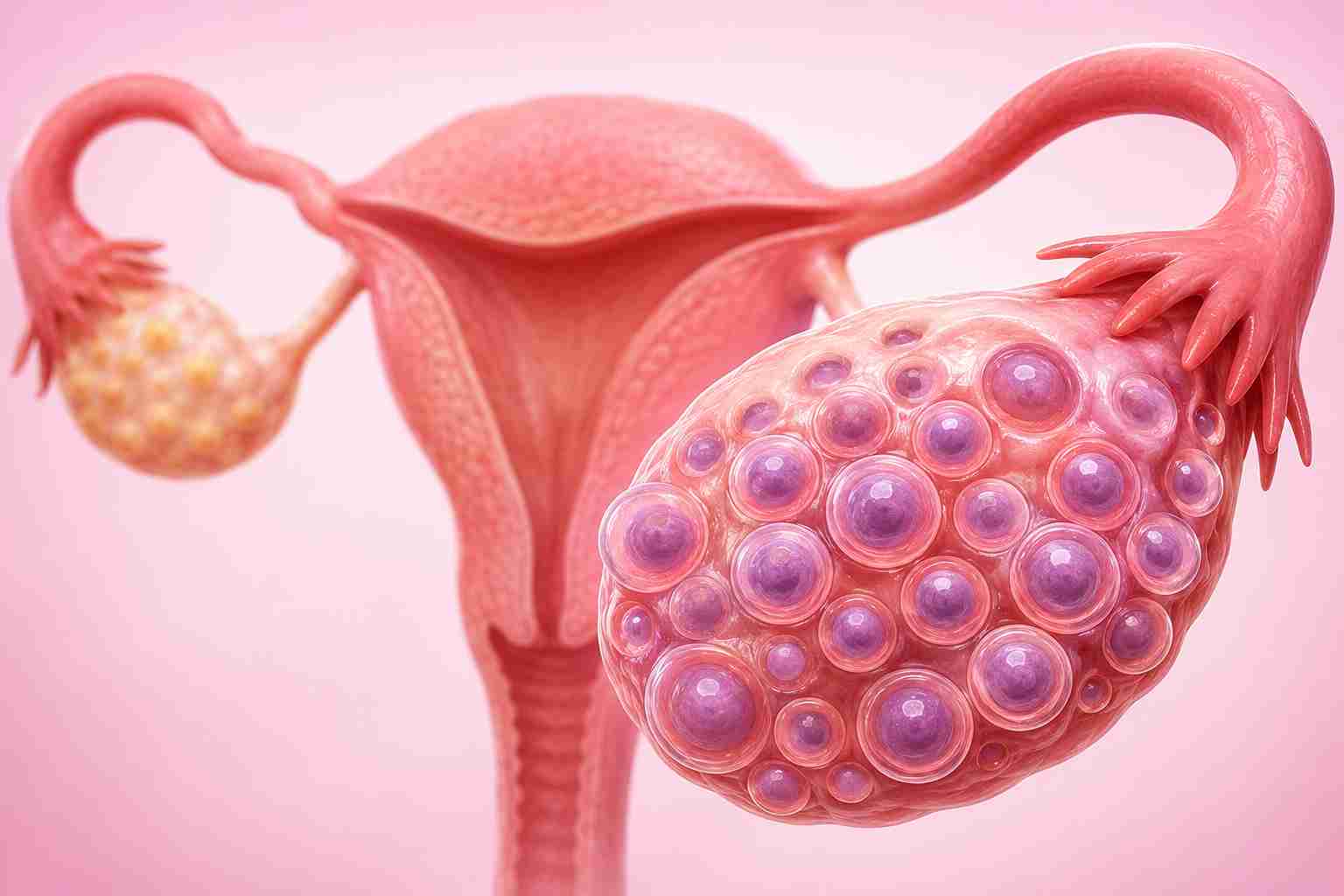
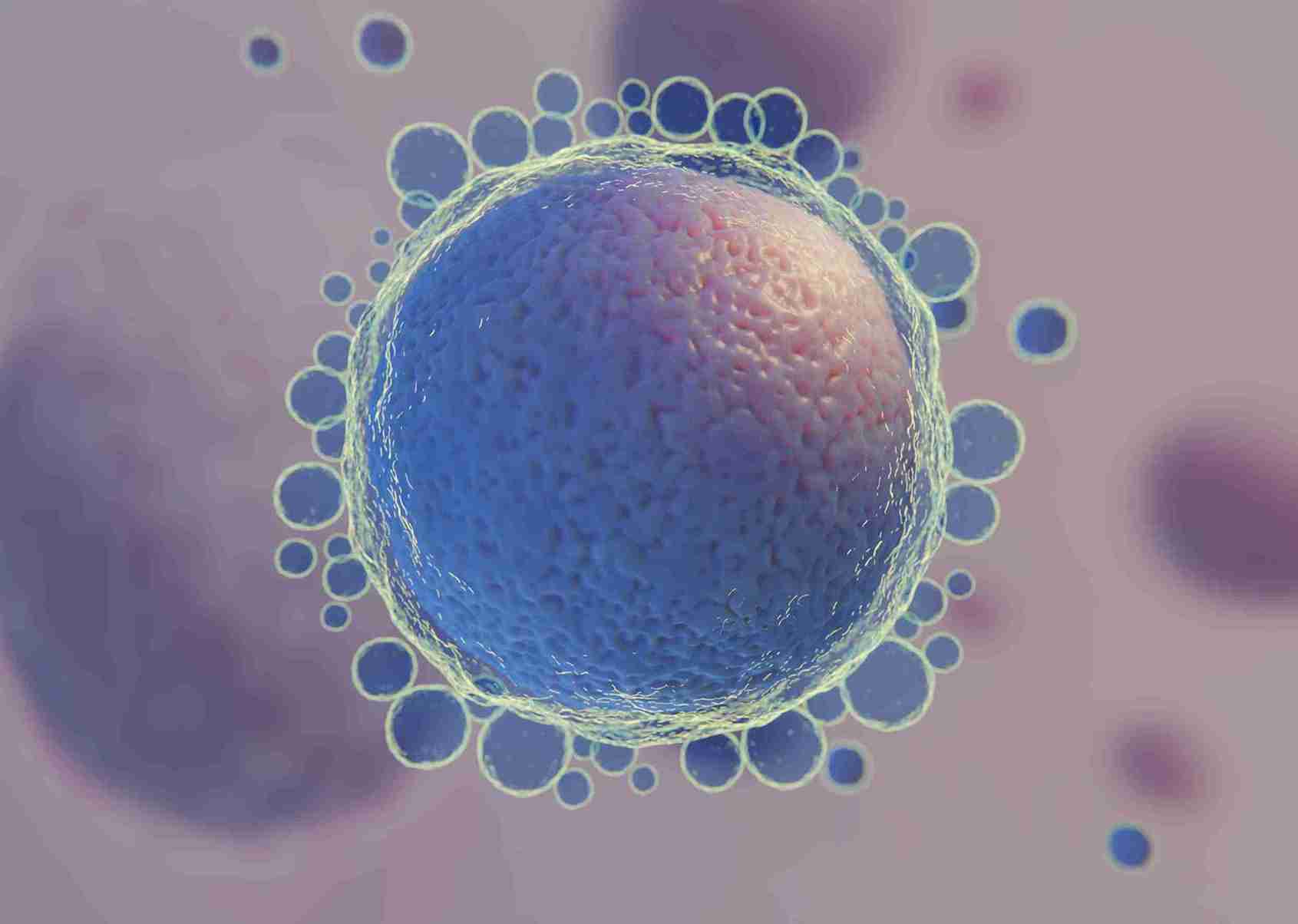
An ovarian follicle is a small fluid-filled sac in the ovary that holds and matures an egg. Each cycle, one follicle usually becomes dominant, grows to about 18-24 mm, and releases an egg at ovulation. Follicle size, number, and which one is dominant, seen on a scan, help doctors understand how your ovaries are working.
Book an Appointment with Dr. Lavi Sindhu for all your Fertility concerns.
What is an ovarian follicle?
An ovarian follicle is a tiny fluid-filled sac inside the ovary that holds one immature egg (oocyte), surrounded by supporting cells that nourish the egg and produce hormones such as estrogen. You are born with your entire lifetime supply of follicles, and their number falls steadily with age. In every menstrual cycle, a group of follicles begins to grow, but usually only one matures fully and releases its egg. The stages of that journey are shown below.
Follicle Stage
What Is Happening
Primordial follicle
The resting follicle present from birth, containing an immature (dormant) egg.
Primary and secondary follicles
The follicle begins to grow, and surrounding cells multiply to nourish and support the developing egg.
Antral follicle
A fluid-filled cavity develops. These small follicles are visible on ultrasound and are counted during an early-cycle antral follicle count (AFC) scan.
Dominant (Graafian) follicle
One follicle becomes dominant, grows to approximately 18–24 mm, and releases the mature egg during ovulation.
What your follicle scan is actually telling you
If you are reading this with an ultrasound report in your hand, here is the reassuring truth: a follicle scan is a snapshot of how your ovaries are working in this one cycle. It shows which follicles are growing, how big they are, and which side is likely to ovulate. What it does not do is tell you whether you will conceive. A textbook-perfect dominant follicle makes pregnancy possible, not certain, and a lower-than-average count does not mean you cannot conceive naturally. Follicle numbers estimate egg quantity, not egg quality, and they do not predict your chance of conceiving this month. For how egg quantity is formally measured over time, see our guide to ovarian reserve and egg age.
How to read your follicle scan
Follicle size by cycle day
Follicles grow at a fairly predictable pace, so size tells your specialist roughly where you are in the cycle and when ovulation is likely. As a general guide:
Follicle Size
What It Indicates
2–9 mm
Small resting (antral) follicles, typically seen during the early phase of the menstrual cycle.
10–15 mm
Actively growing follicles; one follicle usually begins to become dominant.
16–24 mm
A mature follicle that is close to ovulation. Ovulation most commonly occurs when the dominant follicle reaches approximately 18–24 mm.
Follicle disappears on the next ultrasound scan
Usually indicates that ovulation has occurred and the egg has been released.
A leading follicle grows roughly 1 to 2 mm per day, so scans taken a few days apart can closely time ovulation. The lining of the womb (endometrium) is usually measured at the same time, as it needs to thicken to support a pregnancy.
How many follicles are normal? (the antral follicle count)
Early in the cycle, a scan can count the small resting follicles, called the antral follicle count. A healthy count is often around 5 to 10 per ovary, but this varies widely and naturally declines with age, so it is always interpreted relative to your age rather than a fixed number. Because the count estimates egg quantity, its detailed interpretation belongs with reserve testing, which we cover together with what an AMH test shows.
What does "dominant follicle in the right or left ovary" mean
This simply identifies the ovary scheduled to ovulate this cycle. It is completely normal for either ovary to take the lead, and for the side to change from month to month. Having the dominant follicle on the right or left makes no difference to your chances of conception.
How many eggs does one follicle hold?
Almost always one. Each follicle contains a single egg, so the number of mature follicles reflects how many eggs might be released, or in IVF, collected. Not every follicle yields a usable egg, and occasionally a mature follicle contains no retrievable egg, an uncommon situation called empty follicle syndrome.
What affects follicle development
Follicle numbers and behaviour differ between women and change over time. The main influences are:
Age: The strongest factor; follicle numbers fall steadily and faster after the mid-thirties.
Polycystic ovary syndrome (PCOS): Many small follicles are recruited but often stall without one becoming dominant, so ovulation is irregular.
Diminished reserve or premature ovarian insufficiency: Fewer follicles than expected for age; worth checking if the count is persistently low, as covered in our guide to premature ovarian insufficiency.
Hormonal balance: FSH and LH drive follicle growth, and imbalances in thyroid hormone or prolactin can disrupt this process.
Endometriosis and prior ovarian surgery: This can reduce the follicle pool.
Smoking, significant weight change and cancer treatment: All can lower follicle numbers or quality.
What your results mean, and what to do
If your scan shows a few, small, or many follicles
One result is rarely the whole story. A low count on a single scan can be due to timing or image quality, so it is usually repeated and paired with hormone tests before any conclusion is drawn. A very high count of small follicles often points to PCOS rather than better fertility. If a low count is confirmed for your age, it is worth reading about premature ovarian insufficiency and discussing timelines with a specialist.
Can you increase your follicle count?
Honestly, no. You cannot create new follicles or eggs; the supply you were born with only declines. A healthy lifestyle, not smoking, and treating conditions such as thyroid problems support the environment in which your eggs mature, which helps quality, but nothing raises the underlying number. In fertility treatment, hormone injections do not add follicles either; they simply help more of your existing follicles grow together in one cycle.
How much do follicle scans and tests cost in India?
Follicle-related tests are usually billed individually and vary by city and laboratory. These are diagnostic tests, and their prices are not listed on the official pricing sheet. The amounts below are estimates and may change. Please check with your Cloudnine Fertility centre for the most up-to-date prices.
Test
Approximate Cost
Follicular Monitoring Scan (series of ultrasound scans)
Approximately ₹900 for the first visit and ₹650 for each subsequent visit.
Pelvic Ultrasound with Antral Follicle Count (AFC)
Approximately ₹1,500–₹4,000
AMH (Anti-Müllerian Hormone) Blood Test
Approximately ₹5,000
When to see a fertility specialist
A follicle scan is reassuring far more often than not, but a few patterns are worth acting on rather than worrying about alone.
What You Notice
What to Do Next
No dominant follicle develops across several menstrual cycles
Consult a fertility specialist to evaluate ovulation and identify the underlying cause.
Antral follicle count (AFC) remains consistently low for your age
Undergo ovarian reserve testing and seek personalised fertility advice.
Many small follicles along with irregular or absent menstrual periods
Get evaluated for polycystic ovary syndrome (PCOS).
Trying to conceive for more than 6 months (age 35 or older), or 12 months (under 35)
Book a comprehensive fertility assessment for both partners.
For treatment cycles, follicle growth is tracked with follicular monitoring scans. If you are weighing up your next steps, our guide to IVF in India explains what the treatment involves and its costs.
What a follicle scan can and cannot tell you
Keeping these two columns separate is the single best way to read your report calmly.
What Follicular Monitoring Can Show
What It Cannot Confirm
Whether a dominant follicle is growing and its approximate size
Whether pregnancy will occur in that menstrual cycle
Approximately when ovulation is likely to occur
The genetic quality of the egg inside the follicle
The antral follicle count (AFC) for your age
Your exact chance of natural conception
Patterns such as multiple small follicles that may suggest PCOS
A diagnosis of PCOS on its own without clinical assessment and other investigations
Want to consult the best fertility in india? Please find the links below.
An ovarian follicle is a tiny fluid-filled sac in the ovary that holds and protects an immature egg. Each follicle contains one egg and the supporting cells that nourish it and make hormones. You are born with your lifetime supply of follicles, and a group starts to grow in every menstrual cycle, though usually only one matures and releases its egg at ovulation.
How many follicles are normal in each ovary?
On an early-cycle scan, a healthy antral follicle count is often around 5 to 10 resting follicles per ovary, yielding a total in the mid-teens. Counts vary widely with age and naturally fall over time, so what is normal for a woman of 25 differs from that for a woman of 40. Your specialist reads the number relative to your age rather than to a single fixed target.
Does a dominant follicle mean I will get pregnant?
Not on its own. A mature dominant follicle means ovulation is likely, which is necessary for natural conception, but it is not a guarantee. Pregnancy also depends on egg quality, healthy sperm, open fallopian tubes, a receptive uterus and good timing. A perfect-looking follicle on a scan is a good sign, not a promise of a positive test.
How many eggs are in one follicle?
Almost always just one. Each follicle holds a single egg, so the number of mature follicles roughly reflects how many eggs could be released or, in IVF, collected. Occasionally, a follicle contains no retrievable egg, which is uncommon and known as empty follicle syndrome.
Schedule your consultation Today!
Book your consultation with our fertility experts the first step toward your parenthood journey.