A full egg-freezing cycle in India is commonly quoted at ₹1,50,000 to ₹3,00,000, but that single headline hides three very different costs: a mostly fixed procedure and laboratory fee, a highly variable ovarian-stimulation medication bill that shifts with your age and ovarian reserve, and a recurring annual storage charge. Understanding that the split matters more than the headline number.
What does egg-freezing actually cost?
Egg freezing, clinically called oocyte cryopreservation (freezing and storing unfertilised eggs), collects mature eggs, freezes them by vitrification (an ultra-rapid freezing method), and stores them in liquid nitrogen for later use. For the full clinical steps, see how the egg-freezing process works. On cost, it helps to stop thinking of one number and instead read it as three layers, because each behaves differently on your final bill.
Cost Layer
What It Covers
How It Behaves
Procedure and laboratory
Egg retrieval (transvaginal oocyte aspiration), vitrification (egg freezing), consumables, and the initial storage period.
Mostly a fixed cost.
Ovarian stimulation medication
Daily hormone injections used to stimulate the ovaries to produce multiple mature eggs in one cycle.
Highly variable, depending on age, ovarian reserve, and medication requirements.
Storage renewal
Annual storage of frozen eggs in liquid nitrogen after the included storage period ends.
Recurring yearly cost.
Why do two women get very different egg-freezing quotes
Two women can walk out of two clinics with quotes that differ by more than a lakh, and the gap is rarely arbitrary. The largest driver is medication: the dose of stimulation injections is tailored to your age and ovarian reserve, so a woman with a strong reserve may spend far less on drugs than one who needs a higher dose or a second cycle. The next driver is bundling. One clinic may fold consultation, tests, anaesthesia and the first year of storage into a single package, while another quotes a lower headline and bills those separately. City tier and laboratory standard add a further layer, with metro centres and advanced embryology labs generally priced above tier-2 options. Reading what a quote includes, therefore, tells you more than the number on top of it.
Egg freezing cost in India, broken down
The table below sets out the typical component-by-component cost of a single egg-freezing cycle in India. These are indicative market ranges compiled from publicly listed Indian fertility-clinic pricing, shown for orientation only. They are not Cloudnine Fertility audited figures, which appear further down in their own section.
Typically the largest variable cost, depending on medication dose and duration.
Monitoring scans and blood tests
Approximately ₹10,000–₹25,000
Performed throughout the ovarian stimulation phase.
Egg retrieval (operation theatre and sedation)
Approximately ₹30,000–₹1,00,000
Usually performed as a day-care procedure.
Vitrification (laboratory freezing)
Approximately ₹20,000–₹60,000
Laboratory fee for freezing and preserving mature eggs.
First year of storage
Often included in the treatment package
Confirm storage duration included in your package.
Storage renewal (after the first year)
Approximately ₹10,000–₹30,000 per year
Recurring annual storage fee.
Standard fertility centres (all-inclusive package)
Approximately ₹1.20 lakh–₹2.00 lakh
Typically excludes future storage renewal charges.
Premium fertility centres (all-inclusive package)
Approximately ₹2.00 lakh–₹3.00 lakh or more
Usually excludes future storage renewal charges.
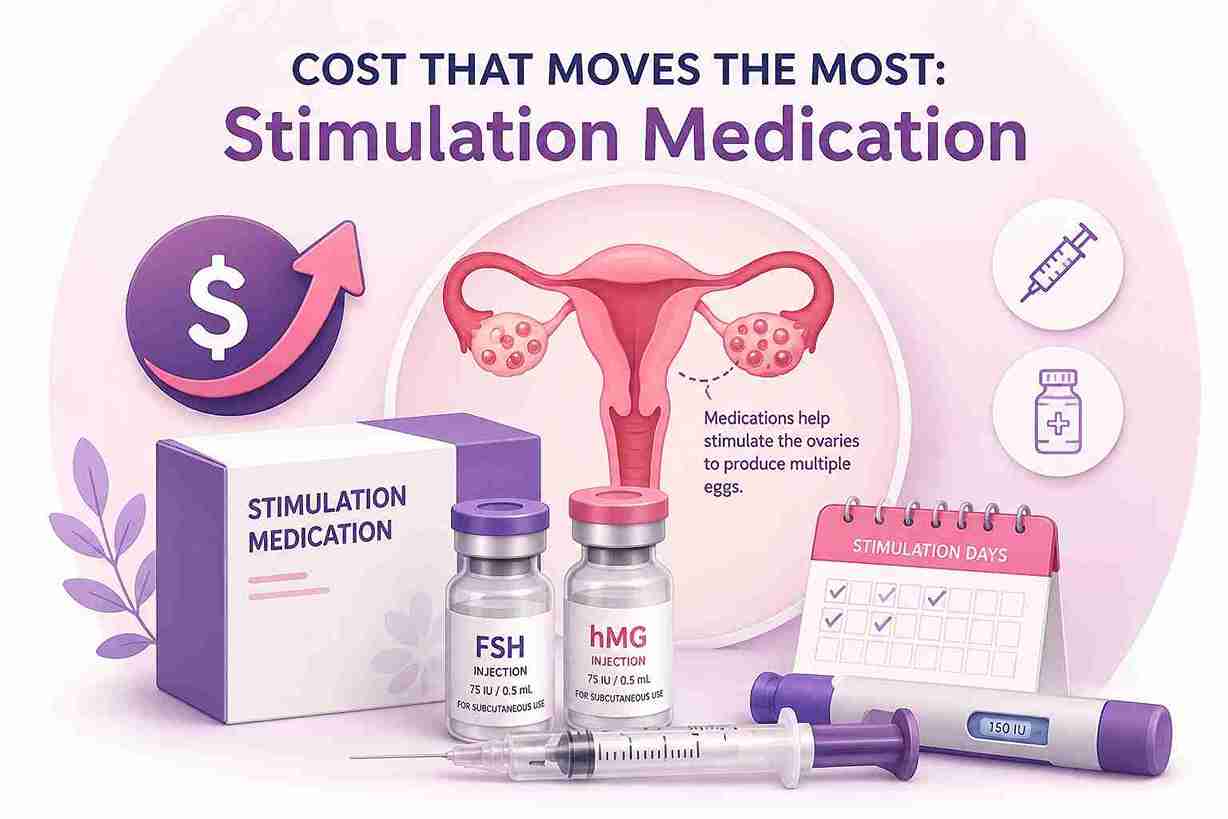
The one cost that moves the most: stimulation medication
If your quote swings, medication is usually why. The injections that ripen multiple eggs in a single cycle are dosed to your age and ovarian reserve, and higher doses or imported preparations raise the bill sharply. A younger woman with a healthy reserve may sit near the bottom of the range, while a woman who needs a stronger protocol can approach the top. Because this is a clinical decision, the honest answer to what your medication will cost is that it is set only after your baseline assessment, not before. We do not name specific medicines or doses here, as those belong in a consultation with your fertility specialist.
Storage: a recurring cost, not a one-off
Storage is where the headline most often misleads. Many packages advertise the first year as included, which is accurate, but the eggs remain frozen only as long as you keep paying the annual renewal fee. Under the Assisted Reproductive Technology (Regulation) Act, 2021, gametes such as eggs are normally stored for up to ten years, after which stored material must be dealt with under the Act, and longer storage is allowed only in specific medical situations, such as before cancer treatment, with National Board permission. Plan the renewal as an ongoing line item, not a formality.
The cost you only pay later: thaw, fertilise, transfer
Freezing eggs is not the cost of a baby, only the cost of preserving the option. When you decide to use them, you pay for a separate treatment cycle: thawing, fertilisation by IVF or ICSI, embryo culture and transfer. That later cycle is itself in the region of the IVF cost in India, so it is fair to budget for two events across time, not one. Building that future cost into your plan now avoids an unwelcome surprise years later.
What makes egg freezing cost more or less
Five factors explain most of the variation in what women actually pay:
Your age and ovarian reserve: younger women with a good reserve often need one cycle, while women in their late thirties may need multiple cycles to bank enough eggs, which multiplies the total.
The number of eggs you need to bank: a higher target means more medication and, sometimes, a repeat cycle. Age-based egg-yield targets are covered in the egg-freezing process guide.
Medication dose and preparation: higher doses and imported injections raise the drug bill, which is the largest single swing in most quotes.
City and clinic tier: metro centres and advanced embryology labs generally price above tier-2 clinics.
What the quoted package includes: consultation, tests, anaesthesia and first-year storage may be bundled or billed separately, which changes the true cost of a low headline.
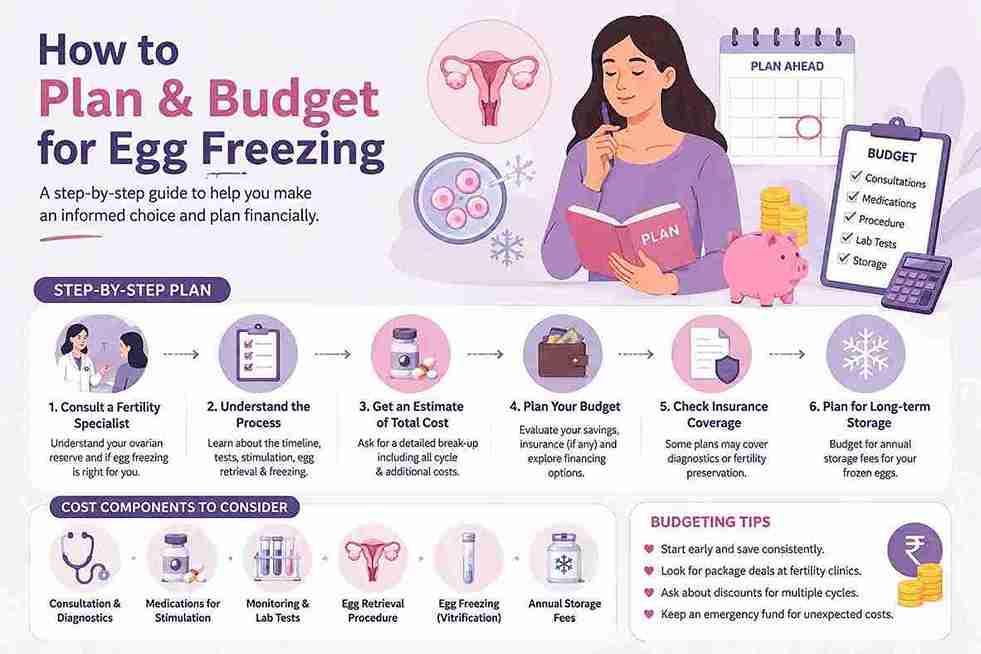
How to plan and budget for egg freezing
Questions to ask before you pay
Ask for a fully itemised quote rather than a single package figure.
Confirm what is included: medication, anaesthesia, consultation, tests, and first-year storage.
Ask the exact annual storage renewal fee, not just the first-year cost.
Ask for a realistic egg-yield estimate for your age and reserve, and whether a second cycle is likely.
Ask the laboratory for its own audited thaw-survival rate.
How to avoid surprise costs
Treat medication as a variable you cannot fix in advance, and budget a buffer toward the upper end if you are over 35. If your reserve is low, plan for a second cycle rather than being blindsided by it. Set aside a realistic figure for the future IVF cycle you will need to use the eggs, and read the storage and renewal terms in your Act-mandated consent form before you sign, so the ten-year framework and the yearly fee are clear from the start.
How much does egg freezing cost at Cloudnine Fertility?
The figures below are Cloudnine Fertility's audited pricing. The procedure fee covers egg retrieval, vitrification, consumables, and the first three months of storage. Ovarian-stimulation medication is billed separately because it is set by your protocol and cannot be quoted as a flat fee.
Item
Cloudnine Fertility (Indicative Cost)
Egg-freezing procedure (egg retrieval, vitrification, consumables, and first 3 months of storage)
Approximately ₹82,500*
Storage renewal (6 months)
Approximately ₹30,000*
Storage renewal (1 year)
Approximately ₹50,000*
Infection screening (serology)
Approximately ₹2,500–₹5,200*
Ovarian stimulation medication
Approximately ₹60,000–₹1,20,000*
Baseline hormone tests (AMH, FSH, oestradiol), AFC ultrasound
Approximately ₹8,500–₹9,500*
What is usually included, and what costs extra
Packages are quoted differently, so the honest way to compare two clinics is to check what each one bundles rather than the headline. As a general guide:
Usually included in the package
Specialist consultations
Ultrasound monitoring during stimulation
Egg retrieval and laboratory vitrification
The first year of storage, in many packages
Commonly billed as extra
Pre-treatment investigations and baseline hormone tests
Ovarian-stimulation medication, in packages that quote it separately
Additional medication if your ovaries respond slowly
Anaesthesia or theatre charges, when not bundled
Storage renewal beyond the included period
The future cycle to thaw, fertilise and transfer the eggs
When to book a fertility assessment
Egg-freezing decisions are time-sensitive because both egg quality and the number of eggs you can bank per cycle decline with age. The situations below are worth a same-month assessment rather than a wait-and-see approach.
If This Applies to You
Why Timing Affects Cost and Outcome
You are in your mid-30s and considering egg freezing.
Delaying treatment may require more stimulation cycles and higher medication costs in the future.
Family history of early menopause
Ovarian reserve may decline earlier than expected, reducing the window for successful egg freezing.
Upcoming cancer treatment
Fertility preservation before treatment is time-sensitive and may be medically recommended.
Endometriosis or PCOS
These conditions may affect ovarian reserve or the stimulation protocol, influencing both treatment approach and cost.
You do not have a partner but want to preserve future fertility options.
Freezing eggs at a younger age often requires fewer eggs and fewer treatment cycles, helping reduce the overall cost.
Cost and outcome are linked through one number: how many mature eggs you need to bank for a fair chance of a future live birth. That target rises with age, and a higher target can mean more medication or a second cycle, so age at freezing is also the main cost multiplier. The banding below is a widely used rule of thumb; full success figures sit in the process guide.
Age at Freezing
Recommended Number of Eggs to Freeze
Cost Implication
Under 35 years
Approximately 10–15 mature eggs
Often achievable in a single egg-freezing cycle.
35–37 years
Towards the higher end of the recommended range
One or two egg-freezing cycles are more likely to be needed.
38 years and older
Approximately 20 or more mature eggs
Multiple stimulation cycles are commonly required, increasing the overall cost.
Want to consult the Best Fertility in india? Please find the links below.
Find clear, trusted answers to the most common questions about IVF—designed to guide and support you every step of the way.
How much does egg freezing cost in India?
A single cycle is commonly quoted at ₹1,50,000 to ₹3,00,000 all-in, but that figure bundles a mostly fixed procedure and laboratory fee, a variable medication bill, and a recurring storage charge. The true cost depends heavily on your medication dose and on how many cycles you need.
Does the price include the medication?
Often not. Ovarian-stimulation medication is frequently billed separately, and it is the single biggest variable in the total because the dose is set by your age and ovarian reserve. Always ask whether a quoted package includes drugs.
Is there an annual storage fee?
Yes. Most packages include an initial storage period, after which you pay a yearly renewal fee to keep the eggs frozen. Budget for this as an ongoing cost for as long as you store the eggs.
Is egg freezing covered by health insurance in India?
Elective or social egg freezing is generally treated as a lifestyle choice and is usually not covered by Indian health insurance, and there is no regulatory mandate requiring coverage. It may be partly covered when it is medically indicated, for example, before cancer treatment, but this depends entirely on your individual policy.