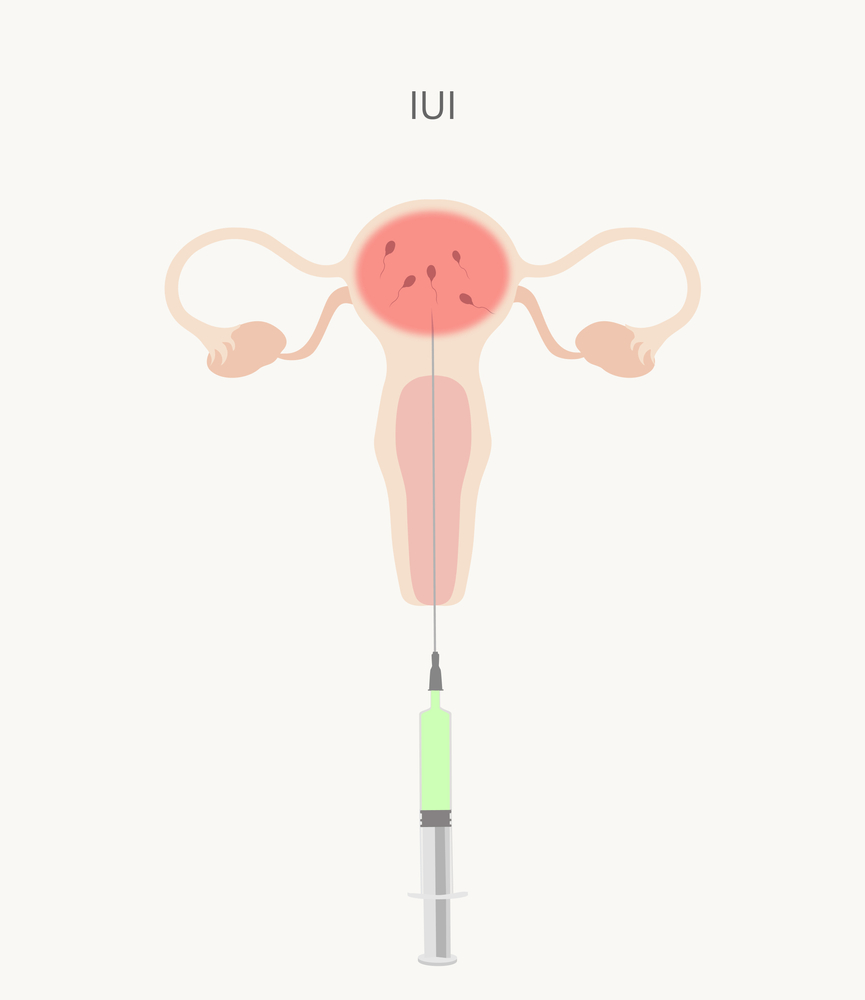
Intrauterine insemination (IUI) is a fertility treatment in which washed, concentrated sperm is placed directly into the uterus around the time of ovulation. The insemination itself is done in the clinic, takes only a few minutes, needs no anaesthesia, and requires no recovery time. Most people go straight back to their normal day.
IUI, also called artificial insemination, gives sperm a head start. Instead of travelling all the way from the vagina through the cervix, a prepared sperm sample is placed high inside the uterus (the womb), closer to the fallopian tubes, where an egg is fertilised. It does not remove eggs or create embryos outside the body, which is what keeps it far simpler than In-vitro Fertilization (IVF). Timing is everything: the insemination is scheduled to sit right around ovulation, when an egg is released. Because it is quick and gentle, IUI is usually the first rung on the fertility treatment ladder.
IUI at a Glance
Detail
What it is
Washed sperm is placed directly into the uterus around the time of ovulation.
Where it is done
As an outpatient procedure in a fertility clinic.
Time taken
A few minutes for the insemination procedure.
Anaesthesia
Usually not needed.
Recovery
Usually no recovery period is required; normal activities can generally be resumed the same day.
Who is IUI for?
IUI suits couples and individuals whose main hurdle is getting healthy sperm to the egg at the right time. It is commonly offered for mild male-factor infertility (a slightly low count or reduced movement), cervical-factor problems (where cervical mucus makes it hard for sperm to pass), unexplained infertility, and some ovulation disorders such as polycystic ovary syndrome (PCOS). It is also widely used by single parents by choice and same-sex couples using donor sperm. IUI is generally not advised when both fallopian tubes are blocked, when sperm quality is very poor, or with advanced endometriosis or significantly reduced ovarian reserve, where IVF tends to give better odds. A fertility specialist confirms suitability after a short work-up.
Getting ready: monitoring, timing, and sperm washing
The days before the procedure matter as much as the procedure itself. Your specialist tracks the growing follicle (the fluid-filled sac that holds the egg) using ultrasound scans and sometimes blood hormone tests, or you may use a home LH (luteinising hormone) kit that detects the surge signalling ovulation is near. In a medicated cycle, ovulation-stimulating tablets (such as letrozole or clomiphene citrate) or injectable hormones (gonadotropins) may be used to help one or two mature follicles develop; a specialist decides whether this is needed. Once a follicle is mature, an hCG (human chorionic gonadotropin) trigger injection may be given to precisely time the procedure. On the day, a semen sample is produced at the clinic (two to five days of abstinence is usually advised), or donor sperm is thawed. The sample is then washed in the laboratory for about 30 to 60 minutes, which separates the healthiest, most active sperm from the seminal fluid and removes substances that can cause cramping. As a rough guide, a post-wash total motile count of at least around 5 million sperm is preferred; when it falls well below about 1 million, IVF with ICSI (intracytoplasmic sperm injection) is usually the better route.
The insemination, step by step
Timing is confirmed. The insemination is usually scheduled for about 24 to 36 hours after the hCG trigger injection, or after a detected LH surge, to coincide with ovulation.
You lie comfortably on an examination couch, much as you would for a smear (Pap) test.
A speculum is gently placed to bring the cervix into view.
A thin, soft catheter (a fine, flexible tube) carrying the washed sperm is passed through the cervix into the uterus.
The sperm is released slowly into the uterine cavity, and the catheter and speculum are removed.
You rest for around 10 to 15 minutes, then go home and carry on as normal.
The insemination itself takes only a few minutes, and the whole visit is usually under half an hour. No anaesthesia is needed.
Why do some IUI cycles not work?
IUI improves your odds in a given month, but it cannot guarantee pregnancy, and a cycle can end without success for reasons that are often nobody's fault:
Age and egg quality: success falls as egg quality declines with age, particularly after the mid-thirties.
Sperm quality: even after washing, a low motile count or poor sperm function lowers the chance of fertilisation.
Timing: the fertile window is short, so if ovulation is earlier or later than expected, the egg and sperm can miss each other.
Tubal or pelvic factors: sperm still has to meet the egg naturally, so subtle tubal or implantation problems can prevent a pregnancy.
Simple chance: because per-cycle success is modest, many cycles fail purely on the odds, which is why several attempts are usually planned.
Most specialists suggest reviewing after three to four cycles. Our guide on how many IUI cycles to try explains when to continue and when to move to IVF.
Does IUI hurt, and what happens afterwards?
Does IUI hurt?
For most people, no. IUI is usually described as mild cramping or a feeling of pressure, similar to a smear (Pap) test, and it is over in a few minutes. Passing the catheter through the cervix can cause a brief pinch, and light spotting afterward is common and harmless. No anaesthesia is used. Compared with IVF, which involves hormone injections, egg retrieval under sedation, and closer monitoring, IUI is far less invasive and far more comfortable. If you have had painful smears in the past, tell your specialist beforehand so they can make the procedure as gentle as possible.
After IUI: the two-week wait
The days after IUI usually feel completely normal. Mild cramping or a little spotting can occur, but it does not indicate whether the cycle has worked. If implantation occurs, it is typically around six to ten days later. You wait about two weeks (roughly 14 days) before taking a pregnancy test, because testing earlier can mislead, especially if an hCG trigger was used, which can cause a false-positive result. A few sensible dos and don'ts:
Do carry on with normal daily life, gentle activity, and travel; there is no need for bed rest.
Do take any prescribed progesterone or other support exactly as advised.
Do eat a balanced, protein-rich diet with folate, and stay well hydrated.
Don't smoke or drink alcohol during the cycle.
Don't test too early, however tempting; wait for the date your clinic gives you.
Roughly, what does one IUI cycle cost in India?
IUI is one of the least expensive fertility treatments, and it costs far less per cycle than IVF. The exact figure depends on your city and centre, whether fertility medication and extra monitoring are needed, and the work-up tests done beforehand. The indicative national bands below are a starting point only.
Item
Indicative Cost in India
One IUI cycle (procedure only)
₹8,000–₹15,000*
Fertility medication, if used
Added separately; cost varies depending on the treatment protocol**
Semen analysis (part of the fertility work-up)
Approximately ₹1,000–₹1,800*
Ultrasound scans and hormone blood tests
Additional; cost varies by fertility centre
The biggest swing is medication: unmedicated (natural-cycle) IUI is cheapest, while stimulated cycles with monitoring cost more. For a current, city-wise and itemised quote, see the Cloudnine Fertility IUI treatment page or speak to a Cloudnine Fertility specialist.
IUI or IVF: When should you see a specialist?
It is worth seeing a fertility specialist if you have been trying to conceive for about 12 months (or 6 months if you are over 35), or sooner if you already know of an issue such as irregular ovulation or a low sperm count. A specialist will help you choose between IUI and IVF, which differ mainly in how involved they are.
Feature
IUI
IVF
Invasiveness
Minimal; performed in a clinic and usually does not require anaesthesia.
More invasive; involves injections and egg retrieval, usually under sedation.
Relative Cost per Cycle
Lower
Higher
Per-Cycle Success
Modest; varies with age, diagnosis, sperm quality, and other factors.
Blocked fallopian tubes, severe male-factor infertility, low ovarian reserve, or unsuccessful IUI treatment.
Most specialists suggest three to six IUI cycles before considering IVF, with the right number depending on your age and diagnosis. If you are unsure which path fits, book a fertility consultation with a Cloudnine Fertility specialist for a plan built around you.
What are IUI success rates, really?
Honesty matters here. Per cycle, IUI success is modest: for many couples, it is roughly 10 to 20 percent, and it declines with age. Published guidance from the American Society for Reproductive Medicine (ASRM) and clinical studies place per-cycle pregnancy rates in this range, with medicated cycles tending to perform better than natural cycles. The more useful number is cumulative: because a modest monthly chance adds up, success improves over several cycles, which is why IUI is planned as a short series rather than a single attempt. Be wary of any figure that promises very high per-cycle success; it does not reflect the evidence.
Age Band
Indicative Per-Cycle Chance
Under 35 years
Towards the upper end, around 15%–20%
35–39 years
Lower, around 10%
40 years and over
Lower still; IVF may be considered sooner depending on individual circumstances
Want to consult the best fertility in india? Please find the links below.
Find clear, trusted answers to the most common questions about IVF—designed to guide and support you every step of the way.
Is IUI painful?
For most people, no. IUI usually feels like mild cramping or pressure, much like a smear test, and lasts only a few minutes. No anaesthesia is needed. Passing the catheter may cause a brief pinch, and a little spotting afterwards is normal and harmless.
How is IUI done, step by step?
Around ovulation, a washed sperm sample is loaded into a thin, soft catheter, passed gently through the cervix, and released into the uterus, with a speculum holding the cervix in view. It is an outpatient procedure taking only a few minutes, with no anaesthesia and no recovery time.
What happens after IUI, day by day?
The first days usually feel normal; mild cramping or light spotting can occur and mean little either way. Implantation, if it happens, is typically around six to ten days later. Carry on as usual, take any prescribed support, and wait about two weeks before testing.
When should I take a pregnancy test after IUI?
Wait about two weeks, roughly 14 days, after the procedure before taking a blood or urine pregnancy test. Testing earlier risks a misleading result because pregnancy hormone levels may be too low to detect, and a recent hCG trigger injection can cause a false positive.