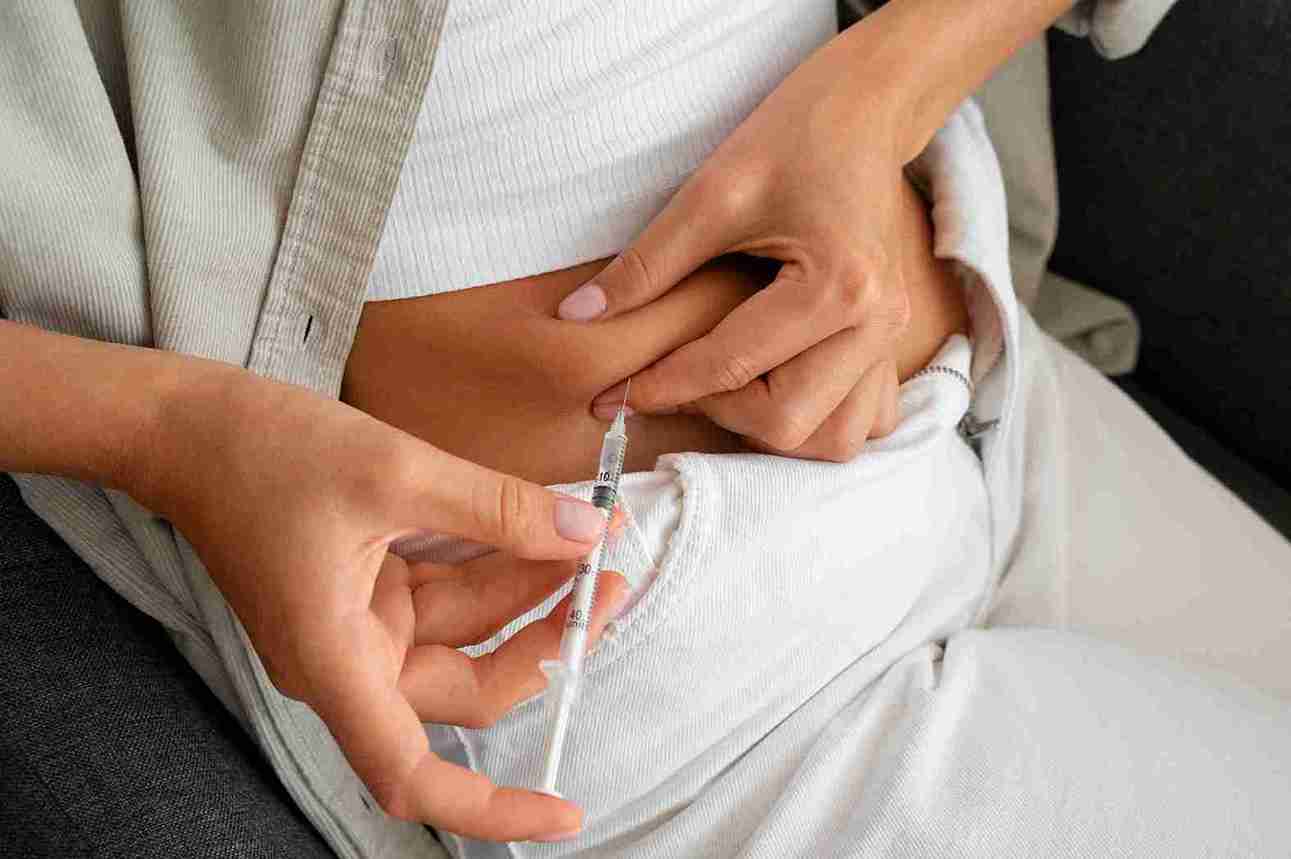
Gonadotropin injections (FSH and sometimes LH) stimulate the ovaries to grow several mature eggs in one IVF cycle. They are taken daily for about 9 to 14 days, usually self-administered at home with a small needle just under the skin. Most women describe them as mildly uncomfortable rather than painful, and side effects are usually limited to bloating and mood changes.
What are gonadotropin injections?
Gonadotropins are the injectable hormones that drive the first stage of IVF - the stimulation phase. They are versions of the body’s own reproductive hormones: FSH (follicle-stimulating hormone, which makes egg-containing follicles grow) and LH (luteinising hormone, which supports egg maturation). Some preparations contain FSH alone; others combine FSH and LH activity (sometimes called hMG, or human menopausal gonadotropin). They can be made in the laboratory (recombinant) or purified from a natural source (urinary). A separate “trigger” injection - hCG (human chorionic gonadotropin) or a GnRH agonist - is given at the end to ripen the eggs before collection.
Injection
What it does
FSH
Stimulates the ovaries to grow and mature several follicles at once - the main workhorse of stimulation.
LH (or FSH+LH / hMG)
Supports follicle maturation and oestrogen production; added when a woman needs extra LH activity.
Trigger - hCG or GnRH agonist
A single, precisely timed injection that completes egg maturation about 36 hours before egg collection.
Why Does IVF Need These Injections?
In a natural monthly cycle, the brain releases just enough hormone to mature a single egg. IVF requires several eggs because not every egg fertilises and not every embryo develops, so having a few gives a realistic chance of transferring a healthy embryo. Gonadotropin injections supply that hormone directly to the ovaries, encouraging a group of follicles to grow together rather than the usual one. That is the whole purpose of the stimulation phase - and it is why the injections are given daily and monitored closely, rather than taken as a one-off.
What each hormone does: FSH vs LH
The two hormones do different jobs, which is why some women are prescribed FSH alone and others a combination. FSH is the main driver: it recruits and grows the follicles, and it is the hormone the dose is mostly built around. LH plays a supporting role, helping the follicles mature and produce oestrogen; a small amount of LH activity is needed for healthy egg development. Many women respond well to FSH-led stimulation, while some - for example, those whose own hormone signals are fully suppressed, or who respond poorly to FSH alone - benefit from added LH (often given as a combined FSH+LH preparation). Which combination you receive is a clinical decision based on your hormone profile and how your ovaries respond, not a sign that one regimen is better than another.
How to Self-Inject Gonadotropins at Home, Step by Step
Most women learn to take these injections themselves, and the great majority find it far easier than they feared after the first day or two. The needle is small and goes just under the skin (subcutaneous), usually into the lower tummy or thigh. Your clinic will demonstrate your specific pen or device first - the steps below are the general routine, not a substitute for that demonstration or the product leaflet.
Before you start
• Wash your hands and prepare a clean, well-lit area.
• Gather everything: your prescribed pen or vial, a new needle, an alcohol swab, cotton, and a sharps container (a puncture-proof bin for used needles).
• Check the medicine - the name, the expiry date, and that it looks as the leaflet describes. If your medicine has been refrigerated, allow it to reach room temperature — if your clinic recommends — since this can make the injection more comfortable.
• Prepare the exact dose your clinic set - dial the pen or mix the powder as shown. Never change the dose yourself.
The injection, step by step
1. Choose and rotate the site: The fatty area of the lower abdomen, a few finger-widths from the navel, or the upper outer thigh. Use a different spot each day to avoid soreness.
2. Clean the skin: Wipe the area with an alcohol swab and let it air-dry.
3. Pinch a fold of skin: Gently lift a soft fold between thumb and finger.
4. Insert the needle: Push it in smoothly at the angle your clinic has shown you (often 45 to 90 degrees), in one steady motion rather than slowly.
5. Deliver the dose: Press the plunger or pen button steadily until the full dose is given, then wait a few seconds so none leaks back.
6. Withdraw and press: Remove the needle, release the skin, and press — don’t rub — with cotton if there is a spot of blood.
7. Dispose safely: Drop the needle straight into the sharps container. Never reuse or recap a used needle.
If you feel anxious, three things help: inject at the same time each day so it becomes routine, breathe out slowly as the needle goes in, and request a refresher from your clinic or ask if a nurse can assist with your first injection. Feeling nervous on day one is normal and is not a sign you will get it wrong.
Realistic Side Effects: What’s Normal and What’s Not
Gonadotropins are generally well tolerated, and most side effects are mild and settle once the cycle ends. The common, harmless ones include:
• Injection-site reactions: Mild redness, a small bruise or brief soreness - very common and not a problem.
• Bloating and abdominal fullness: A normal result of the ovaries growing several follicles.
• Mood changes, headaches, and breast tenderness: Hormone-related and temporary.
There is one uncommon but important risk to know about: ovarian hyperstimulation syndrome (OHSS), where the ovaries over-respond and become swollen. It is the reason for the close monitoring during your cycle. Contact your clinic the same day if you notice rapid weight gain or severe bloating, intense abdominal pain, persistent nausea or vomiting, a noticeable drop in how much urine you’re passing, or shortness of breath. These warning signs are uncommon, but they are treatable when caught early - which is exactly why awareness is important.
Storage, Timing, and Missed Doses
Storing your injections at home
Most gonadotropin preparations are kept refrigerated, and a normal home fridge is perfectly fine - with a few simple rules:
• Use the main shelf, not the freezer: Freezing ruins these medicines. Keep them at standard fridge temperature (about 2 to 8°C).
• Avoid the fridge door: It warms and cools with every opening; the main body of the fridge is more stable.
• Keep them in the original box, away from light: Check the leaflet - some powder forms are stored at room temperature until they are mixed.
• Travelling: Use an insulated cool bag with an ice pack (do not place loose ice directly against the medicine), and refrigerate again on arrival.
Timing and what to do if you miss a dose
Give the injection at roughly the same time each day; many clinics prefer the evening so that monitoring and the final trigger can be timed neatly, but consistency matters more than the exact hour. If you realise you are a few hours late, take it when you remember and let your clinic know. If you have missed a dose entirely, or are unsure, call your clinic before doing anything - do not take a double dose to “catch up”. A single mistimed dose is rarely a disaster, but the clinic should guide the correction.
How Much Do Gonadotropin Injections Cost in India?
Gonadotropin medication is usually the most variable cost in an IVF cycle and is normally billed separately on actuals rather than as a fixed package price. The amount you need depends on your dose (which is driven by your age and ovarian reserve), the type of preparation used (recombinant or urinary, FSH alone or combined with LH), and the number of stimulation days. The figures below are indicative market ranges to set expectations; your clinic will give an itemised estimate at consultation.
Item
What it covers
Indicative cost (India)
Gonadotropin medication (one stimulation cycle)
The daily FSH / FSH+LH injections across roughly 9–14 days.
₹30,000–80,000
Trigger injection (hCG or GnRH agonist)
The single final maturation injection.
₹1,500 - ₹5,000
Full IVF/ICSI cycle (for context)
Cycle fee, with medication usually added on actuals.
*confirmed at consultation
Because the drug bill depends so heavily on your individual dose, the most useful figure is an itemised, personalised estimate rather than a single headline number. For how the cycle, in general, is priced, see our guide to IVF stimulation protocols and what drives the cost.
Every cycle is monitored and adjusted, so timings vary, but the shape of the journey is usually similar:
Stage
What happens
Days 1–2
Stimulation injections begin, often after a baseline scan.
Days 4–6
First monitoring scan and blood test; the dose may be adjusted.
Days 7–11
Follicles grow; in an antagonist protocol, a second injection is added to prevent early ovulation.
When follicles are ready
The trigger injection is given at a precise time.
~36 hours after the trigger
Egg collection.
When to call your clinic
Situation
Why it matters
Rapid bloating, severe pain, or breathlessness.
Possible OHSS - contact the clinic the same day.
A missed dose, or unsure about the amount.
Call before correcting it yourself; never double-dose.
A pen or vial that looks wrong, or was left out of the fridge.
Check with the clinic or pharmacist before using it.
Severe injection-site reaction or an allergic response.
Need prompt review.
If you are preparing for a cycle and want to feel confident about the injections, book a fertility consultation with the Cloudnine Fertility team - IVF nurses typically guide you through the first injection in person to ensure you feel confident and supported.
Want to consult the best fertility in india? Please find the links below.
Find clear, trusted answers to the most common questions about IVF—designed to guide and support you every step of the way.
How do I self-inject gonadotropins at home without doing it wrong?
The reassuring truth is that it is hard to “get it wrong” in a way that causes harm, provided you use the dose your clinic sets and inject just under the skin of the tummy or thigh. Wash your hands, clean your skin, pinch a fold, insert the small needle, deliver the full dose, and dispose of the needle safely. Most women feel anxious on day one and comfortable by day three. Ask your clinic to watch your first injection if that would help.
Are subcutaneous IVF injections actually painful?
For most women, no, they are mildly uncomfortable rather than painful. The needle is short and fine and goes into the fatty layer just under the skin, so it is a brief sting at most. Letting refrigerated medicine reach room temperature, rotating the injection site each day, and injecting in one smooth motion all make the procedure more comfortable.
What is the most painful injection in IVF?
Usually, it is not the gonadotropin injection. If progesterone is given as an intramuscular (into-the-muscle) injection after the transfer, that one tends to be the most uncomfortable because it is deeper and oil-based. The daily subcutaneous gonadotropin injections are generally the mildest part of the process.
What are the realistic side effects of FSH injections during stimulation?
Most are mild: a little redness or bruising at the injection site, bloating, mood changes, headaches, and breast tenderness, all of which settle after the cycle. The one uncommon but serious risk is OHSS, which is why your cycle is closely monitored. Knowing its warning signs - rapid bloating, severe pain, breathlessness - means it can be caught and treated early.
Daily injections can feel like the most daunting part of IVF before you start - and, for most women, the least eventful part once they are underway. Understanding what each hormone does, how to inject calmly, and which side effects are normal takes most of the worry out of the stimulation phase. To prepare for your cycle with hands-on guidance, book a fertility consultation with the Cloudnine Fertility team. You may also find it useful to understand the full IVF process step by step and to learn how OHSS is recognised and managed.