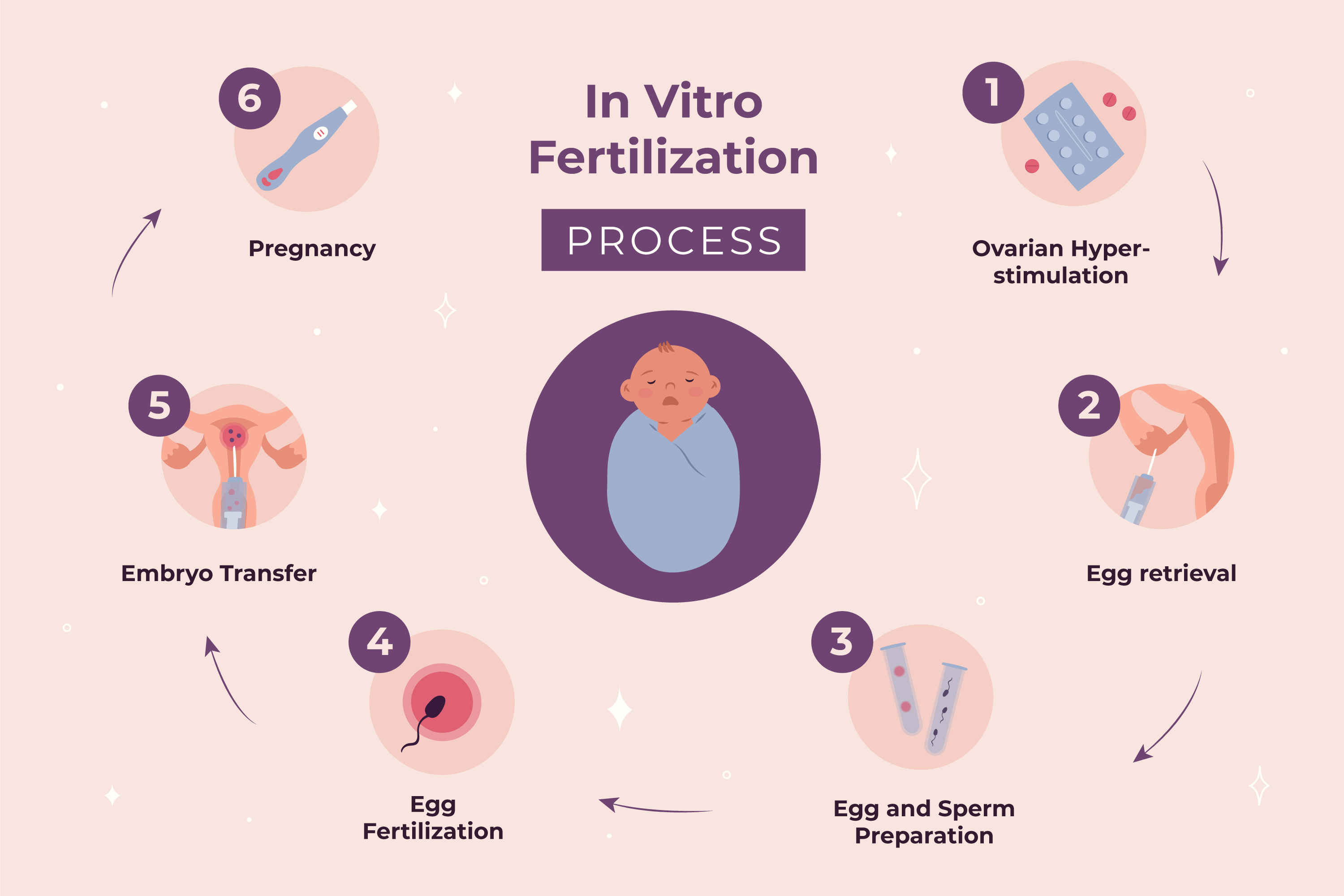
The IVF procedure takes 4 to 6 weeks from start to finish and involves five clear stages: initial consultation and fertility testing, ovarian stimulation with daily hormone injections for 10 to 12 days, egg retrieval under intravenous sedation, fertilisation and embryo development in the laboratory for 3 to 5 days, and finally embryo transfer to the uterus followed by a 10 to 14 day wait for the pregnancy test.
If you have been told that IVF is the next step in your journey, the unknown can feel more daunting than the procedure itself. Many couples arrive at their first appointment carrying months- sometimes years- of questions, anxiety, and quiet hope. This guide walks you through exactly what happens at each stage, day by day, so you know what to expect before you begin. For the bigger picture on IVF in India- including costs, success rates, and how to choose a clinic- read our complete guide to IVF treatment in India.
Book an Appointment with Dr. Aanchal Agarwal for all fertility related concerns.
What is the IVF procedure?
The IVF (In-vitro Fertilization) procedure is an assisted reproductive technology in which eggs are retrieved from a woman's ovaries, fertilised with sperm in a specialised laboratory, and the resulting embryo is transferred back into the uterus to establish pregnancy. The complete procedure happens in five distinct stages over 4 to 6 weeks.
The IVF procedure at a glance
Stage
What happens
Typical duration
1. Consultation and testing
Medical history, hormone tests, ultrasound, semen analysis, protocol planning
2 to 3 weeks
2. Ovarian stimulation
Daily hormone injections to mature multiple eggs, monitoring every 2 to 3 days
10 to 12 days
3. Egg retrieval
SEggs collected under sedation via transvaginal ultrasound-guided aspiration
20 to 30 minutes
4. Fertilisation and embryo development
Eggs fertilised with sperm in the lab (IVF or ICSI), embryos cultured for 3 to 5 days
3 to 5 days
5. Embryo transfer and pregnancy test
Embryo transferred to uterus, two-week wait, beta hCG blood test
14 days
Why understanding the procedure matters
For couples beginning fertility treatment, knowing what happens at each stage of IVF is not just about clinical information- it is about regaining a sense of control during a process that can otherwise feel deeply uncertain. Patients who understand the timeline, the purpose of each injection, and the realistic expectations at every stage tend to experience lower anxiety, better adherence to medication schedules, and stronger emotional resilience through the two-week wait. The IVF procedure is the same across reputable clinics in India- what varies is the protocol your doctor chooses based on your individual diagnosis, the laboratory standards, and the support you receive at each stage.
The IVF procedure stage-by-stage
The IVF procedure is sequenced precisely so that each stage builds on the previous one. Skipping ahead, mistiming an injection, or delaying a monitoring visit can compromise the entire cycle. Here is what happens at each stage.
Stage 1- Initial consultation and fertility testing
The IVF procedure begins long before the first injection. Your first appointment with a fertility specialist is a 45 to 60-minute conversation covering your medical history, lifestyle, previous fertility attempts, and any underlying conditions affecting either partner.
Following the consultation, both partners undergo a baseline fertility evaluation. For the woman, this typically includes blood tests for hormones (AMH, FSH, LH, oestradiol, TSH, prolactin), a transvaginal ultrasound to assess the ovaries and uterus, and screening for infections. For the man, a semen analysis evaluates sperm count, motility, and morphology. Depending on findings, additional tests such as a hysterosalpingogram (HSG) to check fallopian tubes, or genetic screening, may be recommended.
This diagnostic phase usually takes 2 to 3 weeks. Once results are in, your fertility specialist reviews them with you, recommends the most suitable IVF protocol (long, short, antagonist, or mild stimulation), and walks you through the treatment calendar. For a detailed breakdown of what each stage costs, read our guide to IVF cost in India.
Stage 2- Ovarian stimulation, Days 1 to 12
The active IVF cycle begins on Day 1 or Day 2 of your menstrual period. The goal of this stage is to encourage your ovaries to produce multiple mature eggs in a single cycle, rather than the single egg released during a natural cycle.
You will be given daily hormone injections- usually FSH (follicle-stimulating hormone), and sometimes LH- for 10 to 12 days. These are administered subcutaneously using a fine needle. Most patients learn to self-inject within a day or two; nurses at the clinic demonstrate the technique at your first injection appointment.
Alongside the daily injections, you will visit the clinic for monitoring every 2 to 3 days. Each monitoring visit involves a quick blood test to measure oestradiol levels and a transvaginal ultrasound to count and measure developing follicles. These visits typically take 30 to 45 minutes. Based on how your ovaries respond, your doctor adjusts the medication dose to optimise egg development without over-stimulation. Around Day 5 or 6, a second medication is added to prevent premature ovulation- either a GnRH antagonist or a GnRH agonist, depending on your protocol.
Once the follicles reach the right size (typically 18 to 20 mm), you will be given a final "trigger" injection of hCG or a GnRH agonist. This is timed precisely- usually in the evening- because egg retrieval will happen exactly 34 to 36 hours later.
Stage 3- Egg retrieval, Day 12 to 14
Egg retrieval, also called oocyte pick-up or OPU, is a short surgical procedure performed under light sedation. It happens 34 to 36 hours after the trigger injection, at the precise window when the eggs are mature but before they are released naturally.
You will be asked to fast from midnight the night before. On the morning of the procedure, an anaesthetist administers intravenous sedation- you remain asleep and feel nothing throughout the procedure, but it is not full general anaesthesia, so recovery is quick. The fertility specialist uses a thin needle guided by transvaginal ultrasound to gently aspirate the follicular fluid from each mature follicle. The fluid is immediately handed to the embryologist, who identifies and isolates the eggs under a microscope. The entire procedure takes 20 to 30 minutes.
You wake up in the recovery area within 15 to 20 minutes. Most patients are discharged 2 to 3 hours later. Mild cramping, light spotting, and bloating are common for 24 to 48 hours afterwards. Most women take the day of retrieval off work, and most return to normal activities within 1 to 2 days. Your clinic will tell you exactly how many eggs were retrieved before you leave.
Stage 4- Fertilisation in the laboratory
Within hours of retrieval, the embryology team prepares both the eggs and the sperm sample for fertilisation. There are two methods, and your doctor will have decided which is appropriate based on the semen analysis. Conventional IVF is used when sperm parameters are normal- the embryologist places approximately 50,000 to 100,000 motile sperm with each mature egg in a culture dish, allowing fertilisation to occur naturally. ICSI (Intracytoplasmic Sperm Injection) is used when sperm count, motility, or morphology is suboptimal- the embryologist selects a single healthy sperm under high magnification and injects it directly into each mature egg.
The day after fertilisation (Day 1), the embryologist checks for signs of successful fertilisation. Typically, 70 to 80 percent of mature eggs fertilise successfully. The fertilised eggs- now embryos- are placed in an incubator that mimics the conditions of the human body. By Day 3, healthy embryos have divided into 6 to 8 cells. By Day 5, the strongest reach the blastocyst stage- a complex structure of around 100 cells, with two distinct cell types: the inner cell mass (which becomes the baby) and the outer trophectoderm (which becomes the placenta).
Stage 5- Embryo transfer
Embryo transfer is a quick, painless procedure that does not require sedation. It happens either on Day 3 or Day 5 after egg retrieval (for a fresh transfer), or weeks to months later (for a frozen transfer).
On the day of transfer, you arrive at the clinic with a moderately full bladder, which lifts the uterus into a better position. The embryologist brings the selected embryo into the procedure room in a thin, flexible catheter. Your doctor passes the catheter gently through the cervix and into the uterus, guided by abdominal ultrasound, and the embryo is released at the optimal position. The whole procedure takes about 5 to 10 minutes, and most women describe it as similar to a Pap smear.
Fresh embryo transfer happens 3 or 5 days after egg retrieval, in the same cycle. Frozen embryo transfer (FET) involves freezing the embryos after fertilisation and transferring them in a later cycle. FET is increasingly common because it allows the body to recover from the intensity of ovarian stimulation, and is associated with comparable or improved success rates in many cases. For the next 10 to 14 days, you will continue progesterone supplementation to support the uterine lining and early implantation.
Factors that affect the IVF procedure outcome
The success of an IVF cycle depends on multiple variables that influence each stage of the procedure:
Maternal age- egg quality declines significantly after 35, with sharper drops after 38 and 40
Ovarian reserve (AMH levels)- determines how many eggs can be retrieved in a stimulation cycle
Sperm parameters- count, motility, and morphology influence whether IVF or ICSI is needed
Uterine health- fibroids, polyps, adenomyosis, or a thin endometrial lining can affect implantation
Embryo quality- graded by the embryologist based on cell division rate and blastocyst development
Laboratory standards- air quality, incubator type, embryologist experience, and use of time-lapse imaging
Underlying conditions- PCOS, endometriosis, thyroid disorders, and immune factors can each influence outcomes
Lifestyle factors- BMI, smoking, alcohol intake, sleep, and stress levels have measurable effects
What to expect physically and emotionally
Physical experience through the procedure
During stimulation- mild bloating, breast tenderness, mood swings, and a sensation of fullness in the lower abdomen
After egg retrieval- cramping and spotting for 24 to 48 hours, similar to period discomfort
After embryo transfer- no physical recovery needed, normal daily activities can resume the same day
During the two-week wait- most women feel physically normal; mild cramping or spotting around Day 6 to 10 may indicate implantation
Emotional experience through the procedure
Tell only two or three people you trust completely- IVF is not a topic that benefits from wide audiences or casual advice
Keep your routine where you can- walking, gentle exercise, work, and hobbies anchor you when the emotional weight builds
Use counselling support if your clinic offers it- most reputable fertility clinics have fertility-trained counsellors; this is not a weakness, it is a practical resource
Stay off fertility forums during the two-week wait- anecdotal reports, both success stories and losses, tend to intensify anxiety
Consult a specialist regardless of how long you have been trying
Previous miscarriage or failed fertility treatment
Seek expert review before attempting another cycle
Male partner with known sperm parameter issues
Both partners should consult together
IVF success rates by age group
Maternal age
Approximate live birth rate per IVF cycle
Under 35
40 to 50%
35 to 37
30 to 40%
38 to 40
20 to 30%
41 to 42
10 to 15%
Over 42
Under 5% with own eggs; 40 to 50% with donor eggs
Source: Cumulative data from the Society for Assisted Reproductive Technology (SART) and the European Society of Human Reproduction and Embryology (ESHRE), 2022 to 2024. Outcomes at Cloudnine Fertility may vary based on individual diagnosis and protocol. These figures represent the live birth rate per fresh IVF cycle. Cumulative success rates across three cycles are significantly higher, which is why most fertility specialists recommend planning for the possibility of multiple cycles from the outset.
Want to consult the best fertility in india? Please find the links below.
The IVF process from start to finish takes approximately 4 to 6 weeks and involves five stages: initial consultation and fertility testing, ovarian stimulation with daily hormone injections for 10 to 12 days, egg retrieval under intravenous sedation, fertilisation of eggs with sperm in the laboratory followed by 3 to 5 days of embryo development, and finally embryo transfer to the uterus with a beta hCG blood test 10 to 14 days later to confirm pregnancy.
Is an IVF procedure painful?
No, an IVF procedure is generally not painful. The daily stimulation injections cause only mild discomfort similar to a small pinch, and the egg retrieval is performed under intravenous sedation so you feel nothing during the 20 to 30 minute procedure. Most women experience mild cramping and bloating for 24 to 48 hours after egg retrieval, comparable to period discomfort. The embryo transfer itself does not require anaesthesia and feels similar to a routine Pap smear.
Is IVF 100% successful?
No, IVF is not 100% successful. Live birth rates per IVF cycle range from approximately 40 to 50% for women under 35, declining to under 5% for women over 42 using their own eggs. Success depends on maternal age, egg and sperm quality, embryo quality, uterine health, and laboratory standards. Many couples need more than one cycle to achieve pregnancy, which is why fertility specialists often recommend planning for the possibility of two to three cycles from the outset.
How many embryos are transferred in IVF?
In most cases, a single embryo is transferred. This is called elective single embryo transfer (eSET) and is the international standard of care because it significantly reduces the risks of multiple pregnancy while maintaining strong success rates with high-quality blastocysts. In specific cases such as advanced maternal age or previous unsuccessful cycles, your doctor may recommend transferring two embryos after discussing the implications with you.
Schedule your consultation Today!
Book your consultation with our fertility experts the first step toward your parenthood journey.