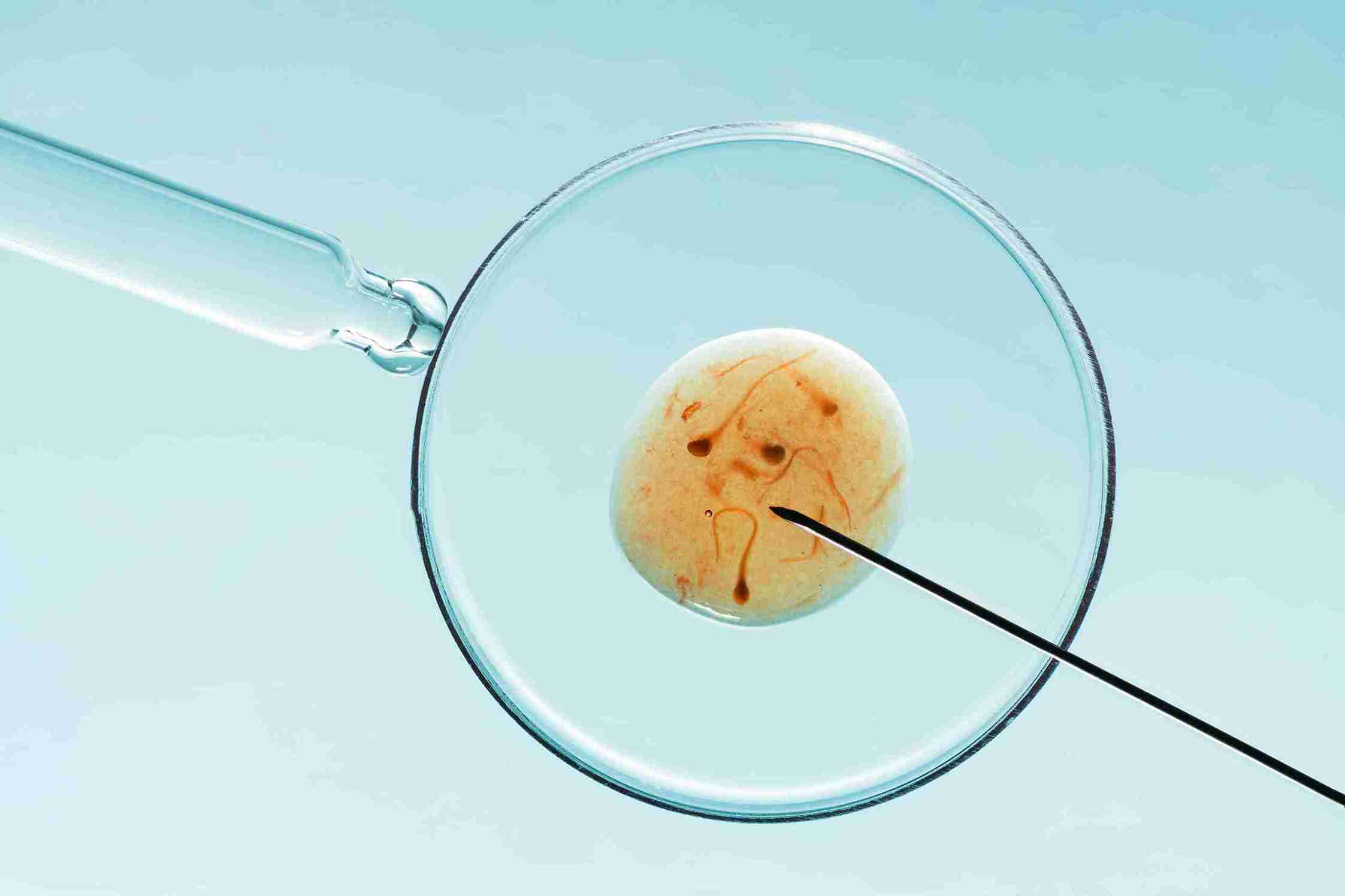
Conventional IVF uses higher-dose hormone injections to mature multiple eggs in one cycle and offers the highest success rate per attempt. Natural IVF uses no stimulation and retrieves the single egg you ovulate naturally, with the lowest cost and side effects, but the lowest yield. Mini IVF sits between them with low-dose stimulation, retrieving 3 to 5 eggs.
What are the three types of IVF?
In-vitro Fertilization (IVF) is a fertility treatment in which eggs are retrieved from the ovaries, fertilised with sperm in a laboratory, and the resulting embryo is transferred back into the uterus. The three main variants, conventional, mini, and natural IVF, differ mainly in how the ovaries are stimulated to produce eggs. The choice affects how many eggs you retrieve per cycle, your medication burden, your costs, and your per-cycle success rate. Cloudnine Fertility offers all three protocols, with the right one decided after a personalised assessment.
At-a-glance comparison:
Feature
Natural IVF
Mini IVF (Mild)
Conventional IVF
Stimulation medication
None or minimal
Low-dose oral and/or injectable
Higher-dose injectable
Eggs retrieved per cycle
Usually 1
Typically 3 to 5 (Depending on antral follicle count and AMH)
Typically 5 to 15 (Depending on antral follicle count and AMH)
Cycle duration
Around 2 weeks
Around 2 weeks
Around 2 weeks
Per-cycle success rate
Lower
Moderate
Highest in the comparison
Relative cost per cycle
Lowest
Moderate
Highest
OHSS risk
Negligible
Very low
Low to moderate, well managed
Best suited for
Specific clinical profiles
Selected lower-reserve cases
Most patients, broadest evidence base
Why this comparison matters in India
IVF in India is no longer a single, one-size-fits-all treatment. Advances in stimulation protocols, embryology, and the regulation introduced by the Assisted Reproductive Technology (Regulation) Act, 2021, have made it possible for fertility specialists to match the protocol to the patient, rather than the other way round. For some women, conventional IVF is unequivocally the right choice. For others, particularly those with very low ovarian reserve, a strong preference to avoid hormones, or specific medical contraindications, mini IVF or natural IVF may produce a better balance of outcome, cost, and physical experience.
The challenge is that protocol names are often used loosely online, and "mild" or "natural" can mean different things at different clinics. Understanding what each protocol actually involves, and who genuinely benefits from each, is the most important early decision in your fertility journey.
Natural IVF vs Conventional IVF vs Mini IVF: explained in detail
Each protocol shares the same egg retrieval, lab fertilisation, embryo culture, and transfer. The differences lie almost entirely in how, and how aggressively, the ovaries are stimulated.
Conventional IVF (standard stimulated IVF)
Conventional IVF is the most established and most studied IVF protocol worldwide. You take daily hormone injections for roughly 8 to 14 days to encourage your ovaries to mature multiple eggs in a single cycle, instead of the one egg they would naturally release. Throughout stimulation, you visit the clinic 3-4 times for a follicle-tracking scan and a blood test, might be advised. Once enough follicles reach the right size, a final "trigger shot" is given, and egg retrieval is performed 34 to 36 hours later under short anaesthesia.
The advantage is yield. With higher number of eggs retrieved on average, there is best chance of producing several high-quality embryos, allowing genetic testing if required, In first cycle best embryos are transferred and extra embryos frozen for future cycles. The trade-off is the highest medication burden, the highest cost per cycle, and a small risk of ovarian hyperstimulation syndrome (OHSS), which modern monitoring and medications keeps well controlled.
Mini IVF (mild stimulation IVF)
Mini IVF, sometimes called mild stimulation IVF or low-dose IVF, uses a much smaller amount of stimulation medication, often combining oral fertility tablets with a few low-dose injectable units instead of the full injectable course. The aim is to gently encourage the ovaries to produce a small batch of high-quality eggs, typically 3 to 5, while keeping side effects, cost to a minimum.
Cycle monitoring is similar in structure to conventional IVF but with lower drug volumes. Mini IVF appeals to women who have not responded well to conventional protocols (so-called "poor responders"), women with very low ovarian reserve, women who prefer a lower medication load, and women planning multiple cycles where the per-cycle cost matters. The main trade-off is fewer eggs per cycle, which usually means lower per-cycle success and more cycles to bank a meaningful number of embryos.
Natural IVF (unstimulated IVF)
Natural IVF uses no stimulation medication at all, or a very small amount only to prevent premature ovulation. The fertility team tracks your natural menstrual cycle with scans and blood tests, then retrieves the single egg you would naturally ovulate that month. That egg is fertilised in the lab, cultured, and transferred to the uterus, just as in conventional IVF.
The appeal is obvious: minimal medication, lowest cost per cycle, and the shortest, least disruptive treatment window. The reality is that with only one egg per cycle, the chance that the egg fertilises, develops into a healthy embryo, and results in a live birth is significantly lower than with conventional IVF. Many women need several natural cycles to achieve a pregnancy, which often makes the cumulative cost and time investment higher than they appear at first glance. Natural IVF is best understood as a specialised tool for specific clinical situations, not a default alternative to conventional IVF.
Who is each IVF protocol best suited for?
Suitability is decided by age, ovarian reserve (measured by AMH and antral follicle count), diagnosis, prior IVF response, and personal preferences. The points below are guidelines for your specialist to weigh your full profile.
• Conventional IVF tends to be the right fit when you are under 40 with a normal or high ovarian reserve, you have unexplained infertility or tubal factor infertility, you are pursuing PGT-A (preimplantation genetic testing for aneuploidy), you are freezing embryos alongside trying for pregnancy, or you want the highest chance of success per cycle.
• Mini IVF tends to be the right fit when you have a low AMH or a poor response to previous conventional cycles, you are 38 or older with diminished ovarian reserve, you have a personal preference for fewer injections, you cannot tolerate full-dose stimulation or there is any medical condition, where full dose is not safe/contradicted, or you are budgeting across multiple cycles where keeping per-cycle cost down matters.
• Natural IVF tends to be the right fit when you have a strong objection to hormone stimulation, you have a medical contraindication to stimulation drugs, you have very few antral follicles where higher doses would not produce more eggs anyway, you are exploring IVF gradually, or you are combining cycles with later-stage IVF planning.
• None of the three is automatically suitable when the underlying cause of infertility has not been investigated, when there are untreated conditions such as severe endometriosis, fibroids distorting the uterine cavity, or hydrosalpinx, or when male-factor severity has not been assessed. These need to be addressed first, regardless of which protocol you eventually choose.
How to decide which IVF type is right for you
Two areas matter: the diagnostic work that points you toward the right protocol, and the personal trade-offs only you can weigh. Treat them as complementary, not competing.
The clinical questions to answer first
• What is your AMH and antral follicle count? Both are needed to predict how your ovaries will respond to stimulation, and they directly inform which protocol is realistic.
• What is the suspected cause of infertility in both partners? A blocked fallopian tube, severe endometriosis, or significant male-factor infertility each shifts the calculus.
• Have you had a previous IVF cycle? If so, how did your ovaries respond? Past response is the best single predictor of future response.
• Are you planning genetic testing of embryos? PGT-A typically requires several embryos to be useful, which favours conventional IVF.
• Are you trying to bank embryos for the future, or only for one transfer? The first goal favours yield-maximising protocols.
The personal questions to weigh honestly
• How do you feel about daily injections, frequent scans, and a 2-3 week treatment window?
• How many cycles can you realistically commit to, financially and emotionally? A lower per-cycle cost loses its appeal if you need three of those cycles.
• How important is the highest possible chance of success in the next cycle, versus a gentler experience over several cycles?
• Are there work, travel, or caregiving commitments that make a longer treatment window genuinely difficult?
• How do you feel about freezing embryos for later use, including the long-term storage decisions that come with that?
Bring the answers to your first consultation. A specialist who knows both your clinical profile and your personal priorities is far better placed to recommend the right protocol than any online comparison alone.
When to see a fertility specialist
The IVF protocol decision should not be made before a thorough fertility assessment. The signs below suggest it is time to book one.
Your situation
Recommended action
You are under 35 and have been trying to conceive for 12 months without success
Book a fertility assessment for both partners before discussing IVF protocols
You are 35 or older and have been trying for 6 months without success
Book a fertility assessment promptly. Protocol choice is age-sensitive
You have already done one IVF cycle that did not result in pregnancy
Review with a specialist to understand your response and whether the protocol should change
You have low AMH or have been told you have diminished ovarian reserve
Book an assessment to compare conventional, mini, and natural IVF for your specific profile
You have PCOS, endometriosis, or fibroids
See a specialist to understand how the underlying condition affects IVF protocol choice
You strongly prefer minimal medication or have a contraindication to hormone stimulation
Discuss whether mini or natural IVF is realistic for you, given your reserve and diagnosis
Speak to a Cloudnine Fertility specialist. A 60-minute consultation, along with the right tests, is usually enough to determine which IVF protocol best fits your profile and goals. Book a fertility consultation at a Cloudnine Fertility centre near you.
Numbers help you compare protocols realistically. The figures below are typical of well-equipped Indian fertility centres and are based on published vitrification and IVF outcome literature. Live birth rates are quoted per started cycle and decline with age across all three protocols. Cumulative live birth rates (across multiple cycles) are higher than the per-cycle figures shown.
Age band
Conventional IVF live birth per cycle
Mini IVF live birth per cycle
Natural IVF live birth per cycle
Relative cost per cycle
Under 35
Around 40 to 50%
Around 20 to 30%
Around 7 to 10%
Conventional > Mini > Natural
35 to 37
Around 30 to 40%
Around 15 to 25%
Around 5 to 8%
Conventional > Mini > Natural
38 to 40
Around 20 to 28%
Around 10 to 18%
Around 3 to 6%
Conventional > Mini > Natural
Over 40
Under 15%
Under 12%
Under 4%
Conventional > Mini > Natural
Two notes on reading this table. First, the gap between conventional and the other two protocols narrows as ovarian reserve drops, because high-dose stimulation cannot create eggs that are not there. Second, lower per-cycle cost does not always mean lower total cost. If a natural or mini cycle needs to be repeated several times to achieve a live birth, the cumulative outlay can exceed a single conventional cycle. Your specialist will discuss your specific numbers during planning.
Want to consult the best fertility in india? Please find the links below.
Find clear, trusted answers to the most common questions about IVF—designed to guide and support you every step of the way.
Is mini IVF better than regular IVF?
Not better in the abstract, but better for some women. Mini IVF wins on cost, side effects, and medication burden. Conventional IVF wins on per-cycle success rate and the number of embryos available for testing or freezing. For a woman with a normal ovarian reserve and good general health, conventional IVF will usually deliver a higher chance of pregnancy in fewer cycles. For a woman with low reserve who has not responded to conventional protocols, mini IVF can be the more realistic option.
Is natural IVF cheaper?
Per cycle, yes, natural IVF is the lowest-cost protocol because it uses minimal or no stimulation medication and far fewer monitoring visits. Across a complete fertility journey, the picture changes. Because each natural cycle yields only one egg, success rates per cycle are significantly lower, and many women need several cycles. The cumulative cost can match or exceed a single conventional cycle. The honest comparison is the total cost per live birth, not the cost per attempt.
Who is a candidate for natural IVF?
Natural IVF is most appropriate for women who have a regular ovulatory cycle, very low antral follicle counts where higher stimulation doses would not yield more eggs, a strong personal or medical reason to avoid stimulation drugs, or a preference to take a gentler stepwise approach. It is rarely the right first-line choice for women with normal ovarian reserve who want the highest chance of success per cycle.
What is mild stimulation IVF?
Mild stimulation IVF is another name for mini IVF. It uses lower doses of fertility medication, often a combination of oral fertility tablets and a smaller course of injectables to retrieve a smaller, higher-quality batch of eggs, typically 3 to 5. The protocol is shorter than conventional IVF, has fewer scans, lower OHSS risk, and lower cost, in exchange for a lower yield per cycle.




_11zon.jpg)