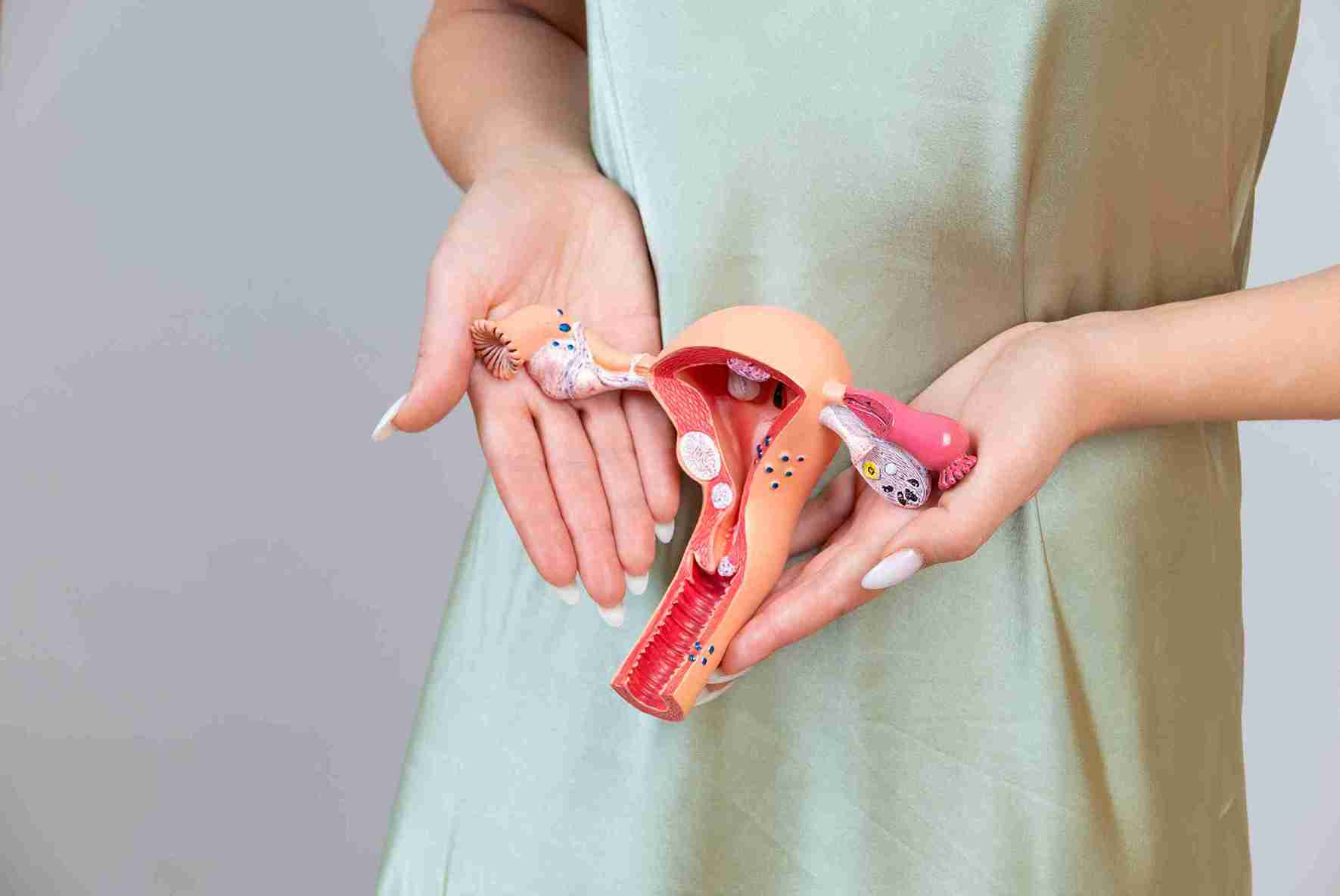
Premature ovarian insufficiency (POI) is when the ovaries stop working normally before age 40, causing irregular or absent periods, low oestrogen and reduced fertility. It is not the same as menopause: ovarian function can fluctuate, and around 1 in 20 women with POI conceive naturally. Updated 2024 guidelines estimate POI affects roughly 3.5% of women.
What is premature ovarian insufficiency?
Premature ovarian insufficiency (POI), also called primary ovarian insufficiency or, as it was formerly termed, premature ovarian failure, signifies that the ovaries cease to function normally before a woman reaches the age of forty. The pituitary gland in the brain pushes harder to stimulate them, so FSH (follicle-stimulating hormone) rises while oestrogen falls. The word insufficiency is deliberate — function is reduced and unpredictable rather than switched off. That distinction shapes everything that follows — your symptoms, your long-term health risks, and, importantly, your fertility options.
Infrequent or absent for 4 or more months (oligo/amenorrhoea)
Fertility
Reduced but not always zero, occasional ovulation can occur
Why an early, accurate diagnosis matters
If you are 32 with a raised FSH result, it doesn’t automatically mean menopause, but a proper work-up is necessary rather than reassurance alone. POI is frequently missed: studies show a median delay of around two years to diagnosis, a quarter of women wait more than five years, and half see a clinician three or more times before the cause is identified. That delay matters because low oestrogen quietly affects bone density and heart health long before fertility becomes the main concern. An early, accurate diagnosis lets you start protective hormone therapy at the right time and make fertility decisions while you still have choices, instead of discovering the picture years later.
POI, early menopause, and low ovarian reserve: the differences that matter
These three terms are often used interchangeably, but they represent distinct conditions and carry different likelihoods. Getting the distinction right is the single most useful thing you can take from this page.
POI vs early menopause
Menopause is permanent: ovulation stops and does not return. POI is not absolute. In POI, the ovaries can flicker back into activity, so periods may come and go, and ovulation can happen unexpectedly. This is why POI is described as insufficiency rather than failure, and why “early menopause” is an incorrect label for a woman in her twenties or thirties. The practical consequence? A small, unpredictable chance of conceiving naturally remains, so use contraception if you wish to avoid pregnancy.
POI vs low ovarian reserve
Low ovarian reserve (a reduced number of eggs) is not the same as POI. With low reserve, the ovaries usually still work normally — you ovulate, periods are regular, and FSH may be near normal. It all comes down to how many eggs you have left, and what happens next depends mostly on your age. POI is a step beyond that — FSH is high (above 25 IU/L), periods are infrequent or absent, and the hormonal signalling itself has broken down. The good news is that research shows if you do become pregnant with POI, your risk of miscarriage is about the same as it is for other women your age. If you want the details on reserve markers, see what an AMH test can and cannot tell you.
Can you still get pregnant with POI? The 5% reality
Yes, but the honest figure is small. Roughly 5% of women with POI conceive spontaneously, and it may be unpredictable, unplanned, and cannot be “boosted” reliably. For most women hoping to carry a pregnancy, donor-egg IVF offers by far the highest success rates, because the limiting factor in POI is egg supply rather than the uterus. Using your own eggs is sometimes attempted if a few follicles remain, but success levels are low and depend on residual ovarian activity. A fertility specialist can assess what, realistically, is on the table for you.
What causes premature ovarian insufficiency?
In most cases, roughly 70-90% of the time, no specific cause is found; this is called idiopathic (no identifiable cause) POI. Where a cause is identified, it usually falls into one of these groups:
● Genetic factors: Chromosomal and gene changes are leading causes, most notably Turner syndrome and a Fragile X (FMR1) gene premutation. The premutation is found in about 1-5% of isolated POI cases and around 13% of cases where POI runs in the family.
● Autoimmune disorders: The immune system mistakenly attacks ovarian tissue, often alongside thyroid disease (thyroiditis) or adrenal disease (Addison’s disease).
● Medical treatments (iatrogenic): Chemotherapy, radiotherapy, and pelvic or ovarian surgery can damage follicles or the ovary’s blood supply. (Iatrogenic means caused by medical treatment.)
● Infections: Rarely, mumps, cytomegalovirus, or tuberculosis can injure ovarian tissue.
● Environmental exposures: Smoking and prolonged exposure to certain chemicals or pesticides may accelerate hair follicle loss.
What to do if you are diagnosed with POI
A POI diagnosis calls for two parallel plans, one for your long-term health and another for fertility, ideally started together.
Protect your long-term health.
Because POI removes oestrogen’s protection decades early, this is the priority even if fertility is not on your mind:
● Hormone therapy: Hormone therapy with oestrogen (and a progestogen added when needed to protect the uterine lining) can help relieve symptoms and protect bone health when used until around the average age of menopause (about 51). Your specialist will choose the hormone type and route.
● Bone and heart care: Adequate calcium and vitamin D, weight-bearing exercise, not smoking, and periodic bone-density and cardiovascular checks.
● Emotional support: Receiving a POI diagnosis can be emotionally challenging; seeking counselling or joining peer support groups is an important and valuable part of comprehensive care.
Plan for fertility early.
See a fertility specialist as soon as possible to map your options — spontaneous conception, donor-egg IVF, or, in selected cases, using your own eggs. If you are weighing treatment in your late thirties, IVF after 35 explains how age affects the statistics. Genetic testing (including for the Fragile X premutation) is also worth discussing.
How much do POI tests and fertility treatment cost in India?
Costs below are indicative national ranges across Cloudnine Fertility centres and depend on the city and centre, the extent of the work-up, whether a treatment is a day-care or an admitted procedure, and, for donor-egg routes, the donor programme and embryology fees. Treatment costs are based on Cloudnine’s audited pricing. However, the hormone blood tests required for diagnosing POI are not itemised separately and should be confirmed with the centre—these should not be estimated.
Test/Procedure
What is it For
Estimated Cost
FSH blood test
Confirms the diagnosis (raised FSH)
₹800-1800
AMH test
Estimates remaining egg supply
₹5000*
Oestradiol blood test
Supports diagnosis (low estrogen)
₹1350*
Pelvic ultrasound (antral follicle count)
Counts resting follicles, checks ovaries
₹900-2600*
Karyotype + Fragile X (FMR1) test
Looks for a genetic cause
₹8000-24000*
Thyroid / autoimmune screen
Checks for associated autoimmune causes
₹800-2700*
Egg freezing
Fertility preservation (only if reserve remains)
~₹82,500 base (incl. 3 months storage) + consumables; stimulation medicines ~₹70,000-95,000 extra
IVF / ICSI
Treatment cycle (own or donor eggs)
~₹1.15-2.5 lakh all-in per cycle (base ICSI ~₹1.2-1.3L + consumables; medicines on actuals)
Frozen embryo transfer (FET)
Transfer of a thawed embryo
~₹35,000-60,000 + consumables
Donor-egg IVF
Highest-success route in most POI
~₹3.5 lakh + donor-programme/agency fees ~₹70,000-1,00,000 (varies by city)
Hormone therapy (HRT)
Ongoing symptom and health protection
₹1000-3600*
Figures shown in green are from Cloudnine’s audited pricing (indicative national ranges). A specialist consultation is the right place to get a personalised, itemised estimate.
Find clear, trusted answers to the most common questions about IVF—designed to guide and support you every step of the way.
Is POI hereditary? Should my younger sister get tested?
It can be. A Fragile X (FMR1) premutation can be passed down in families. POI is more likely if there is a family history of this gene change or early menopause. Guidelines suggest all women with POI should have Fragile X testing. Close female relatives should also consider consulting a specialist about testing and fertility options, especially if they plan to delay having children.
Can POI be reversed naturally with supplements or diet?
No. There is no supplement, diet or lifestyle change proven to restore ovarian function or “reverse” POI, and any claims otherwise are not supported by scientific evidence. A nutritious diet, regular exercise, and not smoking genuinely help your overall and bone health, but they treat the consequences of low oestrogen, not the underlying condition. Be cautious of products marketed as POI cures.
Will I definitely need donor eggs to conceive?
Not always. For most women who want to carry a baby in their uterus, using donor eggs offers the greatest chance of success. About 5% of women with POI become pregnant naturally. Trying with your own eggs is possible if some follicles remain, but the chances of success are low. It depends on your individual hormone levels and scan findings, which is why an early assessment by a specialist is valuable.
Should I urgently freeze my eggs if I have just been diagnosed?
The honest answer is that it's too late for egg freezing once POI is established, because egg supply is already very low. Freezing is most useful before POI fully develops , for example in women at known risk, carriers of the Fragile X premutation, or before chemotherapy or radiotherapy. A specialist can quickly tell from your hormone levels and follicle count whether preservation is realistic for you.