Mature eggs, or oocytes, are typically surrounded by a shell or a glycoprotein coat called a zona pellucida. This coat protects and safeguards a fertilised egg on its way to becoming an embryo and eventually, a blastocyst (5th to 6th day post fertilisation). An embryo must hatch out of its zona, make physical contact with the lining of the uterus (endometrium) and then implant itself. This process is called hatching. Under normal conditions, the zona gradually thins and ruptures, allowing the blastocyst to escape. If the zona fails to hatch, the embryo is unable to implant and pregnancy consequently fails to occur. It is hence thought that one of the reasons for the failure of implantation of good quality embryos in vitro fertilisation (IVF), is the inability of an embryo to hatch.
Book an Appointment with Dr. Sumana Gurunath for fertility concerns
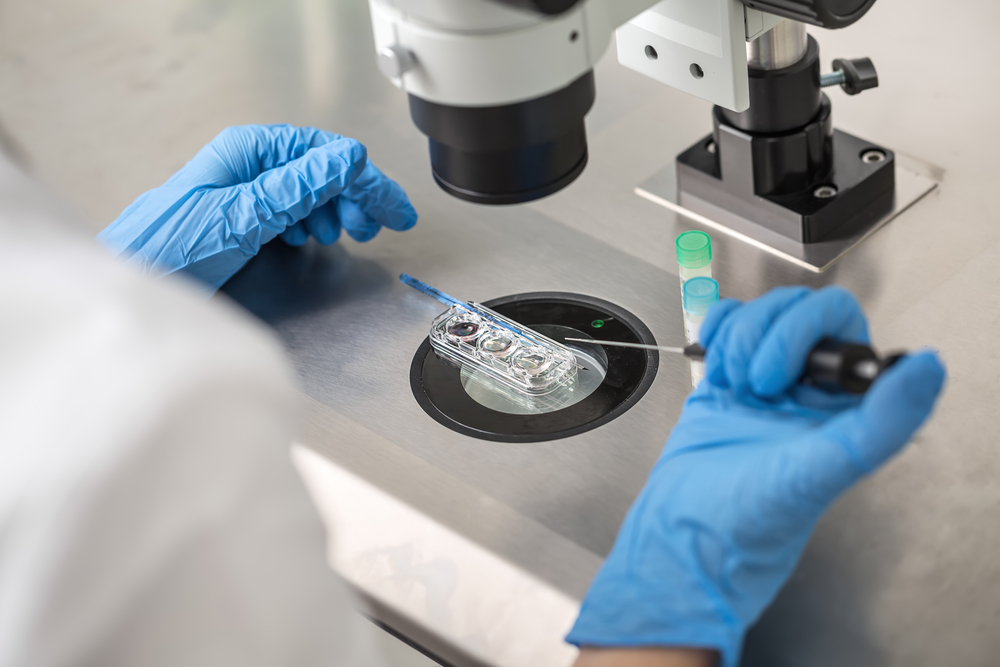
Assisted hatching is a procedure carried out on embryos immediately prior to embryo transfer during an IVF cycle to improve their ability to implant. The aim of assisted hatching is to create a hollow in the zona without causing a complete hole. This allows for easy hatching of the embryo and prevents injury to its cells. Assisted hatching can be performed through physical or chemical methods. Of these, laser is considered to be the safest and most reliable. The advantage of laser lies in its ability to make a precise, accurate and quick depression in the zona.
There are certain categories of women who may benefit from assisted hatching based on current evidence. These include women over 37 years of age, those with previous failed IVF cycles or frozen embryo transfers, and those with thick zonas. Evidence shows that there may be an improvement in clinical pregnancy rates using this technique, but there is no evidence to suggest a positive impact on live birth rates. Available evidence does not recommend assisted hatching for all women. You may be recommended laser assisted hatching if you are over 35 years, if you have had prior failed IVF cycles or if you are undergoing frozen embryo transfer cycles. There may be an improvement in clinical pregnancy rates as a result.

Yes. As the laser creates only a dimple in the zona and not a complete hole, no damage to the inner cells of the embryo is caused. A laser does not increase the risk of physical or chromosomal abnormalities in a baby.