Blocked fallopian tubes cause around a quarter of female infertility. In India, alongside pelvic infection, endometriosis, and past surgery, a leading and often-missed cause is genital tuberculosis. Some blockages can be opened; many cannot, and IVF bypasses the tubes entirely. The right path depends on which tube is affected, where, and how badly.
What a Blocked Fallopian Tube Actually Is
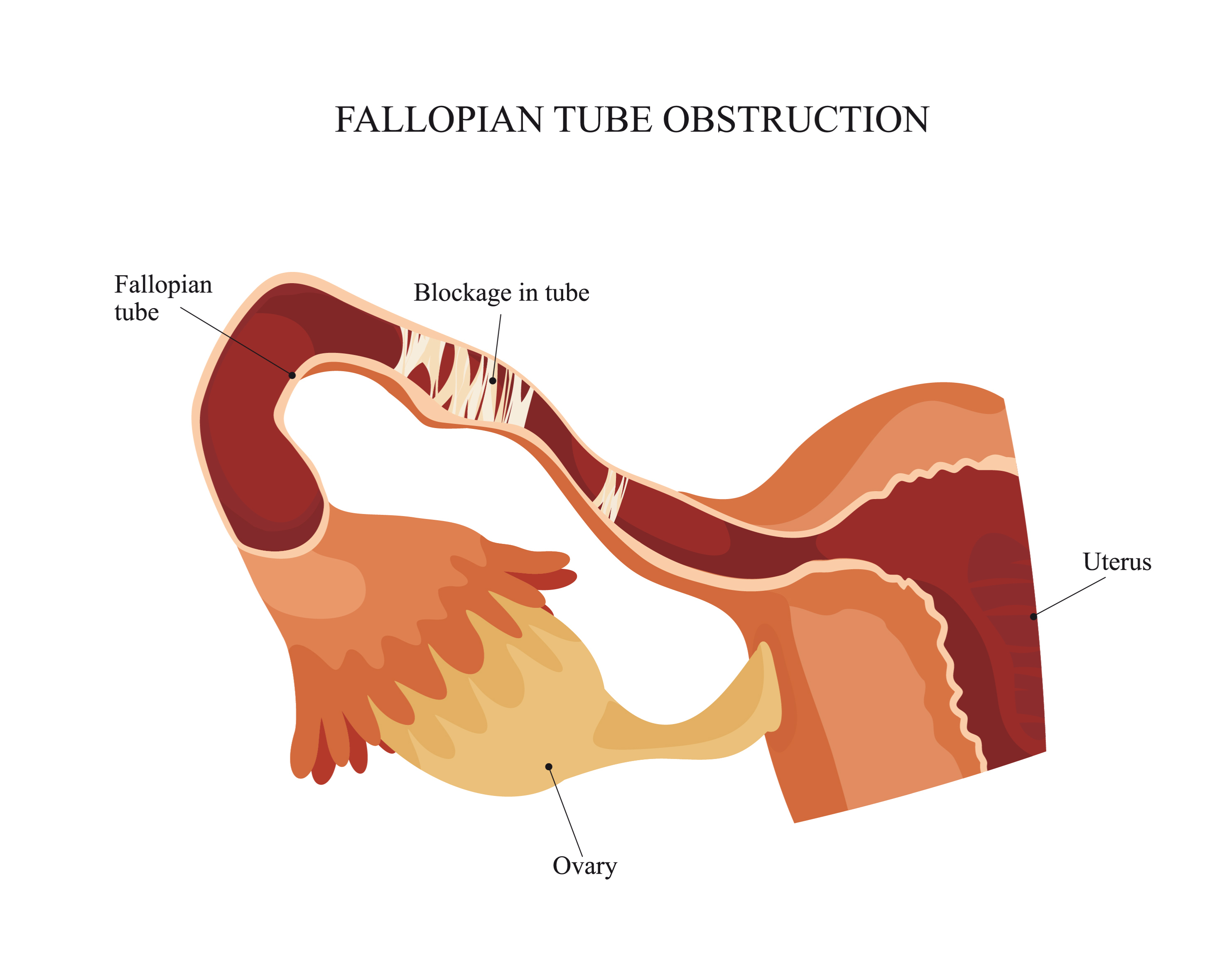
The fallopian tubes are two thin channels that carry the egg from the ovary towards the uterus, where sperm normally meet the egg. When a tube is scarred, narrowed or sealed, known as tubal factor infertility (infertility caused by blocked or damaged tubes), the egg and sperm cannot meet, or a fertilised egg cannot reach the womb. Where the blockage sits matters enormously, because it decides whether the tube can be repaired or whether IVF is the better route.
Type of blockage
Where it is
What it usually means for treatment
Proximal
Near the uterus (the part of the tube closest to the womb)
Sometimes opened with a fine guidewire (cannulation), a mucus plug or spasm can mimic a true block
Distal
At the far, fimbrial end near the ovary
Reconstructive surgery has a limited role; IVF is often the more reliable route
Hydrosalpinx
A distal block where the tube fills with fluid
Usually needs treating (removal or clipping) before IVF- see below
Bilateral
Both tubes blocked
Natural conception is not possible; IVF bypasses the tubes
Why Tubes Block - The Indian Context
Most international pages on this topic list pelvic infection, endometriosis and past surgery as the main causes, and those matter here too. But they miss the cause that is distinctly important in India: genital tuberculosis (TB infection of the reproductive organs). It is estimated to account for a meaningful share of infertility in Indian women; the fallopian tubes are involved in almost all cases, and it tends to strike younger women. Crucially, it is often silent; many women have no chest symptoms and no history of TB, and the first sign is difficulty conceiving. This is why a young Indian woman with blocked tubes and no obvious infection history should be assessed for genital TB rather than assumed to have “unexplained” damage. It changes both the treatment and the conversation about what comes next.
Can Blocked Tubes Be Opened, and Should You Have Surgery or IVF?
Can a blocked tube actually be opened?
Sometimes, it depends on the type and extent. A proximal block close to the uterus is occasionally just a mucus plug or spasm and can be cleared with a fine guidewire passed through the cervix (cannulation). A distal block at the far end is harder: surgery to rebuild the fimbrial end (the delicate, finger-like opening) can restore patency, but the tube often does not work well afterwards even when it looks open, and there is a raised risk of ectopic pregnancy. Where tubes are badly scarred, as is common after genital TB, reconstruction rarely succeeds, and IVF is the realistic route.
Surgery versus IVF - the decision framework
There is no single right answer; the choice turns on a few specific factors:
• Surgery may be worth considering for younger women with mild, distal disease, one blocked tube, and no other infertility factors, if natural conception within a defined window is the goal.
• IVF is usually the better route when both tubes are blocked, when there is a hydrosalpinx, when damage is severe (including most TB-related damage), when age or ovarian reserve is a concern, or when there is also a male-factor or other issue. IVF bypasses the tubes altogether, so their condition no longer matters for fertilisation.
A diagnostic HSG test for the fallopian tubes usually maps the blockage first; a diagnostic laparoscopy (keyhole surgery to view the pelvic organs) gives the clearest picture and can treat some problems in the same sitting.
One tube blocked, the other open - can you conceive naturally?
Yes, it is possible. If one tube is healthy and you ovulate from either ovary, pregnancy can happen naturally, though the monthly chance is lower than with two open tubes. Many specialists suggest a defined period of trying, often with timed cycles, before moving to treatment, provided age, ovarian reserve, and sperm quality are reasonable. If the open tube has any damage or there is a hydrosalpinx on the other side, that calculation changes, so confirm your specific picture with a specialist rather than relying on the general rule.
The Main Causes of Blocked Fallopian Tubes
Most tubal blockage comes down to scarring from infection, inflammation or surgery. The common causes are:
• Pelvic inflammatory disease (PID): infection of the upper reproductive organs, most often from untreated sexually transmitted infections such as chlamydia or gonorrhoea, the single most common cause worldwide.
• Genital tuberculosis, a leading cause in India specifically, is frequently silent and a frequent reason for severe, bilateral tubal damage.
• Endometriosis: tissue similar to the womb lining growing outside the uterus, forming adhesions that distort or seal the tubes.
• Previous pelvic or abdominal surgery: operations such as removal of ovarian cysts or fibroids, or a ruptured appendix, can leave scar tissue (adhesions).
• Past ectopic pregnancy: a pregnancy in the tube, and its treatment, can permanently damage that tube.
• Hydrosalpinx: a fluid-filled, sealed tube, usually the end result of one of the causes above, and a problem in its own right before IVF.
What to Do If You Have Been Diagnosed
Your practical next steps
1. Confirm the type and location of the blockage, proximal, distal, one tube or both, with an HSG, and a laparoscopy where needed.
2. In India, ask specifically about a genital TB assessment if you are young, have no obvious infection history, or have severe or bilateral damage.
3. If a hydrosalpinx is present, discuss treating it (removal or clipping) before any IVF cycle.
4. Decide on surgery versus IVF with your specialist, weighing your age, the extent of damage, and any other fertility factors.
5. Agree on a timeline so you are not waiting indefinitely on a low-probability natural conception.
Questions to ask your specialist
• Is my blockage proximal or distal, and is it in one tube or both?
• Could genital TB be the cause, and should I be tested for it?
• Do I have a hydrosalpinx, and if so, should it be treated before IVF?
• Given my age and overall picture, is surgery realistic, or is IVF the better route?
When IVF, Not Surgery, Is the Right Call
Some situations point clearly towards IVF, and waiting on surgery or natural conception only costs time:
Your situation
Why surgery isn’t the answer
What usually helps
Both tubes blocked
Natural conception is not possible
IVF, which bypasses the tubes
Hydrosalpinx present
Fluid lowers IVF success until treated
Removal or clipping of the tube, then IVF
Severe TB-related damage
Reconstruction rarely restores function
Full anti-tubercular treatment, then IVF
Coexisting male-factor infertility
Open tubes alone won’t solve it
IVF with ICSI (a single sperm is injected into an egg)
IVF success is strongly age-dependent, so per-cycle figures vary widely from one woman to the next; treat any single percentage with caution and ask for figures relevant to your age and situation. The clearest, best-evidenced point is about hydrosalpinx: an untreated fluid-filled tube roughly halves IVF success, and treating it first restores the odds.
Scenario
Typical approach
What the evidence shows
Strength
Untreated hydrosalpinx before IVF
(none)
IVF live-birth rates cut by roughly half vs no hydrosalpinx
High
Hydrosalpinx treated before IVF
Salpingectomy or tubal clipping
Clinical pregnancy and live-birth rates significantly improved
High (randomised + reviews)
Distal tubal block, IVF vs surgery
IVF is preferred in most cases
Surgery outcomes generally poor except in selected young, mild cases
Moderate - high
Bilateral block / severe TB damage
IVF
Bypasses the tubes; the realistic route to pregnancy
Established practice
Want to consult the best fertility in india? Please find the links below.
Find clear, trusted answers to the most common questions about IVF—designed to guide and support you every step of the way.
What is the main cause of blocked fallopian tubes?
Worldwide, the leading cause is pelvic inflammatory disease, an infection of the upper reproductive organs, usually from untreated chlamydia or gonorrhoea, which scars the tubes. In India, genital tuberculosis is also a major and frequently overlooked cause, often with no symptoms beyond difficulty conceiving.
Can I get pregnant with one blocked tube?
Yes, it is possible if the other tube is healthy and you are ovulating. The monthly chance is lower than with two open tubes, but natural conception still happens. If the open tube is also damaged, or there is a hydrosalpinx on the blocked side, the odds change, so confirm your specific picture with a specialist.
Can blocked fallopian tubes be opened naturally?
No reliable home or herbal method opens a truly blocked tube. Fertility massage, castor oil packs, and similar remedies are not supported by evidence and can delay effective treatment. A genuine blockage needs proper assessment and is addressed either with a medical procedure or by bypassing the tubes with IVF.
What is the difference between a proximal and a distal blockage?
A proximal blockage sits near the uterus, at the start of the tube; it is sometimes just a mucus plug or spasm and can occasionally be cleared with a fine guidewire. A distal blockage sits at the far end near the ovary; it is harder to treat well, and IVF is often the more dependable route.