ICSI (Intracytoplasmic Sperm Injection) is not significantly painful for most patients. The daily stimulation injections feel like a brief pinch, egg retrieval is done under sedation and is pain-free during the procedure, and embryo transfer feels similar to a Pap smear (a routine cervical screening test). Mild period-like cramping for one to two days afterward is the most common discomfort.
Is ICSI Painful? The Short Answer
ICSI is performed inside an IVF cycle, and the question “Is ICSI painful?” really means “What does the whole cycle feel like physically?” Each stage has its own honest answer - some involve mild discomfort, others involve none at all because they happen in the lab or under sedation. The table below sets out what is actually done at each stage and the realistic pain level reported by patients.
ICSI Stage
What Is Actually Done
Realistic Pain Level
Stimulation injections (10–12 days)
Daily subcutaneous (just under the skin) hormone injections, usually self-administered into the lower abdomen using fine, insulin-like needles.
Mild – most patients describe it as a brief sting or small pinch; many feel almost nothing.
Monitoring scans and blood tests
Transvaginal (internal) ultrasound and blood draws every 2–3 days during stimulation.
Mild – ultrasound is briefly uncomfortable, not painful; blood draws are routine.
Egg retrieval (15–20 minutes)
A fine needle is guided through the vaginal wall to aspirate eggs from each follicle (fluid sac in the ovary).
None during the procedure – performed under sedation; mild cramping afterwards similar to period pain, lasting 1–2 days.
ICSI lab step
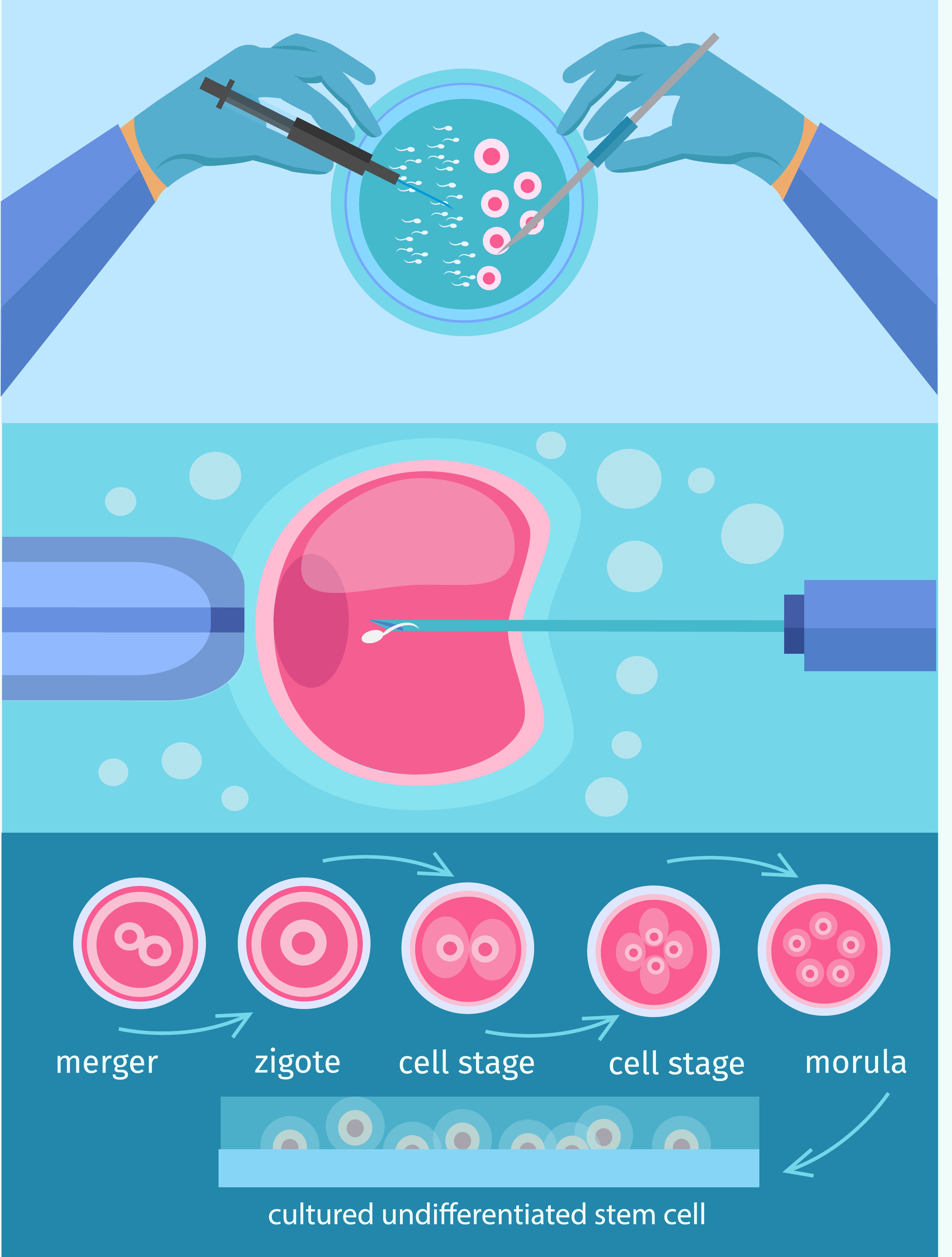
Embryologist injects a single sperm into each mature egg using a microscopic needle.
None – happens entirely in the lab; the patient is not present and feels nothing.
Embryo transfer
Embryo placed into the uterus through a thin catheter via the cervix.
Minimal – most patients say it feels similar to a Pap smear (cervical screening test); no anaesthesia needed.
Two-week wait + pregnancy test
Light activity resumes; blood pregnancy test 10–14 days after transfer.
None physically – emotional strain is real and often described as the hardest part.
The ICSI lab step itself - the actual sperm injection into the egg - happens entirely under a microscope in the embryology lab. The patient is not present and feels nothing. So when people ask “Is ICSI painful?” they are usually asking about the IVF cycle that surrounds it, not the lab procedure.
Why So Many Indian Couples Worry About ICSI Pain
ICSI is one of the most recommended fertility treatments in India because male-factor infertility now contributes to roughly 40–50% of all infertility cases, and the Indian Council of Medical Research (ICMR) places overall infertility at 10–15% of married couples. Despite how routine it has become - with thousands of cycles performed each year in Gurgaon and Delhi NCR alone - the procedure remains shrouded in silence and rumor.
Most worry about pain comes from three sources: misunderstanding what is actually done in the lab versus what is done to the body, second-hand stories that conflate IVF cycles with major surgery, and a general lack of stage-by-stage information in patient resources. The reality is that ICSI is an outpatient (no overnight hospital stay) procedure for the female partner, with most patients back to their normal routine within one to two days of egg retrieval and the same day after embryo transfer. The emotional weight of the cycle, including the two-week wait for the pregnancy test, is often reported as harder than the physical experience.
What Each Stage of ICSI Actually Feels Like
This is the stage-by-stage walkthrough of a typical ICSI cycle at a Cloudnine Fertility centre, focused specifically on what the female partner - and the male partner - actually feel at each point.
These are the injections most people worry about, often unnecessarily. The medications are subcutaneous (just under the skin) and are usually self-administered into the lower abdomen using fine insulin needles. The lower abdomen has a small amount of fatty tissue, which makes the injection smoother and less sensitive than other sites. Most patients describe the sensation as a brief sting or pinch - similar to a flu shot or barely noticeable after the first few. A small amount of soreness, bruising, or redness at the injection site is normal and resolves on its own.
Practical tips that help: rotate injection sites, hold an ice pack against the area for a minute before injecting to numb it, let refrigerated medication warm to room temperature briefly before use, and ask a partner or family member to help if needles cause anxiety. Trigger injections (the final shot that completes egg maturation, given 36 hours before retrieval) are also subcutaneous in most protocols and feel no different from the daily injections.
Stage 2: Monitoring scans and blood tests
During stimulation, transvaginal (internal) ultrasound and blood tests are done every two to three days to track follicle (the fluid-filled sac that holds the developing egg) growth. The ultrasound is briefly uncomfortable but not painful - it takes a few minutes. The blood tests are routine. Neither stage requires recovery time, and most working professionals manage these appointments around their day.
Stage 3: Egg retrieval (the part most people worry about)
Egg retrieval is the only step in an ICSI cycle that is genuinely a surgical procedure for the female partner, and it is performed under sedation, not local anesthesia, not without anesthesia. The patient is asleep or in a deeply relaxed twilight state during the procedure and feels nothing. The retrieval itself takes 15 to 20 minutes.
Afterward, mild cramping similar to period pain is normal for the next one to two days, along with possible light spotting and a feeling of bloating from the enlarged ovaries. Most patients manage this with paracetamol, rest, and a heating pad. Tylenol-equivalent painkillers are usually enough; stronger medication is rarely needed. By day three, most people are back to their normal routine.
Stage 4: The ICSI lab step (where ICSI differs from IVF)
This is the part that gives ICSI its name - and the patient feels nothing at all because it happens entirely in the embryology lab. The embryologist injects a single sperm into each mature egg using a microscopic needle under high magnification. The female partner is recovering from egg retrieval; the male partner has already provided a sample. Neither is present in the lab. This is true for ICSI, IMSI (a higher-magnification variant), and PICSI (a variant that uses a hyaluronic acid plate to select mature sperm).
Stage 5: Embryo transfer
Embryo transfer feels similar to a Pap smear (a routine cervical screening test). A speculum is inserted, a thin soft catheter passes through the cervix, and the embryo is gently placed into the uterus. The procedure takes a few minutes. No sedation, no anesthesia, no recovery time - most patients return to normal light activity the same day. Strict bed rest is not required and does not improve outcomes.
Stage 6: For the male partner - sperm collection
In most cases, the male partner provides a semen sample through ejaculation on the day of egg retrieval. This is not painful. Where sperm cannot be produced normally - for example, in cases of azoospermia (no sperm in the ejaculate) - surgical sperm retrieval is needed. Procedures like TESA (testicular sperm aspiration) and PESA (percutaneous epididymal sperm aspiration) are performed under local anesthesia or light sedation. The procedure itself is painless; mild scrotal soreness for two to four days afterward is the most common after-effect, managed with paracetamol and an ice pack.
What Makes ICSI Feel More - or Less - Painful?
Pain experience is not the same for everyone, and a few specific factors influence how comfortable a cycle feels. The honest variables:
The quality of sedation during egg retrieval - proper intravenous sedation with a trained anesthetist makes the difference between a pain-free retrieval and a memorable one. Always ask the clinic what type of sedation is used and whether an anesthetist is present
Number of follicles being aspirated - more follicles means slightly more post-procedure soreness and bloating; this is usually a sign of a good response to stimulation, not a problem
Individual pain sensitivity - like any procedure, pain perception varies; clinics adjust pain relief accordingly
Stimulation protocol dose - higher doses for women with low ovarian reserve or PCOS (polycystic ovary syndrome, a hormonal condition affecting the ovaries) can cause more bloating and abdominal heaviness in the final days before retrieval
Risk of OHSS - ovarian hyperstimulation syndrome is an over-response of the ovaries to stimulation. Modern protocols specifically reduce this risk; severe OHSS is now rare. When it occurs, it causes significant abdominal pain, bloating, and nausea and requires medical attention
Whether progesterone is given by injection or vaginally, some protocols include intramuscular progesterone injections after transfer, which can be sore; vaginal gel or pessaries (medication inserted vaginally) are an equally effective alternative, and many specialists prefer them
Anxiety and information - patients who know what to expect at each stage consistently report less distress; this is why a structured Cloudnine consultation before starting a cycle matters
How to Make an ICSI Cycle More Comfortable
Before the cycle starts
Ask the Cloudnine specialist for a clear walkthrough of every stage - knowing what is coming reduces fear noticeably
Ask specifically about the sedation protocol used for egg retrieval and whether a qualified anesthetist is present in tthe heatre
Ask whether progesterone after transfer will be vaginal or by injection - there is usually flexibility
Practice injection technique with the nurse before the first dose; many couples find a few minutes of demonstration removes the anxiety
Plan for one to two days off work around egg retrieval and the rest of the transfer day off; longer leave is not required
During the cycle
Rotate injection sites daily - avoid the same spot twice in a row
Use an ice pack on the abdomen for a minute before each injection to numb the area
Stay well hydrated through stimulation - this helps reduce bloating and supports recovery after retrieval
Avoid alcohol, heavy gym workouts, and unprescribed medication from stimulation onwards through embryo transfer
After egg retrieval, plan a quiet day with a heating pad, paracetamol if needed, and light food
After embryo transfer, return to normal light activity - strict bed rest is not required and does not improve outcomes
Keep emotional support active - the two-week wait is consistently rated as the hardest part of the cycle; counselling, partner conversations, and peer groups all help
When to Call the Doctor
Most discomfort during and after ICSI is mild and self-limiting. Some symptoms, however, need same-day clinic attention rather than waiting it out.
Symptom After Egg Retrieval or Transfer
What to Do
Mild cramping, light spotting, bloating, fatigue in the first 1–2 days
Expected. Rest, hydration, and paracetamol are usually enough.
Severe abdominal pain, rapid weight gain (more than 1 kg in 24 hours), nausea, vomiting, or significantly reduced urination
Possible OHSS (ovarian hyperstimulation syndrome) – contact the Cloudnine Fertility centre the same day.
Fever above 38°C, chills, or heavy vaginal bleeding (more than a normal period)
Contact the clinic immediately – may indicate infection or post-procedure bleeding.
Pain that worsens after the second day instead of improving
Same-day clinic review – normal post-retrieval pain peaks early and eases, not the other way around.
Shortness of breath, leg swelling, or chest pain
Emergency – these are rare but serious signs that need urgent assessment.
Anyone in Gurgaon or Delhi NCR who has any concern at any point during their cycle should call their Cloudnine Fertility centre rather than wait. Book a fertility consultation at a Cloudnine Fertility centre near you to discuss any concerns about pain, sedation, or the cycle protocol before starting.
A typical ICSI cycle does not require significant time off work, and most working professionals plan their schedule around just two anchor days: egg retrieval and embryo transfer.
Stage
Typical Recovery Time
Back-to-Work Guidance
Daily stimulation injections
No recovery needed
Normal work and routine continue throughout.
Egg retrieval day
Rest the same day; mild cramping for 1–2 days
1–2 days off work recommended; resume light duties on day 3.
Surgical sperm retrieval (TESA/PESA)
Mild scrotal soreness for 2–4 days
1–2 days off work; avoid heavy lifting for a week.
Embryo transfer day
No physical recovery needed
Rest of the day off is fine; normal light activity from the next day.
Two-week wait
Normal activity, no bed rest required
Continue routine work; avoid heavy gym, alcohol, and unprescribed medication.
Anyone planning an ICSI cycle while working full-time in Gurgaon or Delhi NCR can usually do so with minimal disruption. The most common adjustment is to rearrange meetings around monitoring scans during the stimulation week and to take one to two days of leave around retrieval. Cloudnine Fertility centres in the region offer early-morning and late-evening monitoring slots to help working couples fit appointments around their day.
Want to consult the best fertility in india? Please find the links below.
ICSI is not significantly painful for most female patients. The daily stimulation injections feel like a brief pinch. Egg retrieval is done under sedation and is pain-free during the procedure, with mild period-like cramping for one to two days afterward. Embryo transfer feels similar to a Pap smear and requires no anaesthesia. The most common discomfort across the whole cycle is the bloating during the last few days of stimulation and the cramping in the first two days after egg retrieval - both manageable with paracetamol and rest.
Is IVF ICSI painful?
IVF and ICSI feel almost identical from the patient’s perspective because ICSI is performed inside an IVF cycle - only the fertilisation step in the lab differs. The female partner goes through the same stimulation, egg retrieval, and embryo transfer in both. The single sperm injection that defines ICSI happens in the lab and is not felt by the patient at all. So if someone is comfortable with the idea of an IVF cycle, an ICSI cycle feels no different to them.
What are the disadvantages of ICSI?
The main disadvantages of ICSI are higher cost (20–30% more than conventional IVF), no proven benefit over IVF when sperm parameters are normal, and a small additional risk that about 5% of eggs may be damaged by the injection itself. There is also a slightly higher reported risk of birth defects, though this is thought to relate to the underlying infertility rather than the technique itself. For couples without a male-factor diagnosis, ESHRE and Cochrane reviews suggest conventional IVF is equally effective and a more honest choice.
What is the success rate of ICSI first time?
For women under 35 at well-equipped Indian fertility labs, the live birth rate per ICSI cycle is typically 40–50%. After three cycles, cumulative rates rise above 70%. Success drops with age, to roughly 25–30% per cycle at 38–40, and below 10% beyond 42 ,using a woman’s own eggs. First-attempt success also depends on the quality of the embryology lab, the diagnosis, and how well the stimulation protocol was tailored to the individual.
Schedule your consultation Today!
Book your consultation with our fertility experts the first step toward your parenthood journey.




%20Why%20It%20Happens.jpg)