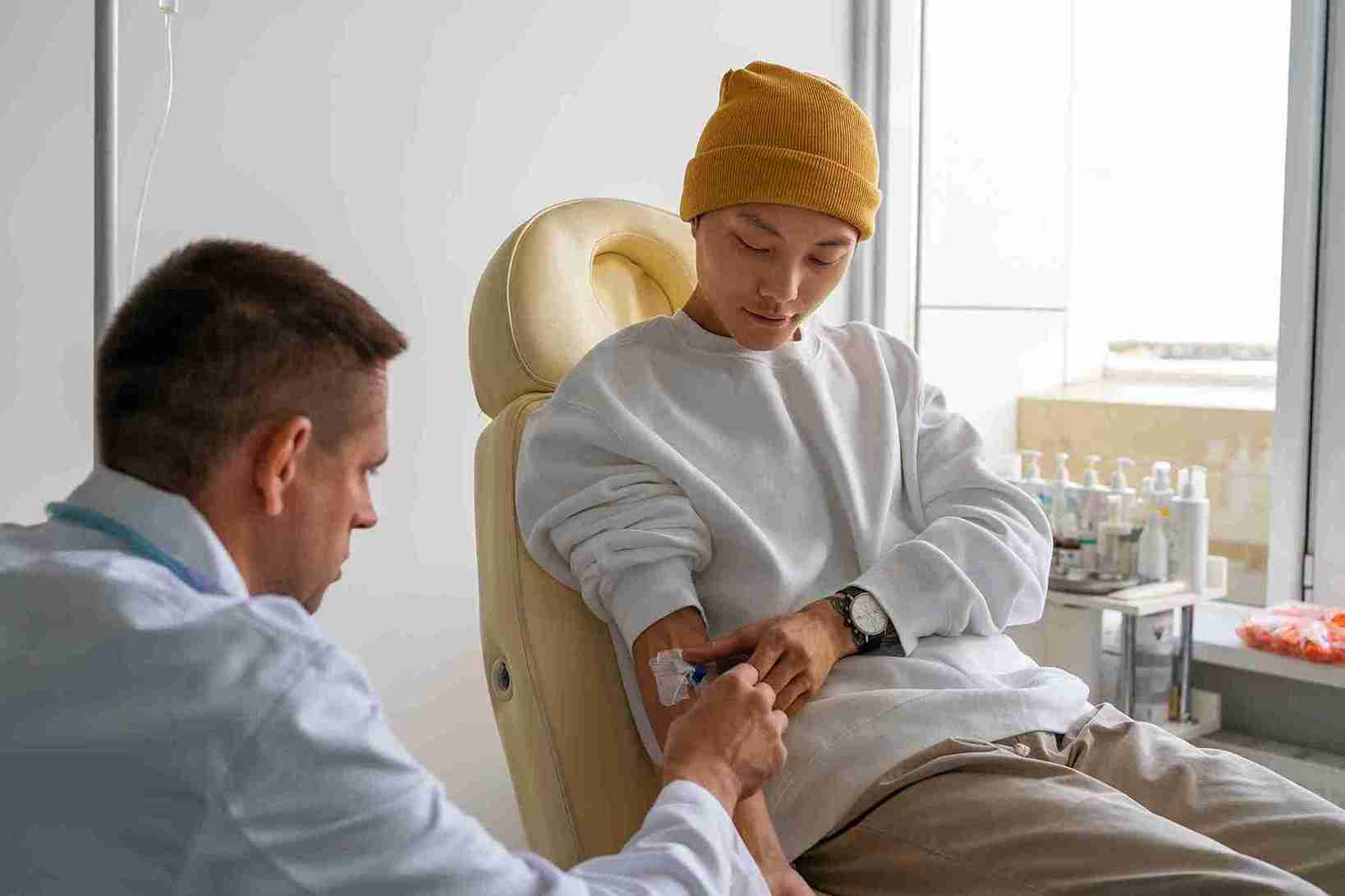
A cancer diagnosis brings an enormous amount to process in a very short time. Treatment decisions, timelines, hospital plans, family conversations- all of this lands at once. In the middle of it, fertility is often the last thing anyone thinks to bring up. For many patients, it does not come up at all.
This is a gap that matters. Many cancer treatments, like chemotherapy, radiation, and some surgeries, can damage or destroy fertility, sometimes permanently. For patients who are not yet done building their family, fertility preservation before chemotherapy and other cancer treatments is a time-sensitive decision that needs to happen before treatment begins, not after.
Why Cancer Treatment Affects Fertility
Chemotherapy uses drugs that target rapidly dividing cells, which is how it kills cancer. But egg-producing cells in the ovaries and sperm-producing cells in the testes are also rapidly dividing. Chemotherapy can damage or destroy both.
The extent of the damage depends on:
Which chemotherapy drugs are used - alkylating agents like cyclophosphamide are particularly damaging to fertility
The total dose received
The age of the patient - younger patients generally have more fertility reserve to begin with and may tolerate damage better
The type of cancer and how it affects the reproductive organs directly
Radiation therapy to the pelvis, abdomen, or brain can affect the ovaries, uterus, testes, and the hormonal signals that control reproduction. Radiation to the brain can damage the pituitary gland, which regulates the hormones that drive ovarian and testicular function.
Surgery, particularly for gynaecological cancers, may involve removal of the ovaries, uterus, or cervix. Surgery for testicular cancer involves removal of one or both testes.
Fertility Preservation Options for Women
Egg Freezing Before Cancer Treatment
Egg freezing before cancer treatment, also called oocyte cryopreservation, is the primary fertility preservation option for women without a partner or those who do not want to create embryos. The ovaries are stimulated with hormone injections to produce multiple eggs. These are retrieved in a minor procedure under light sedation, and flash-frozen for storage.
The process takes approximately 10-14 days from the start of hormone injections to egg retrieval. In cancer care, this window is critical. Oncologists and fertility specialists need to communicate closely to ensure the delay does not compromise cancer treatment. In most early-stage solid tumours, a two-week delay is acceptable and does not affect treatment results. For very aggressive cancers or haematological malignancies, the window may be tighter or unavailable.
Embryo Freezing
For women with a partner or who are willing to use donor sperm, embryo freezing is an option with slightly higher success rates than egg freezing. The process is the same as egg freezing up to the point of retrieval; after that, the eggs are fertilised, and the resulting embryos are frozen.
Embryo freezing is ethically and legally more complex than egg freezing because the embryo involves both partners, and decisions about what happens to frozen embryos if the relationship changes or the patient dies need to be documented clearly before storage.
Ovarian Tissue Freezing
For patients who cannot delay treatment at all, including children with cancer, ovarian tissue freezing offers an alternative. A piece of ovarian tissue is surgically removed, frozen, and reimplanted after treatment is complete. The ovary resumes function after reimplantation, and the woman can potentially conceive naturally.
This option is not yet widely available in India and carries a small risk of reintroducing cancer cells if the cancer originates in the ovary. It is offered at select specialised centres and is most relevant for pre-pubertal girls or women who cannot complete a stimulation cycle.
GnRH Agonists During Chemotherapy
Some oncologists use GnRH agonist injections during chemotherapy to temporarily suppress ovarian function, with the idea that protecting the ovaries from active cycling may reduce damage. The evidence on how well this works is mixed; it is not a substitute for egg or embryo freezing, but it may be used alongside it or when other options are unavailable.
Fertility Preservation Options for Men
Sperm Banking Before Cancer Treatment
Sperm banking before cancer treatment is straightforward, non-invasive, and can be done within a day or two of diagnosis. A semen sample is collected, analysed, and the sperm are frozen for future use.
This is the most important fertility preservation step for any male cancer patient of reproductive age, and it should be discussed and completed before any cancer treatment begins. Even one session of chemotherapy can damage sperm production, sometimes permanently.
A single sample is useful, but collecting two to three samples over consecutive days provides a better buffer, since sperm counts and quality can vary between samples. Men who cannot produce a sample through ejaculation may be able to have sperm retrieved surgically from the testes.
After Testicular Cancer Surgery
Men who have a testicle removed for testicular cancer retain the ability to produce sperm from the remaining testicle in most cases. However, chemotherapy or radiation following surgery can affect the remaining testicle. Sperm banking before any treatment is still strongly recommended even if one testicle is healthy.
Fertility Options for Cancer Patients: Timing and Practicalities
The most important practical point is this: fertility preservation must occur before treatment begins.
Once chemotherapy begins, the opportunity to freeze eggs may be lost for that cycle, and repeated cycles of chemotherapy can progressively damage ovarian reserve to the point where stimulation is no longer possible. Sperm quality degrades quickly after chemotherapy begins.
What to ask at the time of cancer diagnosis:
Will this treatment affect my fertility?
How much time do I have before treatment must start?
Can you refer me to a fertility specialist immediately?
Are there fertility-sparing surgical options for my type of cancer?
For women with hormone-sensitive cancers, such as certain breast cancers, the use of oestrogen-containing stimulation injections may need modification. Protocols using letrozole alongside stimulation can limit oestrogen exposure while still producing eggs for freezing. This is a standard approach in fertility preservation for breast cancer patients and should be discussed with both the oncologist and the fertility specialist.
What Happens to Stored Eggs, Embryos, and Sperm After Treatment?
Frozen eggs, embryos, and sperm can be stored for extended periods, up to 10 years under Indian law, with extensions possible. Storage fees are charged annually by the fertility clinic and should be factored into planning.
After cancer treatment is complete and the patient is declared in remission or cured, the fertility specialist can advise on when it is safe to attempt conception, for women who have lost ovarian function entirely after treatment, using frozen eggs or embryos gives the best chance of a future pregnancy. Women who have had their uterus removed may explore surrogacy where legally and practically available.
Conclusion
Fertility does not have to be a casualty of cancer treatment. The options exist, the technology works, and the time needed to act is short. For any patient of reproductive age facing cancer treatment, the conversation about fertility preservation should happen at diagnosis, not months later when the window has passed. Ask the question early, and ask it directly.
Want to consult the best fertility in india? Please find the links below.
Find clear, trusted answers to the most common questions about IVF—designed to guide and support you every step of the way.
Can men preserve fertility before chemotherapy?
Yes. Sperm banking before cancer treatment is quick, non-invasive, and can be done within days of diagnosis. A semen sample is collected and frozen before any treatment begins. This is the most important fertility step for male cancer patients and should always happen before the first cycle of chemotherapy, since even one cycle can damage sperm production. Multiple samples collected over two to three days provide a better buffer for future use.
Does cancer treatment always affect fertility?
Not always, but many treatments carry a significant risk. The impact depends on the type of treatment, the drugs or radiation doses used, and the patient's age. Some chemotherapy drugs are highly damaging to ovarian and testicular function. Pelvic radiation is particularly harmful to the ovaries and uterus. Fertility options for cancer patients are most effective when explored before treatment starts, regardless of the perceived risk level.
Why should fertility be preserved before cancer treatment?
Because cancer treatment can damage or destroy reproductive function, sometimes permanently. Fertility preservation before chemotherapy gives patients the option of biological parenthood after treatment is complete. This window closes once treatment begins.
How long does egg freezing take?
Egg freezing before cancer treatment takes approximately 10-14 days from the start of hormone injections to egg retrieval. Injections begin on a specific day of the menstrual cycle, stimulate the ovaries to produce multiple eggs, and retrieval is done under light sedation. For cancer patients, close coordination between the oncologist and fertility specialist is needed to ensure this window fits within the treatment timeline without compromising cancer care.