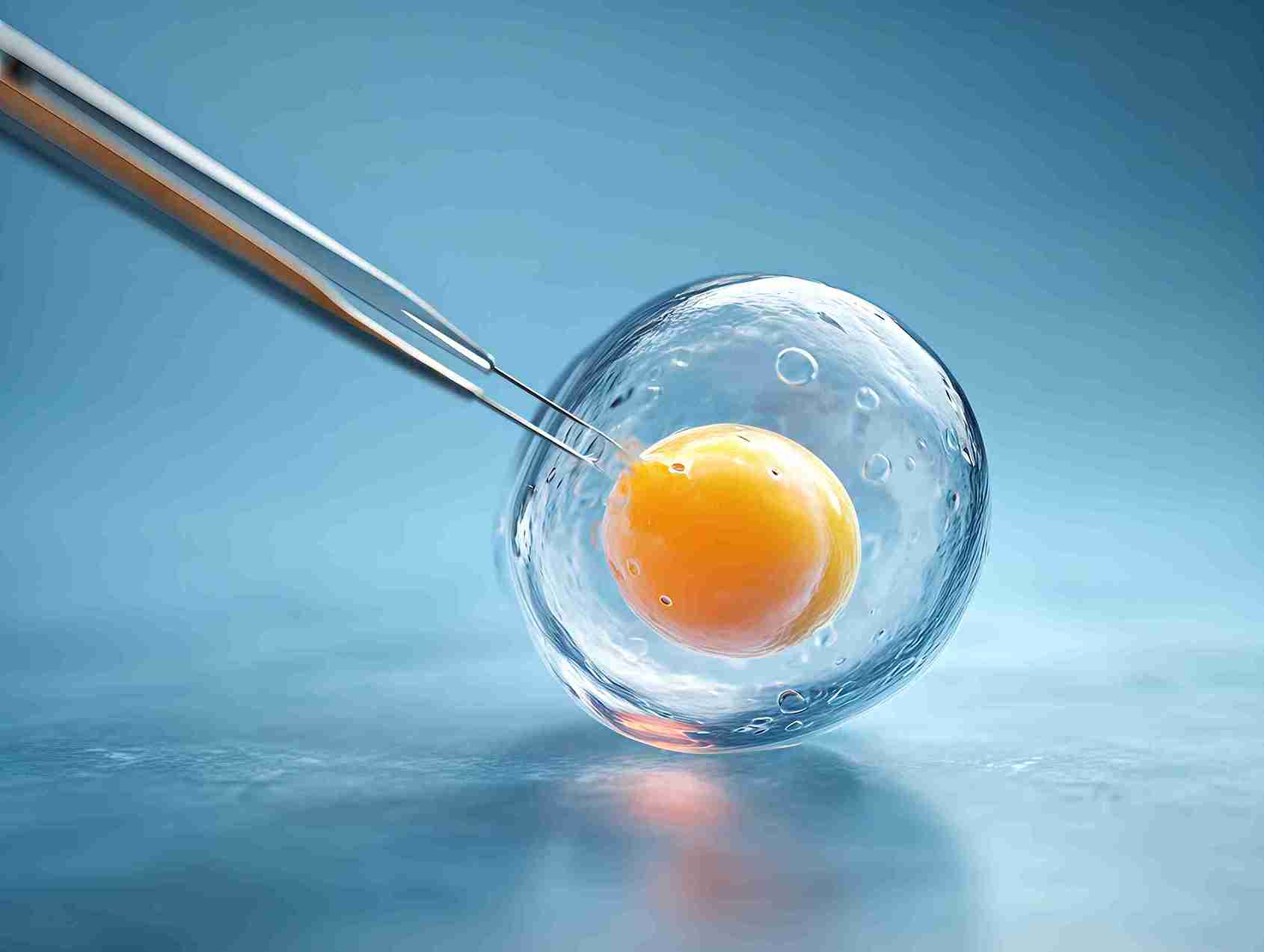
More people are freezing their eggs and embryos every year. Some do it for medical reasons, while some want to delay parenthood for personal or career reasons. Some are simply going through IVF treatment. One question almost everyone asks at some point is simple yet important: how long can these eggs and embryos remain frozen before they become unusable?
It's a valid question—and the answer is more reassuring than you might think. Egg freezing storage duration is not the limiting factor most people think it is. Here is what the evidence actually says, what the law allows and what really matters when the time comes to use them.
How Freezing Actually Works
Eggs and embryos are frozen using a method called vitrification, a rapid freezing technique that turns the cells into a glassy state almost instantly. This prevents ice crystals from forming, which can damage delicate cellular structures. This is a big step up from the older slow-freezing method, which had much lower survival rates after thawing.
Once vitrified, eggs and embryos are stored in liquid nitrogen at extremely low temperatures, around 196 °C. At this temperature, all biological activity basically stops. No metabolism, no ageing, no cell decay happening inside. This is why eggs and embryos can be stored long-term without losing quality.
Frozen Eggs Shelf Life: What the Research Shows
The frozen egg’s shelf life is, for all practical purposes, unlimited once vitrified and stored properly. Because the cell is essentially paused at -196 °C, time alone does not cause the egg to degrade as it would at room or body temperature.
Several long-term studies have followed eggs and embryos stored for many years and found no significant drop in quality attributable solely to storage duration. Pregnancies have come from eggs and embryos frozen for over a decade, with success rates similar to those of eggs frozen for much shorter periods.
What this means in practice: an egg frozen at age 30 and thawed at age 42 carries roughly the same potential as it did the day it was frozen, not the lower potential usually linked to a 42-year-old's natural egg quality. This is one of the main reasons people choose egg freezing — it allows them to preserve their eggs at their current age, when egg quality is more favourable, for potential future use.
Embryo Freezing Storage Period: Does It Differ From Eggs?
The embryo freezing storage period follows the same basic rule as eggs. Embryos are slightly more developed and structurally more complex than unfertilised eggs, but they have actually shown strong survival rates after long-term storage in several studies.
There are documented healthy births from embryos frozen for over 20 years in some international cases. The general scientific view is that once an embryo is properly vitrified, the storage time itself, one year or fifteen years, does not really change its ability to result in a successful pregnancy after thawing.
What matters more for embryos than freezing duration is the quality of the embryos at the time they were frozen. A high-grade blastocyst frozen at day five or six tends to survive thawing and implant better than a lower-grade embryo, no matter how long it sits in storage. This is why embryologists grade embryos carefully before freezing. The embryo’s quality at freezing is a much stronger predictor of future success than how long it’s been stored.
What the Law Says in India
While the biology supports long-term storage, fertility preservation storage guidelines in India are governed by law, not just science.
Under the Assisted Reproductive Technology (Regulation) Act, eggs, sperm, and embryos can generally be stored for up to 10 years. While eggs and embryos may remain biologically viable beyond this period, clinics in India must follow the legal storage limit unless an extension is granted with proper documentation and approval.
What Actually Affects Success Rates
If storage time itself is not the main factor, what are the factors that decide if frozen eggs or embryos result in a successful pregnancy?
Age at the time of freezing: This is the single biggest factor. Eggs frozen from a woman under 35 have much higher success rates than eggs frozen after 38 or 40, no matter when they are eventually used. What truly matters is the biological quality of the egg at the time of freezing—not how long it has been stored.
Number of eggs or embryos frozen: A larger number of frozen eggs or embryos may increase the chances of achieving pregnancy, as some may not survive thawing, fertilise, or develop into embryos that implant successfully. Clinics usually discuss target numbers based on age and individual fertility checks.
Embryo grade at freezing: As mentioned before, a well-developed, good-grade blastocyst has a noticeably better survival and implantation rate than a lower-grade embryo, no matter how long it has been stored.
The freezing technique used: Vitrification has mostly replaced slow freezing because of its much higher survival rate after thawing, usually above 90 per cent for vitrified eggs, compared to much lower rates for slow-frozen eggs.
Experience and capability of the laboratory: Safely storing frozen eggs or embryos over time requires careful handling. Maintaining the right storage temperature, ensuring liquid nitrogen tanks are functioning properly, and having skilled embryologists manage the process all help preserve their quality until they are needed. This is why picking a well-established fertility clinic with a strong lab track record matters more than worrying about storage duration.
Keep your records up to date: Make sure your clinic has your current contact details and that you know exactly when your storage renewal is due each year.
Understand the consent process: Clinics need written permission for how long the egg or embryo will be stored and for whatever happens in case of death, divorce, or separation. These conversations are uncomfortable but necessary before freezing starts.
Ask about transfer options: If you move cities or change clinics, ask early about the process and costs of transferring frozen eggs or embryos between facilities, since this requires specialised shipping in liquid nitrogen containers.
Plan for the long run: Storage fees add up over the years. Factor this into your decision, especially if you are freezing your eggs at a younger age and expect to use them many years later.
Conclusion
The science here is quite reassuring — frozen eggs and embryos, once properly vitrified, do not really break down with time in storage. What matters far more is the age and quality at the time of freezing, the technique used, and the skill of the lab handling the process. In India, the legal storage period of 10 years (with possible extensions) is the practical limit to plan around, not a biological one. If you are thinking about egg or embryo freezing, a clear conversation with your fertility specialist about timelines, costs, and consent will help you far more than worrying about how long is too long.
Want to consult the best fertility in india? Please find the links below.
How long can frozen eggs be stored without affecting their quality?
Frozen eggs can be preserved for many years without significant loss of quality, as the vitrification process halts all biological activity at -196°C. Research has shown successful pregnancies from eggs stored for more than a decade, with no substantial evidence that storage duration alone affects pregnancy outcomes.
How long can frozen embryos remain viable for future pregnancy?
Frozen embryos remain viable for extended periods once vitrified, with documented healthy pregnancies from embryos stored for well over a decade internationally. The embryo freezing storage period itself does not significantly affect viability. What matters more is the embryo's grade and developmental stage at the time of freezing.
Does the storage duration affect the success rates of frozen eggs and embryos?
Not by much. Once properly vitrified and stored at steady, ultra-low temperatures, storage duration alone has little impact on success rates. What affects outcomes more is the woman's age at the time of freezing, the quality of the embryo or egg, the freezing method used, and the lab's skill. Eggs or embryos frozen at a younger age generally do better, regardless of how long they remain in storage.
Can frozen eggs be used after 10 years of storage?
In India, eggs can generally be stored and used up to 10 years under the Assisted Reproductive Technology (Regulation) Act, after which an extension needs specific permissions and paperwork through the fertility clinic. Biologically, eggs frozen for more than 10 years would likely still be usable, but clinics must follow the legal storage rules. Anyone planning long-term storage should discuss the extension steps with their clinic well in advance.
Schedule your consultation Today!
Book your consultation with our fertility experts the first step toward your parenthood journey.