Ovarian Cyst Treatment: All Your Options (and When You Need None)
October 8, 2026
Cloudnine
No items found.
Ovarian Cyst Treatment: All Your Options (and When You Need None)
October 8, 2026
Cloudnine
No items found.
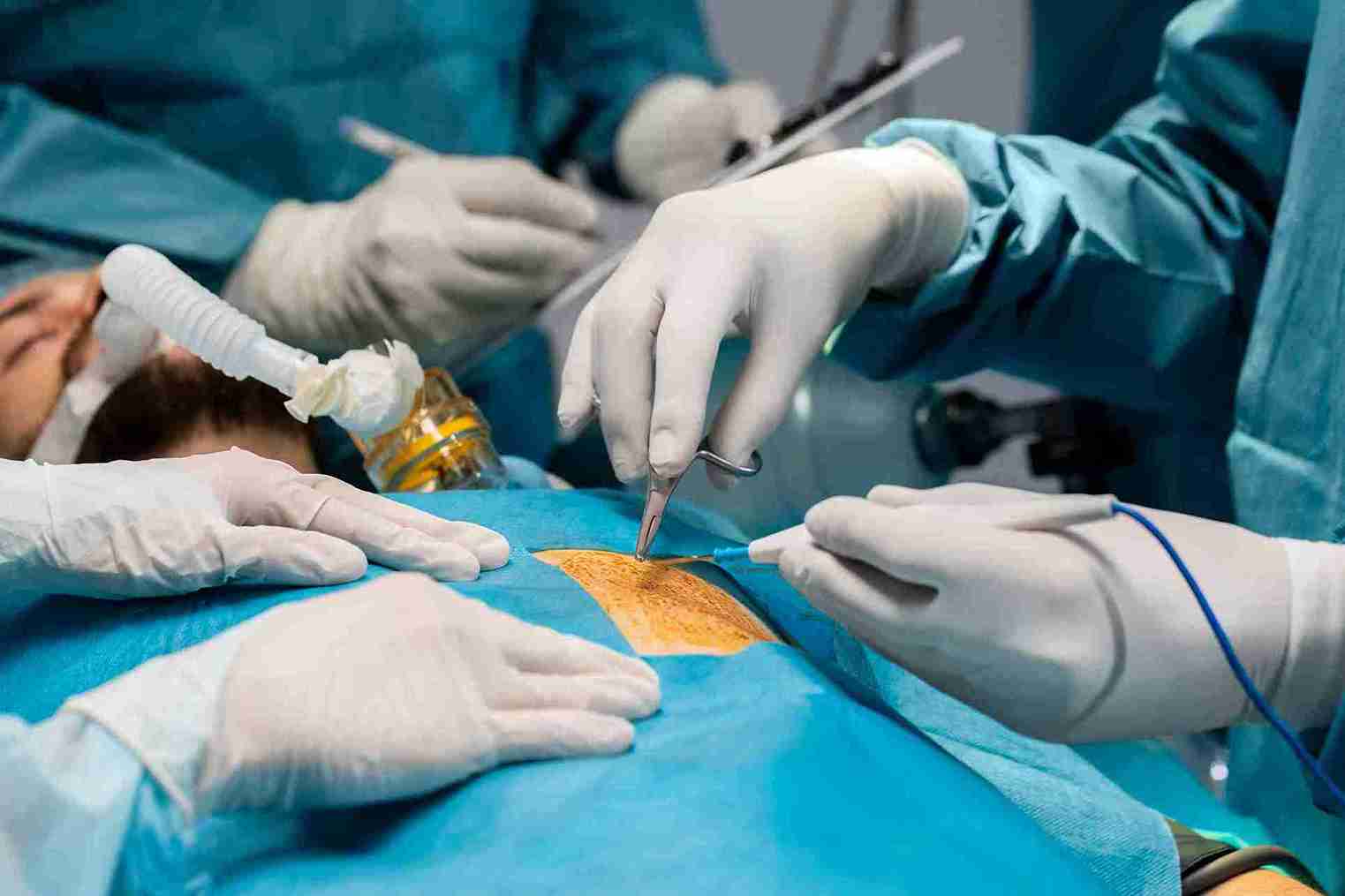
Most ovarian cysts need no treatment at all. The majority are functional cysts that form as part of ovulation and clear on their own within two to three menstrual cycles. When treatment is needed, there are three real paths: watchful waiting with a repeat scan, medication for symptoms, and surgery.
What are the treatment options for an ovarian cyst?
Treatment for an ovarian cyst is a decision, not a default. Your gynaecologist weighs how the cyst looks on the scan, whether it is growing, what symptoms it is causing, your age, and whether you have reached menopause. Only one of the three paths involves an operation, and it is the least common among women of reproductive age.
The table below sets out what each path does, who it suits, and, just as importantly, what it does not do. That last column matters because much of the confusion around ovarian cyst treatment options stems from expecting one path to do a job that belongs to another.
Option
What It Actually Does
Who It Suits
What It Does NOT Do
Typical Timeline
Watchful Waiting
Allows a cyst that is likely to resolve by itself to do so, while a repeat scan confirms that it is behaving as expected.
Simple, benign-appearing cysts with no concerning features, in women without severe symptoms.
It does not treat pain or actively shrink the cyst. Nothing is being given; the ovary is doing the work.
Reassessed across two to three cycles in most cases.
Medication
Manages pain and may reduce the chance of new functional cysts forming in future cycles.
Women whose main problem is cyclical pain or who continue to develop new functional cysts.
It does not shrink, dissolve or remove an existing cyst. No pill or injection reliably does this.
Symptom relief can be relatively quick; prevention of new functional cysts applies only to future cycles.
Surgery
Physically removes the cyst and, in some cases, the ovary. The removed tissue can be examined.
Cysts that persist or grow, cause significant symptoms, appear suspicious, or cause complications such as torsion.
It does not guarantee that cysts will never return, and surgery can reduce ovarian reserve.
Usually planned in advance, except when emergency surgery is required.
How doctors decide which path you are on
The decision turns on the ultrasound appearance far more than on any single number. A radiologist reports whether the cyst is simple (a thin-walled sac of clear fluid) or complex (containing solid areas, internal walls, or unusual blood flow). A simple cyst in a woman of reproductive age is overwhelmingly likely to be functional and to resolve. A complex cyst gets closer attention, not because it is likely to be cancer, but because the appearance changes what should happen next.
Alongside that sit your symptoms, your age, whether the cyst has changed between scans, and whether you have reached menopause. Many Indian ultrasound reports now also carry an O-RADS category (Ovarian-Adnexal Reporting and Data System, a standardised way of grading how concerning an ovarian lesion looks). It is a risk-scoring system, not an instruction to operate.
Path 1: watchful waiting, and what it actually involves
Watchful waiting is the most common treatment for an ovarian cyst, and it is the one patients find hardest to accept. Being told that nothing will be done can feel like being dismissed. It is not. It is an active clinical decision based on the fact that the vast majority of cysts in women of reproductive age are functional and resolve without intervention.
The Royal College of Obstetricians and Gynaecologists, in Green-top Guideline No. 62 (2011), states that many ovarian masses in premenopausal women can be managed conservatively, and that simple cysts usually resolve over two to three menstrual cycles without any intervention.
In practice, watchful waiting means a repeat pelvic or transvaginal ultrasound after an agreed interval, usually timed to a specific point in your cycle so that the two scans can be compared fairly. Between scans, your clinician is looking for three things: whether the cyst has gone, whether it has changed size, and whether its appearance has changed. A cyst that has disappeared needs no further action. A cyst that is stable and still simple usually continues to be monitored. A cyst that has grown or developed solid areas or new blood flow moves the conversation towards surgery.
What changes the plan mid-way is new or worsening symptoms, not the calendar. If pain escalates, or you develop the red-flag symptoms set out further down this page, the interval stops mattering and you are seen sooner. Waiting is not the same as being unsupervised.
Path 2: medication, what it can and cannot do
No pill, injection or supplement shrinks an ovarian cyst that has already formed. This is worth stating flatly, because it is the single most common misunderstanding patients arrive with, and because it is frequently implied rather than corrected.
The confusion comes from a real effect that has been misapplied. Hormonal contraception suppresses ovulation, and because functional cysts form as a by-product of ovulation, women taking it form fewer new functional cysts. Clinicians in the 1970s reasonably inferred that if the pill prevents cysts, it might also treat them. It does not.
A Cochrane systematic review (Grimes and colleagues, updated 2014) pooled eight randomised controlled trials covering 686 women and found that combined oral contraceptives did not hasten the resolution of functional ovarian cysts in any trial. This held for cysts that arose spontaneously and for those that followed ovulation induction. The review's conclusion was that watchful waiting for two or three cycles is the appropriate approach, and that cysts persisting beyond that window are more likely to be pathological rather than functional, and warrant surgical assessment.
So what is medication genuinely for? Two distinct jobs, which are worth separating:
Pain relief. Simple analgesia treats the symptom while the cyst resolves on its own. It is aimed at your comfort, not at the cyst.
Preventing new functional cysts. Hormonal contraception can reduce how often new functional cysts form in future cycles. This is genuinely useful for women who keep forming them, but it acts on cycles yet to come, not on the cyst currently on your scan.
Neither job includes making an existing cyst smaller. If you are prescribed hormonal contraception after a cyst is found, it is reasonable to ask which of these two purposes it is serving, because the answer changes what you should expect at your next scan.
Path 3: when is ovarian cyst surgery actually needed?
Surgery has a clear and legitimate place. It is the right answer when a cyst is doing harm, is likely to do harm, or cannot be confidently called benign. What it is not is the safe default, and the distinction matters more than most pages on this subject admit.
Ovarian cyst removal is generally considered when one or more of the following applies:
It persists. The cyst remains present after a reasonable period of monitoring, suggesting it is nonfunctional.
It is growing. Serial scans show the cyst enlarging rather than stabilising or shrinking.
It is symptomatic. Pain, pressure or bloating is significant, persistent, and attributable to the cyst rather than to something else.
It looks suspicious. Solid components, thick internal walls, or unusual blood flow on the scan mean the tissue needs to be examined rather than watched.
It has caused a complication. Ovarian torsion (twisting of the ovary, which cuts off its blood supply) or a significant rupture is a surgical situation, sometimes an emergency one.
Menopausal status shifts the calculation. After menopause, a persistent or complex cyst is assessed more cautiously, because the background risk profile is different.
Where surgery is indicated, and the cyst appears benign, a laparoscopic (keyhole) approach is the established standard. Green-top Guideline No. 62 describes laparoscopy as generally considered the gold standard for managing benign ovarian masses, with shorter hospital stays than open surgery. Open surgery is reserved for very large masses or where malignancy is suspected.
Cloudnine Fertility performs these procedures as part of its hysteroscopy and laparoscopy surgical services. The mechanics of the operation itself, how it is performed, what anaesthesia is involved, and what recovery looks like, are covered separately so that this page can stay on the question that comes first: should you be having one at all.Those details are covered on our page on ovarian cyst surgery.
Cystectomy or oophorectomy: what is actually removed
If surgery is going ahead, the next question is how much comes out. These are two different operations with two very different consequences for your ovaries, and they are frequently discussed as though they were interchangeable. They are not.
The difference matters because of ovarian reserve, which is the number of eggs remaining in your ovaries. You are born with all the eggs you will ever have, and the ovaries cannot make new ones. Any surgery that removes or damages ovarian tissue takes some of that supply with it, and it cannot be replaced. Doctors usually estimate reserve with an AMH (anti-Müllerian hormone) blood test and an antral follicle count on ultrasound, and both are worth having before surgery if you may want children in the future.
Most ovarian cyst surgery today is done laparoscopically, through small incisions in the abdomen, whichever procedure is chosen. The approach affects recovery time. What is removed is what affects fertility.
Procedure
What Is Removed
When It Is Chosen
Effect on Ovarian Reserve
Fertility Implication
Ovarian Cystectomy
The cyst and the capsule around it. The ovary itself is preserved.
The usual choice when the cyst appears benign and the ovary is otherwise healthy.
Some healthy ovarian tissue may be removed or damaged alongside the cyst wall, so ovarian reserve can fall to some degree.
Preserves the ovary and its function, but the reduction in ovarian reserve is real and should be discussed before consent.
Oophorectomy
The whole ovary, sometimes together with the fallopian tube.
Chosen when the ovary cannot be safely preserved, has lost its blood supply, or malignancy is suspected.
The ovarian reserve contained in that ovary is permanently lost. The remaining ovary can continue to function.
One functioning ovary is usually compatible with natural conception, but the margin for error is smaller, particularly when ovarian reserve is already low.
Two points are easy to miss. First, a cystectomy is not free of fertility cost simply because the ovary stays. Endometriomas (chocolate cysts) are the clearest example, because their wall is difficult to separate from healthy tissue, so more eggs are lost in removing them. For this reason, some specialists recommend monitoring a small endometrioma rather than operating on it, particularly before IVF. Second, the final decision is sometimes made during the operation itself. A surgeon may plan a cystectomy but find that the ovary cannot be saved, so it is worth discussing in advance what you would want them to do in that situation.
If you are planning a family, ask your surgeon before consenting: which procedure they expect to perform, what might make them change the plan during surgery, how they will protect healthy ovarian tissue, and whether a fertility assessment or egg freezing makes sense beforehand. A short conversation with a fertility specialist before surgery can help you weigh these options while all of them are still available.
The trade-off nobody sells you
Removing a cyst is not a clean subtraction. When a surgeon strips a cyst capsule away from the ovary, healthy ovarian cortex comes with it. Histological studies have repeatedly found primordial follicles, the earliest-stage eggs, in the tissue removed alongside the cyst wall, and this appears to happen even in experienced hands. Heat used to control bleeding at the surgical site can add a further insult to the surrounding tissue.
The evidence is clearest for endometriomas (ovarian cysts formed by endometriosis). A systematic review and meta-analysis by Younis and colleagues, published in Human Reproduction Update in 2019, found a significant and sustained fall in AMH, the blood marker of ovarian reserve, after endometrioma cystectomy, with a larger fall where both ovaries were operated on than where one was. The ESHRE endometriosis guideline (2022) responds to this evidence directly, recommending that clinicians counsel women with an endometrioma about the risk of reduced ovarian function after surgery.
Two points of honesty are owed here, and they cut in opposite directions.
The evidence is strongest for endometriomas, not for every cyst. A dermoid cyst or a simple cystadenoma sits differently in the ovary, and the reserve cost of removing one is generally smaller and less consistently demonstrated. It would be misleading to present the endometrioma figures as though they applied to all ovarian cyst removal.
This is not an argument against surgery. A cyst that is growing, symptomatic, or suspicious carries its own costs, and leaving it alone is not automatically the reserve-preserving choice. Torsion can cost you the entire ovary.
The point is narrower and more useful than either extreme: surgery has a price; that price is paid in ovarian tissue, and it should be named out loud before you consent rather than discovered afterwards. If you are planning a pregnancy, that conversation should include your ovarian reserve as it stands today, not only the cyst.The mechanism behind the reserve loss, and the framework for deciding whether to operate before IVF, are set out on our pages on oophorectomy and on cyst surgery before IVF.
Does the size of the cyst decide it?
No single measurement in centimetres automatically means surgery. This is a persistent myth, and it causes real distress: a number is read off a scan report, searched online, and interpreted as a verdict.
Size is one input among several. A large, simple, thin-walled cyst in a young woman with no symptoms is a very different proposition from a smaller cyst with solid areas and abnormal blood flow, even though the second one measures less. What the cyst looks like, whether it is changing, what it is doing to you, and your age all carry weight alongside the measurement. Two women with identically sized cysts can correctly receive completely different advice.
The size thresholds that clinicians do use as prompts for closer review, and how they interact with scan appearance, are set out on our dedicated page on ovarian cyst size, which is the right place to interpret the number on your own report.
Treatment when you are trying to conceive
If you are trying to get pregnant, the ovarian cyst treatment question becomes a sequencing question: treat first, or try first. For most cysts, the honest answer is that you do not need to treat first.
A simple functional cyst does not need to be resolved before you try to conceive, and it is not the reason conception has not happened. Functional cysts are, in a sense, evidence that ovulation is occurring. Watching it while you continue trying is usually entirely reasonable.
A small number of situations genuinely do change the plan:
Endometriomas. These sit at the centre of a much finer balance. Removing one may help symptoms, but it carries the clearest reserve cost of any cyst type, and repeat surgery before fertility treatment is generally avoided.
Large or rapidly growing cysts. Size and growth raise the risk of torsion, which is a poor complication to encounter during a pregnancy or a stimulated cycle.
Cysts with suspicious features. Where the appearance is not clearly benign, assessment comes before conception planning, not after it.
Recurrent cysts alongside difficulty conceiving. Here the cyst may be a signal of an underlying condition that is worth investigating in its own right.
The endometrioma question in particular, whether to operate before IVF or proceed without surgery, deserves more space than a treatment overview can give it. Our guide to endometriosis and fertility sets out how current guidance approaches that decision, including when surgery is likely to help and when it is not.
What does not treat an ovarian cyst
No food, supplement, herbal preparation, oil, heat application or dietary regime has been shown to resolve an ovarian cyst. Some of these may make you feel more comfortable, and there is no harm in that. The harm comes when they are used as a substitute for a repeat scan, because the entire safety net of watchful waiting depends on somebody looking again. A cyst that would have resolved anyway will resolve regardless of what you took, which is precisely why anecdotes are so persuasive and so unreliable. Our separate pages on diet and on home remedies for ovarian cysts examine the specific claims in more detail.
When to seek medical care immediately
Most ovarian cysts do not require emergency treatment. A small number cause complications that require same-day assessment. Do not wait for a scheduled appointment if any of the following applies.
Procedure
What Is Removed
When It Is Chosen
Effect on Ovarian Reserve
Fertility Implication
Ovarian Cystectomy
The cyst and the capsule around it. The ovary itself is preserved.
The usual choice when the cyst appears benign and the ovary is otherwise healthy.
Some healthy ovarian tissue may be removed or damaged alongside the cyst wall, so ovarian reserve can fall to some degree.
Preserves the ovary and its function, but the reduction in ovarian reserve is real and should be discussed before consent.
Oophorectomy
The whole ovary, sometimes together with the fallopian tube.
Chosen when the ovary cannot be safely preserved, has lost its blood supply, or malignancy is suspected.
The ovarian reserve contained in that ovary is permanently lost. The remaining ovary can continue to function.
One functioning ovary is usually compatible with natural conception, but the margin for error is smaller, particularly when ovarian reserve is already low.
These symptoms can indicate ovarian torsion or a significant rupture. Both are treatable, and both are treated better early. Our pages on ovarian cyst rupture and ovarian torsion cover what happens next in each case.
What each treatment path usually leads to
Symptom
What to Do
Sudden, Severe Pelvic or Abdominal Pain
Go to an emergency department the same day.
Severe Pain With Vomiting or Fever
Go to an emergency department the same day.
Faintness, Dizziness or Rapid Breathing With Pain
Seek emergency care immediately.
Pain That Is Worsening Rather Than Settling
Contact your gynaecologist without waiting for the next scan.
Recurrence deserves a word. Removing a cyst removes that cyst. It does not stop your ovaries from forming new functional cysts, and it does not cure an underlying condition such as endometriosis. Being told that surgery is not a permanent cure is not a reason to avoid it; it is a reason to understand what it is for.
How the treatment decision is made at Cloudnine Fertility
A fertility clinic approaches this question from a particular angle, and it is worth being transparent about that. Cloudnine Fertility's focus is on protecting your ovarian reserve, because it is what fertility treatment ultimately depends on. That shapes the default towards the least invasive, safe option rather than towards the operating theatre.
In practice, that means a scan reviewed by someone who reads ovarian imaging routinely, ovarian reserve assessed before any surgical decision rather than after it, and an explicit conversation about what an operation would cost you in ovarian tissue, weighed against what leaving the cyst would cost you. Where surgery is the right answer, the aim is to remove the cyst and preserve as much healthy ovary as the situation allows.
Costs vary considerably by procedure, by city and by whether the case is managed as day care or as an admission, and the extent of pre-operative work-up changes the total. Our dedicated page on the cost of ovarian cyst surgery in India sets out current figures, so that the numbers sit alongside the pricing detail rather than in the middle of a clinical decision.
Want to consult the Best Fertility in india? Please find the links below.
Find clear, trusted answers to the most common questions about IVF—designed to guide and support you every step of the way.
Do all ovarian cysts need treatment?
No. Most need no treatment at all. The majority are functional cysts that resolve on their own within one to three menstrual cycles.
Can an ovarian cyst be treated without surgery?
Yes, in most cases. Watchful waiting with a repeat scan is the usual first step, and surgery is reserved for cysts that persist, grow, cause symptoms or look suspicious.
Is there a medicine that shrinks an ovarian cyst?
No. No pill, injection or supplement shrinks a cyst that has already formed. Hormonal contraception can prevent new functional cysts, but it does not act on an existing one.
What size ovarian cyst needs surgery?
There is no single size that decides it. Size is weighed alongside how the cyst looks on the scan, whether it is growing, your symptoms and your age.