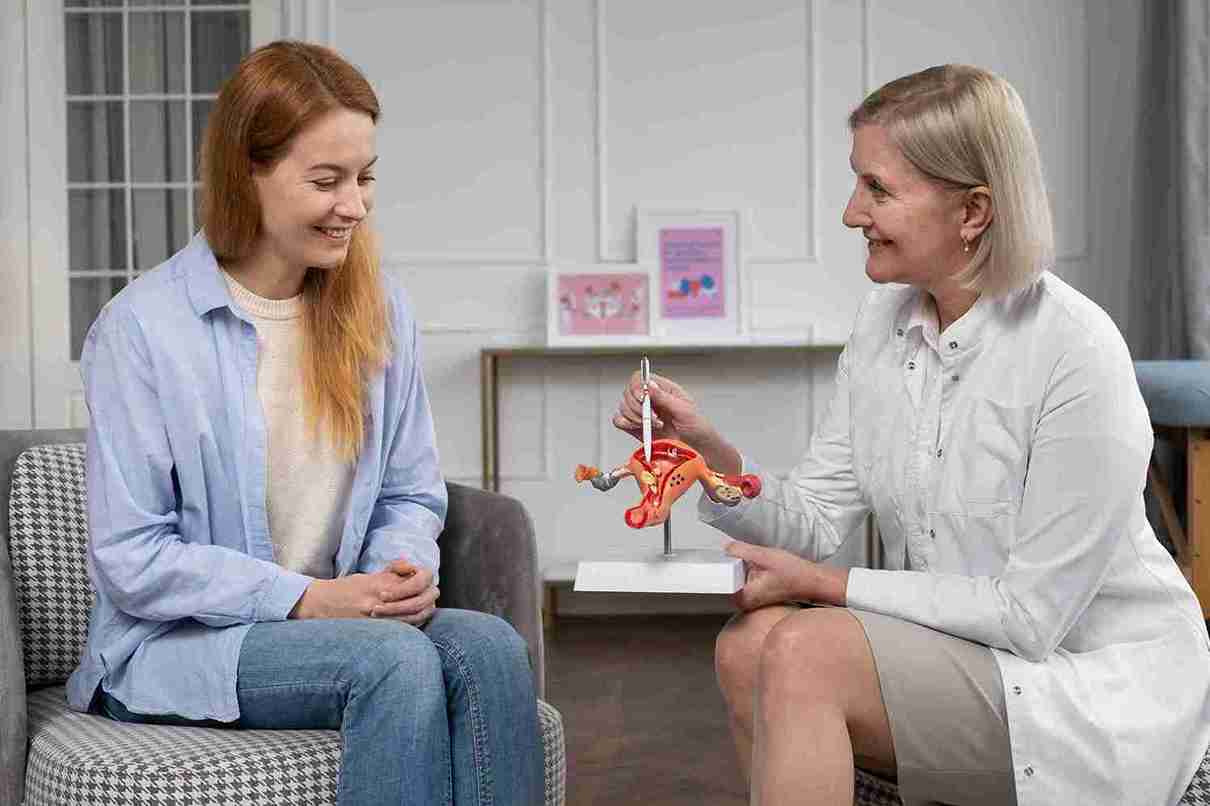
IVF is one of the most talked-about fertility treatments and also one of the most misunderstood. Many people have a vague idea of what it involves: injections, eggs, a lab. But the actual IVF process step by step of what happens, when it happens, why each stage matters, and how long the whole thing takes is not well-known.
Knowing what lies ahead makes the process less frightening and helps couples ask better questions at every stage. This guide walks through IVF from the initial workup to the pregnancy test, clearly and in order.
Before IVF Begins: The Initial Assessment
Before a single injection is given, both partners go through a thorough fertility evaluation. This is not optional preparation, it directly shapes the treatment plan.
For the woman:
Day 2 or 3 blood tests for FSH, LH, oestradiol, and AMH, to assess ovarian reserve and predict how the ovaries will respond to stimulation
Transvaginal ultrasound to count antral follicles and check the uterus and ovaries
Uterine assessment using a saline infusion sonogram or hysteroscopy to check for polyps, fibroids, or adhesions that could affect implantation
Infectious disease screening like hepatitis B, hepatitis C, HIV, and rubella
For the man:
Semen analysis to evaluate sperm count, motility, morphology, and volume
Sperm DNA fragmentation is recommended if previous cycles have failed or if the basic semen analysis is borderline
Hormonal blood tests if the semen analysis is significantly abnormal
Once results are reviewed, the specialist discusses the protocol and the likely number of eggs and embryos expected based on the assessment.
Stage 1: Ovarian Stimulation
In a natural cycle, one follicle develops and releases one egg. IVF requires multiple eggs to give the laboratory enough to work with, as not every egg fertilises, not every fertilised egg becomes a viable embryo, and not every embryo survives till the last stage.
Stimulation involves daily injections of FSH (may be combined with LH) to help multiple follicles develop at the same time.
The stimulation phase is usually 8-14 days. During this time, the woman attends the clinic every 2-3 days to measure follicle growth (through transvaginal ultrasound). Blood tests are also done to check estrogen levels and adjust the injection dose accordingly.
A second medication is given during stimulation to prevent the follicles from releasing prematurely before retrieval. When the lead follicles reach approximately 18-20 mm in size, a trigger injection is given to mature the eggs. Egg retrieval happens exactly 34-36 hours after this.
Stage 2: Egg Retrieval
Egg retrieval is done under sedation. You will be sedated, and a thin needle is passed through the vaginal wall, guided by ultrasound, into each follicle to aspirate the fluid and collect the egg.
The procedure takes 15-30 minutes. Most women feel period-like cramping for a day or two afterwards but can go home the same day. The embryology lab immediately examines the aspirated fluid to identify and count the mature eggs retrieved.
The number of eggs retrieved is based on your age. If you are younger with good ovarian reserve, 10-20 or even more eggs can be retrieved; if you have a lower reserve, you may get fewer. The goal is mature eggs, called MII eggs, which are the ones capable of fertilisation.
On the same day as egg retrieval, the male partner gives a semen sample. The sample is processed in the lab to isolate the best-quality sperm.
Stage 3: Fertilisation
Fertilisation happens either one of these two ways:
Conventional IVF: Eggs and sperm are placed together in a dish and left to fertilise naturally. This is used when sperm parameters are normal or almost normal.
ICSI (Intracytoplasmic Sperm Injection): A single sperm is injected directly into each mature egg. This is used when sperm count, motility, or morphology is abnormal, when there has been previous fertilisation failure, or when sperm is surgically retrieved.
The next morning, the lab checks how many eggs have fertilised; these are now called zygotes.
Stage 4: Embryo Culture and Development
The fertilised embryos are placed in incubators and are monitored at every step. On day 2, these embryos divide into 2-4 cells, and on day 3 they further divide into 6-8 cells. The embryo develops into 2 distinct cell types by day 5 or 6, is called the blastocyst and is now ready to be transferred into the uterus.
Embryos that do not reach the blastocyst stage by day 5 or 6 are unlikely to result in a viable pregnancy and are not used. If preimplantation genetic testing (PGT) is being done, a biopsy of a few cells is taken from the blastocyst at this point. The embryo is then frozen while results are awaited.
Stage 5: Embryo Transfer
Embryo transfer is the simplest stage of the IVF procedure explained to you; it takes about 10 minutes and does not require sedation. A thin catheter is inserted into the uterine cavity (through the cervix). The embryo is then placed gently inside.
Fresh transfer - the embryo is transferred in the same cycle as stimulation, usually on day 3 or day 5 after retrieval.
Frozen embryo transfer (FET) - embryos are frozen and transferred in a subsequent cycle when the uterine lining has been prepared separately with estrogen and progesterone. FET gives the lining more time to recover from stimulation, and in many cases produces better results than fresh transfer.
After transfer, progesterone support through vaginal pessaries, injections, or a combination is given to support the lining until the placenta is producing enough progesterone on its own.
The time between embryo transfer and the pregnancy test is normally 10-14 days. This is probably the most emotionally difficult part of the IVF treatment timeline.
A blood beta-hCG test is done to confirm pregnancy. A positive result is followed by repeat hCG testing a few days later to confirm the level is rising, and then an early ultrasound at around six weeks to confirm a heartbeat.
A negative result means the cycle has not worked. This is the point at which the couple and specialist review what happened and decide on next steps.
Conclusion
IVF is a step-by-step process with clear stages, one following the other. Understanding what happens at each point helps couples go into the treatment with realistic expectations. It also gives you confidence to ask the right questions. No cycle is guaranteed, but knowing the road ahead makes each step easier to navigate.
Want to consult the Best Fertility in india? Please find the links below.
A single IVF cycle from the start of stimulation to the pregnancy test takes 4-6 weeks. The full IVF treatment timeline can take between 2-4 months from the initial consultation. Frozen embryo transfer cycles take an additional 4-6 weeks after the stimulation and retrieval phase.
What are the stages involved in an IVF treatment cycle?
The stages of IVF treatment are: pre-IVF assessment, ovarian stimulation with daily injections for 8-14 days, egg retrieval under sedation, fertilisation in the laboratory using IVF or ICSI, embryo culture for 3 to 5 days, embryo transfer, progesterone support after transfer, and a blood pregnancy test 10-14 days later.
What tests are required before IVF?
Before IVF, women need Day 2 or 3 blood tests (FSH, LH, oestradiol, AMH), a transvaginal ultrasound, thyroid function, uterine assessment, and infectious disease screening. Men need a semen analysis and, where indicated, sperm DNA fragmentation testing and hormonal blood tests.
What is the best age for IVF?
IVF success rates are highest in women under 35, when egg quality and quantity are at their best. Success rates decline with age, more noticeably after 38 and significantly after 40 when using the woman's own eggs. However, there is no single "best age" - the right time to do IVF is when it is clinically indicated, regardless of age.
Schedule your consultation Today!
Book your consultation with our fertility experts the first step toward your parenthood journey.