Before You Refer a Cyst for Surgery: What Cystectomy Costs the Ovarian Reserve
September 22, 2026
Cloudnine
No items found.
Before You Refer a Cyst for Surgery: What Cystectomy Costs the Ovarian Reserve
September 22, 2026
Cloudnine
No items found.
A 29 year old sits in your clinic with a 4 cm ovarian cyst picked up on a scan ordered for something else entirely. She is asymptomatic. She is not trying to conceive yet, but intends to in the next two or three years. In a lot of outpatient practice the reflex is to arrange a laparoscopic cystectomy and remove the uncertainty.
I want to make one argument here, and only one: cystectomy is not a reserve neutral operation. That fact belongs in the decision before the referral letter is written, not in the debrief afterwards.
The cortex leaves with the capsule
Stripping cystectomy works by developing a plane between the pseudocapsule and the surrounding ovarian cortex. In a functional or simple cyst that plane is usually clean. In an endometrioma it frequently is not, because the pseudocapsule is fibrotic, inflamed and adherent to cortex that has been under chronic insult for months or years.
Histological series of excised endometrioma specimens have repeatedly found normal ovarian tissue attached to the removed cyst wall, and in a meaningful proportion of those specimens, primordial follicles within that tissue. None of it is recoverable. A second mechanism sits alongside the first: electrosurgical haemostasis near the ovarian hilum, where the vascular supply to the remaining cortex runs, produces thermal injury and can compromise perfusion to tissue that was never actually removed.
Neither mechanism reflects poor technique. Both are intrinsic to the operation. That is precisely why the decision has to be made upstream of the surgeon.
What the AMH data show
Serial AMH measurement before and after endometrioma excision produces unusually consistent findings for this literature. Pooled analyses report a post-operative fall commonly in the region of 30 to 40 per cent, measurable within one to three months, with only partial recovery on longer follow up. Antral follicle count in the operated ovary moves in the same direction.
Three variables concentrate the risk:
Bilateral disease. The decline is substantially greater when both ovaries are operated. Premature ovarian insufficiency after bilateral endometrioma excision is reported in a small but non-trivial minority of women.
Repeat surgery. A second operation for recurrence strips cortex from an ovary that has already lost some. The marginal cost of the second cystectomy is higher than the first, and the recurrence rate for endometriomas means this is not a rare scenario.
Simple and functional cysts do not carry the same magnitude of effect. The effect is not zero, though, and the indication for removing them is usually the weaker one.
The asymptomatic simple cyst
Most simple cysts under 50 mm in premenopausal women resolve without any intervention, and current guidance supports observation rather than routine follow up imaging at that size. Between 50 and 70 mm, serial ultrasound is reasonable. Above that, size itself, torsion risk and the adequacy of sonographic characterisation start to justify a surgical conversation on their own terms.
For asymptomatic, sonographically typical endometriomas in a woman planning conception, the evidence does not support routine excision to improve spontaneous conception rates, and excision before IVF has not been shown to reliably improve oocyte yield or live birth. What excision does reliably do is reduce reserve.
Where surgery is clearly the right call
None of this is an argument for inaction, and none of it is a comment on referring practice. Refer, and refer promptly, for suspicious sonographic features or a raised risk of malignancy index, for torsion or suspected torsion, for rupture with haemodynamic compromise, for documented growth across serial imaging, for pain that is genuinely attributable and refractory, for size that carries mechanical or torsion risk, and where a cyst obstructs access for oocyte retrieval.
The distinction worth holding onto is between operating on a cyst and operating on infertility. Those are different indications with different thresholds, and the second has narrowed considerably over the last decade. If the underlying question is subfertility rather than the cyst itself, it is worth being clear about when laparoscopy is indicated in an infertility workup before the cyst becomes the reason for theatre by default.
Test before theatre, not after
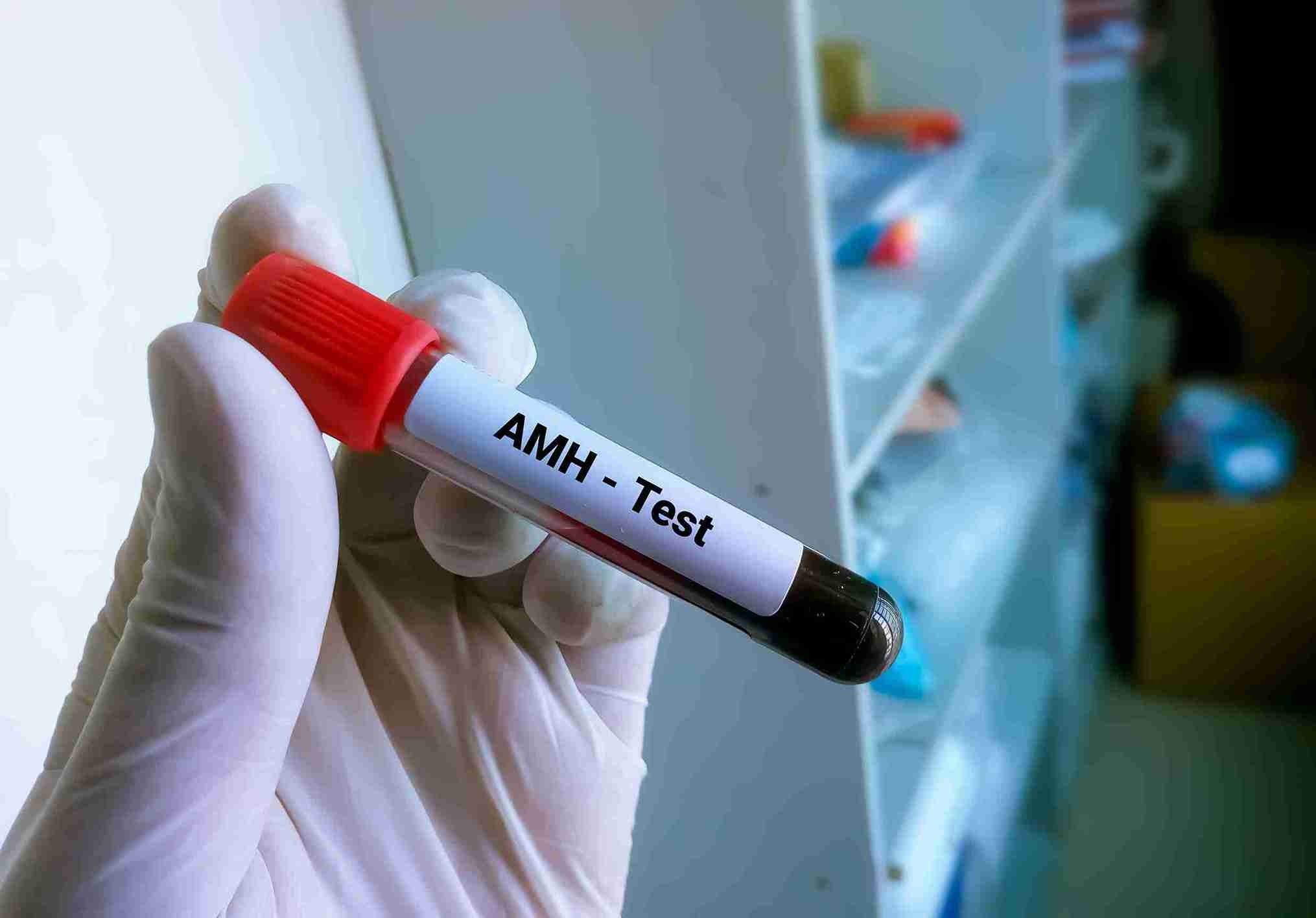
Ordering an AMH and an antral follicle count before surgery costs very little and changes three things. It tells you whether the cyst or the reserve is the more urgent problem. It gives the operating surgeon a number to weigh technique and extent against. And it gives you the only honest baseline against which any post-operative decline can be interpreted, which matters enormously if she later presents with difficulty conceiving.
Where reserve is already low, or disease is bilateral, or there has been previous ipsilateral surgery, oocyte cryopreservation before theatre is a conversation worth having rather than a conversation to have afterwards. It is the difference between offering a woman an option and explaining one she no longer has.
Consent should reflect this too. Standard operative risk counselling covers bleeding, infection and conversion. For a reproductive age woman having a cystectomy, quantified reserve loss belongs in the same conversation.
A short pre-referral checklist
Is the cyst simple, sonographically typical, under 50 mm and asymptomatic? If yes, observation is a legitimate plan, not a deferral.
Have I documented a baseline AMH and antral follicle count?
Is the disease bilateral, or has this ovary been operated before? Both raise the threshold considerably.
Have I asked her about intended timing of conception, rather than assuming from her age?
If reserve is low or disease is bilateral, has fertility preservation been raised before theatre?
Am I referring for the cyst, or for infertility? State which in the letter, because they are different operations.
Does the consent conversation include reserve loss, not just standard operative risk?
A referral that reads “AMH 1.4, bilateral endometriomas, planning conception within twelve months” gets a different operation, or no operation, from one that reads “left ovarian cyst for laparoscopic cystectomy”. The information you send determines the decision that gets made. That is the whole argument.
Want to consult the best fertility in india? Please find the links below.
Yes. Stripping cystectomy removes some healthy cortex with the cyst wall, and haemostasis near the hilum adds thermal injury to what remains. Serial AMH studies show a measurable fall after surgery, largest for endometriomas, bilateral disease and repeat operations. Simple and functional cysts carry a smaller effect, but the operation is not reserve neutral for any cyst type
How much does AMH fall after endometrioma excision?
Pooled analyses report a fall of roughly 30 to 40 per cent after unilateral excision and a larger fall after bilateral surgery, with some reviews reporting declines above 50 per cent. The drop is visible within weeks and is largely sustained across 9 to 18 months of follow up. Individual results vary with cyst size, baseline AMH and technique
Does ovarian reserve recover after cystectomy?
Partly, at best. Some cohorts show a modest rise in AMH between six and twelve months, mainly after unilateral surgery, but levels rarely return to baseline. Follicles removed with the capsule are not replaced, so any recovery most likely reflects the remaining cortex settling after thermal and inflammatory injury rather than restoration of the lost pool.
Should endometriomas be removed before IVF?
Not routinely. ESHRE's 2022 endometriosis guideline advises against routine endometrioma surgery before assisted reproduction to improve live birth, citing no demonstrated benefit and a likely negative effect on reserve. Surgery before IVF can still be considered for endometriosis-associated pain or where the cyst limits access to follicles at retrieval.
Schedule your consultation Today!
Book your consultation with our fertility experts the first step toward your parenthood journey.