Dermoid Cyst of the Ovary (Ovarian Teratoma): Symptoms, Causes, Surgery and Fertility
October 7, 2026
Cloudnine
No items found.
Dermoid Cyst of the Ovary (Ovarian Teratoma): Symptoms, Causes, Surgery and Fertility
October 7, 2026
Cloudnine
No items found.
A dermoid cyst is a benign ovarian growth that forms from a germ cell and can contain mature tissue such as skin, hair, fat, and occasionally teeth. It is not cancer; it is not caused by anything you did, and it does not dissolve on its own. Most are found by accident on a routine scan.
What is a dermoid cyst?
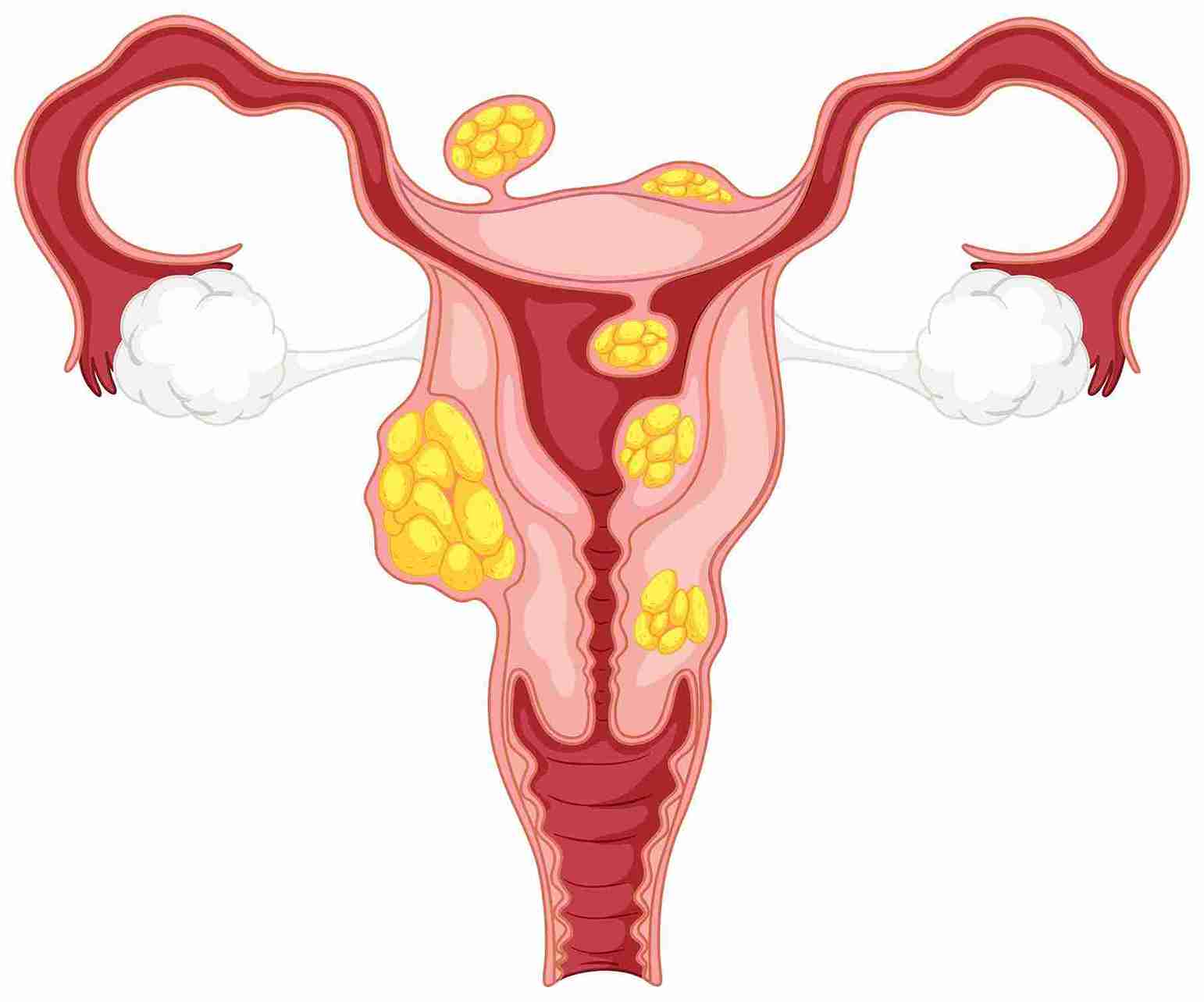
A dermoid cyst is a slow-growing, non-cancerous tumour of the ovary that develops from a germ cell (one of the cells present in the ovary from before birth that can turn into any tissue in the body). It can therefore contain fully formed skin, hair follicles, sebaceous (oil-producing) material, fat, cartilage, bone and sometimes a tooth. It is solid tissue, not a fluid-filled sac that settles with your cycle, and on a pathology report it is written as a mature cystic teratoma.
Term on Your Report
What It Actually Means
Dermoid Cyst
The everyday name for a usually benign ovarian growth that can contain mature tissues such as skin, hair and fat.
Mature Cystic Teratoma
The pathology name for the same type of tumour. “Mature” means the tissues are fully developed and the tumour is generally benign.
Germ Cell
A reproductive cell present from early development that can give rise to different tissue types.
Immature Teratoma
A different and much rarer type of teratoma containing immature or poorly developed tissue. Unlike a mature teratoma, it can be malignant.
Is a dermoid cyst the same as an ovarian teratoma?
Yes. A dermoid cyst and a mature cystic teratoma are two names for one benign condition, so seeing teratoma on a histopathology report does not mean something has changed. The caveat is the word in front of it: an immature teratoma is a different and much rarer tumour, containing poorly formed tissue, which can be malignant.
Why a dermoid cyst contains hair, teeth and fat
Because it grows from a cell that was never assigned a job. Germ cells would ordinarily become eggs, but a small number begin dividing without being fertilised and, retaining the ability to become any tissue, build skin and keratin most commonly, along with hair, sebaceous material and fat, and occasionally a tooth. The process is not directed, which is why the contents are disorganised. The tissue is genetically yours and stable, so it neither invades nor spreads.
How common are dermoid cysts, and how do they differ from other ovarian cysts?
Dermoid cysts are the most common ovarian tumour in young women, making up roughly 10 to 20 out of every 100 ovarian tumours and about 95 out of every 100 ovarian teratomas. Most are diagnosed between 20 and 40, and roughly 10 to 15 in 100 have a dermoid in each ovary, which is why a scan should report on both sides.
If you have been told that ovarian cysts usually settle on their own, that advice was correct, but it was about a different kind of cyst. Functional cysts form as part of the menstrual cycle and disappear as part of it. A dermoid has nothing to do with the cycle, so waiting does not resolve it.
Type of Cyst
What It Is Made Of
Hormone Driven?
Resolves on Its Own?
Functional Cyst (Follicular or Corpus Luteum)
Fluid associated with a normal ovulation cycle.
Yes
Yes, usually within one to three cycles.
Haemorrhagic Cyst
A functional cyst that has bled into itself.
Yes
Yes, usually within a few cycles.
Dermoid Cyst (Mature Cystic Teratoma)
Mature tissue such as skin, hair, fat and sometimes teeth.
No
No. It generally persists rather than shrinking or disappearing.
Endometrioma (Chocolate Cyst)
Old blood and endometrial tissue associated with endometriosis.
Yes, it is influenced by ovarian hormones.
No. It usually persists, although its size can change over time.
Cystadenoma
A benign growth arising from the ovarian surface or lining.
No
No. It does not usually resolve spontaneously.
Polycystic Ovaries (PCOS)
Multiple small immature follicles rather than true ovarian cysts.
Yes, associated with hormonal and metabolic factors.
Not applicable. PCOS is a condition, not a single cyst that resolves.
So repeating a scan in six weeks to see whether a dermoid has gone will not change the answer, and medicines that suppress ovulation have no effect on it. If your report says complex cyst, that is a description rather than a diagnosis: it means the cyst contains something other than clear fluid, and hair, fat and calcification are exactly what make an image look busy.
What causes a dermoid cyst?
Nothing you ate, avoided, took or did caused this. A dermoid cyst forms when a germ cell in the ovary begins dividing on its own and develops into mature tissue instead of remaining a dormant egg cell, a process that starts in early life.
Germ cell origin: a chance event at the cellular level, not a response to your environment.
Not related to ovulation: a dermoid does not form because of an ovulation that went wrong.
No lifestyle cause: cold foods, curd at night, refrigerated water and irregular meal times are all commonly blamed in India. None is a cause, and neither is weight, exercise or stress.
Not inherited: they occur sporadically, so no screening is recommended for relatives.
Nothing preventable, nothing contagious: there is no modifiable trigger to remove, and it contains only your own tissue.
The date on your scan is the date of detection, not of formation, which is how a cyst can appear at 5 or 6 centimetres despite growing at roughly 2 millimetres a year. It did not appear suddenly. It was found suddenly.
Symptoms of a dermoid cyst
Most dermoid cysts cause no symptoms at all, and a large proportion are found by accident on a scan done for something else: a health check, an antenatal ultrasound, or a fertility work-up. Symptoms appear once the cyst takes up space.
Pelvic pressure or ache: one-sided, dull, more heaviness than pain.
Lower abdominal fullness: noticeable in the evening or after standing for long periods.
Needing to pass urine more often: if the cyst is pressing on the bladder.
Discomfort with movement: during exercise or intercourse rather than at rest.
Visible abdominal swelling: with a large cyst, which you may notice before a scan does.
Do not wait on these
Sudden severe one-sided pelvic pain, especially with vomiting, is not a symptom to monitor at home. It needs same-day emergency assessment. The red flag table below sets out exactly when to go in.
What the pain feels like, and what a dermoid cyst does not cause
Cyst pain is usually low and to one side: a dragging heaviness that comes and goes across weeks rather than hours, and it does not follow the menstrual cycle the way endometriosis pain does. Torsion pain is entirely different: sudden, severe from the outset, and very commonly with vomiting. Bloating is a genuine symptom of a large cyst and is mechanical. Generalised weight gain is not.
A dermoid also does not disturb your periods. It is hormonally inactive, producing no oestrogen, progesterone or androgens, so it cannot make your cycle irregular, heavy or absent. If your cycles are irregular and a dermoid has been found, those are two separate findings, and PCOS or thyroid dysfunction are more likely explanations.
When to go to hospital the same day
The main risk is ovarian torsion, and torsion is time-sensitive. Treated promptly, the ovary can usually be untwisted and saved. Left for a day or more, it can be lost.
What You Are Experiencing
What to Do
Sudden severe pain on one side of the pelvis, starting abruptly
Seek emergency medical care the same day. Do not wait to see whether the pain settles.
Sudden pelvic pain together with nausea or vomiting
Seek emergency medical care immediately. This combination can occur with ovarian torsion.
Severe pelvic pain with fever
Seek same-day emergency medical assessment.
Feeling faint or being unable to stand because of the pain
Seek same-day emergency medical assessment.
Sudden severe abdominal pain with rapid abdominal swelling
Seek same-day emergency medical assessment.
A known cyst with new persistent pain that is different from your usual pattern
Contact your gynaecologist within 24 to 48 hours for assessment.
Why dermoid cysts twist more than other cysts
Ovarian torsion means the ovary has twisted on the stalk carrying its blood supply, cutting off circulation. It is a surgical emergency and the most common serious complication of a dermoid cyst. Dermoids twist more than other cysts because they are heavy: a functional cyst is essentially a bag of fluid, while a dermoid contains fat, dense sebaceous material, hair and sometimes calcified bone. That weight on a mobile stalk makes rotation more likely as the cyst grows.
Published estimates range from around 3 to 16 out of every 100 dermoid cysts, and the range is more useful than a single number. They vary because the studies count different populations: surgical and emergency series capture a higher proportion of complicated cysts, while series following women whose cysts were found on routine scans report far lower rates. If your cyst is small and was found incidentally, your risk sits at the lower end. Rupture is uncommon at roughly 1 to 4 in 100, and infection rarer still.
Is a dermoid cyst cancerous?
No. Over 98 out of every 100 dermoid cysts are non-cancerous, and the tissue inside them is fully formed, stable and incapable of invading or spreading. The anxiety comes from three words: tumour, which describes any abnormal growth; teratoma, which also appears in oncology; and complex on the ultrasound report. None indicates malignancy here.
Can a dermoid cyst turn into cancer over time?
Malignant transformation happens in up to 2 out of every 100 dermoid cysts. That number is small but not zero, and giving it honestly is more useful than saying it never happens. The cancer is most often a squamous cell carcinoma arising from the skin lining of the cyst. Three factors raise the risk.
Age: transformation occurs overwhelmingly in women over 45, most often after menopause. In your twenties or thirties it is very rare.
Size: larger cysts carry a higher risk, most reported cases well above the usual size range.
Rapid growth: a cyst enlarging quickly on serial scans is a reason to operate rather than watch.
This is why a dermoid found after menopause is usually removed, while a small stable one found at 28 often is not. The mature and immature distinction is made under the microscope, and it determines how the condition is managed.
Mature Cystic Teratoma (Dermoid Cyst)
Immature Teratoma
Behaviour
Usually benign
Malignant potential
How Common
One of the most common ovarian tumours in young women
Rare; a small fraction of ovarian teratomas
Tissue Inside
Fully formed, well-differentiated mature tissue
Immature or poorly differentiated embryonic-type tissue
Typical Age
Often diagnosed between 20 and 40 years
More often diagnosed during the first two decades of life
Tumour Markers
Usually normal
AFP may be elevated
Managed By
Gynaecologist or minimally invasive gynaecological surgeon
Gynaecological oncology team; treatment may include surgery and chemotherapy depending on the stage and findings
How a dermoid cyst is diagnosed
Most dermoid cysts are found on a pelvic ultrasound, and the diagnosis can usually be made confidently on that scan alone. Examination may pick up a large ovarian mass but cannot tell a dermoid from any other. A transvaginal scan gives a much better view than an abdominal one.
What a dermoid cyst looks like on ultrasound
Radiologists look for a set of named signs. These are the phrases worth recognising on your report.
Rokitansky nodule, or dermoid plug: a bright, solid nodule of hair, fat and keratin casting a shadow. The most common single sign.
Tip of the iceberg sign: the front of the cyst is so reflective that the beam cannot pass through, obscuring the back wall.
Dermoid mesh, or dot-dash pattern: fine interdigitating bright lines and dots: strands of hair suspended in sebum.
Fat-fluid level: a horizontal line where fat floats above denser fluid, highly specific to a teratoma.
Floating balls sign: uniform round globules of fat moving freely inside the cyst.
Acoustic shadowing: dark shadowing behind bright areas from calcification, bone or a tooth.
If your report contains two or three of these, the diagnosis is usually secure. Some dermoids, particularly those with little visible fat, do not show the classic features and are reported as an indeterminate adnexal mass. Indeterminate does not mean sinister; it means the scan could not characterise the mass, and the next step is a different test rather than a different level of concern. That is usually MRI, which works through fat suppression: a mass bright on one sequence and dark once fat is switched off contains fat.
Blood tests and tumour markers
CA-125 is not the right test for a dermoid cyst, and this is worth saying because it is frequently ordered. It rises in endometriosis, fibroids, pelvic infection and even normal menstruation, which makes it unreliable before menopause and a common source of unnecessary alarm. Tumour markers have a narrow role: AFP and LDH are checked only when imaging raises the possibility of an immature teratoma. CA 19-9 can be raised in entirely benign dermoid cysts, so a raised level alone does not indicate cancer.
Size, growth and when surgery is recommended
Most dermoid cysts are under 10 centimetres when found. The growth rate is the most useful number on this page: studies following them over time have found an average of approximately 1.8 millimetres per year. That is slow enough that a stable cyst can be watched with serial scans, and growth beyond roughly 2 centimetres in a year is the point at which most clinicians recommend removal.
Do dermoid cysts ever go away on their own?
No. A dermoid cyst does not resolve, shrink or disappear, because the body has no mechanism for reabsorbing skin, hair and fat. That contradicts what most women hope to read, so the next sentence matters just as much: not resolving is not the same as being urgent. At roughly 2 millimetres of growth a year, you have time to think and take a second opinion.
What size dermoid cyst needs surgery?
The working threshold in most practices is around 5 to 6 centimetres, above which removal is usually recommended because torsion risk rises with size. The honest addition is that no major guideline sets a hard cut-off. A 4 centimetre cyst causing pain may well be removed; a 6 centimetre cyst unchanged across three years may reasonably be watched. Documented growth, symptoms, your age and your fertility plans all carry weight alongside the measurement.
When watchful waiting is reasonable
Monitoring is a legitimate clinical choice, not a delay tactic, and worth saying plainly because the default advice in much of Indian private practice is to operate on every dermoid. It is reasonable when most of the following apply.
The cyst is small: under about 5 centimetres.
You have no symptoms: no pain, no pressure, no interference with daily life.
The imaging is confidently characteristic: the classic ultrasound signs are present.
You can have a follow-up scan: typically annual, with removal recommended if it grows more than about 2 centimetres in a year.
You are premenopausal: the group in which malignant transformation risk is very low.
Where monitoring stops being reasonable
If you are postmenopausal, if the cyst is growing, if it is above roughly 6 centimetres, if the imaging is not clearly characteristic, or if you have developed symptoms, watchful waiting is no longer the appropriate plan and removal should be discussed.
What to do if you have just been told you have a dermoid cyst
The most common mistake here is either rushing into surgery on the day of the scan or doing nothing at all for two years.
Steps you can take now
Get a copy of the actual scan report: note the size, which ovary, whether both were seen, and which signs the radiologist described.
Find any previous scans: comparing two scans gives a growth rate, far more informative than a single measurement.
Keep a simple symptom note: where the pain is, whether it is constant, and whether it relates to your cycle.
Raise your fertility plans at the first appointment: the single most useful action if you are planning a pregnancy now or soon.
Steps your fertility specialist may recommend
A good-quality transvaginal ultrasound: to confirm the diagnosis, measure it accurately and assess the other ovary.
An antral follicle count: checked at the same visit, since it complements AMH.
A repeat scan in 6 to 12 months: rather than immediate surgery, where the cyst is small and asymptomatic.
Referral for laparoscopic cystectomy: where the cyst meets the criteria for removal, with an explicit discussion about preserving the ovary.
What does not work: dissolving a dermoid cyst
Nothing dissolves a dermoid cyst. It contains skin, hair and fat, and nothing dissolves that. No medicine, supplement, oil, herbal preparation, diet or therapy has been shown to shrink or remove one, and the reason is mechanical rather than a gap in the evidence: no biological process reabsorbs solid mature tissue from inside an ovary. Functional cysts often disappear during a course of any treatment, which is why so many remedies appear to work. A dermoid never does.
The delay argument is stronger here than for any other ovarian cyst. With a functional cyst, months of alternative treatment usually cause no harm because it would have resolved anyway; with a dermoid there is no such window, and that time is time during which the torsion risk remains unaddressed. Using complementary therapies alongside medical follow-up is your choice. Using them instead of a scan and a surgical opinion is the part that carries risk.
Contraceptive pills work on functional cysts by suppressing ovulation, but a dermoid is not hormone responsive and is not produced by ovulation. No exercise or yoga will shrink it either, though sudden severe pelvic pain beginning during exercise should be assessed the same day, because exertion is a recognised trigger for torsion. And a dermoid is not an undeveloped twin: it arises from one of your own germ cells.
How is a dermoid cyst removed?
In most cases the ovary stays. The standard operation is a laparoscopic ovarian cystectomy (keyhole surgery in which the cyst is separated from the surrounding ovarian tissue and lifted out whole), leaving the healthy ovary to work normally. Through two or three small incisions the cyst is shelled out from the plane between its wall and the normal ovary, bagged so nothing spills, and sent to the laboratory.
One detail matters for you specifically: because a dermoid grows by pushing ovarian tissue aside rather than infiltrating it, that plane is usually clean and well defined, which is why a dermoid cystectomy tends to be less damaging to the ovary than surgery for an endometrioma.
Cystectomy or removing the ovary
These are two different operations with very different consequences, and the distinction should never be left ambiguous before you sign a consent form.
Ovarian Cystectomy
Oophorectomy
What Is Removed
Only the ovarian cyst is removed.
The entire ovary is removed, including the eggs stored within it.
Ovary Preserved
Yes, where technically possible.
No.
Effect on Ovarian Reserve
May cause a small measurable reduction in ovarian reserve, depending on the cyst and surgical technique.
The ovarian reserve from that ovary is permanently lost.
When It Is Chosen
Often preferred for women of reproductive age when preserving ovarian tissue is appropriate.
May be considered when there is extensive ovarian damage, a non-viable ovary, suspected malignancy, or other specific clinical indications.
Fertility Impact
Usually limited, although the impact depends on the cyst, surgery and remaining ovarian reserve.
Removing one ovary can reduce overall ovarian reserve; the fertility impact is greater if the other ovary is also affected or absent.
Ask your surgeon directly whether the plan is to preserve the ovary, and what would have to be found during the operation for that to change. It is the most useful conversation on this page if you are trying to conceive or plan to.
Keyhole or open surgery, and how spillage is prevented
Laparoscopy is the standard approach and the one you should expect: less blood loss, less pain afterwards, a shorter stay and a faster return to normal activity. Open surgery (laparotomy) is still right for a very large cyst, a suspicion of malignancy, or extensive adhesions, and being told you need one is not a sign that something has gone wrong. Some spillage happens in a proportion of keyhole removals, so surgeons dissect the cyst out intact where possible, bag it before removal, and irrigate with warm fluid if spillage occurs, which keeps chemical peritonitis (inflammation caused by sebaceous material in the abdomen) uncommon.
Recovery timeline after dermoid cyst surgery
The timeline below applies to uncomplicated keyhole surgery. Open surgery adds roughly two to four weeks at each stage.
Milestone
Typical Timing After Laparoscopic Cystectomy
Walking and Eating Normally
Usually the same day or the next morning.
Hospital Discharge
Usually the same day or after one night.
Shoulder Tip Discomfort Settles
Usually within 2 to 4 days.
Return to Desk Work
Usually within 1 to 2 weeks.
Driving
When you can perform an emergency stop comfortably and are not affected by pain medication; often around 1 to 2 weeks.
Light Exercise
Often after 2 to 3 weeks, depending on recovery and your surgeon's advice.
Full Activity Including Gym
Often around 4 to 6 weeks, depending on the procedure and recovery.
Histopathology Result Available
Usually within 1 to 2 weeks.
Trying to Conceive
Often after 1 to 3 cycles, depending on the type of cyst, healing and your surgeon's advice.
There is no medical treatment that removes a dermoid cyst, so the alternative to surgery is monitoring, not medication.
How much does dermoid cyst surgery cost in India?
The cost of laparoscopic ovarian cystectomy varies by city, by hospital, by whether it is done as day care or with an overnight admission, and by the work-up needed beforehand. The figures below are indicative bands for orientation only. Verified figures for Cloudnine Fertility centres are being confirmed and will replace them.
City
Laparoscopic Ovarian Cystectomy: Indicative Range
Bengaluru
₹80,000 to ₹2,00,000
Mumbai
₹80,000 to ₹2,00,000
New Delhi
₹80,000 to ₹2,00,000
Gurugram
₹80,000 to ₹2,00,000
Noida
₹80,000 to ₹2,00,000
Chennai
₹80,000 to ₹1,60,000
Hyderabad
₹80,000 to ₹1,80,000
Pune
₹80,000 to ₹1,80,000
Chandigarh and Mohali
₹80,000 to ₹1,60,000
Related costs are quoted separately, and these figures are also indicative.
Item
Indicative Cost
Pelvic or Transvaginal Ultrasound
₹1,000 to ₹3,500
Pelvic MRI, Where Indicated
₹12,000 to ₹19,000
AMH Blood Test
₹5,000 to ₹6,500
Tumour Marker Panel, Where Indicated
₹2,000 to ₹5,000
Histopathology of the Removed Cyst
₹1,500 to ₹4,000
Pre-Anaesthetic Assessment and Bloods
₹4,500 to ₹8,000
What moves the final figure: day care or overnight admission, the anaesthesia, laparoscopic or open surgery, whether both ovaries need treating, and whether histopathology and follow-up scans sit inside the package. Ask for a written estimate stating which are included. Surgery of this kind requires hospitalisation and is generally considered under health insurance, unlike elective fertility treatment, so ask the hospital insurance desk to raise a pre-authorisation before surgery.
Dermoid cysts and fertility
A dermoid cyst usually has no effect on your fertility. It is hormonally inactive; it does not interfere with ovulation, damage the fallopian tubes, or change egg quality, and most women with one conceive naturally. This question generates anxiety because most fertility information about ovarian cysts is really about endometriomas, which are markers of endometriosis and genuinely associated with reduced ovarian reserve. The fear has been imported from a different condition.
Does dermoid cyst surgery reduce AMH or ovarian reserve?
Yes, slightly, and rounding it to zero would be wrong. Studies measuring AMH before and after laparoscopic cystectomy consistently show a small but measurable fall, because some normal ovarian tissue is inevitably removed alongside the cyst wall. The fall is smaller than after endometrioma surgery, for the anatomical reason given above, and surgeon experience matters: careful stripping, minimal heat, and avoiding repeat operations on the same ovary all protect reserve. The conclusion is not to avoid surgery, but to have it done once, done well, by someone asked explicitly to preserve ovarian tissue.
Should you get an AMH test before dermoid cyst surgery?
Yes, if you have not completed your family. A baseline is the one thing that cannot be reconstructed afterwards: without it, a low AMH found later can never be attributed with confidence to the surgery rather than to where you already were. Our guide to AMH testing explains what the number does and does not tell you, and both tests are available through Cloudnine Fertility testing and diagnostics.
Can you get pregnant after dermoid cyst removal?
Yes. When the ovary has been preserved, natural conception remains entirely possible, and most women who were fertile before surgery are fertile after it. Even where one whole ovary has been removed, pregnancy is still possible with a healthy remaining one, which ovulates every cycle rather than alternating. Most women start trying again after 1 to 3 cycles.
Do you need to remove a dermoid cyst before IVF?
Not always, and this is a case-by-case decision often answered too quickly in either direction. A large dermoid can obstruct access to follicles during egg collection, and there is a theoretical concern about the retrieval needle releasing sebaceous contents into the pelvis, so where it sits in the path of retrieval, removing it first is safer. Against that, surgery costs ovarian reserve at exactly the point when it matters most. A small dermoid well away from the retrieval path often does not need to come out first.
Egg quality, and when egg freezing is worth discussing
A dermoid cyst does not affect egg quality. It produces no hormones and creates no inflammatory environment within the ovary, so it cannot influence the eggs developing alongside it; egg quality is driven overwhelmingly by age. Our article on ovary size, follicles and what scans can actually tell you covers what a scan does and does not reveal about egg supply.
Egg freezing before surgery is not routine, and recommending it for a single dermoid on one ovary in a woman with normal reserve would overstate the risk the operation carries. It becomes reasonable in three situations: cysts in both ovaries; a second operation on the same ovary; or AMH already low for your age. Cloudnine Fertility fertility preservation services can advise.
Dermoid cysts found during pregnancy
Finding a dermoid cyst on an early pregnancy scan is unsettling, and the reassurance is genuine: in most cases it is monitored rather than operated on, and the pregnancy proceeds normally. This is one of the commonest routes to diagnosis, because the first trimester scan is often the first detailed pelvic ultrasound a woman has had. It cannot harm the baby: the cyst sits in the ovary, entirely outside the uterus, so it does not affect fetal development or cause miscarriage.
Surgery during pregnancy is the exception, considered when the cyst causes torsion, is very large, causes significant pain, or looks suspicious on imaging. Where it is needed, the second trimester is preferred: the organs of the baby have formed, so anaesthetic risk is lower than in the first trimester; the uterus is still small enough to allow access; and the risk of triggering preterm labour is lower than in the third.
Torsion risk is modestly higher during pregnancy and shortly after delivery, because the enlarging uterus displaces the ovaries and increases their mobility. The emergency signs are the same as in the red flag table above. A dermoid is not in itself an indication for a caesarean section; the exception is a cyst both very large and positioned low in the pelvis, which your obstetric team would assess on scan before your due date.
Can a dermoid cyst come back after surgery?
It can, but for most women it does not. Reported rates vary with how long women are followed, so the honest picture is a range rather than a single figure: around 4 in 100 within three to four years of cystectomy, rising to roughly 10 to 15 in 100 at five to six years or longer. Recurrence is more likely in women who were young at surgery, where the original cyst was large, and where both ovaries were involved.
Routine lifelong surveillance imaging is not standard practice, and this is worth saying because indefinite annual scanning is commonly advised in Indian private care without a clear rationale. A reasonable approach is a scan if symptoms return, a scan as part of a fertility work-up if you are trying to conceive, and attention to the other ovary at any routine review. If you are told you need a scan every six months indefinitely after an uncomplicated cystectomy, it is fair to ask what that schedule is looking for.
Left untreated, in many cases very little happens: the cyst grows at roughly 2 millimetres a year and may cause no symptoms for years. Torsion risk rises as it enlarges, a very large cyst is harder to remove with ovary-sparing surgery, and the small risk of malignant transformation increases with age. None of that makes an untreated dermoid an emergency. It makes it something to follow rather than forget.
When should you see a doctor about a dermoid cyst?
For most women the right first stop is a gynaecologist, who can arrange a scan and characterise the cyst. A fertility specialist becomes the better choice if you are trying to conceive now or plan to soon, because that changes what gets measured before surgery.
Your Situation
Who to See and When
Sudden severe one-sided pelvic pain, with or without vomiting
Emergency department, the same day.
A dermoid found on a scan, with no symptoms and no pregnancy planned soon
See a gynaecologist within a few weeks.
A dermoid found on a scan while you are trying to conceive
See a fertility specialist before any surgery is scheduled.
A dermoid found and you plan pregnancy within the next few years
Consider a fertility specialist assessment, including baseline AMH and antral follicle count where appropriate.
Dermoid cysts reported in both ovaries
See a fertility specialist before agreeing to a surgical plan.
Surgery has already been advised and you want the ovary preserved
Consider a second opinion from a fertility specialist or minimally invasive gynaecological surgeon.
Persistent pelvic pain, bloating or swelling
See a gynaecologist within a few weeks for assessment.
A dermoid found after menopause
See a gynaecologist promptly because ovarian findings require a different level of assessment after menopause.
If you are trying to conceive or plan to soon, book a consultation with a Cloudnine Fertility specialist before surgery is scheduled, so that ovarian reserve is measured first and ovary-sparing surgery is planned deliberately rather than assumed.
What outcomes to expect
The table below puts the numbers in one place.
Question
What the Evidence Shows
Is it benign?
Yes, in more than 98 out of 100 cases.
Will it resolve on its own?
No. Dermoid cysts generally do not shrink or disappear spontaneously.
How fast does it grow?
Approximately 1.8 millimetres per year on average.
Risk of Ovarian Torsion
Approximately 3 to 16 out of 100, with the risk generally higher for larger cysts.
Risk of Rupture
Uncommon, estimated at around 1 to 4 out of 100.
Risk of Malignant Transformation
Up to 2 out of 100, with most cases occurring in women over 45.
Present in Both Ovaries
Roughly 10 to 15 out of 100 cases.
Effect of Surgery on Ovarian Reserve
A small measurable fall in AMH may occur after cystectomy.
Natural Conception After Ovary-Sparing Surgery
Usually unaffected.
Recurrence After Cystectomy
Around 4 out of 100 early after surgery, with recurrence rates increasing over longer follow-up.
Return to Full Activity After Keyhole Surgery
Typically around 4 to 6 weeks, depending on the procedure and individual recovery.
Want to consult the Best Fertility in india? Please find the links below.
Find clear, trusted answers to the most common questions about IVF—designed to guide and support you every step of the way.
Will a dermoid cyst go away on its own?
No. It contains solid mature tissue such as skin, hair and fat, and the body has no way to reabsorb that. This is not the same as urgent: at roughly 2 millimetres of growth a year, a small one gives you time to gather opinions.
What size dermoid cyst needs surgery?
Around 5 to 6 centimetres is the working threshold in most practices, because torsion risk rises with size. No major guideline sets a hard cut-off, and documented growth, symptoms, your age and your fertility plans all carry weight alongside the measurement.
Can a dermoid cyst be dissolved with medicine or natural remedies?
No. The cyst contains skin, hair and fat, and nothing dissolves that. Contraceptive pills work on functional cysts by suppressing ovulation, but a dermoid is not produced by ovulation and is not hormone responsive.
Does a dermoid cyst affect fertility?
Usually not. It is hormonally inactive, does not interfere with ovulation, does not damage the fallopian tubes and does not affect egg quality. Much of the anxiety here is imported from information about endometriomas, a different condition.