Most ovarian cysts are caused by ordinary ovulation. Each month, the ovary grows a fluid-filled sac called a follicle to release an egg. If that follicle does not release the egg, or does not shrink back afterward, it fills with fluid and becomes a functional cyst. That is the cause in the large majority of cases. A smaller number are caused by endometriosis, by abnormal tissue growth, or by the ovary's response to fertility medication. Stress, diet, and lifestyle do not cause ovarian cysts. In most cases, an ovarian cyst is not the result of anything you did.
How Ovarian Cysts Form: The Ovulation Cycle in Plain Terms
To understand why ovarian cysts form, it helps to know what the ovary does every month. An ovarian cyst is a fluid-filled sac in or on the ovary. The word sounds alarming, but the structure that produces most cysts is a normal and necessary part of the menstrual cycle.
At the start of each cycle, several small sacs called follicles begin to grow inside the ovary. Each follicle holds an immature egg and is filled with fluid. Usually one follicle becomes dominant, grows to roughly 18 to 25 mm, and then bursts to release its egg. That release is ovulation. The emptied follicle collapses and reorganises itself into a temporary hormone-producing structure called the corpus luteum, which supports the second half of the cycle and then breaks down if pregnancy does not occur.
A functional ovarian cyst forms when one of those two steps does not finish. Either the follicle does not rupture and keeps taking on fluid, or the corpus luteum seals over and retains fluid or blood instead of shrinking. Both are variations on a normal process rather than a disease of the ovary.
Stage of Cycle
What Normally Happens
What Happens When an Ovarian Cyst Forms
Cyst Type
Early Follicular Phase, Days 1 to 7
Several follicles begin to grow, each containing a small fluid-filled sac holding an immature egg.
Nothing unusual. Cysts do not usually form at this stage.
None
Late Follicular Phase, Days 8 to 14
One dominant follicle grows to about 18 to 25 mm and prepares to release its egg.
The follicle continues growing and fluid collects inside it.
Follicular Cyst
Ovulation, Around Day 14
The follicle ruptures and releases the egg towards the fallopian tube.
The follicle does not rupture, or it ruptures incompletely.
Follicular Cyst
Luteal Phase, Days 15 to 28
The emptied follicle becomes the corpus luteum and produces progesterone, then normally shrinks.
The opening seals over and fluid or blood becomes trapped inside.
Corpus Luteum Cyst
Next Period
The corpus luteum breaks down and a new cycle begins.
Most functional cysts gradually shrink and disappear over the following two to three cycles without treatment.
Usually Resolves
This is why a functional ovarian cyst is, in one sense, evidence that the ovary is working rather than failing. An ovary that is not cycling does not produce follicles at all. A cyst that forms this way says something about the timing of one cycle, not about damage to the ovary.
It also explains why most functional ovarian cysts need no treatment. Once the cycle moves on, the cyst loses its hormonal support and is reabsorbed. A Cochrane review of eight randomised trials covering 686 women found that combined oral contraceptives did not speed up the resolution of functional ovarian cysts, and that watchful waiting over two to three cycles is the appropriate approach. Cysts still present after that window are more likely to be something other than functional, which is why a repeat scan matters far more than any tablet.
The Follicle That Does Not Release
A follicular cyst forms when the dominant follicle matures but does not rupture. Instead of releasing the egg and collapsing, it continues to take on fluid and can reach several centimetres. Most stay under 5 cm, cause no symptoms at all, and disappear within two or three cycles. Many are found only because a scan was done for another reason. A follicular cyst does not mean ovulation has stopped permanently. It usually means one particular cycle did not complete the release step. Size thresholds, symptoms and follow-up intervals for this cyst type are covered in full on our dedicated follicular cysts page.
The Follicle That Does Not Shrink Back
A corpus luteum cyst forms after the egg has already been released. The emptied follicle normally reseals, becomes the corpus luteum, and produces progesterone to support a possible pregnancy. If that sealed structure retains fluid or bleeds into itself, it becomes a corpus luteum cyst. These are more likely than follicular cysts to cause one-sided discomfort, and they are common in early pregnancy, when the corpus luteum is deliberately maintained by pregnancy hormones instead of breaking down. Most resolve on their own within a few weeks. The full picture for this cyst type sits on our dedicated corpus luteum cysts page.
What 'Hormonal Imbalance' Actually Means in Ovarian Cysts
'Hormonal imbalance' is the phrase used most often to explain ovarian cysts in India, and it is one of the least useful phrases in the whole conversation. It is not wrong. It is simply too vague to act on.
Here is what it actually describes. Ovulation depends on an ordered sequence of hormone signals. Follicle-stimulating hormone, released by the pituitary gland at the base of the brain, prompts follicles to grow. The growing follicle produces oestrogen. Rising oestrogen triggers a sharp surge of luteinising hormone, and that surge is what makes the follicle rupture and release the egg. If the surge is weak, mistimed or absent, the follicle keeps growing and does not release. That is the whole mechanism. A cycle that does not ovulate cleanly leaves a follicle behind, and a follicle left behind is a functional ovarian cyst.
Several things can disturb that signalling: polycystic ovary syndrome, an under-active or over-active thyroid, a raised prolactin level, significant weight gain or loss, and the years approaching menopause, when cycles become less predictable. Each of these is a specific, testable condition. That is the point. 'Hormonal imbalance' is worth investigating precisely because it usually resolves into one of these named diagnoses once the right tests are done.
What to be clear about
'Hormonal imbalance' describes a mechanism. It is not a diagnosis on its own, and it is not a finding a scan can show.
There is no single blood test called a hormone balance test. What exists are specific tests for specific conditions: thyroid function, prolactin, androgens, and hormones read at defined points in the cycle.
No supplement, herbal preparation, detox regime or dietary protocol has been shown in controlled trials to clear an ovarian cyst. That includes preparations marketed specifically for dissolving cysts.
The genuine risk is not the remedy itself. It is the delay. A cyst that is assumed to be hormonal and treated at home for months is a cyst nobody has rescanned, and persistence past two or three cycles is exactly the signal that matters.
If a cyst has been found, the useful next step is a repeat pelvic ultrasound at the interval your doctor advises, plus targeted blood tests if your cycles are irregular. That sequence answers the question. A balancing protocol does not.
What Does Not Cause Ovarian Cysts
Most of what circulates about the causes of ovarian cysts in India is not supported by evidence, and much of it lands as blame. The table below sets out the beliefs we hear most often in clinic and what the evidence actually shows.
Common Belief
What the Evidence Shows
Verdict
Stress causes ovarian cysts
Prolonged stress can affect hormone signals that regulate ovulation, and disrupted cycles can be associated with functional cysts. However, this is an indirect association, not evidence that stress directly causes ovarian cysts.
No
Cold foods, curd, or sour foods cause ovarian cysts
No specific food or food temperature has been established as a cause of ovarian cysts. These beliefs do not have a known physiological basis.
No
Weight gain causes ovarian cysts
Weight gain does not directly create an ovarian cyst. However, excess weight can worsen insulin resistance, which is associated with PCOS and can affect ovulation.
No
Sexual activity, or lack of it, causes ovarian cysts
Ovarian cysts generally develop from ovarian processes such as ovulation, independently of sexual activity. Frequency of intercourse does not determine whether a follicle releases an egg.
No
Contraceptive use causes ovarian cysts
Hormonal contraception generally suppresses ovulation rather than causing it, and it does not generally cause functional ovarian cysts.
No
Late marriage or not having children causes ovarian cysts
Marital status or childbearing history does not cause ovarian cysts. The number of ovulatory cycles over a lifetime may affect the statistical likelihood of developing some functional cysts, but this is not a fault or disease caused by delaying pregnancy.
No
Heavy lifting or exercise causes ovarian cysts
Physical activity does not cause ovarian cysts to form. Vigorous movement can occasionally contribute to rupture or complications of an existing cyst, which is a different issue.
No
A previous termination causes ovarian cysts
A previous termination does not cause ovarian cysts. There is no established mechanism by which it would alter follicle development in later cycles in a way that causes ovarian cysts.
No
Two of those rows deserve a sentence more, because the honest answer is not the same as no connection at all. Weight and stress both influence how reliably you ovulate, and ovulation is the process that produces functional cysts. That makes them background factors in cycle regularity, which is worth managing for its own sake. It does not make them the cause of the cyst on your scan report.
The reason to be blunt about this is practical. Women arrive at fertility consultations having spent months auditing their diet, their work stress and their past decisions for the mistake that caused this. There usually was not one.
Causes of Ovarian Cysts That Do Matter: Endometriosis, PCOS and Abnormal Tissue Growth
The reasons for an ovarian cyst that genuinely change what happens next fall into a small group. These are the ones worth naming precisely, because each behaves differently and each is followed up differently.
Cause
What It Is
Cyst Type It Produces
Does It Tend to Recur?
Normal Ovulation
A follicle that does not release its egg, or a corpus luteum that does not shrink back.
Follicular cyst, corpus luteum cyst
Can recur in any cycle, but usually resolves each time.
Endometriosis
Tissue similar to the womb lining growing outside the uterus, including on the ovary, where it is affected by hormonal changes each cycle.
Endometrioma, also called a chocolate cyst
Yes, and it often persists rather than resolving on its own.
Polycystic Ovary Syndrome
A hormonal and metabolic condition in which many small immature follicles may accumulate because ovulation is irregular or does not occur.
Multiple small follicles, not true ovarian cysts
The pattern can persist while the underlying condition remains untreated.
Abnormal Tissue Growth
Growth of ovarian cells unrelated to the menstrual cycle; many such growths are benign.
Dermoid cyst, cystadenoma
These generally do not resolve on their own and can recur after removal in some cases.
Pelvic Infection
Infection involving the ovary and fallopian tube that can lead to a collection of pus.
Tubo-ovarian abscess
Uncommon as a recurring cyst-type process and related to infection rather than the menstrual cycle.
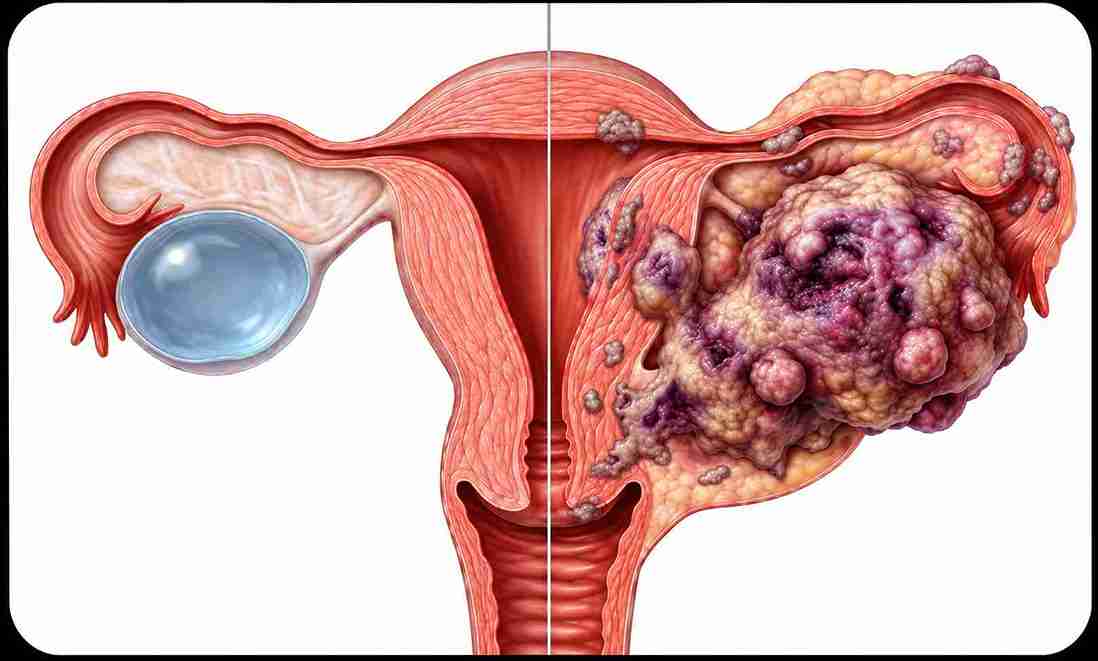
Endometriosis is the cause most likely to matter for fertility. When endometriosis affects the ovary, the tissue bleeds with each cycle and the old blood collects, producing an endometrioma, commonly called a chocolate cyst because of the thick dark fluid inside. These do not clear on their own the way functional cysts do, and they need to be assessed alongside any plans to conceive. We cover this in depth in our guide to endometriosis and fertility, and the endometrioma itself has its own dedicated page in this cluster.
Polycystic ovary syndrome is the one to correct rather than explain at length. Despite the name, the many small follicles seen on a polycystic ovary are immature follicles, not true ovarian cysts. Having an ovarian cyst does not mean you have polycystic ovary syndrome, and having polycystic ovaries on a scan is not the same as having a cyst. If polycystic ovary syndrome is the question you actually came with, our guide to PCOS and fertility answers it properly, and the comparison between the two findings has its own page.
Dermoid cysts and cystadenomas sit outside the cycle altogether. A dermoid cyst arises from cells present since birth and can contain tissue such as hair, skin or fat. A cystadenoma develops from the surface cells of the ovary and can grow large. Both are usually benign, and both usually need surgical removal rather than monitoring, because they do not reabsorb.
Pelvic infection is an uncommon but real cause. A severe infection of the reproductive tract can spread to the ovary and form a collection of pus known as a tubo-ovarian abscess. This is not a variation of a functional cyst. It usually comes with fever and marked pain, and it needs prompt treatment.
Ovarian Cysts After Fertility Treatment and Ovulation Induction
This is one cause where the honest answer is yes. Functional ovarian cysts are common after ovulation induction and cycle monitoring, and after ovarian stimulation as part of a treatment cycle. The reason is straightforward. These treatments deliberately encourage follicles to grow, so more follicles develop than in a natural cycle, and any one of them can persist as a cyst instead of resolving cleanly.
Most of these cysts are simple, small, produce no symptoms, and disappear within a cycle or two without any treatment. They are not a sign that something has gone wrong with the treatment, and they are not damage to the ovary.
What they can do is affect timing. Before starting a stimulation cycle, your team performs a baseline scan to check that the ovaries are quiet and ready. If that scan shows a cyst of a certain size, or one that is producing hormones, the cycle may be postponed by a few weeks to let it settle. That delay is frustrating, and it is also the right decision: starting stimulation over an active cyst tends to produce a poorer response, not a better one.
A cyst found at a baseline scan before an IVF cycle is a specific situation with its own decision points, and we cover it separately in this cluster. The distinction between an ordinary post-stimulation cyst and ovarian hyperstimulation syndrome, which is a different and more significant complication, is also handled on its own page rather than here.
Why Some Women Get Ovarian Cysts Repeatedly
A single ovarian cyst is usually a chance. Ovarian cysts that keep returning are usually a pattern, and a pattern points to a driver.
Three drivers account for most recurrence. The first is polycystic ovary syndrome, where cycles repeatedly fail to complete ovulation, so follicles keep accumulating rather than releasing. The second is endometriosis, where the underlying disease continues to seed the ovary, so endometriomas re-form after they are removed. The third is a tendency to anovulatory cycles for other reasons, including thyroid disorders, raised prolactin, significant weight change and the perimenopausal years, where the hormone signal that triggers release becomes unreliable.
The practical consequence is that recurrent ovarian cysts are worth investigating as a question about ovulation, not as a series of separate cysts. Repeatedly removing or monitoring individual cysts without asking why they keep forming treats the same problem over and over.
It is also worth saying plainly that recurrence is not evidence of a failure to follow advice. If the driver has not been identified and addressed, cysts will keep forming regardless of what you do at home. Prevention and recurrence are covered in depth on our dedicated page for recurrent ovarian cysts.
Can You Prevent Ovarian Cysts?
No. There is no reliable way to prevent functional ovarian cysts, because they are a by-product of ovulation itself. As long as you are ovulating, the ovary is producing the exact structure that becomes a functional cyst when a cycle does not finish cleanly. Preventing them entirely would mean preventing ovulation.
That is the nuance worth understanding. Suppressing ovulation does reduce the formation of new functional cysts, because no ovulation means no follicle left behind. This effect was clearest with the older, higher-dose hormonal preparations. Studies of modern low-dose preparations have not shown the same association, so the protective effect is weaker than it is often described. Either way, suppression does nothing for a cyst that already exists: the Cochrane evidence is that combined oral contraceptives do not hasten the resolution of a functional cyst that has already formed.
And for anyone trying to conceive, suppressing ovulation is not a strategy at all. It works against the thing you are trying to achieve. This is the point at which cyst prevention and fertility plans genuinely conflict, and it should be a conversation with your doctor rather than a default.
What can be managed is the driver. If recurrent cysts trace back to polycystic ovary syndrome, endometriosis or a thyroid problem, treating that condition changes the pattern. That is a different proposition from preventing cysts, and it is the only version that holds up.
When the Cause of an Ovarian Cyst Changes What Happens Next
The cause matters mainly because it determines whether the cyst is likely to go away by itself. That single question drives most of what follows.
Cause
Typical Management
Why
Functional Cyst from Ovulation
Repeat pelvic ultrasound after two to three cycles, with no treatment in between unless symptoms require otherwise.
The large majority resolve on their own, and treatment does not usually speed up the process.
Endometrioma from Endometriosis
Assessed alongside fertility plans before making any decision about removal.
Removal may improve symptoms in selected cases but can also reduce ovarian reserve, so timing needs to be considered carefully when pregnancy is desired.
Dermoid Cyst or Cystadenoma
Usually planned surgical removal when indicated, rather than urgent surgery.
These cysts generally do not reabsorb on their own, and tissue examination may be part of the reason for removal.
Polycystic Ovary Syndrome
Managed as a hormonal and metabolic condition rather than as an individual ovarian cyst.
The ultrasound finding represents multiple small follicles, so cyst-directed treatment does not apply.
Tubo-Ovarian Abscess from Infection
Prompt medical treatment, sometimes including drainage.
This represents an active infection rather than a cycle-related ovarian cyst.
Any Cyst with Concerning Features on a Scan
Further imaging and specialist review before a treatment decision.
Appearance, size, growth pattern, symptoms, and menopausal status all influence how the cyst is assessed.
Whether a given cyst will resolve on its own, and how long that usually takes, is covered separately in this cluster, as are the treatment options in full. The purpose of this section is only to show that the cause and the plan are linked.
When the Cause of an Ovarian Cyst Matters for Your Fertility
For most women, the answer here is reassuring. A functional ovarian cyst does not reduce your fertility. It forms as part of ovulation, resolves on its own, and leaves the ovary as it was. A dermoid cyst or a cystadenoma does not usually affect fertility either, though its position and size can influence how surgery is planned if removal is needed.
Two causes are different. Endometriosis-driven cysts sit within ovarian tissue, and both the disease and the surgery to treat it can reduce the number of eggs available. Polycystic ovary syndrome affects fertility through anovulation, which is the failure to release an egg reliably, rather than through the follicles seen on the scan. In both cases, it is the underlying condition, not the cyst, that is the fertility question.
The wider relationship between ovarian cysts and fertility has its own dedicated page in this cluster, including what to expect from testing and from treatment.
If you have been told you have an ovarian cyst and you are planning a pregnancy, or you have been trying without success, it is worth having the cause identified rather than waiting to see. A fertility specialist can review the scan, decide whether a repeat scan or further tests are needed, and set out what it means for your timeline. You can book a consultation with Cloudnine Fertility to have that conversation.
When to Seek Medical Care for an Ovarian Cyst
Seek urgent medical care if you have any of the following
Sudden, severe pain on one side of the lower abdomen or pelvis
Pain with fever
Pain with vomiting
Feeling faint, light-headed or unusually breathless
These can indicate that an ovarian cyst has ruptured or that the ovary has twisted, which needs assessment the same day.
Outside those situations, book a routine appointment if you have persistent pelvic pain, a change in your cycle that lasts more than a few months, or abdominal swelling that does not settle. One honest point to finish on: the cause of an ovarian cyst cannot be worked out from symptoms. Two cysts with entirely different causes can feel identical, and many cause nothing at all. It takes a scan.
Most ovarian cysts are caused by normal ovulation. A follicle that does not release its egg, or does not shrink back after releasing it, fills with fluid and becomes a functional cyst.
Can stress cause ovarian cysts?
No. Stress does not cause ovarian cysts. Prolonged stress can disrupt the menstrual cycle, and disrupted cycles are associated with functional cysts, but stress is not a direct cause.
Can diet cause ovarian cysts?
No. No food causes ovarian cysts and no food clears them. Diet matters only where it affects an underlying condition such as polycystic ovary syndrome.
What does hormonal imbalance mean in ovarian cysts?
It describes cycles in which the hormone signals that trigger ovulation do not work as expected, so a follicle persists as a cyst. It is a description of a mechanism, not a diagnosis on its own.
Schedule your consultation Today!
Book your consultation with our fertility experts the first step toward your parenthood journey.