Do Birth Control Pills Treat Ovarian Cysts? Myth vs Evidence
October 3, 2026
Cloudnine
No items found.
Do Birth Control Pills Treat Ovarian Cysts? Myth vs Evidence
October 3, 2026
Cloudnine
No items found.
Birth control pills do not shrink or dissolve an ovarian cyst you already have. What they do is reduce the chance of new functional cysts forming, because they suppress ovulation (the monthly release of an egg) and functional cysts form as part of ovulation. That is prevention, not treatment.
This matters because the pill is prescribed for ovarian cysts every day in India, often for good reasons. It is simply not doing the job most women assume it is doing, and knowing the difference changes what you should ask for.
What the pill actually does to an ovary
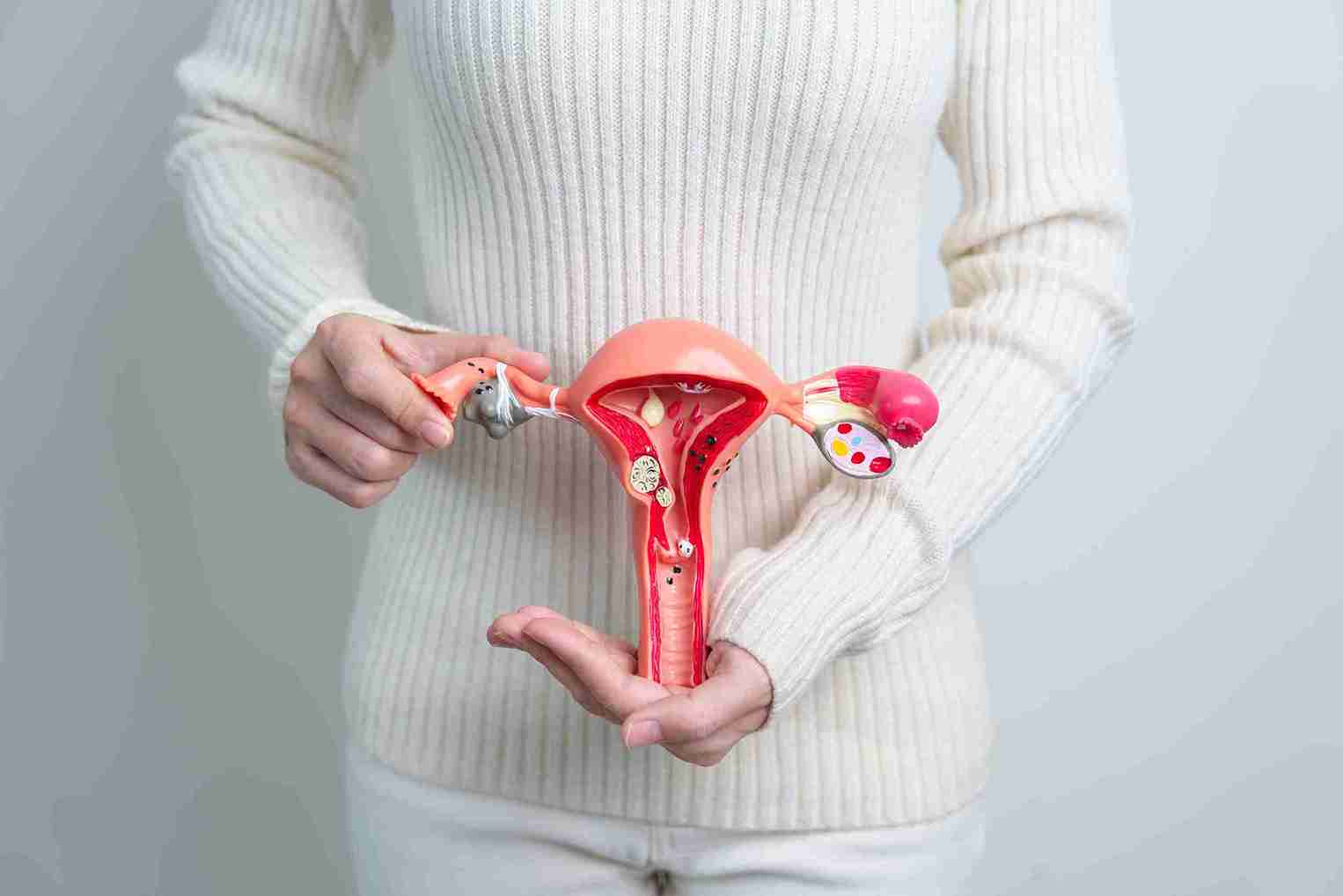
Every month, one follicle (a small fluid-filled sac holding an egg) grows on the ovary and releases its egg. Most common ovarian cysts are a variation on that same process. A follicular cyst forms when the follicle grows but does not release the egg. A corpus luteum cyst forms when the emptied follicle seals over and fills with fluid or blood afterward. Both are called functional cysts, because they are made by normal ovarian function rather than by disease.
The combined pill (which contains both an oestrogen and a progestogen) works by stopping that monthly cycle from completing. No ovulation means no follicle reaches the point where it can turn into a cyst.
Read that mechanism carefully, because the whole misunderstanding sits inside it. Suppressing ovulation affects cysts that have not yet formed. It has no mechanism at all for acting on a cyst that formed last month and is sitting on the scan report in front of you. The pill works forwards in time, not backward.
What the evidence actually found
This is not a matter of clinical opinion. It has been tested directly, and the answer has been settled for years.
The Cochrane Collaboration, which produces systematic reviews (studies that pool every trial ever run on a question), examined oral contraceptives as a treatment for functional ovarian cysts. The review by Grimes and colleagues, last updated in 2014, pulled together eight randomised controlled trials from four countries covering 686 women. In every one of those trials, women given the combined pill saw their cysts clear no faster than women who were simply monitored. That held for cysts that appeared spontaneously and for cysts that appeared after ovulation induction in fertility treatment.
The authors concluded that combined oral contraceptives appear to be of no benefit for this purpose, and that watchful waiting over two to three cycles is the appropriate approach. Where a cyst persists beyond that, surgical management is often what is indicated, not a longer course of pills.
The reason the practice took hold is worth knowing. Early oral contraceptives were noticed to reduce how often functional cysts appeared, so clinicians inferred that the pill might also clear them. That became routine practice in the 1970s. When it was finally tested, the prevention half held up and the treatment half did not.
Prevention versus treatment: what the pill does and does not do
The single most useful thing to hold on to is that prevention and treatment are two different questions, and the pill only answers one of them. This table separates them by situation.
Your Situation
What the Pill Does
What It Does Not Do
What to Do Instead
A functional cyst you already have
Usually has no effect on the existing cyst.
Does not reliably shrink or dissolve the cyst or make it clear faster.
Monitor the cyst, with repeat imaging after two to three cycles when advised.
Preventing new functional cysts
Hormonal contraception can reduce ovulation and therefore reduce the frequency of new functional cysts.
Does not guarantee that no cyst will ever form again.
May be a reasonable ongoing option if you are repeatedly developing functional cysts and are not trying to conceive.
An endometrioma or chocolate cyst
Hormonal treatment may help control endometriosis-related pain.
Does not reliably remove or shrink the endometrioma.
Seek specialist assessment; surgery is considered selectively based on size, symptoms, ovarian reserve, and fertility plans.
A dermoid cyst
Usually has no effect on the cyst.
Does not dissolve or shrink a dermoid cyst.
Monitoring or surgical removal may be considered based on imaging, size, symptoms, and other clinical factors.
A cystadenoma
Usually has no effect on the cyst.
Does not dissolve or shrink a cystadenoma.
Monitoring or surgical removal may be considered based on imaging, size, growth, and symptoms.
Pain from a cyst
Hormonal treatment may help some cycle-related pain over time, depending on the cause.
It is not a rapid painkiller and does not treat sudden severe pain.
Use appropriate pain relief as advised and seek medical review if pain is severe, sudden, or worsening.
Why the pill does not work on structural cysts
Functional cysts are only one family of ovarian cysts. The others are structural, made of tissue that is there whether you ovulate or not. Ovulation suppression cannot prevent or shrink them.
Endometrioma, also called a chocolate cyst
This forms when tissue similar to the womb lining grows on the ovary and bleeds into itself cycle after cycle. Hormonal treatment can quieten the pain around it. The cyst is still there on the next scan.
Dermoid cyst
A dermoid cyst (which contains ordinary body tissue such as skin, hair or fat) develops from cells present since before birth. It has no connection to your cycle, and no hormonal treatment shrinks it.
Cystadenoma
A cystadenoma grows from the surface cells of the ovary and can become large. It is a growth, not a phase of the cycle, so the pill is irrelevant.
Paraovarian cyst
A paraovarian cyst sits beside the ovary rather than within it. It is not produced by ovulation and does not respond to the pill.
If your scan names any of these, the pill is not treating the cyst. It may be treating something else, which is worth asking about directly.
Why your doctor may still prescribe the pill
None of this means your prescription is wrong. The pill has several legitimate roles around ovarian cysts, and a gynaecologist may have any of them in mind.
Cutting recurrence. If you form functional cysts repeatedly, suppressing ovulation reduces how often new ones appear. This is the pill doing what the evidence supports.
Cycle control. Irregular or unpredictable bleeding alongside a cyst is often what is actually bothering you, and hormonal contraception settles it.
Pain management. Heavy, painful periods that worsen the overall picture can improve, a real benefit even when the cyst is unchanged.
Endometriosis symptom control. Where endometriosis is the underlying condition, hormonal treatment is a mainstay for symptoms, separate from any endometrioma.
Contraception itself. If pregnancy is not wanted right now, that is a complete reason in itself.
The useful question at your next appointment is not whether to take it, but which of these your doctor is aiming at. If the answer is that it will make the cyst go away, that is worth a second conversation. Where polycystic ovary syndrome is the underlying diagnosis, see PCOS and fertility.
Why a fertility clinic may put you on the pill before IVF
Being handed a contraceptive prescription at a fertility clinic feels contradictory, and it is one of the most common questions patients raise. The reasoning has nothing to do with treating a cyst you have.
In its 2024 committee opinion on hormonal contraceptives in fertility treatment, the American Society for Reproductive Medicine sets out that hormonal contraception can be used before assisted reproduction to help time the cycle, to reduce the risk of cysts appearing at the baseline scan, and to improve visualisation before hysteroscopy. Timing and a clean starting point are the goals. A cyst already present when you arrive is assessed on its own terms.
One practical consequence: ongoing hormonal contraception can make ovarian reserve markers read lower than they truly are, so results taken while you are on it need interpreting with that in mind. See what an AMH test measures for how that is interpreted.
The detail of when suppression is used and how each stimulation plan is built belongs elsewhere: see the different IVF protocols for that.
What actually works if you already have a cyst
For a simple functional cyst, the honest answer is that time does the work. The standard approach is watchful waiting: no treatment, and a repeat scan after roughly two to three cycles to confirm the cyst has gone. Most do. Nothing you take makes that happen sooner.
Beyond that, what happens next is decided by what the cyst is and how big it is, not by whether you are on the pill. A simple cyst that resolves on the repeat scan requires no further action. One that persists, grows, or has features on imaging that need explaining moves into a surgical conversation. Size thresholds and the full set of options are set out separately:
There is no tablet, supplement or hormonal treatment currently available that dissolves an ovarian cyst. Any product marketed on that claim is not supported by evidence.
When to seek care
Being on the pill is never a reason to wait out symptoms. A cyst can rupture, or the ovary can twist on its blood supply. Both need same-day assessment.
Symptom
What to Do
Sudden, severe pain on one side of the pelvis
Go to an emergency department now; do not wait for a routine appointment.
Pain with fever or vomiting
Seek same-day medical assessment in person.
Fainting or dizziness with pelvic pain
Seek emergency medical assessment immediately.
Pain getting steadily worse over several days
Arrange a medical review this week rather than waiting for a planned repeat scan.
No. Birth control pills do not shrink or dissolve a cyst that has already formed. They lower the chance of new functional cysts developing, which is prevention rather than treatment.
Will the pill make my ovarian cyst go away faster?
No. Trials comparing oral contraceptives with simple monitoring found cysts cleared at the same rate either way. Most functional cysts resolve on their own within two to three menstrual cycles.
Why has my doctor prescribed the pill for my ovarian cyst?
Usually to stop new cysts forming, to settle an irregular cycle, or to manage pain, rather than to remove the cyst you have. It is a reasonable prescription, but ask your doctor which of those goals applies to you.
Can birth control pills treat a chocolate cyst or endometrioma?
No. An endometrioma is a structural cyst that is not driven by ovulation, so suppressing ovulation does not remove it. The pill may ease endometriosis pain, but the cyst itself stays.
Schedule your consultation Today!
Book your consultation with our fertility experts the first step toward your parenthood journey.