Saline Sonohysterogram vs HSG: Which Test Do You Need, and When?
November 2, 2026
Cloudnine
No items found.
Saline Sonohysterogram vs HSG: Which Test Do You Need, and When?
November 2, 2026
Cloudnine
No items found.
A saline sonohysterogram (SIS or SHG) fills the uterus with sterile saline during a transvaginal scan to show the cavity. An HSG uses iodinated dye and X-ray and remains the standard test to check whether the fallopian tubes are open. In the saline sonohysterogram vs HSG choice, WHO favours SIS for the cavity .
What is a saline sonohysterogram (SIS or SHG)?
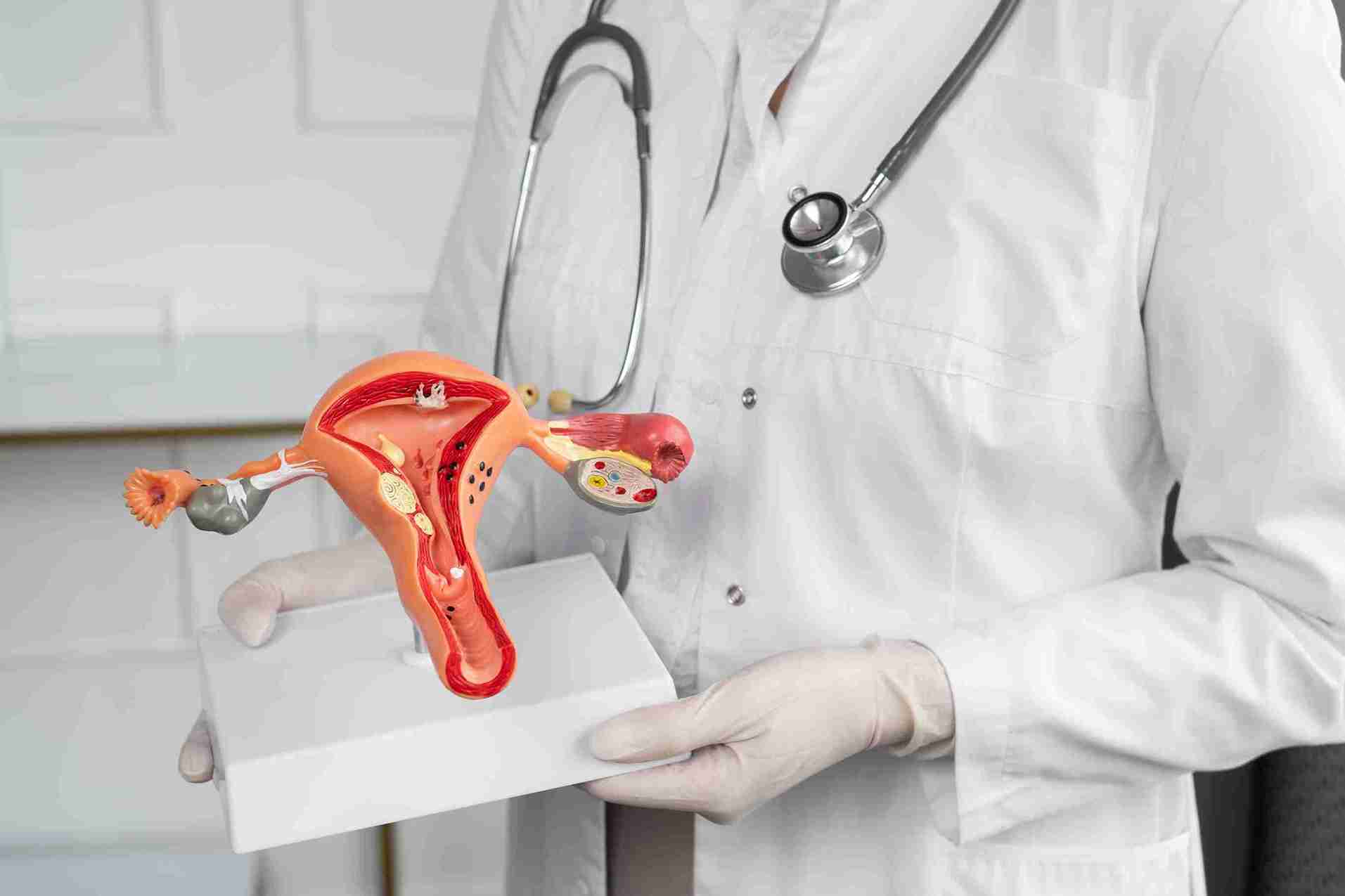
A saline sonohysterogram is a transvaginal ultrasound done while a small amount of sterile salt water flows into the uterus through a thin catheter. The saline gently separates the front and back walls of the cavity. Polyps, fibroids that bulge inward, scar tissue, and shape problems then stand out against a dark, fluid-filled background].
On an ordinary scan, the walls of the uterus lie against each other, and a small polyp can hide between them. Adding saline is what turns a routine scan into a test of the cavity. It is minimally invasive rather than non-invasive: a catheter passes through the cervix, though nothing is cut and anaesthesia is not usually needed.
Names you may see on a prescription or report
Indian prescriptions and scan reports use several names for overlapping tests, and some sound alike but refer to different organs. This table sorts them by what each one actually examines.
Term
Full form
What it looks at
SIS
Saline infusion sonography (or sonohysterography)
The uterine cavity
SHG
Sonohysterogram or sonohysterography
The uterine cavity (the same test as SIS)
Saline sonogram, saline ultrasound
Informal names
The uterine cavity
SSG, sono HSG or HSG sonography
Sonosalpingography (sometimes written loosely for SHG)
Usually the fallopian tubes; confirm with your doctor
HyCoSy
Hysterosalpingo contrast sonography
The fallopian tubes, by ultrasound with a contrast agent
HyFoSy
Hysterosalpingo foam sonography
The fallopian tubes, by ultrasound with a foam
HSG
Hysterosalpingography
The fallopian tubes and an outline of the cavity, by X-ray with dye
Why the uterine cavity and the fallopian tubes need different tests
The cavity and the tubes cause trouble in different ways. A polyp or fibroid pushing into the lining can prevent an embryo from implanting. A blocked tube stops the egg and sperm from meeting at all.
Cavity problems are more common than many couples expect. In a review by the American Society for Reproductive Medicine (ASRM), 16.2% of women presenting for infertility evaluation had a cavity abnormality: polyps in 13%, submucous fibroids in 2.8%, and adhesions in 0.3%. Among women who also had abnormal bleeding, the figure rose to 39.6%.
In a typical workup, hormone blood tests and a baseline ultrasound come first. SIS or HSG follows, depending on the question, and hysteroscopy only if something needs confirming or treating. Two conditions sit at the edges of these tests: a hydrosalpinx, a blocked tube swollen with fluid, shows on HSG or an ultrasound tubal test, while adenomyosis, lining tissue growing into the muscle of the uterus, is assessed on ultrasound or MRI.
In many Indian clinics, SSG and HSG are prescribed together as a "tube test", and reports use the names loosely. Before you book, ask your doctor one thing: are we checking the inside of the uterus, the tubes, or both? Our guide to uterine causes of infertility explains the conditions behind these findings.
Saline sonohysterogram vs HSG: which is better?
Neither test is better overall, because they answer different questions. A saline sonohysterogram is the more accurate way to look inside the uterus and involves no X-rays, so WHO suggests it over HSG for the cavity. HSG remains the established test of whether the tubes are open, with HyCoSy accepted by WHO as the ultrasound alternative.
WHO rates its SIS-over-HSG recommendation as conditional, based on very low-certainty evidence, and its tubal recommendation as conditional with low certainty. In practice, your history sets the order. Irregular bleeding or failed transfers point to the cavity first; a past pelvic infection or ectopic pregnancy points to the tubes.
SIS vs HSG at a glance
SIS vs HSG comparison
This table sets the two tests side by side on the points patients ask about most. Accuracy and pain figures come from the studies in the Sources list; costs are indicative of Cloudnine Fertility ranges.
Attribute
Saline sonohysterogram (SIS)
HSG
What it mainly looks at
The uterine cavity and lining
The fallopian tubes, plus the cavity outline
How it is done
Saline through a thin catheter during a transvaginal scan
Iodinated dye through the cervix, with X-ray images
Radiation
None
Low-dose X-ray
Contrast
Sterile saline
Iodinated contrast (mention any iodine allergy)
Polyps and submucous fibroids
Sensitivity 81.8%, specificity 93.8%
Sensitivity 58.2%, specificity 25.6%
Adhesions (scar tissue)
About 75% sensitive, with frequent false positives
About 75% sensitive, with frequent false positives
Checks each tube
No; free fluid only shows that at least one tube is open
Yes, and shows where a block sits
Average pain score (0 to 10)
2.7
5.8
When in the cycle
After bleeding stops, before ovulation
The same window
Time taken
Usually under 30 minutes
A short outpatient procedure
Indicative cost at Cloudnine Fertility
Rs 3,000 to Rs 7,000
Rs 5,000 to Rs 10,000
How accurate is SIS compared with HSG?
For finding problems inside the uterus, SIS outperforms HSG in head-to-head studies. In a study of 149 women undergoing fertility evaluations, with hysteroscopy as the reference, SIS detected 81.8% of cavity abnormalities compared with 58.2% for HSG, and its overall accuracy was 75.5% compared with 50.3%. ASRM puts HSG's sensitivity for polyps and submucous fibroids at 50%, while SHG's positive and negative predictive values exceed 90%.
SIS is not perfect, though. Scar tissue is the weak spot for both tests: in one study, each picked up 75% of adhesions, and many of the adhesions they reported were not there at hysteroscopy. Hysteroscopy, where a thin camera looks directly inside the uterus, remains the reference standard.
Which is more painful, HSG or saline sonogram?
HSG is usually more painful than saline sonogram. In the trials pooled for WHO's 2025 infertility guideline, women rated SIS at an average of 2.7 out of 10 and HSG at 5.8. Most describe SIS as period-like cramping that settles within hours. Less painful, then, but not painless.
A sonohysterogram can hurt more than expected for a few reasons. A narrow or tightly closed cervix makes the catheter harder to pass. Scar tissue or a fibroid can stop the cavity from expanding, so pressure builds as saline goes in. Tell the person doing the scan if the pain is building, so they can pause. Your doctor may also suggest a simple pain reliever beforehand.
SSG vs HSG: which is better for checking blocked fallopian tubes?
For checking blocked fallopian tubes, HSG is the established first-line test, and WHO accepts either HSG or HyCoSy, its ultrasound alternative. HyCoSy and HyFoSy avoid X-rays and usually hurt less , but they depend more on the skill of the person scanning. An SIS on its own does not answer the tube question.
SSG is not the same as a saline sonohysterogram. In India, SSG most often stands for sonosalpingography, an ultrasound test that sends saline, air or a contrast agent through the uterus to watch whether it passes along the fallopian tubes. A saline sonohysterogram looks only at the cavity. Some reports use SSG loosely for both, so check which question your doctor wants answered.
HyCoSy uses an ultrasound contrast, often saline mixed with air; HyFoSy uses a foam. In a Dutch trial of 1,026 women, HyFoSy-guided care gave a 46% live birth rate versus 47% with HSG, and HyFoSy scored 3.1 for pain versus 5.4. HyFoSy was inconclusive more often, in 9.5% of tests against 2.9% for HSG.
Ultrasound tubal tests depend heavily on the operator. ASRM reports HyCoSy sensitivity of 76% to 96% and specificity of 67% to 100%, and a 2025 review pooled HyFoSy at 87% sensitivity and 95% specificity from just nine studies. HSG has its own blind spot: a spasm where the tube leaves the uterus can look like a block. A repeat HSG about a month later showed open tubes in roughly 60% of women first reported as blocked at that point. Our guide to the HSG test for fallopian tubes walks through the X-ray procedure, and what an HSG test shows covers the basics of the test.
How long after HSG are you more fertile?
Any rise in fertility after an HSG seems short-lived and is linked mainly to oil-based contrast. In the Dutch H2Oil trial of 1,119 women, 39.7% had an ongoing pregnancy within six months of an oil contrast HSG, against 29.1% with water-based contrast. ASRM describes a slight rise lasting about three months after a normal HSG.
Can an HSG test mess up ovulation?
No. An HSG is booked after your period ends and before you ovulate [13], so no egg has been released yet, and the contrast dye is not a hormone. It is not expected to stop or delay ovulation. If your cycle seems different afterwards, mention it to your specialist rather than assuming the test caused it.
Can a saline sonohysterogram detect blocked fallopian tubes?
Not reliably. When saline collects in the pouch behind the uterus during SIS, it shows that at least one tube is open, but a routine SIS cannot tell which tube, or whether both are [2][6]. If your doctor needs to know about the tubes, HSG, HyCoSy or HyFoSy is the right test.
The same limitation applies to endometriosis, a common question about HSG. Endometriosis grows outside the uterus, on the ovaries and pelvic lining, which neither a cavity scan nor a tube test images directly. Your specialist assesses it from your symptoms, an examination, and other investigations.
When is a saline sonohysterogram used instead of HSG?
A saline ultrasound of the uterus shows the shape of the cavity and anything growing into it, such as polyps, submucous fibroids, scar tissue or a septum. Doctors choose it over HSG when the main worry sits inside the uterus, especially in these situations.
Suspected polyps. A thickened or irregular lining on a routine scan often triggers the suspicion. In one study, SIS matched hysteroscopy for polyps, while HSG missed half of them. Read more on endometrial polyps and fertility.
Fibroids that may bulge into the cavity. SIS shows whether a fibroid is submucous, which changes how it is treated.
Possible scarring (Asherman's syndrome). After miscarriage, uterine surgery or infection, SIS can raise suspicion of adhesions, but a hysteroscopy confirms them.
Uterine septum or an unusual shape. ASRM recommends 3D transvaginal ultrasound, with or without saline, as the first test for uterine shape; HSG cannot reliably tell a septate uterus from a bicornuate one.
Abnormal or heavy bleeding. In ASRM's review, 39.6% of women with infertility and abnormal bleeding had a cavity finding.
Failed embryo transfers. When good quality embryos repeatedly fail to implant, specialists often check the cavity before the next transfer.
Iodine allergy or a wish to avoid X-rays. SIS uses saline and no radiation.
If the main question is whether the tubes are open, HSG or a tubal ultrasound test comes first.
What happens during a saline sonohysterogram?
A saline sonohysterogram is a short outpatient scan, usually finished in under 30 minutes, and most women go back to normal activity the same day. It is done in an ultrasound room, not an operating theatre, and you stay awake throughout. Expect a few minutes of cramping as the saline is inserted.
How to prepare and when in your cycle
SIS is booked once bleeding has finished and before you ovulate, within about 10 days of the first day of bleeding. The lining is thin at this point, so small lesions are easier to see, and an unknown early pregnancy is unlikely. A pregnancy test may still be done on the day.
Tell the team beforehand about fever, unusual discharge, pelvic pain or a recent pelvic infection; the test is postponed while infection is active . Antibiotics are not routine and are given only when your doctor sees a reason. The "10-day rule" you may hear about for HSG is the same safety idea: testing early in the cycle so that an unexpected pregnancy is not exposed to the procedure.
Step by step: the SIS procedure and recovery
Baseline scan. A transvaginal ultrasound of the uterus and ovaries comes first.
Speculum and cleaning. A speculum is placed, as in a routine internal examination, and the cervix is cleaned with antiseptic.
Catheter. A thin, soft catheter is passed through the cervix into the uterus.
Scan with saline. The speculum is removed, the ultrasound probe is inserted again, and sterile saline is infused slowly while images are recorded.
Finish. The catheter is removed. The doctor usually sees the main findings on screen during the test.
Afterwards, expect watery discharge as the saline drains, and mild cramps for a few hours. Spotting can last a few days. Call your doctor if you develop fever, pain that worsens rather than settles, foul-smelling discharge, or heavy bleeding.
Risks and side effects of SIS, with how often they happen
This table lists the effects reported by professional society sources. Serious problems are uncommon, and most women have only cramping and brief spotting.
Effect
How common
Source
Cramping during and after the test
Common; usually settles within hours
[5][7]
Spotting and watery discharge
Common; can last a few days
[6]
Pelvic infection
Rare: 0.95% per RadiologyInfo; under 1% per ASRM, mostly in women with blocked or previously infected tubes
[6][7]
Pelvic pain needing attention
One case reported across the trials WHO reviewed
[1]
How much does a saline sonohysterogram cost in India?
At Cloudnine Fertility, a saline sonohysterogram is indicatively priced at Rs 3,000 to Rs 7,000, against Rs 5,000 to Rs 10,000 for an HSG. The final bill depends on whether the consultation, baseline scan and report are bundled, and on whether pain relief or antibiotics are added. Prices also vary by city and centre.
Saline sonohysterogram and related test costs at Cloudnine Fertility
This table covers every test and procedure mentioned in this guide, one row each, including the SHG test price. Figures are indicative ranges; rows marked as placeholders are awaiting confirmed pricing.
Test or procedure
Price range (INR)
Specialist consultation and fertility counselling
₹ 800 to ₹ 1,500
Transvaginal or pelvic ultrasound, 2D or 3D (baseline scan, uterine shape)
₹ 1,000 to ₹ 3,500
Ovarian reserve and hormone blood tests (AFC, FSH, oestradiol, LH)
₹ 5,000 to ₹ 6,500
Thyroid (TSH) and prolactin blood tests
₹ 400 to ₹ 1,200
Semen analysis (partner's test)
₹ 500 to ₹ 1,800
Saline infusion sonohysterogram (SIS or SHG)
₹ 3,000 to ₹ 7,000
HSG (hysterosalpingography, tubal test)
₹ 5,000 to ₹ 10,000
SSG (sonosalpingography), HyCoSy or HyFoSy (ultrasound tubal tests)
₹ 5,000 to ₹ 10,000
Serum beta hCG (pregnancy test, if needed)
₹ 500 to ₹ 3,000
Diagnostic hysteroscopy
₹ 15,000 to ₹ 30,000
Hysteroscopic polyp removal or removal of a submucous fibroid (operative hysteroscopy)
When should you see a fertility specialist about SIS or HSG?
See a fertility specialist if you have been trying for 12 months without success, or 6 months if you are 35 or older. Go sooner after irregular or heavy periods, two or more miscarriages, failed transfers, or a past uterine procedure or pelvic infection. You can book a consultation with a Cloudnine Fertility specialist to decide which test fits your history.
Which test to ask about
Your history usually points to the first question that needs answering. Use this table to start the conversation with your specialist, not as a self-referral guide.
Your situation
Test usually discussed first
Why
Irregular or heavy bleeding
SIS
Polyps and submucous fibroids are common causes
Two or more miscarriages
SIS or 3D ultrasound
Checks for lesions and the shape of the cavity
Failed embryo transfers
SIS, then hysteroscopy if needed
A polyp or fibroid can get in the way of implantation
Past pelvic infection or ectopic pregnancy
HSG or HyCoSy
Tubal damage is the main concern
Past miscarriage or uterine procedure
SIS or hysteroscopy
Scar tissue is possible
Tubes never checked and no other clues
HSG or HyCoSy
WHO accepts either for tubal patency
Who should not have SIS or HSG right now
Some situations mean you should wait, or choose a different test. This answers a common question: who should not do HSG or SIS today?
Situation
SIS
HSG
Possible pregnancy
Postpone until pregnancy is excluded
Postpone until pregnancy is excluded
Active pelvic infection
Postpone and treat the infection first
Postpone and treat the infection first
Heavy bleeding on the day
Usually rescheduled
Usually rescheduled
Allergy to iodine contrast
Not an issue, as saline is used
Discuss options; SIS and HyCoSy avoid iodine
What happens after your SIS result?
A normal saline sonohysterogram means the cavity looks healthy. That is reassuring, but it says nothing about the tubes, ovulation or your partner's tests. If SIS finds a polyp, a fibroid or possible scarring, the usual next step is hysteroscopy, which confirms the finding and can often treat it in the same sitting.
SIS findings and usual next steps
This table shows what common results mean and what typically follows. Your specialist will tailor the plan to your age, history and the rest of your workup.
Finding
What it means
Usual next step
Normal cavity
No polyp, fibroid or adhesion seen
Complete the rest of the fertility workup
Polyp
An overgrowth of the lining
Hysteroscopic polyp removal
Submucous fibroid
A fibroid bulging into the cavity
Assess size and position; hysteroscopic removal if it distorts the cavity
Possible adhesions
Bands of scar tissue inside the uterus
Diagnostic hysteroscopy to confirm, then operative adhesiolysis if present
Septum or unclear shape
An abnormal cavity shape
3D ultrasound or pelvic MRI, then hysteroscopic septum resection if indicated
Inconclusive scan
Cervical narrowing, scarring or fibroids stopped the cavity filling [6]
Repeat the test or move to diagnostic hysteroscopy
Most of these next steps are day care procedures. Our team performs them as part of hysteroscopic surgery at Cloudnine Fertility, usually after a short pre-procedure assessment.
FAQs
Your questions, clearly answered
Find clear, trusted answers to the most common questions about IVF—designed to guide and support you every step of the way.
Are HSG and sonohysterogram the same?
No. A sonohysterogram uses sterile saline and ultrasound to look inside the uterus, with no radiation. An HSG uses iodinated dye and X-ray images to show whether each fallopian tube is open, along with an outline of the cavity. They answer different questions, and some women need both before treatment is planned.
Is a sonohysterogram test painful?
Most women feel period-like cramping that eases within a few hours. In the trials summarised in WHO's 2025 infertility guideline, the average pain score was 2.7 out of 10 for a sonohysterogram, compared with 5.8 for HSG. A narrow cervix or scar tissue can make it more uncomfortable, so mention any past difficulty beforehand.
Are you more fertile after a sonohysterogram?
There is no good evidence that a saline sonohysterogram improves your chances of conceiving. The fertility boost people read about comes from studies of oil-based contrast flushed through the tubes during HSG, which is a different test with a different dye. To understand that effect, read our guide to pregnancy after an HSG.
Would PCOS show up on HSG?
No. PCOS is diagnosed based on your cycle pattern, hormone blood tests, and the appearance of your ovaries on a standard ultrasound. Neither HSG nor a saline sonohysterogram is designed to assess the ovaries. Both look at the tubes or the uterine cavity, so a normal result does not rule PCOS in or out.
Is a saline sonohysterogram needed before IVF?
Not for everyone. WHO and ASRM support it when a cavity problem is suspected, such as after abnormal bleeding or a thickened lining on a routine scan. Specialists often add it after failed transfers too. If your baseline ultrasound is normal and there are no clues in your history, it may not be needed. Your specialist decides based on your history and earlier scans.
How long does a saline sonohysterogram take, and when do I get the report?
The test itself usually takes under 30 minutes, according to ACOG, and you can go home straight afterwards. Because the images are seen live, the doctor can often tell you the main findings before you leave. Report timing varies by centre, so ask when you book, especially if an IVF cycle is waiting on the result.
Can I have a saline sonohysterogram if I might be pregnant?
No. Sonohysterography is avoided if there is any chance you are pregnant, according to ACOG. That is why the test is booked after your period ends and before ovulation, and why the team may ask for a pregnancy test on the day. If your period is late, tell the clinic before the appointment.
Is a saline sonohysterogram safe?
Yes, it is considered very safe. The main risk is pelvic infection, which RadiologyInfo (RSNA and ACR) puts at 0.95% of procedures, or roughly 1 in 100. The risk is higher if a tube is already blocked or you have had a pelvic infection before. Fever, worsening pain, or foul-smelling discharge afterwards means you should call your doctor.