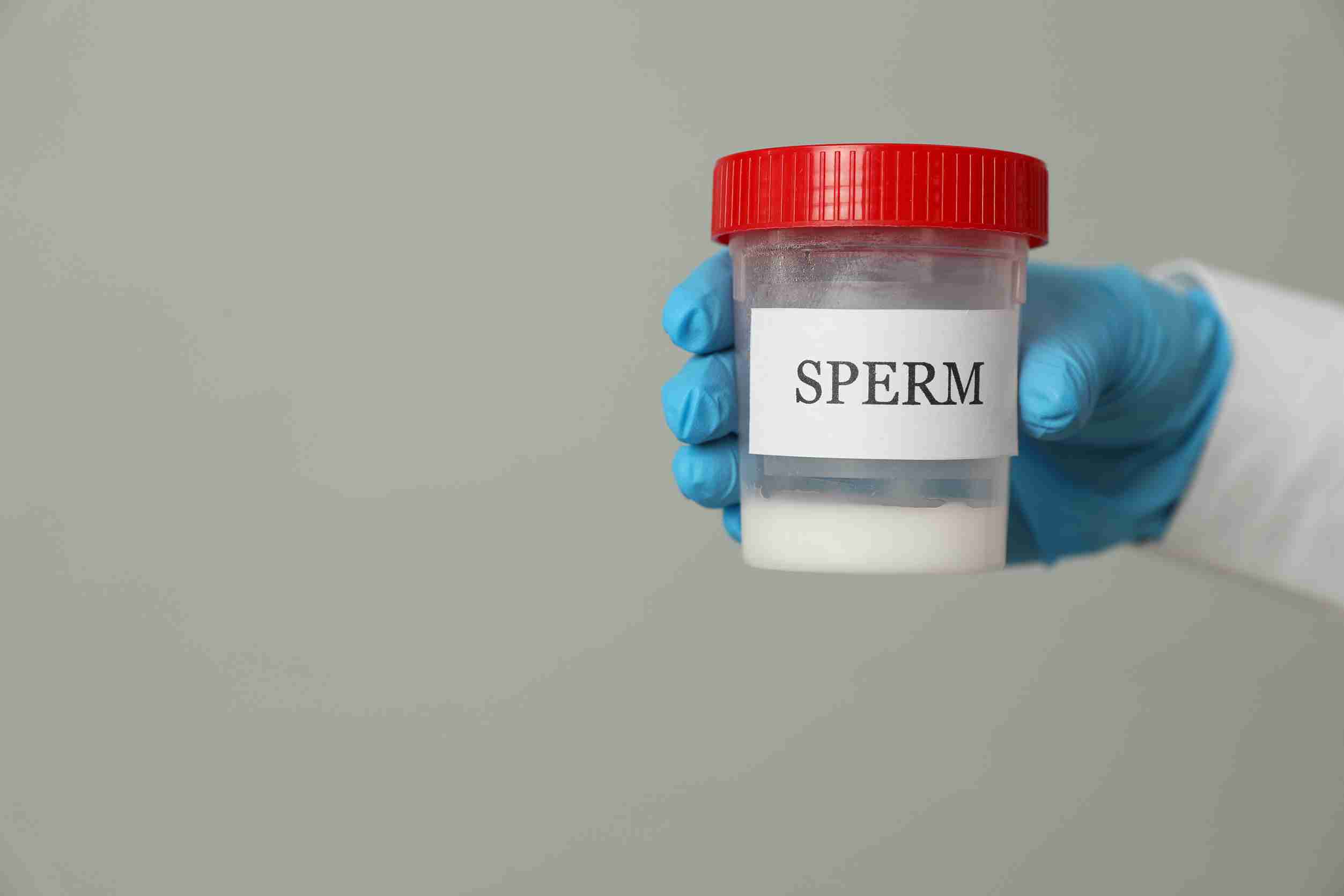
Semen is mostly fluid, not sperm. Sperm make up only about 2 to 5 percent of semen by volume. The rest is seminal plasma, a fluid made mainly by the seminal vesicles and the prostate that carries water, sugar, proteins, enzymes, zinc, and other minerals to keep sperm alive.
That one fact clears up a lot of confusion. It explains why the amount of semen says little about fertility, why semen barely changes after a vasectomy, and why the widely repeated beliefs that semen is made from blood, or that losing it drains the body, do not hold up.
This guide covers the difference between semen and sperm, where each part of semen comes from, what the fluid contains and what each ingredient does, three false beliefs about semen, how doctors measure what semen contains, and what that test costs in India.
Semen and Sperm are Not the Same Thing
No, semen and sperm are not the same thing. Sperm are the reproductive cells made in the testicles. Semen is the whole fluid released at ejaculation, and sperm are only a small part of it. The two words are often used as if they mean the same thing, and that is where much of the confusion about male fertility begins.
Table 1. Semen and sperm compared
Sperm
Semen
What it is
Single reproductive cells, each with a head and a tail.
The whole fluid released during ejaculation.
Where it is made
The testicles, inside tiny coiled tubes called seminiferous tubules, then matured in the epididymis (the coiled tube behind each testicle).
Mostly the seminal vesicles and the prostate, with a little from other glands.
Share of semen volume
About 2 to 5 percent, including the fluid sperm travel in.
All of it: sperm plus seminal plasma.
How long the body takes to make it
About 74 days for new sperm to develop.
The glands refill their fluid within a few days.
Can you see it?
No. Each sperm is far too small to see without a microscope.
Yes. It is the visible fluid.
What it does
Carries the father's genetic material to the egg. Seminal plasma does not carry it.
Carries, feeds and protects sperm on their journey.
Because the two are made in different places and at different speeds, one can change without the other. A man can release a normal-looking amount of semen that contains very few sperm, or none at all. This is why nobody can judge male fertility from semen alone, and why a laboratory test is needed. For how sperm are made and why the cycle takes so long, see our guide to how sperm is made and how long it takes .
Where Each Part of Semen Comes From
Semen is put together at the moment of ejaculation from several sources along the male reproductive tract. Each one adds its own fluid, and the fluids mix only as they leave the body. The seminal vesicles and the prostate supply the large majority of the volume. The table below shows roughly how much each source contributes and what it adds.
Table 2. Where semen comes from, by share of volume
Source
Approximate Share of Semen Volume
What It Adds
Seminal vesicles (a pair of glands behind the bladder)
About 60 to 75 percent
Most of the fluid, plus fructose, amino acids, alkaline buffers, clotting proteins, prostaglandins and vitamin C.
Prostate gland
About 20 to 30 percent
A thin, slightly acidic fluid carrying enzymes (including prostate-specific antigen and acid phosphatase), zinc and citric acid.
Testicles and epididymis
About 2 to 5 percent
The sperm and the small amount of fluid they travel in.
Bulbourethral glands (two pea-sized glands below the prostate, also called Cowper's glands)
A very small amount
A clear fluid released just before ejaculation that lubricates the urethra and neutralises leftover acidity from urine.
he seminal vesicles are the largest single contributor, providing the sugar that fuels sperm and the proteins that briefly thicken semen. The prostate adds most of the enzymes and minerals. For a gland-by-gland explanation, see our guide to the seminal vesicles and the accessory glands. For how these glands fit into the rest of the tract, see how the male reproductive system works.
What is Inside Seminal Plasma
Seminal plasma (the liquid part of semen, without the sperm) is mostly water. Dissolved in that water are dozens of substances, and nearly every one of them has a specific job to do for sperm in the few hours after ejaculation. The table below groups the main ones by their source and function.
Table 3. The main ingredients of semen and what each one does
Ingredient
Main Source
What It Does for Sperm
Water
All the glands
Makes up most of the volume and gives sperm a liquid to move in.
Fructose (a simple sugar)
Seminal vesicles
Supplies the energy sperm use to swim.
Bicarbonate and other alkaline buffers
Seminal vesicles
Help neutralise the natural acidity of the vagina, which would otherwise harm sperm.
Semenogelin and other clotting proteins
Seminal vesicles
Make semen form a soft gel for a short time after ejaculation.
Enzymes, including prostate-specific antigen (PSA) and acid phosphatase
Prostate
Break down the gel so sperm can swim freely.
Zinc
Prostate
Helps protect sperm and keep their genetic material stable.
Citric acid
Prostate
Helps balance acidity and keep minerals dissolved in the fluid.
Prostaglandins (hormone-like fatty substances)
Seminal vesicles
Thought to act on muscle and immune responses in the female reproductive tract.
Calcium, magnesium and potassium
Several glands
Support sperm movement and the balance of the fluid.
Spermine and other antioxidants, including vitamin C
Prostate and seminal vesicles
Help protect sperm from oxidative damage caused by unstable oxygen molecules.
Tiny amounts of hormones, such as testosterone
Carried over from the blood
Present only in trace amounts, with no known effect on either partner.
Two of these rows explain something many men notice. Semen is often thick just after ejaculation and turns more liquid a little later. Clotting proteins from the seminal vesicles form a soft gel, then the prostate's enzymes break it down. It is a normal, built-in sequence, not a sign of a problem on its own.
Does semen contain testosterone?
Only in trace amounts. Semen carries very small quantities of testosterone, and of other hormones such as estrogen, picked up from the blood. These amounts are far too small to affect the man or his partner. Ejaculating does not use up a man's testosterone, which the testicles make continuously.
Does semen contain protein?
Yes, but only a small amount. A single ejaculate contains well under a gram of protein, mostly enzymes and clotting proteins (see the table above), and only a few calories. Semen is built to serve sperm for a few hours after ejaculation, not to store nutrition or strength for the body.
How Much of Semen is Sperm
What percentage of semen is sperm?
Sperm make up only about 2 to 5 percent of semen by volume, even though a single ejaculate usually contains millions of them. Each sperm is tiny, about a twentieth of a millimetre long, so a very large number fit into a very small space. You may see other figures quoted online, because sources measure slightly differently; the range used here includes the sperm and the small amount of fluid that carries them from the testicles. The reference values laboratories use for sperm count are set out in our guide to WHO 2021 semen analysis guidelines and low sperm count.
Why semen barely changes after a vasectomy
A vasectomy is the clearest proof of how little of semen is sperm. The procedure cuts or blocks the vas deferens (the tubes that carry sperm up from the testicles), yet the fluid released afterward looks and measures almost the same, because nearly all of it still comes from the seminal vesicles and the prostate. This is also why a man cannot tell whether a vasectomy has worked by looking. Only a semen test, done after the waiting period his doctor recommends, confirms that no sperm are present.
Can you tell how much sperm semen contains by looking at it?
No, you cannot tell how many sperm semen contains by looking at it. The color, thickness, and amount of semen are set mostly by the glands, not by sperm, and counting sperm needs a microscope. For what the look of semen can and cannot tell you, see whether you can judge sperm quality by looking at it.
Three Beliefs About Semen That Are Not True
Three beliefs about semen are especially common in India. Each one falls apart once you know that semen is mostly gland fluid the body replaces within days.
Semen is not made from blood
No, semen is not made from blood. In India, semen is often called by the Sanskrit word shukra, and a belief repeated widely holds that many drops of blood go into making a single drop of semen. That is not how the body works. The seminal vesicles and the prostate make their fluid in the same way the salivary glands make saliva: they draw water and nutrients from the bloodstream and add substances of their own. No blood is used up, and a man does not lose blood when he ejaculates. Blood that appears in semen is a different matter, and it is a symptom to have checked, as the callout further down this page explains.
Losing semen does not weaken the body
No, losing semen does not weaken the body or drain its strength. The fluid is mostly water with small amounts of sugar, protein, and minerals, and the glands replace it within a few days. The testicles make new sperm every day. Releasing semen, whether during sex, masturbation or a nocturnal emission, does not cause weakness, tiredness, poor memory or loss of energy. Worry about semen loss is common in India, and doctors sometimes call it dhat syndrome. That worry is real and deserves a calm conversation with a doctor, not a remedy. For nocturnal emission specifically, see whether nightfall is normal [, and for how often ejaculating affects sperm count, see whether frequent ejaculation influences sperm count.
More semen, or thicker semen, does not mean more fertile
No, a larger amount of semen or thicker semen is not a sign of higher fertility. Because nearly all of semen is gland fluid, its amount and texture mostly reflect the glands and the number of days since the last ejaculation, not the sperm count. A man can produce plenty of semen that contains few sperm. For more on this, see whether semen volume or thickness indicates fertility.
What Can Change What Semen Contains
The make-up of semen is not fixed. It shifts from one ejaculate to the next with everyday factors, and it changes in recognisable ways when part of the system is blocked or not working. The table below is a map, not a diagnosis.
Table 4. What can change the make-up of semen, and where to read more
Factor
What It Changes
Read More
Days since the last ejaculation
Longer gaps may increase semen volume and sperm numbers slightly; very frequent ejaculation may temporarily lower them.
A routine semen analysis tests what semen contains. It reports on the fluid, including volume, pH (how acidic or alkaline it is), and how long it takes to liquefy, and on the sperm, including count, movement, and shape. A seminal fructose test is added only in some cases, usually when volume is low and no sperm are seen, because it shows whether fluid from the seminal vesicles is reaching the ejaculate.
Most men only ever need a routine semen analysis, which already reports on both the fluid and the sperm. The other tests below are ordered selectively, when a first report shows a pattern that needs explaining or when a vasectomy needs confirmation.
Table 5. Indicative costs of tests that measure what semen contains
Test
What It Checks
Indicative Cost
When It Is Usually Ordered
Sem en analysis
Volume, pH, liquefaction, sperm count, movement and shape.
Rs 470 to Rs 1,800 (commonly Rs 1,030 to Rs 1,150)
First test for every man being assessed for fertility.
Seminal fructose test
Whether seminal vesicle fluid is reaching the ejaculate.
Rs 500 to Rs 2,000
When semen volume is low and no sperm are seen.
Post-vasectomy semen analysis
Whether any sperm remain after a vasectomy.
Rs 1,000 to Rs 3,000
After the waiting period recommended by the doctor.
Costs vary by city, by centre and by whether tests are bundled into a wider male fertility work-up. A repeat semen analysis is common, because a single ejaculate can be affected by a recent illness, the number of days since the last ejaculation, or an incomplete collection. Ask at booking whether the quoted cost includes a repeat test.
Seek medical care if you notice blood in your semen that does not settle or keeps coming back; pain during or after ejaculation; little or no semen at orgasm, or cloudy urine afterwards; or pain or burning when passing urine, especially with a fever. Sudden severe pain in a testicle can be a twisting of the testicle and needs same-day emergency care.
When to Get a Fertility Check
Most couples do not need to wait for a problem to appear before seeking an assessment. The table below sets out when a check is recommended.
Table 6. When to seek a fertility assessment
Situation
When to Seek an Assessment
Trying to conceive, female partner under 35
After 12 months without success.
Female partner aged 35 or older
After 6 months without success.
A semen report has shown low volume or no sperm
Now, without waiting.
Little or no semen released at orgasm
Now, without waiting.
Assess both partners at the same time, because a delay on one side delays the whole picture. The Cloudnine Fertility team can review an existing semen report and explain what each line says about the fluid and the sperm. Learn more about male infertility treatment at Cloudnine Fertility, or book an appointment with a Cloudnine Fertility specialist.
FAQs
Your questions, clearly answered
Find clear, trusted answers to the most common questions about IVF—designed to guide and support you every step of the way.
What is semen made of?
Semen is mostly fluid, not sperm. About 60 to 75 percent comes from the seminal vesicles and about 20 to 30 percent from the prostate, carrying water, fructose, proteins, enzymes, zinc, and other minerals. Sperm and the fluid they travel in make up only about 2 to 5 percent.
What percentage of semen is sperm?
About 2 to 5 percent by volume. A single ejaculate usually contains millions of sperm, but each one is so small that together they take up very little space. Our guide to WHO semen analysis values sets out the normal range for sperm count.
What is the difference between semen and sperm?
Sperm are the reproductive cells made in the testicles. Semen is the fluid released at ejaculation that carries the sperm. Most of semen is fluid from the seminal vesicles and prostate, so the two are made in different places and on different timetables.
Is semen made from blood?
No. Semen is not made from blood, and ejaculating does not cost the body any blood. The glands that make semen draw water and nutrients from the bloodstream in the same way the salivary glands make saliva, and then add their own substances.
Does losing semen make you weak?
No. Losing semen does not weaken the body. It is mostly water with small amounts of sugar, protein and minerals, the glands replace it within a few days, and the testicles make new sperm every day. Releasing semen does not cause tiredness, weakness or poor memory.
Does semen contain protein?
Yes, but only a small amount. A single ejaculate holds well under a gram of protein, mostly enzymes and the proteins that make semen briefly thicken, and only a few calories. Semen is not a meaningful source of nutrition or a store of the body's strength.
Does semen change after a vasectomy?
Hardly at all. A vasectomy blocks the tubes that carry sperm, but sperm are only a few per cent of semen, so the fluid looks and measures almost the same afterwards. Only a semen test after the recommended waiting period confirms that no sperm are present.
How long does the body take to replace semen?
The glands refill their fluid within a few days of ejaculation. Sperm are made on a longer cycle of about 74 days, but because production is continuous, new sperm are always on their way. This is why frequent ejaculation lowers semen volume only for a short time.