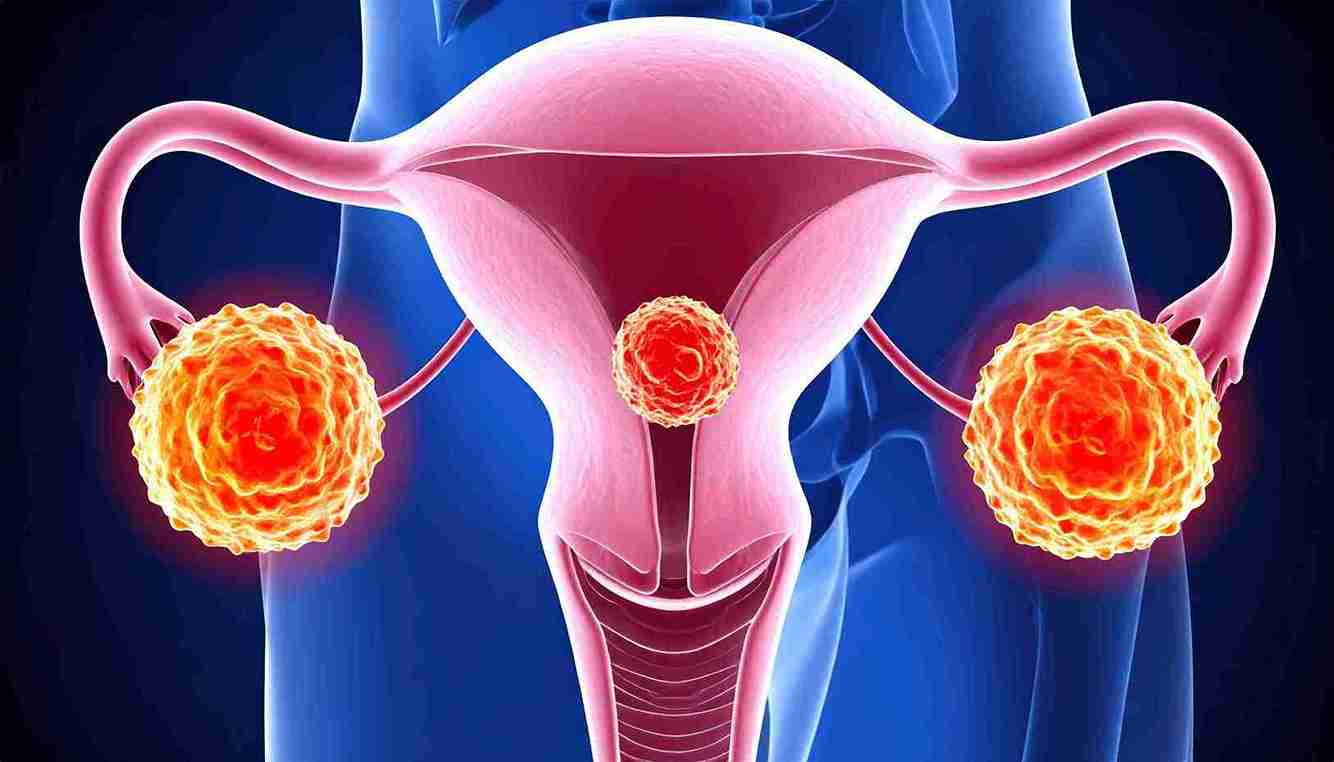
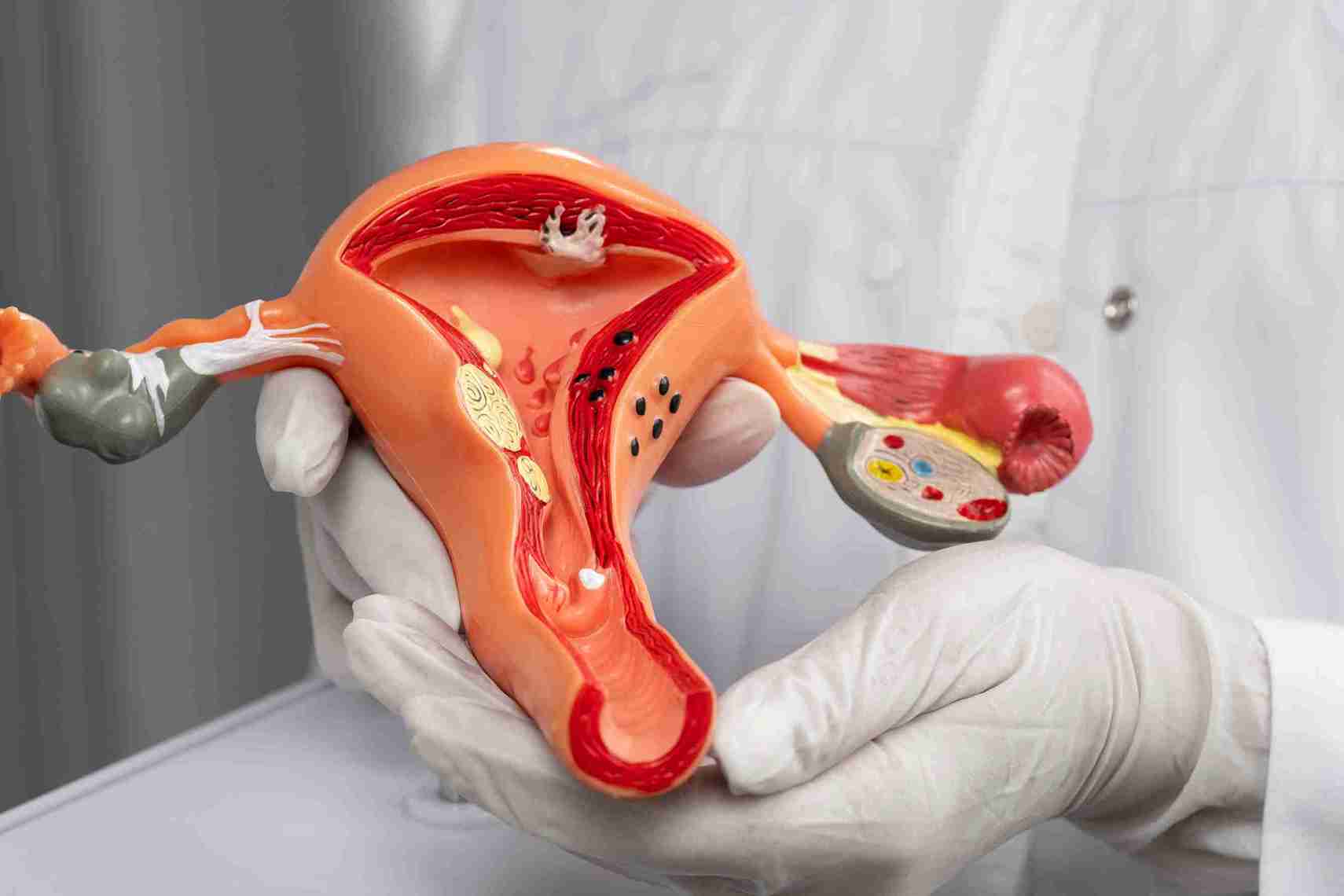
A functional ovarian cyst is a fluid-filled sac that forms in the ovary as a by-product of ovulation, not as a result of disease. There are two types: follicular cysts and corpus luteum cysts. Most measure under 5 cm, cause no symptoms, and resolve on their own within two to three menstrual cycles.
What does 'functional' actually mean?
'Functional' means the cyst is related to the normal function of the ovary. It forms because your ovary is doing what it is designed to do each month, and one step of that process did not complete as expected. It is not a growth, not a tumour, and not a sign that anything has gone wrong with your body. The word describes where the cyst came from, not how serious it is. Radiologists in India often use the term physiological cyst to mean the same thing.
Is a functional ovarian cyst normal?
Yes. Functional ovarian cysts are a normal by-product of ovulation and are extremely common in women of reproductive age. Most are found incidentally, during a scan booked for something else entirely.
Is it a disease, a tumour or cancer?
No. A cyst is a fluid-filled sac, a tumour is a solid growth of tissue, and cancer is a malignant growth. A functional ovarian cyst is the first of those three and does not become either of the other two. The one honest qualifier: a cyst that does not resolve on a repeat scan is no longer being treated as functional, and is investigated on a different pathway. That is why the follow-up scan matters.
Other names you may see on your scan report
Indian ultrasound reports use several terms interchangeably. If your report carries any of the wording below alongside a normal-looking ovary, it is describing the same thing.
Term on your report
What it means
Physiological cyst
Same as functional cyst. Formed by the normal cycle.
Simple cyst
Thin-walled, fluid only, no solid parts. The reassuring description.
Follicular cyst
The follicle did not rupture at ovulation.
Corpus luteum cyst
The structure left behind after ovulation did not shrink.
Anechoic, unilocular
Radiology wording for clear fluid in a single compartment.
Benign ovarian cyst
Noncancerous.
How common are functional ovarian cysts?
They are the single most common ovarian finding in women of reproductive age. Because ovulation happens roughly twelve times a year, almost every woman who ovulates will form one at some point, and most will never know. The Royal College of Obstetricians and Gynaecologists notes that the majority of ovarian cysts in premenopausal women are benign, and puts the risk of malignancy in an asymptomatic simple cyst in this group at roughly 1 in 1,000. In India, detection rates have risen mainly because pelvic ultrasound has become routine in antenatal, fertility and general gynaecology care, not because cysts themselves have become more common.
The two types of functional ovarian cyst
Both types come from the same monthly sequence. The difference is timing: a follicular cyst forms before ovulation, a corpus luteum cyst forms after it. That single distinction explains almost every difference between them, including which hormone is involved and how each one behaves.
Follicular cysts are the more common of the two.
Follicular cyst
A follicular cyst forms when the dominant follicle fails to rupture at ovulation and continues to accumulate fluid instead of releasing the egg. It is the most common ovarian cyst in women of reproductive age, is almost always simple in appearance on ultrasound, and typically resolves within one to two cycles without any treatment.
Corpus luteum cyst
After ovulation, the emptied follicle becomes the corpus luteum, a temporary gland that produces progesterone. If it seals over and fills with fluid or blood rather than shrinking, a corpus luteum cyst forms. These are commonly seen in early pregnancy, where they serve a normal purpose, and usually settle by the second trimester.
Can you have more than one at the same time?
Yes. It is possible to have more than one functional cyst, and to have one in each ovary at the same time. This is not the same as polycystic ovaries. In polycystic ovarian morphology, the ovary contains many small follicles, which are not cysts at all, and the diagnosis depends on hormone levels and cycle pattern rather than on a scan alone.
What causes functional ovarian cysts?
The mechanism is a two-step failure of an otherwise normal process. First, a follicle grows through the first half of the cycle and should rupture at ovulation. If the hormonal signal to rupture is weak or mistimed, it does not, and the retained fluid turns the follicle into a follicular cyst. Second, if ovulation does happen, the corpus luteum should shrink over about two weeks. If it seals instead, fluid or a small amount of blood collects inside and forms a corpus luteum cyst.
Factors that make either step more likely include:
• Irregular or anovulatory cycles: mean the hormonal signal that triggers rupture is less consistent.
• Ovulation induction: normally raises the number of cysts seen, because more follicles are being recruited than usual.
• Early pregnancy: commonly produces a corpus luteum cyst that supports the pregnancy until the placenta takes over.
• A previous functional cyst: makes another one more likely, because the underlying ovulation pattern tends to repeat.
• Age-related cycle variability: in the years after menarche and approaching menopause, when cycles are naturally more variable.
Cysts after fertility treatment
Fertility medication makes functional cysts more likely, and this is expected rather than a complication. Medicines used for ovulation induction recruit several follicles instead of one, so more follicles are available to become cysts, and a cyst may persist into the following cycle. This is the reason a baseline scan is performed on day 2 or day 3 before starting a stimulated cycle. If a cyst is found at that scan, the usual response is to wait one cycle rather than to treat it. Cysts of this kind almost always resolve on their own and do not affect the outcome of later cycles. The way follicles are tracked through a treatment cycle is covered in our guide to follicular monitoring.
What does not cause them?
Stress does not directly cause functional ovarian cysts. There is no mechanism by which cortisol creates a cyst. The honest concession is indirect: sustained stress can disrupt the regularity of ovulation, and irregular ovulation makes a cyst marginally more likely. That is a long way from stress causing cysts, and it is not a reason to blame yourself for a scan finding.
Functional cysts are also not caused by polycystic ovary syndrome. PCOS involves many small follicles that are not cysts, diagnosed on a combination of cycle pattern, hormone levels and ultrasound. A woman with PCOS can develop a functional cyst, but one does not cause the other.
They are not hereditary. There is no inheritance pattern and no genetic test. Functional cysts are sporadic events tied to individual cycles.
Symptoms of a functional ovarian cyst
Most functional ovarian cysts cause no symptoms at all and are found incidentally on a scan booked for another reason. Listing symptoms first, as much online content does, gives a misleading impression of how these usually present. When symptoms do occur, they are typically mild and one-sided.
What the pain feels like
Most women describe a dull ache or a sense of heaviness low down on one side, rather than sharp pain. It often comes and goes rather than being constant, and may be more noticeable around the middle of the cycle or during exercise or intercourse. If a cyst ruptures, the pain is different in character: sudden, sharp, and clearly worse than anything that preceded it.
Which side does it hurt on?
The side of the ovary that has the cyst. Because ovulation alternates between ovaries in most cycles, the side can differ from one month to the next. Left-sided pain one cycle and right-sided pain the next does not mean you have two cysts.
Can a functional cyst delay your period?
Yes. A corpus luteum cyst can prolong progesterone production and push the period back by several days. A follicular cyst reflects a cycle in which ovulation did not happen, which can also delay the bleed. Both are common explanations. Neither replaces a pregnancy test, and a delayed period still warrants one.
Bloating and weight
Bloating, yes. Weight gain, no. A larger cyst can create a genuine sense of abdominal fullness or pressure, and that sensation is real. A functional cyst does not cause weight gain, and the fluid inside even a sizeable cyst weighs very little.
Size: what the numbers on your report mean
Size in centimetres is the number most women fix on, and it is the number that determines what happens next. A structure has to exceed about 3 cm before it is even called a cyst rather than a follicle. Below that, many radiologists will not report it at all.
Size is usually the first number a woman is given after a scan, and it is the one that causes the most worry. On its own, though, it says less than most people expect. What matters more is how the cyst looks on ultrasound (its internal appearance, whether it is simple fluid or has solid areas), whether it is causing symptoms, and whether it is still there at the next scan. Size mainly guides how closely a cyst is watched. It does not, by itself, decide that treatment is needed. The table below sets out what each size band usually means and what is usually done.
Size
What it usually means
What is usually done
Under 3 cm
A normal follicle, not a cyst. Often not reported.
Nothing. No follow-up needed.
3 cm to 5 cm
A typical functional cyst.
Observation. Re-scan only if symptomatic or if you are in a treatment cycle.
5 cm to 7 cm
Larger than average but still usually functional.
Repeat scan to confirm it is shrinking.
Over 7 cm
Large enough that other causes are considered.
Further imaging and a specialist opinion.
Over 10 cm
Uncommon for a functional cyst.
Specialist review, and surgery is discussed.
You may see the '1-2-3 rule' or '3:2:1 rule' mentioned online. It refers to a radiology reporting convention rather than a treatment rule: structures under 1 cm are follicles, those up to 3 cm are physiological and need no comment, and only above 3 cm is the word cyst usually applied. It is guidance for the person writing your report, not a grading of risk.
Is a 5 cm functional ovarian cyst dangerous?
Usually not. RCOG guidance treats simple cysts under 5 cm in premenopausal women as very likely to be physiological, resolving over two to three cycles without intervention. Between 5 cm and 7 cm, the approach is still conservative, with a repeat scan to confirm it is settling. Size alone does not make a cyst dangerous. What matters more is whether it looks simple on ultrasound and whether it shrinks.
Do they keep growing?
No. Functional cysts are self-limiting. They enlarge over a matter of days to weeks, reach a peak, and then regress. They do not grow indefinitely. A cyst that is measurably larger on a repeat scan several weeks later is behaving unlike a functional cyst, and that finding, rather than the size itself, is what prompts further assessment.
Do functional ovarian cysts go away on their own?
Yes. The great majority resolve without any treatment within two to three menstrual cycles, which is roughly six to twelve weeks. This is the single most important fact about them, and it is why the standard management is observation rather than intervention.
The table below sets out how long each type of functional cyst usually takes to resolve, when a repeat scan is worth doing, and what happens if the cyst is still there.
Cyst type
Typical resolution
When to re-scan
If it persists
Follicular cyst
1 to 2 cycles, about 6 weeks
6 to 12 weeks, if a scan is indicated at all
Reclassified and imaged further
Corpus luteum cyst
2 to 3 cycles, about 8 to 12 weeks
8 to 12 weeks
Reclassified and imaged further
Cyst in early pregnancy
By the second trimester
At the routine anomaly scan
Obstetric review
Cyst after ovulation induction
1 cycle in most cases
At the next baseline scan, day 2 or 3
Treatment cycle deferred
What happens if it does not go away?
This is the most useful sentence on this page: a cyst that has not resolved after about twelve weeks is, by definition, no longer being managed as a functional cyst. It has not become dangerous. It has simply stopped fitting the description, and so the questions change. Your doctor will look again at the ultrasound characteristics, may arrange further imaging, and will consider the other cyst types that do not self-resolve, such as endometriomas and dermoid cysts. Persistence is a reason to look more carefully, not a reason to assume the worst.
Can they come back?
Yes, though it is worth being precise about what that means. The original cyst does not return. A new one forms in a later cycle, through the same mechanism. Women who ovulate irregularly tend to see this repeat. Recurrent functional cysts are not a sign of deterioration and do not accumulate damage to the ovary.
How are functional ovarian cysts diagnosed?
Diagnosis is made on ultrasound, usually transvaginal because it gives far better resolution of the ovary than an abdominal scan. A pelvic examination may come first and can detect an enlarged or tender ovary, but it cannot characterise a cyst. A pregnancy test is often added, since a corpus luteum cyst is common in early pregnancy and pregnancy changes what happens next.
What your scan report will say
Reports describing a functional cyst tend to use a consistent set of phrases: anechoic, meaning clear fluid with no internal echoes; simple; thin-walled; unilocular, meaning a single compartment; no septations; no solid component; and no internal vascularity on Doppler. If your report carries that combination, it is describing a simple, reassuring cyst. Words that prompt closer attention are the opposites: septations, solid areas, internal echoes, or increased vascularity.
When should the follow-up scan be done?
Where a repeat scan is indicated, it is usually arranged for six to twelve weeks later, which allows two to three cycles to pass. Timing within the cycle matters: the scan is best done between day 5 and day 10, just after your period has finished. Scanning in the second half of the cycle will show a corpus luteum that is entirely normal and may be mistaken for a persistent cyst, a common source of unnecessary worry.
It is worth knowing that RCOG guidance does not require follow-up at all for an asymptomatic simple cyst under 5 cm in a premenopausal woman. Indian practice is often more conservative and repeats the scan anyway. Neither approach is wrong, but if you have been given a repeat scan for a small simple cyst, it is reasonable to ask what it is intended to show.
Do you need a CA-125 blood test?
Usually not. RCOG advises that CA-125 is not routinely needed to assess a simple cyst in a premenopausal woman, because the marker rises in many benign conditions including endometriosis, fibroids and even menstruation itself. A raised result in this setting causes more anxiety than it resolves.
How are functional ovarian cysts treated?
Usually with nothing at all. Observation is the treatment, not a delay before the real treatment. Where a cyst is causing discomfort, simple pain relief is appropriate, taken on medical advice. If you have been told to wait and re-scan, you are not being fobbed off. Operating on a cyst that would have resolved on its own carries real costs: anaesthetic risk, surgical risk, and the loss of some healthy ovarian tissue, which matters if you are hoping to conceive.
Do birth control pills shrink an existing cyst?
No. Combined oral contraceptives do not shrink or dissolve a cyst that has already formed. This is a genuine and widespread misconception, including among women who have been prescribed them for exactly this reason. What they actually do is suppress ovulation, and since functional cysts form as a by-product of ovulation, suppressing it reduces how often new cysts form. That is prevention, not treatment. If a cyst disappears while you are taking the pill, it resolved on its own, on the timeline it was always going to follow.
When is surgery actually needed?
Rarely. No medicine dissolves a functional cyst, and no medicine needs to. Surgery is reserved for a specific and short list of situations:
• The cyst persists beyond about twelve weeks, so it no longer fits the functional description.
• It is very large, larger than roughly 10 cm.
• Ultrasound shows features that are not simple: septations, solid areas or abnormal blood flow.
• It has ruptured with significant internal bleeding.
• Ovarian torsion has occurred, where the ovary twists, cutting off its blood supply. This is a surgical emergency.
Where surgery is needed, laparoscopic (keyhole) removal is the standard approach for benign ovarian cysts, and it is usually possible to remove the cyst while preserving the ovary.
What does not work
Nothing you take, apply or avoid makes a functional ovarian cyst disappear. That sounds discouraging until you pair it with the more important fact: it will very probably disappear anyway, on its own, within a couple of cycles. The following are widely promoted, and none of them has evidence behind it:
• Castor oil packs do not penetrate the abdominal wall and cannot reach or shrink an ovarian cyst. Any cyst that resolves during a course of them would have resolved regardless.
• Homeopathy and ayurvedic preparations have no clinical evidence for dissolving ovarian cysts. The real risk is not the remedy itself but the delay: months spent on an alternative treatment are months in which a cyst that should have been re-scanned was not.
• No specific foods cause or cure functional cysts. There is no diet to follow and nothing you need to cut out. General healthy eating is worthwhile for other reasons.
• Exercise will not burst a cyst. Normal exercise is safe, and there is no need to restrict activity. The one honest caveat applies to very large cysts, where high-impact activity may slightly raise torsion risk, and your doctor will tell you if that applies.
How much do ovarian cyst scans cost in India?
A functional ovarian cyst is diagnosed and monitored with imaging rather than treated, so the cost is usually that of one or two scans. The figures below cover only the diagnostic pathway. Costs vary by city, by whether the scan is transabdominal or transvaginal, and by whether it forms part of a wider fertility work-up.
The table below sets out the scans and consultation most often involved in assessing an ovarian cyst, what each one covers, and an indicative cost range in India.
Item
What it covers
Indicative cost in India
Pelvic ultrasound (transabdominal)
First-line imaging, often the scan that found the cyst
₹1500 to ₹3500
Transvaginal ultrasound
Higher resolution view of the ovary, used to characterise the cyst
₹1000 to ₹2500
Follow-up scan at 6 to 12 weeks
Confirms the cyst has resolved
₹2000 to ₹4500
Follicular monitoring series
Serial scans across a treatment cycle
₹3000 to ₹6000 per scan
Specialist consultation
Gynaecology or fertility review of the scan
₹1200 to ₹2000
Surgical costs are not listed here because surgery is not the management pathway for a functional cyst. Where a cyst turns out not to be functional and laparoscopic removal is discussed, that is a separate conversation with its own costing.
Functional ovarian cysts and fertility
Functional ovarian cysts do not reduce fertility. They do not damage the ovary, do not deplete egg reserve, and do not block conception. If anything, their presence indicates that your ovaries are cycling. The honest qualifier is this: if you are forming cysts month after month alongside irregular periods, the cysts are not the problem, but the ovulation pattern behind them may be worth investigating.
Can you get pregnant with a functional ovarian cyst?
Yes. A functional cyst is not a barrier to conception. Ovulation continues, and the other ovary is unaffected. Many women conceive in a cycle during which a cyst is present, and many corpus luteum cysts are only discovered because a woman had an early pregnancy scan. If you have been trying for some time and a cyst has been found, the cyst is very unlikely to be the reason.
Does having a cyst mean you are not ovulating?
Not necessarily, and the distinction is worth getting right. A follicular cyst does indicate that ovulation did not complete in that particular cycle. It says nothing about the next cycle, and most women ovulate normally the following month. A corpus luteum cyst is the opposite: it can only form after ovulation has happened, so it is direct evidence that you did ovulate.
Will a cyst delay or cancel an IVF cycle?
It can delay a cycle, and occasionally it will lead to one being deferred, but it rarely affects the eventual outcome. A baseline scan on day 2 or day 3 checks that both ovaries are quiet before stimulation begins. If a functional cyst is found, the decision usually turns on two things: its size and whether it is hormonally active, which is assessed by measuring oestradiol levels. A small, quiet cyst is often ignored and stimulation proceeds. A larger or hormonally active cyst can blunt the response to stimulation and distort monitoring, so the usual course is to wait one cycle and rescan, by which point most have gone. Aspiration is occasionally used but is not routine. Deferring by a month is frustrating, but starting into an unfavourable baseline tends to cost more than it saves. How the ovaries are stimulated and monitored across a cycle is set out in our guide to IVF stimulation protocols.
Should you see a fertility specialist?
Usually not for the cyst itself. A gynaecologist is the right person to assess and monitor a functional ovarian cyst, and most cases need nothing more. A fertility opinion becomes useful when the cysts are recurrent alongside irregular cycles, when you have been trying to conceive for twelve months or more without success, or six months if you are over 35, or when a cyst has been found during a fertility work-up, and you want to know whether it changes the plan.
How this differs from other ovarian findings
Three conditions are commonly confused with functional cysts. The differences matter because only functional cysts reliably resolve on their own.
Finding
How it differs
Key distinguishing fact
Polycystic ovaries (PCOS)
Many small follicles arranged around the ovary, not fluid-filled cysts
The follicles in PCOS are not cysts at all
Chocolate cyst (endometrioma)
Old blood from endometriosis, ground-glass appearance on ultrasound
Endometriomas do not self-resolve
Complex cyst
Contains septations, solid areas or internal echoes
Requires further evaluation rather than observation
A related question is whether a cyst is simply a large follicle. Structurally, they are the same thing, separated by size: above roughly 3 cm, the term cyst is used. If your scan has raised questions about ovary appearance more generally, our guide to normal ovary size and fertility covers what a size measurement can and cannot tell you.
When should you see a doctor?
Most functional cysts need no more than the scan that found them. Book a review with a gynaecologist if you have persistent one-sided pelvic pain, a cyst that has not resolved on a follow-up scan, increasing abdominal swelling, pain during intercourse, or unusually heavy or irregular bleeding.
Go to a hospital straight away, do not wait for an appointment if you have sudden severe pelvic or abdominal pain, especially with any of the following: fever, vomiting, dizziness or fainting, a rapid pulse, or pain severe enough that you cannot stand upright. These can indicate a ruptured cyst with significant bleeding, or ovarian torsion, where the ovary twists and loses its blood supply. Torsion is a surgical emergency, and the ovary can often be saved if it is treated quickly.
Situation
What to do
Incidental cyst, no symptoms
No action needed. Discuss at your next routine visit.
Mild one-sided ache
Routine gynaecology appointment.
Cyst still present after 12 weeks
Book a review. Further imaging is likely.
Trying to conceive, recurrent cysts
Fertility consultation to assess ovulation.
Sudden severe pain, fever or fainting
Emergency care immediately.
What to expect
For the overwhelming majority of women, the entire course of a functional ovarian cyst is uneventful and requires nothing beyond patience
Outcome
What usually happens
Resolves without treatment
The typical course. Two to three cycles, no intervention.
Needs a follow-up scan
Common where the cyst is 5 cm or larger, or symptomatic.
Requires further imaging
A minority, where the cyst persists past twelve weeks.
Requires surgery
Uncommon. Reserved for persistent, very large or complicated cysts.
Affects fertility
No. Functional cysts do not reduce fertility or egg reserve.
Becomes cancerous
No. Functional cysts are not a precursor to ovarian cancer.
Want to consult the Best Fertility in india? Please find the links below.
Find clear, trusted answers to the most common questions about IVF—designed to guide and support you every step of the way.
Do functional ovarian cysts go away on their own?
Yes. The large majority resolve without any treatment within two to three menstrual cycles, roughly six to twelve weeks.
How long does a functional ovarian cyst take to disappear?
Follicular cysts usually resolve within one to two cycles, about six weeks. Corpus luteum cysts take a little longer, typically two to three cycles or eight to twelve weeks. A cyst still present beyond twelve weeks is reassessed, because it no longer fits the functional pattern.
Do I need surgery for a functional ovarian cyst?
No. Surgery is not the treatment for a functional cyst. It is considered only if the cyst persists past twelve weeks, exceeds about 10 cm, shows non-simple features on ultrasound, ruptures with significant bleeding, or causes ovarian torsion. Each of these is uncommon.
Can a functional ovarian cyst turn into cancer?
No. Functional cysts do not become cancerous and are not a precursor to ovarian cancer. The two follow entirely separate pathways. A cyst that persists or shows solid areas on ultrasound is investigated differently, not because it has changed, but because it was never functional.