How Long Does It Take to Get Pregnant After Stopping Birth Control? (India 2026 Guide)
November 2, 2026
Cloudnine
No items found.
How Long Does It Take to Get Pregnant After Stopping Birth Control? (India 2026 Guide)
November 2, 2026
Cloudnine
No items found.
Most women can try to conceive straight after stopping birth control, with no waiting period needed. After the pill, patch, ring, implant or an IUD, ovulation usually returns within one to three months. The three-monthly injection is the exception: conception takes about 10 months on average from the last injection. Long-term use does not cause infertility.
Key facts at a glance
Your Question
The Short Answer
Do I need to wait before trying?
No. You can start trying as soon as you stop.
When does ovulation usually return?
Within one to three months for most methods, often sooner.
Which method takes the longest?
The three-monthly injection: on average about 10 months from the last injection to conception.
Does long-term use harm fertility?
No. How many years you used a method makes no difference.
How many women conceive within a year of stopping?
About 83 in 100, based on pooled data from 22 studies.
How quickly does fertility return after each type of birth control?
Return of fertility means your own cycle of ovulation (the release of an egg from the ovary) restarting after you stop contraception, so that pregnancy is possible again. For almost every reversible method, any delay is short and temporary. The largest study on this question followed 17,954 women trying to conceive in Denmark and North America (Yland and colleagues, BMJ, 2020). It found that fertility returned in women who had used no hormones within about two to four cycles for most methods, and five to eight cycles after the injection. The table lists the methods used in India from fastest to slowest return. Cycle figures are study averages, not a promise for any one person.
Method
How It Works
How Quickly Fertility Returns
What to Expect After Stopping
Condoms and natural methods
A barrier, or avoiding sex on fertile days. No hormones.
Immediate.
Pregnancy is possible from the first cycle. About one in six married women in India use natural methods.
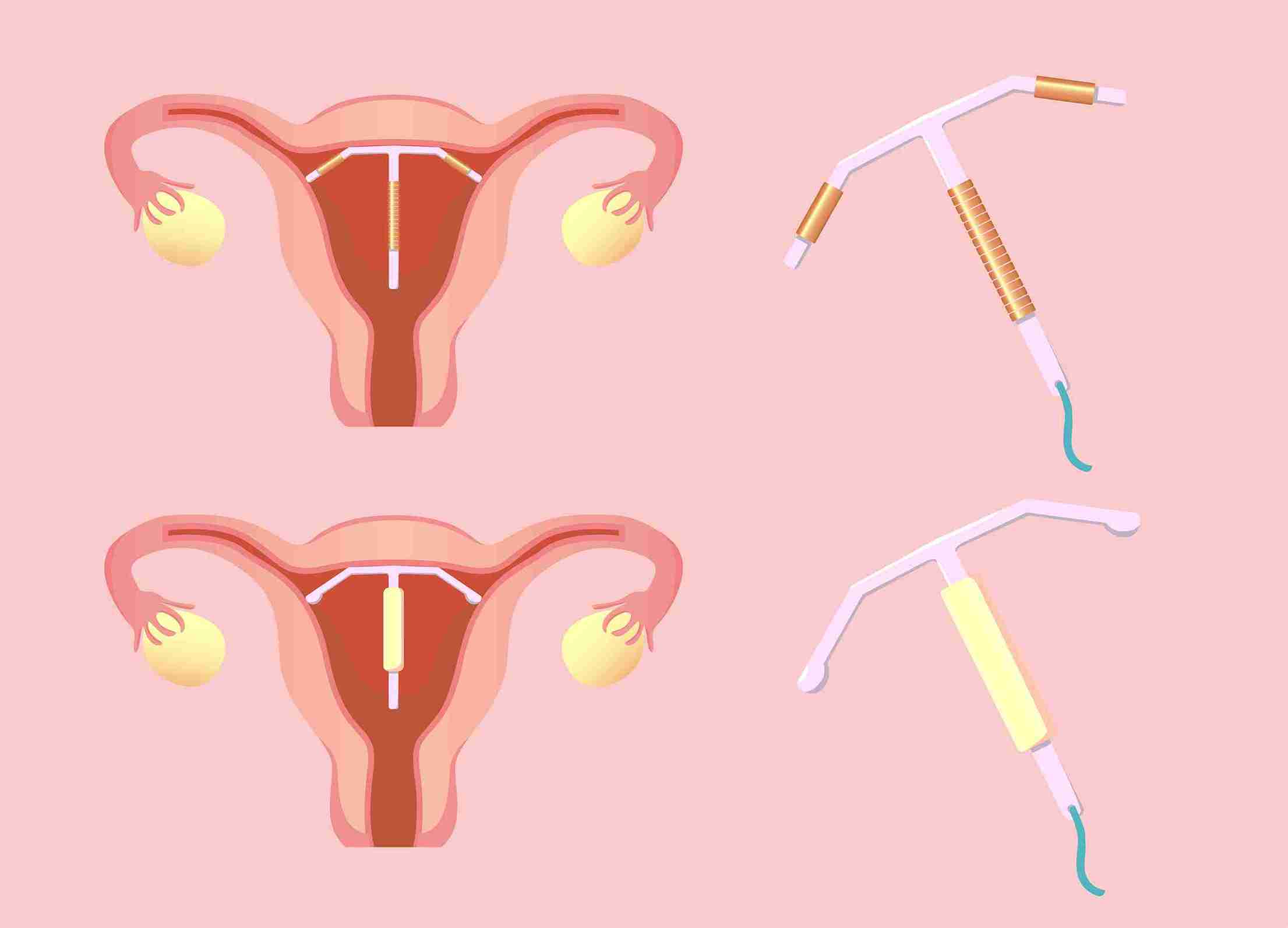
Copper IUD (Copper T)
Copper makes the womb unfriendly to sperm. Ovulation continues throughout.
Quick. Your own cycle never stops; about two cycles on average to full fertility.
Periods made heavier by the device usually settle after removal.
Weekly non-hormonal pill (national programme)
Acts on the womb lining. Does not stop ovulation.
Prompt, according to Indian studies, although the evidence base is small.
Because ovulation continues, your natural cycle is usually unchanged.
Hormonal IUD
Releases a progestogen (a man-made form of progesterone) inside the womb. Many users still ovulate.
About two cycles on average.
Pregnancy is possible in the first cycle after removal.
Implant
A small rod in the upper arm releases a progestogen and stops ovulation.
About two cycles on average. Some studies from lower-income countries report longer delays.
Fertility returns once the rod is removed; no lasting effect is known.
Progestogen-only pill
Thickens cervical mucus and stops ovulation in some cycles.
Usually quick, because ovulation isn't suppressed every cycle.
Pregnancy is possible in the first cycle after stopping.
Combined pill
Oestrogen and a progestogen stop ovulation.
Ovulation often restarts within weeks; full fertility returns in about three cycles on average.
The monthly bleed on the pill is not a true period.
Vaginal ring
Combined hormones released inside the vagina.
About three cycles on average.
Less commonly used in India.
Skin patch
Combined hormones absorbed through the skin.
About four cycles on average.
Less commonly used in India.
Three-monthly injection
A progestogen injection every three months stops ovulation.
Slowest. Conception about 10 months after the last injection on average; five to eight cycles to full fertility.
Count from your last injection, not from when the next one was due.
Female sterilisation (tubal ligation)
The fallopian tubes are cut, tied or blocked permanently.
Does not return.
Natural pregnancy is not expected. See the sterilisation section below.
What happens in your body when you stop birth control?
Hormonal methods work by quieting the signals between your brain and your ovaries. While you use them, the pituitary gland (a pea-sized gland at the base of the brain) releases less of the hormones that ripen an egg each month. When you stop, those signals restart, a follicle (the fluid-filled sac that holds an egg) begins to grow, and ovulation follows. The monthly bleed on the pill was a withdrawal bleed, caused by the drop in hormones during the break, not a true period, so your first natural cycle may be longer or shorter than you expect. Non-hormonal methods such as the Copper T never pause ovulation. Sterilisation is different again: it is a physical block, not a hormonal pause. That matters in India, where female sterilisation is the most common method, used by 36.5% of currently married women according to the National Family Health Survey (NFHS-6, 2023 to 24).
How long after stopping the pill until I can get pregnant?
You can get pregnant in the very first cycle after stopping the pill. Most women ovulate again within a few weeks to three months. On average, it takes about three cycles for fertility to match that of women who never used hormones, according to the 2020 BMJ study of 17,954 women. Over a full year, the picture is reassuring: a review of 22 studies covering 14,884 women found that about 83% of women became pregnant within 12 months of stopping contraception, with no significant difference between hormonal methods and IUDs (Girum and Wasie, Contraception and Reproductive Medicine, 2018).
What shapes your timeline more than the pill itself is your age, whether your cycles were regular before you started the pill, and your partner's fertility. Male factor plays a part in a large share of couples who find it hard to conceive, so remember that conception depends on both of you.
Can I get pregnant the month I stop birth control?
Yes, and you don't need to wait. You do not need to let your body clear the hormones before trying. Ovulation can happen within the first few weeks, so pregnancy in the first cycle is possible.
You may hear of a three-month rule that says you should wait three months after stopping the pill. It has no medical basis. Three months is actually when you should see a doctor if your periods haven't come back. Older advice to wait for one natural period also exists; its only purpose is to make the pregnancy easier to date from your last period. An early scan does the same job, so waiting is optional.
Conceiving straight after stopping the pill does not raise the risk of miscarriage or of problems for the baby. If you are not ready for pregnancy yet, switch to condoms rather than stopping contraception altogether.
Will my periods be irregular after IUD removal?
Usually only briefly, and pregnancy is possible in the first cycle after either type is removed. A copper IUD, known in India as the Copper T, never stops ovulation, so your natural cycle continues; the heavier or more painful periods it caused usually settle. With a hormonal IUD, many women were ovulating throughout. If your periods become lighter or stop, they usually return to your normal pattern within one to three months. So if you are asking how soon you can get pregnant after Copper T removal, the answer is from the next time you ovulate.
Why does the contraceptive injection take the longest?
The injection is designed to protect for three months, but the hormone can stay active for much longer in some women. On average, women conceive about 10 months after their last injection. Of women who go on to conceive, about 68% do so within 12 months of the last injection, 83% within 15 months, and 93% within 18 months (US Food and Drug Administration prescribing information). About half of women return to regular periods within six months and about three-quarters within a year, although ovulation can be delayed for up to 18 months (MSD Manual, 2025). How long you used the injection does not change any of this.
Always count from the date of your last injection, not the date the next one was due. If you hope to be pregnant within a year, talk to your doctor about switching to another method before your next injection is due.
Can I get pregnant after sterilisation (tubal ligation)?
Not naturally, in almost all cases. Female sterilisation, often called tubal ligation or getting the tubes tied, is designed to be permanent. There is nothing to stop it, so fertility does not come back on its own. It is the most common method in India, and some women who were sterilised after completing their family later wish to conceive again.
There are two routes. Tubal reversal is surgery to rejoin the tubes, and is possible only for some types of sterilisation and when enough healthy tube remains. IVF (in vitro fertilisation, where eggs are fertilised in a laboratory and an embryo is placed in the womb) bypasses the tubes altogether. Which route is right depends on your age, your ovarian reserve (the number of eggs remaining), the type of sterilisation and your partner's semen analysis, so the first step is a fertility consultation.
Sterilised and hoping for another baby? A Cloudnine Fertility specialist can review your history and explain whether reversal or IVF suits you. Book a consultation.
Does long-term birth control use cause infertility?
No. Years on the pill, an IUD, an implant or the injection do not reduce your fertility. In the 2020 BMJ study of 17,954 women, the total length of time a woman had used hormonal contraception made no difference to how quickly she conceived once she stopped. The delays the researchers found were short-term and linked to the method, not the number of years. The injection's delay also isn't related to how long it was used.
If conceiving feels harder after a decade of contraception, the usual reason is the decade, not the contraception. Fertility falls gradually from the late twenties and more steeply after 35, because both the number and the quality of eggs decline with age. A woman who starts the pill at 22 and stops at 34 is trying to conceive at 34, whatever method she used. That is why the time limits for seeing a specialist are shorter after 35, and why you plan around age, not the pill. Read more about the impact of age on fertility.
Does the pill protect your eggs or your AMH?
No. The pill does not save eggs, slow your biological clock, or delay menopause. One point matters if you are having fertility tests: AMH (anti-Müllerian hormone, a blood marker of how many eggs remain) can read about a fifth lower while you take the combined pill, and the antral follicle count on scan can also be lower (Birch Petersen and colleagues, Human Reproduction, 2015). An AMH test taken while you're on the pill may therefore underestimate your reserve, so ask your doctor whether to time it or repeat it after stopping. Here is what an AMH test can and cannot tell you.
Why is my period not coming back after stopping the pill?
It is usually not the pill itself. The pill's monthly withdrawal bleeds can hide an irregular cycle that was there before you started, so stopping simply reveals it. Doctors call a missing period after stopping the pill post-pill amenorrhoea (amenorrhoea means absent periods). The common causes are:
Pregnancy. Ovulation happens before a period, so that you can conceive before your first period returns.
Polycystic ovary syndrome (PCOS). A common hormonal condition that causes infrequent ovulation and is often masked for years by the pill. Read our guide to PCOS and pregnancy.
Raised prolactin. Higher levels of this milk-producing hormone can shut down ovulation.
Low body weight or intense exercise. Too little energy for the body's needs can pause the signals that trigger ovulation.
Stress and illness. Significant physical or emotional strain can delay ovulation for a cycle or two.
Irregular cycles before the pill. If your periods were irregular before, they may be irregular again.
Take a pregnancy test first. If it is negative and there is still no period three months after stopping the pill, see a doctor. After the injection, the time window is longer, as the table below explains.
What should you do after stopping birth control?
A few simple steps help you get the most from the first months:
Note the date. Record when you stopped, or the date of your last injection, so that you can measure the timeline accurately.
Start folic acid. See the dose and timing below.
Watch your cycle. Note when bleeding starts and stops; a regular cycle returning is a good sign that you are ovulating.
Use condoms if you are not ready. Pregnancy is possible from the first cycle.
Seek advice early if you are at higher risk. This applies if you are 35 or over, or had PCOS, endometriosis or irregular periods before contraception.
How do I know I'm ovulating after stopping the pill?
Three signs are the most useful:
Stretchy, clear cervical mucus that looks like raw egg white.
A positive ovulation test, which detects the hormone surge before ovulation.
A regular cycle returning, with periods at a predictable interval.
Should I take folic acid before stopping birth control?
Yes. Take 400 micrograms of folic acid a day, starting at least one month before you begin trying, which usually means before you stop contraception, and continue until 12 weeks of pregnancy. Folic acid lowers the risk of neural tube defects (problems in the development of the baby's brain and spine). Some women need a higher dose, for example after a previously affected pregnancy, so check with your doctor.
How much do fertility tests after stopping birth control cost in India?
Most women need no tests at all after stopping contraception. Tests come in only when a period does not return, when pregnancy has not happened within the time limits below, or after sterilisation. Costs depend on the city, the laboratory, whether tests are bundled into a fertility assessment and, for procedures, on anaesthesia and day care versus admission. The ranges below are indicative; your clinic will confirm an exact quote.
Test
Why It Is Done
Indicative Cost
Pelvic or transvaginal ultrasound
Checks the womb and ovaries when periods do not return.
Estimates egg reserve; best timed after stopping the combined pill.
Rs 5,000 to 6,500
Ovarian reserve panel (antral follicle count, FSH and oestradiol)
Fuller reserve check before planning treatment. FSH is follicle-stimulating hormone.
Rs 5,000 to 6,500
Semen analysis
Checks the partner's sperm; part of any fertility assessment.
Rs 470 to 1,800 (commonly about Rs 1,030 to 1,150)
HSG (tube test)
X-ray dye test showing whether the fallopian tubes are open, for example after tubal reversal or pelvic infection.
Rs 14,000 to 26,000 (Bengaluru range)
IUD or implant removal
Removing a device when you are ready to conceive.
Rs 5,000 to Rs 18,000
Tubal reversal surgery
Rejoining the tubes after sterilisation, where suitable.
Rs 50,000 to Rs 1,50,000
IVF or ICSI cycle
An alternative to reversal after sterilisation, or for other causes. In ICSI, a single sperm is injected into each egg.
Rs 1.15 lakh to 2.5 lakh per cycle, depending on medication.
When should you see a fertility specialist after stopping birth control?
Most women need time. See a doctor sooner if any of the situations below apply. The age limits follow the standard medical definition of infertility (American Society for Reproductive Medicine, 2020).
Your Situation
Recommended Next Step
No period three months after stopping the pill, patch, ring, implant or an IUD, with a negative pregnancy test.
Book a doctor review.
No period about 12 months after your last injection.
Book a doctor review.
Trying for 12 months without pregnancy, under 35.
Book a fertility evaluation.
Trying for 6 months without pregnancy, aged 35 to 39.
Book a fertility evaluation.
Aged 40 or over.
See a specialist as soon as you start trying.
Irregular periods, PCOS, endometriosis or pelvic infection before contraception.
Seek advice early rather than waiting.
You were sterilised and want a baby.
Book a consultation to discuss reversal or IVF.
URGENT: Positive test with one-sided pain or bleeding, especially with an IUD in place or after tubal reversal.
Seek same-day emergency care. This can signal an ectopic pregnancy (a pregnancy growing outside the womb).
URGENT: Fever or severe pelvic pain after IUD removal.
What are your chances of getting pregnant after stopping birth control?
High, for most women. The table brings together the most reliable figures. One caution: no study gives a trustworthy figure for the first month alone, so treat any single first-month percentage with care. Your own chances depend far more on your age and health than on the method you used.
Finding
Pregnancy Rate
Source
Women pregnant within 12 months of stopping reversible contraception
About 83%
Review of 22 studies, 14,884 women (Girum and Wasie, 2018).
Pregnant within 12 months after stopping condoms, natural methods, the pill, or an IUD
86% to 91%
47 national surveys from lower- and middle-income countries (Demography, 2023).
Not pregnant within 12 months after stopping the injection or implant, same surveys
About 1 in 5
Demography, 2023.
Average extra cycles before fertility matches barrier-method users
Injection: 5 to 8; patch: 4; pill and ring: 3; IUDs and implant: 2
Yland and colleagues, BMJ, 2020.
Of women who conceive after the injection, share pregnant at 12, 15 and 18 months from the last injection
68%, 83% and 93%
US Food and Drug Administration prescribing information.
Effect of years of use on return of fertility
None found
Yland and colleagues, BMJ, 2020.
FAQs
Your questions, clearly answered
Find clear, trusted answers to the most common questions about IVF—designed to guide and support you every step of the way.
Does long-term birth control use cause infertility?
No. Using the pill, an IUD or an implant for many years does not reduce your fertility. A large 2020 study found that how long you used a method didn't affect how quickly fertility returned. Age has a much bigger effect.
Can I get pregnant immediately after stopping the pill?
Yes. Ovulation can return in the first cycle after you stop, so pregnancy is possible straight away. On average, it takes about three cycles for fertility to return to your natural level fully, and most women conceive within a year.
How long should I wait after stopping birth control before trying?
You do not need to wait. You can start trying as soon as you stop. Some doctors suggest waiting for one natural period so the pregnancy is easier to date, but this is optional.
How long does it take to get pregnant after the contraceptive injection?
Longer than other methods. On average, women conceive about 10 months after their last injection, and nearly all who conceive do so within 18 months. How long you used the injection does not change this.
How soon can I get pregnant after IUD removal?
Very soon. Fertility returns quickly after both copper and hormonal IUDs are removed, including the Copper T, and pregnancy is possible in the first cycle. Most women's periods return to their normal pattern within a few months.
Can I track ovulation while still on the pill?
Not reliably. The combined pill stops ovulation, so there is no natural cycle to track, and the monthly bleed is not a real period. On a progestogen-only pill, you may ovulate in some cycles, but the signs are hard to read. Start tracking ovulation after you stop taking the pill.
What if my period does not come back after stopping birth control?
Take a pregnancy test first. If it is negative and you have had no period three months after stopping the pill, patch, ring, implant or an IUD, see a doctor. The pill is rarely the cause; it can hide an irregular cycle that was there before.
Can I get pregnant after sterilisation?
Not naturally in almost all cases, because sterilisation is designed to be permanent. The options are surgery to reverse it, where suitable, or IVF. A fertility specialist can advise you on what's right for you.