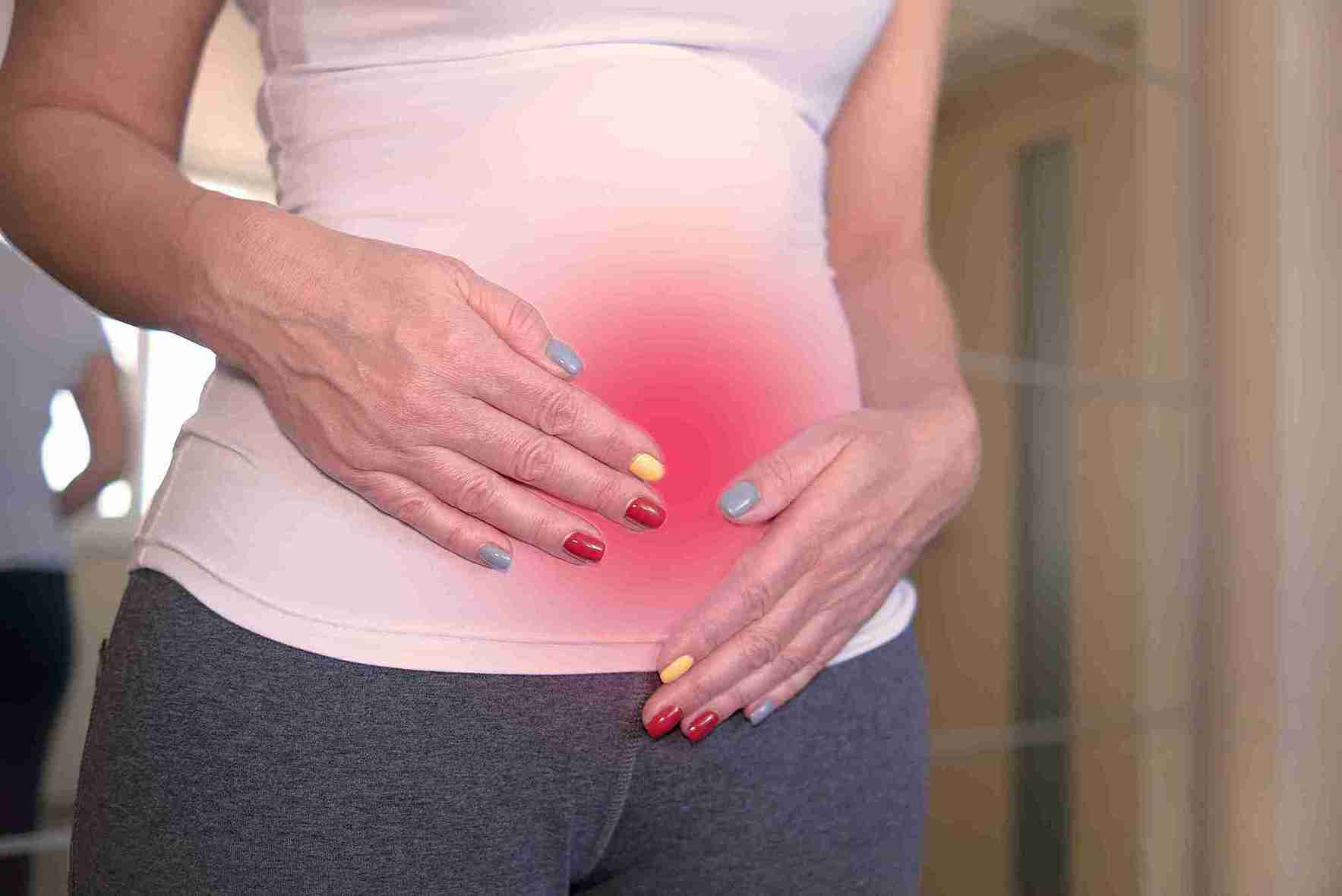
Usually not. An ovarian cyst generally has to reach around 8 to 10 cm before it displaces enough space to cause visible bloating or abdominal swelling. Most cysts found on a scan are under 5 cm and cause no bloating at all. Persistent bloating is more often digestive or hormonal, and still needs assessment.
Why most ovarian cysts do not cause bloating
The abdominal cavity is not a tightly packed box. It accommodates a few centimetres of extra volume without any perceptible change in shape, which is why a loop of bowel full of gas can feel more obvious than a cyst you cannot feel at all. A 4 cm ovarian cyst is roughly the size of a walnut, sitting deep in the pelvis behind the pubic bone. It is simply not large enough to push the abdominal wall outward or to compress the bowel.
So when a scan finds a small cyst, and you also feel bloated, the two are usually coincidental rather than causal. Bloating in women of reproductive age is far more often gastrointestinal, arising from gas, constipation, irritable bowel syndrome (a common condition affecting how the bowel functions) or food intolerance. It is also frequently hormonal and cyclical. Isolated bloating is rarely the only sign of a cyst large enough to matter, because pressure, fullness and a change in how clothes fit tend to appear alongside it.
What size of ovarian cyst causes bloating?
Cyst size
What you are likely to notice
Under 3 cm
Nothing at all. Cysts this size are extremely common, often physiological, and do not alter abdominal shape.
3 to 5 cm
Bloating is rarely explained by the cyst. A 3 cm cyst does not cause abdominal swelling.
5 to 8 cm
Occasional pressure or fullness on one side. Visible bloating remains uncommon at this size.
8 to 10 cm
Distension becomes plausible. Some women notice waistbands feeling tighter without any weight change.
Above 10 cm
Visible abdominal enlargement is likely, often described as looking a few months pregnant.
Size is a guide, not a threshold. Cyst type and position matter too: a cyst sitting high and forward is felt sooner than one tucked deep in the pelvis, and some types reach a size a functional cyst never will. Which sizes need surgery is a separate question, fully answered in our ovarian cyst size chart.
What does bloating from an ovarian cyst feel like?
Digestive bloating
Cyclical hormonal bloating
Large ovarian cyst distension
Pattern needing review
Onset
Comes and goes, often for years
Recurs with the menstrual cycle
Gradual over weeks to months, then steadily present
New for you and has not settled
Daily pattern
Flattest on waking, worst by evening
Predictable timing each month
Much the same morning and night
Persistent rather than fluctuating
Relieved by
Passing wind, opening the bowels, changing diet
The period starting
Nothing reliably
Nothing
Associated symptoms
Gas, gurgling, altered bowel habit
Breast tenderness, mood change
Pressure, fullness, tighter waistband, passing urine often
Feeling full quickly, urinary urgency, weight loss
What it usually means
Gastrointestinal, not gynaecological
A normal hormonal fluid shift
A cyst large enough to displace space
Book an assessment
The fluctuation test is the practical differentiator. Bloating that is worst at the end of the day and gone by morning points firmly towards a digestive cause rather than a cyst, because a cyst does not shrink overnight.
Is it bloating, or is your abdomen actually swollen?
These are not the same thing, and the distinction changes what happens next.
Bloating is a subjective feeling of fullness, tightness or gas. It fluctuates through the day and settles overnight.
True distension is a measurable increase in abdominal size. Clothes fit differently; a waistband that fit last month does not, and it does not settle overnight.
Ascites is fluid collecting inside the abdominal cavity. It leads to a steadily expanding waistline, weight gain even if your appetite remains the same or decreases, and may also cause breathlessness.
If your abdomen is measurably enlarging, particularly alongside weight gain or breathlessness, arrange assessment promptly rather than waiting to see whether it settles.
Can an ovarian cyst make you look pregnant or gain weight?
Only a genuinely large cyst can visibly enlarge the abdomen, and this is uncommon. Mucinous cystadenomas, a benign type that secretes fluid and keeps expanding, are the type most likely to reach that size. Very large ovarian cysts still turn up in Indian hospital practice, usually in women who had no pain and therefore no reason to seek a scan.
This is not fat gain. A cyst adds its own weight, but even a large one is a token amount on the scales. Women notice shape rather than number: the waist thickens while the rest of the body does not change. If that is happening, it warrants a scan rather than a diet. Dermoid cysts can also grow large, and they have their own guidelines.
When is bloating a sign of something serious?
Most bloating is not cancer, and ovarian cancer is uncommon before menopause. What matters is not the bloating itself but its pattern. The American College of Obstetricians and Gynaecologists advises contacting a gynaecologist when the symptoms below are present on more than 12 days in a month. That number is very useful, because it converts a vague worry into something you can actually count.
RED FLAG PATTERN
Arrange a gynaecological review if, on more than 12 days in a month, you have any of the following:
Bloating that is persistent rather than fluctuating, and is new for you
Feeling full quickly, or being unable to eat normally
Pelvic or abdominal pain
Needing to pass urine more urgently or more often
Unexplained weight loss alongside any of these warrants prompt review, whatever your age.
Having these symptoms does not mean you have cancer. It means the cause is worth establishing. How an ovarian cyst differs from ovarian cancer on a scan is set out in full in our cyst versus cancer comparison.
CA-125 is a blood marker that rises in many benign conditions, including endometriosis, fibroids and even menstruation, so it is not a bloating test and is not used for screening. Its proper role is covered separately, as is the separate question of whether an existing cyst can turn cancerous.
Can a chocolate cyst or endometrioma cause bloating?
Bloating in endometriosis is real and common, but it is generally driven by inflammation and bowel involvement rather than by the endometrioma (a chocolate cyst, filled with old blood) itself. That is why removing the cyst does not reliably resolve it, and why ESHRE treats endometrioma surgery as an individualised decision rather than a routine one. Painful bowel movements alongside period pain point towards endometriosis rather than towards the cyst. Our guide to endometriosis and fertility covers this properly.
Does PCOS cause bloating?
Polycystic ovary syndrome, a hormonal condition affecting ovulation, is not a cyst in the sense meant here. Bloating in PCOS is usually related to insulin resistance, hormonal fluctuation and bowel habits rather than to ovarian swelling. Our PCOS and fertility guide covers it in full.
Will removing an ovarian cyst stop the bloating?
It depends entirely on whether the cyst was causing it. If a large cyst was genuinely displacing abdominal space, removing it relieves that distension, usually within a few weeks once post-operative swelling has settled. If the cyst was small, removal will not resolve bloating caused by digestion or hormones, and the bloating will continue afterwards.
This is worth saying plainly, because patients are sometimes disappointed for exactly this reason. They go into surgery expecting their abdomen to change, and it does not, because the cyst was never the problem. Before any operation, ask your surgeon directly whether your bloating is expected to improve, and treat a confident yes with caution when the cyst is under 5 cm.
Do home remedies reduce ovarian cyst bloating?
No. No castor oil pack, herbal preparation or ayurvedic formulation has been shown to shrink an ovarian cyst or to relieve distension caused by one. Castor oil packs are worth naming specifically because they are recommended constantly online. Applied to the skin, they do not reach the ovary, and no evidence shows they change cyst size.
This is not a dismissal of traditional medicine, and it is not a claim that these practices are dangerous in themselves. The harm is delay. Persistent bloating deserves proper assessment, and weeks spent on a remedy are weeks when a pattern that needed review went unreviewed. Diet will not shrink a cyst either, although it can genuinely help digestive bloating, which is covered in our diet guide.
Is bloating after IVF stimulation the same thing?
No. Bloating after ovarian stimulation reflects enlarged ovaries and a shift of fluid out of the blood vessels, not a cyst. Some degree of it is expected, and it usually settles as the cycle resolves.
The distinction that matters is direction of travel. Ordinary post-retrieval discomfort plateaus and then improves. Bloating that keeps increasing, particularly with breathlessness, rapid weight gain or a drop in how much urine you are passing, suggests ovarian hyperstimulation syndrome (OHSS), an over-response to fertility medication, and needs same-day assessment rather than waiting. Our guide to OHSS warning signs sets out exactly when to call.
Does bloating mean the cyst is affecting your fertility?
No. Bloating is a symptom of volume and pressure, not of ovarian function, and on its own it tells you nothing about whether you will conceive. What matters is the cyst type. Endometriomas can reduce the healthy ovarian tissue around them, and repeated surgery for recurrent cysts can do the same. A simple functional cyst, which forms and resolves as part of a normal menstrual cycle, generally does not affect fertility at all.
If you are trying to conceive and a scan has found a cyst, the question to ask is which type it is and what it means for your ovarian reserve (the number of eggs remaining), not how bloated you feel. Our guide to what ovary size actually tells you about fertility explains which measurements matter.
When should you see a doctor?
Book a routine gynaecology appointment if you have:
Bloating that has lasted more than two to three weeks without settling
Abdominal size that is increasing rather than fluctuating
Bloating with feeling full quickly, urinary urgency or unexplained weight loss
Any of the above on more than 12 days in a month
Seek same-day or emergency care if you have:
Sudden severe pelvic pain, particularly with vomiting, fever or feeling faint. This is not bloating, and it can indicate ovarian torsion (a twisted ovary) or a ruptured cyst
Rapidly increasing abdominal swelling with breathlessness or a marked drop in urine output
Usually not. Most ovarian cysts are under 5 cm and too small to displace enough abdominal space to be felt. Cysts generally need to pass roughly 8 to 10 cm before they cause noticeable bloating or visible swelling.
What size ovarian cyst causes bloating?
Bloating becomes likely once a cyst passes roughly 8 to 10 cm. Below 5 cm, bloating is rarely explained by the cyst. Size is a guide rather than a threshold, because cyst type and position also affect what a patient feels.
How can I tell if my bloating is from a cyst or from gas?
Digestive bloating fluctuates: flatter in the morning, worse after eating, easing after passing wind. Bloating from a large cyst is steadier and does not settle overnight. Bloating that stays constant for weeks needs assessment regardless of the cause.
Can an ovarian cyst make you look pregnant?
Only a genuinely large cyst can visibly enlarge the abdomen, and this is uncommon. Mucinous cystadenomas are the type most likely to reach that size. This is displaced volume rather than weight gain, and it warrants prompt gynaecological assessment.
Schedule your consultation Today!
Book your consultation with our fertility experts the first step toward your parenthood journey.