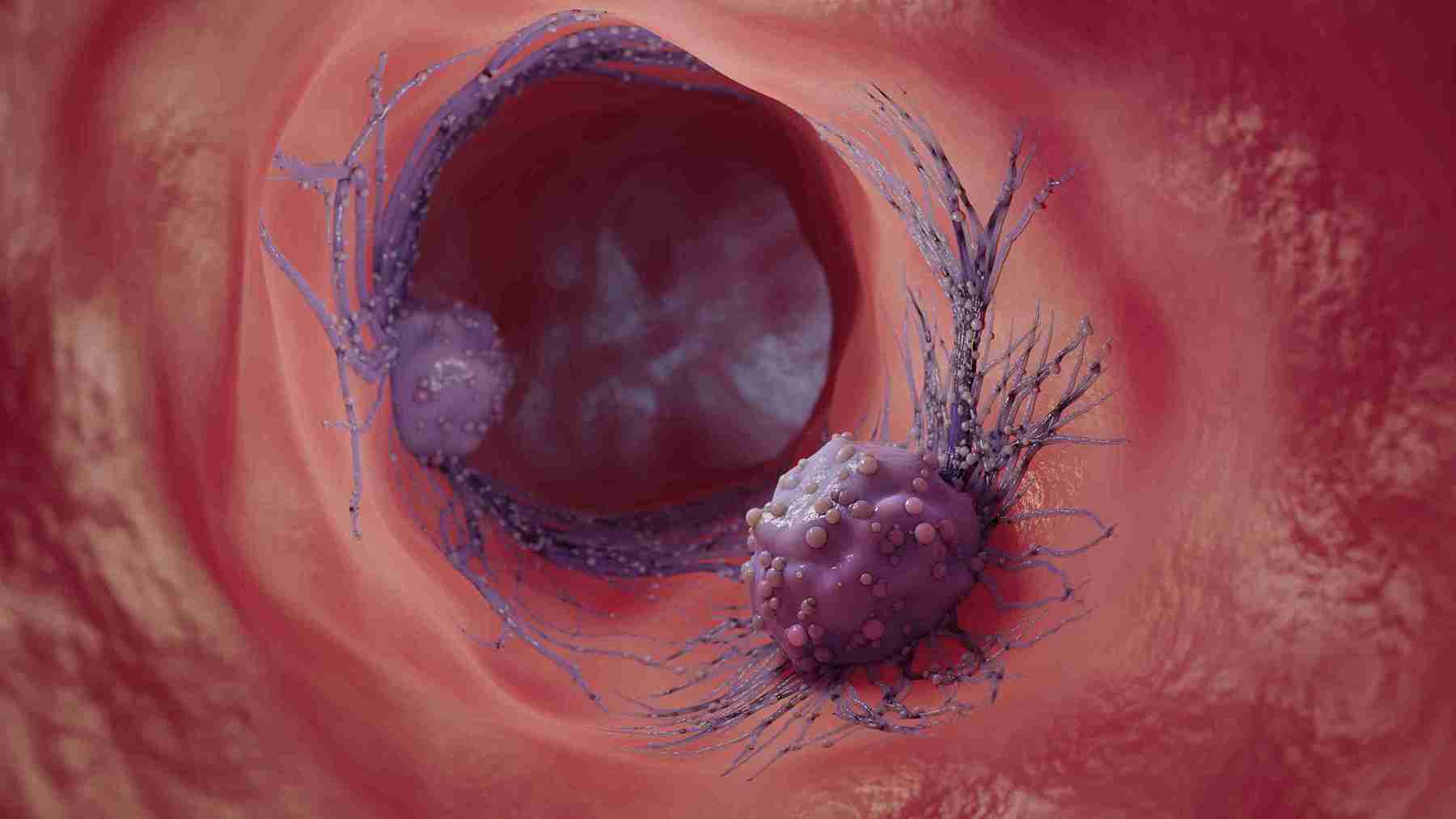
A haemorrhagic ovarian cyst is a functional ovarian cyst that has bled into itself after a small blood vessel in its wall ruptured. In plain terms, it is an ordinary ovulation cyst with blood trapped inside the sac. It is not cancer, and most clear on their own within 6 to 12 weeks.
What a haemorrhagic ovarian cyst is
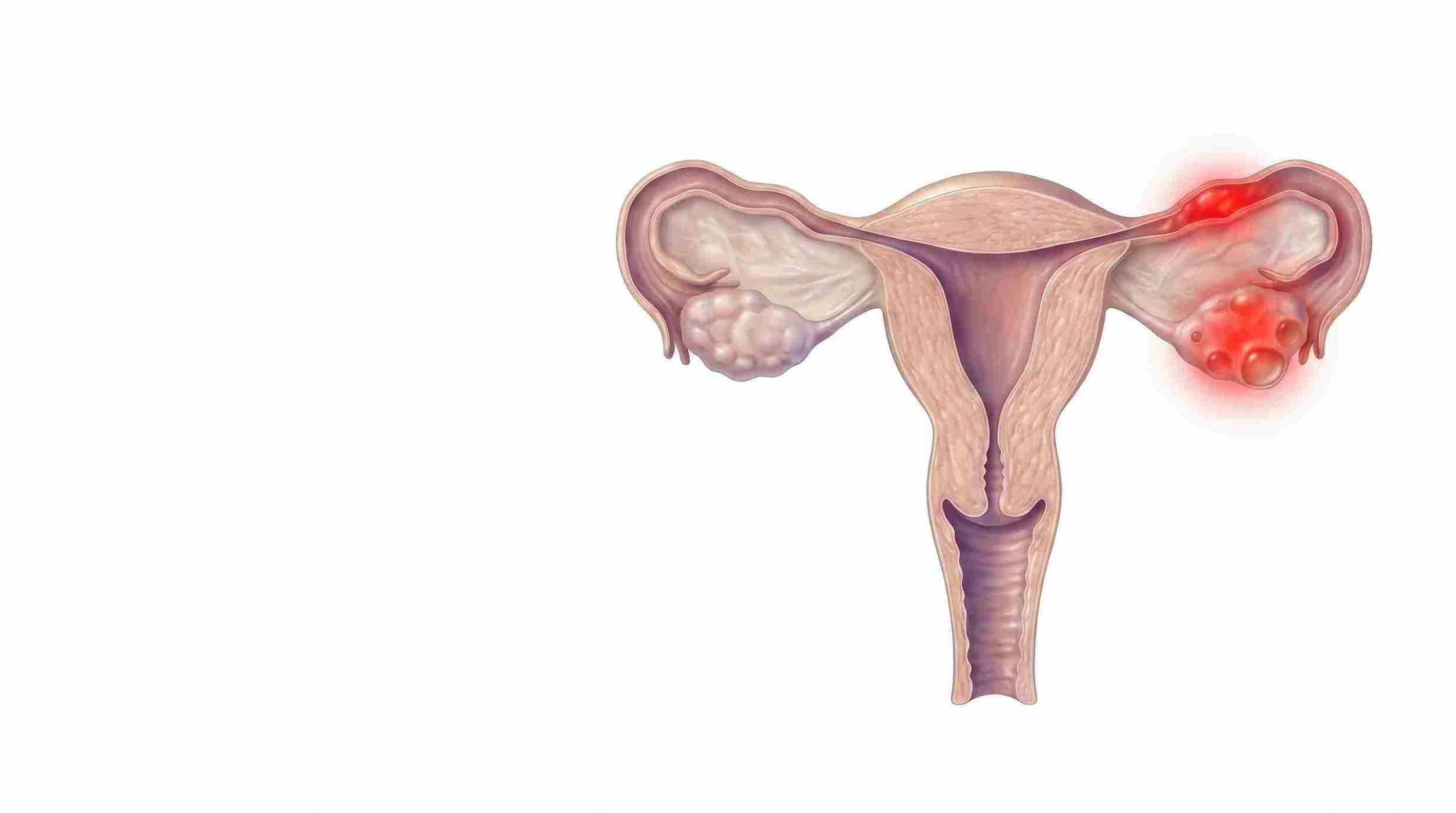
A haemorrhagic ovarian cyst is a fluid-filled sac on the ovary that formed during normal ovulation and then bled inside itself. It is benign, temporary, and one of the commonest findings on a pelvic scan in women of reproductive age.
You may see it written as haemorrhagic ovarian cyst, the UK and Indian spelling, or hemorrhagic ovarian cyst, the US spelling. Some reports say bleeding ovarian cyst. All three mean the same thing.
Most women reach this page with a scan report in hand and the same handful of questions. The table below answers each in a single line, and the sections that follow work through them properly.
Question
Short Answer
What Is It?
A functional ovarian cyst containing blood.
Where Does It Come From?
Usually develops as part of normal ovulation, often from the corpus luteum.
Is It Cancer?
A typical haemorrhagic cyst is generally considered benign based on its characteristic ultrasound appearance.
How Long Does It Last?
Often resolves within about 6–12 weeks, or roughly one to two menstrual cycles.
What Is the Usual Treatment?
Observation and simple pain relief when needed. Surgery is uncommon unless complications or concerning features develop.
Who Gets Them?
They occur in people who ovulate and are most common during the reproductive years.
Does It Affect Fertility?
A typical haemorrhagic cyst does not usually reduce ovarian reserve or directly block conception.
What "haemorrhagic" actually means
Haemorrhagic means containing blood. It describes what is inside the cyst, not how serious it is. Many women read the word as haemorrhaging and assume they are bleeding dangerously. They are not. It describes what the sonographer saw on the screen, nothing more.
It is also not a separate disease, but a functional cyst at one particular stage: the stage at which it has bled. That is why a report can call the same cyst functional on one scan and haemorrhagic on the next, with nothing having gone wrong.
How a haemorrhagic cyst forms
A haemorrhagic cyst is a byproduct of ovulation. The tissue that develops around a released egg is rich in new, thin-walled vessels that break easily. If you are not sure when in your cycle you ovulate, the physical signs that you are fertile explain when in the month one of these cysts is most likely to form.
A follicle in the ovary matures and releases an egg. The cells around it become densely supplied with new blood vessels.
The empty follicle reorganises into the corpus luteum, the structure that produces progesterone. Its inner granulosa layer is densely vascular, and those new vessels are thin-walled and fragile.
If one gives way, blood collects inside the sac and cannot escape. That is a haemorrhagic ovarian cyst.
Is it the same as a corpus luteum cyst? Not quite. Most haemorrhagic cysts are corpus luteum cysts that have bled, and a smaller number are follicular cysts that have bled. The corpus luteum is the usual origin, not the definition.
What your scan report is actually describing
Ultrasound reports describe haemorrhagic cysts in words that sound alarming and are not. A fishnet or reticular pattern, low-level internal echoes, and a retracting clot all describe blood and fibrin inside the sac. These are the features that confirm the cyst is benign, not ones that raise concern.
Radiology reports are written for the doctor who requested the scan, not for the woman who receives it, which is why the wording lands so badly. The table below translates the phrases that appear most often. You do not need to memorise any of it. Reading it once is usually enough to take the fear out of a report you have already been carrying around for a few days.
What Your Report Says
What It Means
Reticular pattern, fishnet, lace-like, lacy
Fine crossing threads of fibrin suspended in the blood inside the cyst. This is a classic sign of a benign haemorrhagic cyst.
Low-level internal echoes
Blood and fibrin are floating within the fluid rather than representing solid tissue.
Retracting clot, retractile clot
A blood clot is shrinking away from the cyst wall. It may have straight, concave, or angular edges, helping distinguish it from a true solid growth.
No internal vascularity, no internal blood flow on Doppler
The material inside the cyst has no independent blood supply. This is generally a reassuring ultrasound feature.
Peripheral flow, circumferential flow, ring of fire
Blood flow is seen in the cyst wall rather than inside the cyst contents. This can be a normal finding with a corpus luteum.
Fluid-fluid level
Blood has settled into layers inside the cyst.
Posterior acoustic enhancement
A brighter signal is seen behind the cyst, supporting that it contains fluid rather than being completely solid.
Unilocular
A single-compartment cyst with no internal dividing walls.
Free fluid in the pouch of Douglas
A small amount of fluid behind the uterus. This can be common after ovulation and is often harmless when minimal.
Complex cyst
The cyst does not appear as simple clear fluid on ultrasound. The term describes its appearance and does not, by itself, indicate cancer or another specific diagnosis.
Adnexal
Located in the region of the ovary and fallopian tube.
Read together, these descriptors are why a radiologist is usually confident about a haemorrhagic cyst on sight. The combination of a fishnet pattern, a retracting clot and no blood flow inside the contents is characteristic enough that most reports will name the diagnosis directly rather than hedge. What would change the picture is a different vocabulary altogether: solid nodules or papillary projections growing from the inner wall, thick or nodular dividing walls, or blood flow within the cyst contents rather than around the outside. If your report does not use those words, the terms above are describing an ovulation cyst behaving exactly as it should.
If your report says "complex", that is expected
Almost every haemorrhagic cyst is described as complex on ultrasound, because the blood and fibrin inside stop it appearing as clear fluid. The word describes the picture, not the danger. A haemorrhagic cyst sits in that category by definition.
The line that matters most: no internal blood flow
If your report says there is no internal vascularity, or no flow within the cyst contents on Doppler, that is the finding that separates a haemorrhagic cyst from something concerning. Growing solid tissue needs a blood supply and shows flow. A clot does not. Flow in the wall only, sometimes called a ring of fire, is normal.
One caution: the ring of fire pattern also appears in ectopic pregnancy, which is why a pregnancy test is part of assessing any sudden one-sided pelvic pain.
Do you need an MRI?
Usually not. A transvaginal ultrasound is enough in the great majority of cases, because the detail it shows is exactly what characterises a haemorrhagic cyst. An MRI is reserved for the minority where the appearance stays unclear after a repeat scan. Being told you need no further imaging is a good outcome, not an oversight.
Radiologists using the O-RADS scoring system classify a typical haemorrhagic cyst as O-RADS 2, meaning almost certainly benign, with a risk of malignancy under 1 percent.
Symptoms of a haemorrhagic ovarian cyst
The typical symptom is sudden, one-sided pelvic pain, most often in the second half of the cycle. Many cause no symptoms at all and are found on a scan done for something else. Where pain does occur, it usually eases within 24 to 72 hours.
Sudden one-sided pelvic pain: on the left or the right, depending on which ovary ovulated that cycle
A dull ache or heaviness low in the abdomen, which can linger for a few days after the sharp pain settles
Pain during intercourse or during exercise, particularly movements that twist or jolt
Bloating or a sense of pressure and fullness in the pelvis
Nausea without fever. Fever points elsewhere, usually to infection
Referred pain in the lower back or inner thigh on the same side
Why the pain comes on so suddenly
Blood collects faster than the ovary can accommodate it, stretching the ovarian capsule. It is the stretch, not the blood, that hurts, which is why the pain arrives abruptly rather than building over days.
How long the pain lasts
Most pain settles within 24 to 72 hours, as the bleeding stops and the sac stops expanding. A duller ache can continue for several days. Pain still severe after three days, or worsening rather than easing, should be reviewed rather than waited out.
When there are no symptoms at all
A large share are silent, turning up on a routine pelvic ultrasound, a follicular monitoring scan, or imaging done for something unrelated. Finding one by accident does not mean it was missed or has been developing unnoticed for months.
Lower back or inner thigh pain on its own, without pelvic pain, is not a red flag and usually has another explanation.
Does a haemorrhagic cyst cause bleeding you can see?
No. Despite the name, the bleeding happens inside the cyst, not out of the vagina. Most women with a haemorrhagic cyst have no visible bleeding at all. The blood is sealed in the sac and reabsorbed over the following weeks.
This is the most misleading thing about the condition. The name describes where the blood is, not where it is going.
It is not the same as heavy periods
No. A haemorrhagic cyst does not cause heavy periods, and the mechanisms are unrelated. If your periods are heavy enough to worry you, the commoner explanations are fibroids, thyroid dysfunction, adenomyosis or a clotting problem. Heavy bleeding deserves its own assessment rather than being blamed on a cyst that happened to appear on the same scan.
Spotting between periods: the honest answer
Sometimes, and indirectly. A cyst that disturbs the corpus luteum can unsettle progesterone in the second half of the cycle, and light spotting can follow. That is a hormonal knock on effect, not the cyst bleeding out. We would rather say sometimes than give a clean yes or no that is not true.
It can delay your period
Yes. If the corpus luteum keeps producing progesterone for longer than usual, the period is held back, sometimes by a week or more, and resets once the cyst resolves. One caveat: a delayed period with one-sided pain needs a pregnancy test before anything else is assumed.
Will you bleed internally?
A small amount of free fluid in the pelvis is common and harmless. Significant bleeding into the abdomen is uncommon, but it does happen, and it is why the red flag list further down matters. Please do not skip it on the strength of the reassurance in this section.
The commonest cause is ovulation itself. The new vessels that form around a released egg are thin-walled and break easily. Most haemorrhagic cysts are a byproduct of a normal, healthy cycle rather than a sign that anything has gone wrong.
Ovulation: the usual cause. The fragile new vessels of the corpus luteum bleed into the sac
Anticoagulant medication: blood-thinning drugs raise both the chance of a cyst bleeding and the risk of that bleeding becoming significant. This is the most clinically important risk factor here and the one most often left out. Discuss any new pelvic pain with the doctor who prescribed it, and never stop or alter the dose yourself
Inherited bleeding and clotting disorders: conditions such as von Willebrand disease and the haemophilias carry the same raised risk of a cyst bleeding heavily
Ovarian stimulation: fertility treatment produces more corpora lutea than a natural cycle, so there are more opportunities for one to bleed
Physical trauma or intercourse: these can trigger bleeding in a cyst that is already present, particularly a large one
What does not cause a haemorrhagic cyst?
You did not cause this. Haemorrhagic cysts are not caused by diet, body weight, hygiene, exercise, or anything you did or failed to do. They are a byproduct of ovulating.
Stress does not cause them either. There is no evidence linking psychological stress to the formation of haemorrhagic cysts.
Rough sex: trigger, not cause
Several widely read pages list vigorous sex as a cause. That is not quite right. Intercourse can trigger a cyst that is already there to bleed or rupture, particularly a large one. It does not create the cyst.
Does a haemorrhagic cyst mean PCOS?
No. They are different conditions. PCOS involves many small follicles that never mature and do not bleed. A haemorrhagic cyst is a single functional cyst that has bled, and it happens in women with entirely normal ovaries. Having one says nothing about whether you have PCOS.
Can it happen after IVF stimulation?
Yes, and usually without consequence. Ovarian stimulation produces multiple corpora lutea, so a haemorrhagic cyst is a common finding on a monitoring scan, and it usually settles without any change to the treatment plan. It helps to know what a follicular scan is looking for before your next appointment.
How long a haemorrhagic ovarian cyst takes to resolve
Most haemorrhagic cysts resolve within 6 to 12 weeks, roughly one to two menstrual cycles. Radiology references describe complete resolution within about 8 weeks as typical. Where follow-up is advised, a repeat ultrasound at 8 to 12 weeks confirms it has gone.
It is also normal for a cyst to look slightly larger on a scan a few days later, while bleeding is still settling, before it shrinks. Growth over days is not the same as growth over months.
It helps to see the full range of outcomes in one place rather than only the ones that worry people. The great majority of haemorrhagic cysts need nothing at all. A smaller number need a second scan to confirm they have gone, and a smaller number again run into a complication that needs attention. The table below sets these out in rough order of how often they occur, so that the uncommon outcomes are visible without being mistaken for likely ones.
Outcome
How Often, and What It Means
Resolves with No Treatment
The great majority resolve without treatment; the blood is typically reabsorbed over one to two menstrual cycles.
Needs One Repeat Scan
May be recommended when the cyst is over 5 cm or when its ultrasound appearance is not clear-cut.
Still Present Past 12 Weeks
Uncommon. Persistence should prompt reassessment of the diagnosis rather than simply repeating the same scan.
Ruptures with Significant Bleeding
Uncommon. The risk of significant bleeding may be higher when taking anticoagulant medicines.
Needs Surgery
Required in a small minority of cases, usually with the aim of preserving as much healthy ovarian tissue as possible.
Happens Again in a Later Cycle
Can occur in women who ovulate. Each episode generally represents a new cyst rather than a recurrence of the previous cyst.
Two rows are worth reading twice. The first is recurrence, which is common and is not a sign that anything has gone wrong with your ovaries. If you ovulate, you can form another cyst in a later cycle, and each one is a new event rather than the old cyst coming back. The second is the anticoagulant note. If you take a blood thinner, the rupture row applies to you more than it does to most readers, and new pelvic pain is worth reporting rather than waiting out
What if it does not go away?
A cyst still present beyond 12 weeks is no longer behaving like a haemorrhagic cyst, so the diagnosis is reconsidered rather than the same scan repeated. The commonest alternative is an endometrioma, which also contains blood but persists for months. Persistent or enlarging cysts are referred for specialist ultrasound or MRI.
Can a haemorrhagic cyst come back?
Yes, and it usually is not the old one returning. If you ovulate, you can form another in a later cycle. A new cyst is a new event, not a relapse. Recurrence does not mean anything is wrong with your ovaries. It means you are ovulating.
Size: when it matters and when it does not
Size decides whether you need a follow-up scan, not whether you need surgery. Current radiology guidance treats a typical haemorrhagic cyst of 5 cm or less in a premenopausal woman as needing no further imaging at all. Larger cysts are rescanned, not removed.
Size decides how closely a cyst is watched, not whether it is treated. The thresholds below come from the published ACR O-RADS ultrasound guidance, which is what a radiologist reporting your scan is actually applying. You may find different bands quoted elsewhere. Where they differ, these are the ones in clinical use, and they are the reason a cyst you were told to worry about may turn out to need nothing at all.
Size on Scan
What Guidance Advises for a Woman Who Is Still Ovulating
5 cm or less
No follow-up imaging is generally needed if the appearance is typical of a haemorrhagic cyst.
Over 5 cm and under 10 cm
Repeat ultrasound in approximately 8–12 weeks.
Persisting or Enlarging at Follow-up
Referral for specialist ultrasound or MRI to characterise the cyst properly.
10 cm or more
Specialist assessment is recommended; a cyst of this size is less likely to resolve on its own.
Any Size After Menopause
Further assessment is recommended regardless of size.
Notice what this table does not contain: a size at which surgery becomes automatic. Larger cysts are rescanned rather than removed, and the last row is the only one that changes the whole approach. Everything above it assumes you are still ovulating, because a functional cyst forms as part of that cycle. After menopause, the same appearance means something different and is assessed on its own terms regardless of how small it is.
What size haemorrhagic cyst needs surgery?
Size alone does not decide surgery, and the bare centimetre threshold quoted on many pages is not how the decision is made. What counts is whether the cyst causes severe or unrelenting symptoms, whether it persists or enlarges past the follow-up window, whether the appearance stays uncertain, and whether there is active bleeding into the abdomen or torsion.
Practically: a 6 cm cyst that is settling and painless is watched. A 4 cm cyst that has twisted the ovary is operated on the same day. The size of the cyst is also a separate question from whether the size of your ovary itself matters for conception, which is a question we are asked constantly and which has a different answer.
Is a haemorrhagic ovarian cyst dangerous?
Most are not. A haemorrhagic cyst is self-limiting and resolves without intervention. There are two exceptions: rupture with heavy bleeding into the abdomen, and ovarian torsion, where an enlarged ovary twists on its own blood supply.
Rupture
Yes, a haemorrhagic cyst can go on to rupture. When it does, the scan usually shows free fluid in the pelvis. Most ruptures settle without surgery and are managed with observation and pain relief.
Ovarian torsion
Torsion is a surgical emergency in which the ovary twists and loses its blood supply, and it needs treatment within hours to save the ovary. The risk rises with cyst size rather than with the amount of bleeding inside.
Can it be life-threatening?
Rarely, yes, and we are not going to flatten that to a simple no. Significant bleeding into the abdomen from a ruptured haemorrhagic cyst is uncommon but well documented, and the risk is meaningfully higher in women on anticoagulants and those with inherited bleeding disorders. For most women it will never be relevant. For a small number, it is exactly why the warning signs below matter.
Red flags: when to seek urgent care
Go to an emergency department, rather than waiting for an appointment, if you have severe pain that will not settle, feel faint, or have pain at the tip of your shoulder. These suggest bleeding into the abdomen, which needs assessment within the same hour, not the same week.
The signs below are the ones that mean same hour rather than same week. They are grouped together so you can check them quickly, and none of them asks you to interpret your own scan report. If you are reading this because something is happening right now, the first three rows are the ones to check first.
Warning Sign
Why It Matters
Severe pain that does not settle with simple pain relief
May suggest continued bleeding or ovarian torsion.
Fainting, near-fainting, or dizziness on standing
May suggest significant blood loss.
Rapid pulse or a marked drop in blood pressure
May suggest significant blood loss.
Pain at the tip of the shoulder
May occur when blood in the abdomen irritates the diaphragm and can be a sign of internal bleeding.
Repeated vomiting with severe one-sided pain
Raises concern for ovarian torsion.
Unusual paleness, cold or clammy skin
May suggest significant blood loss.
Fever alongside pelvic pain
May point toward infection rather than an uncomplicated cyst and needs medical review.
Sudden severe pelvic pain while taking anticoagulants
May indicate a higher bleeding risk and should be assessed urgently rather than observed at home.
Sudden one-sided pain with a late or missed period
A pregnancy test is needed to help exclude ectopic pregnancy.
Two situations lower the threshold further. If you take an anticoagulant or have a known bleeding disorder, sudden pelvic pain warrants assessment rather than waiting to see whether it settles. And if there is any possibility you could be pregnant, a pregnancy test comes before anything else, because a haemorrhagic cyst and an ectopic pregnancy can cause the same pain and the test separates them in minutes.
If you are unsure whether what you are feeling counts, the safer choice is to be seen. A Cloudnine Fertility specialist can review your scan report and symptoms together and tell you plainly whether this needs watching or acting on.
Is a haemorrhagic cyst cancer?
No. A haemorrhagic ovarian cyst is benign and is not a sign of ovarian cancer. It forms from ovulation, contains blood and fibrin rather than solid tissue, and radiologists place a typical one in the almost certainly benign category, with a malignancy risk below 1 percent.
Can it turn into cancer later? No. It either resolves as the blood is reabsorbed, or it turns out to have been something else from the start. Catching that second possibility is exactly what follow-up imaging is for.
It is usually more reassuring to see what the concerning version actually looks like than to be told not to worry. The features below are what a radiologist weighs up, and they are assessed together rather than one at a time. No single row on the right decides anything on its own, and the great majority of haemorrhagic cysts sit entirely in the middle column.
Feature on the Scan
Typical Haemorrhagic Cyst
What Would Raise Concern
Blood Flow Inside the Cyst Contents
Absent
Blood flow within a solid component
What Is Inside
Blood, fibrin strands, and a retracting clot
Solid nodules or papillary projections
Behaviour Over Time
Usually shrinks over one to two menstrual cycles
Persists or grows across repeated scans
Internal Structure
Usually a single compartment
Thick or irregular/nodular dividing walls
Age Group
More common in women who are still ovulating
A new complex ovarian finding after menopause
If your report sits somewhere between the two columns, the answer is almost always a repeat scan in a few weeks rather than anything more. Behaviour over time is the most informative row in the table, and it is the one that cannot be read from a single scan. A cyst that shrinks has answered the question. That is why follow-up imaging exists, and being asked to come back for one is not a sign that something has been found.
Do you need a CA-125 test?
Usually not, and there is a specific reason to be careful with the result if one has been done. CA-125 is raised by bleeding, endometriosis, menstruation, pregnancy and pelvic inflammation, all far more common than cancer at reproductive age. A haemorrhagic cyst can push the number up by itself, so a raised CA-125 here is easy to misread.
After menopause, this is different
This is the one section of this article that is not reassuring, and that is deliberate. Once you have stopped ovulating, you do not form functional cysts, so a true haemorrhagic cyst should not occur after menopause. Radiology guidance is explicit that a cyst with this appearance in a postmenopausal woman needs further assessment regardless of size, whether by a gynaecologist, a specialist ultrasound, or an MRI.
Everything reassuring in the rest of this article applies to women who are still ovulating. If you are past menopause and your report describes a haemorrhagic or blood-filled ovarian cyst, treat it as a finding to follow up promptly rather than watch and wait.
Treatment for a haemorrhagic ovarian cyst
Usually none is needed. The standard management is observation, simple pain relief, and a repeat scan where size or appearance calls for one. The body reabsorbs the blood on its own. That is the entire treatment for most women, and pages that construct a more elaborate protocol are describing something that is not standard practice.
What is actually done
Rest and simple pain relief while the pain is at its worst, usually the first two to three days
A repeat ultrasound at 8 to 12 weeks where the size or the appearance of the cyst calls for one
A pregnancy test at first presentation if there is any possibility of pregnancy
A review of anticoagulant medication by the doctor who prescribed it, if you are taking one. Never a self-directed change
Follow up of symptoms rather than the number how you feel over the next fortnight matters more than the centimetre reading
On pain relief: simple analgesia is the mainstay, and both paracetamol and the non-steroidal anti-inflammatory class are used. One caution is worth knowing. Non-steroidal anti-inflammatories have a mild antiplatelet effect, so if you take anticoagulants or have a bleeding disorder, ask your doctor which pain relief suits you.
What does not work
No tablet dissolves a haemorrhagic cyst. Painkillers treat the pain, not the cyst. The body reabsorbs the blood on its own, and nothing speeds that up.
The contraceptive pill needs its own answer, because it changes with the question. Combined oral contraceptives do not shrink a cyst that has already formed. They can reduce the chance of new ones forming by suppressing ovulation. Treating and preventing are different questions, and a page that blurs them leaves you expecting something the pill cannot do.
No home remedy, castor oil pack, heat therapy, herbal preparation, or dietary change dissolves a haemorrhagic cyst.
When surgery is considered
Surgery is uncommon. Where it is needed, it is usually laparoscopic and ovary-sparing, meaning the cyst is removed and healthy ovarian tissue left in place. That matters if you are trying to conceive now or may want to later, and it is worth asking about explicitly if surgery is proposed.
It is considered when there is continued bleeding into the abdomen with unstable observations, when the ovary has twisted, when a cyst persists or enlarges beyond the follow-up window, or when the diagnosis stays uncertain after imaging.
How it differs from other ovarian cysts
The distinction that matters most is between a haemorrhagic cyst and an endometrioma, because both contain blood and both look complex on a scan. The difference is time. A haemorrhagic cyst resolves over weeks. An endometrioma persists for months.
Three other conditions get confused with a haemorrhagic cyst often enough to be worth setting side by side. They separate on features that are straightforward once laid out together, and in most cases a single scan and a pregnancy test are enough to tell them apart. The table below compares them on the points that actually do the separating.
Feature
Haemorrhagic Cyst
Endometrioma (Chocolate Cyst)
Dermoid Cyst
Ectopic Pregnancy
What Is Inside
Fresh blood and fibrin
Old, degraded blood
Fat, hair, and sometimes teeth
A pregnancy outside the uterus
Scan Appearance
Fishnet or reticular pattern, with retracting clot
Uniform low-level echoes, sometimes described as a ground-glass appearance
Bright fatty areas and possible calcification
Adnexal mass; a ring-of-fire appearance may be seen on Doppler
Resolves on Its Own
Often yes, typically over about 6–12 weeks
Usually does not resolve spontaneously
Usually does not resolve spontaneously
No; requires prompt medical assessment and treatment
Pregnancy Test
Usually negative unless pregnancy is present separately
Negative
Negative
Usually positive
Urgency
Usually none if uncomplicated
Routine gynaecology evaluation
Planned gynaecology or surgical review depending on size and symptoms
Potential medical emergency requiring urgent assessment
One row matters more than the rest. Any woman of reproductive age with sudden one-sided pelvic pain needs a pregnancy test first. A haemorrhagic cyst and an ectopic pregnancy can present almost identically, and the ring of fire pattern appears in both. The pregnancy test, not the scan appearance, separates them quickly and safely.
A haemorrhagic cyst is not the same as a ruptured cyst
No, and the two are used interchangeably far too often. A haemorrhagic cyst has bled inside itself and the sac is intact. A ruptured cyst has broken open and released its contents into the pelvis. A haemorrhagic cyst can go on to rupture, which is why they are mentioned together, but they describe different events.
Left and right are not different conditions
No. A left ovarian haemorrhagic cyst and a right ovarian haemorrhagic cyst are the same condition. Left and right describe which ovary ovulated that cycle. There is no difference between the sides in treatment, resolution time, symptoms, or risk.
Fertility and pregnancy
A haemorrhagic cyst does not reduce your egg reserve or block conception. Unlike an endometrioma, it resolves without leaving lasting damage to the ovary.
You can conceive with one present. Ovulation continues as normal, and conception in the same cycle is entirely possible.
In pregnancy, the corpus luteum can bleed and appear as a haemorrhagic cyst on an early scan. It is monitored and usually resolves by the second trimester.
If you are in a fertility cycle, a haemorrhagic cyst on a baseline scan may mean the cycle is deferred until it settles. That is a scheduling decision, not a change to your long-term outlook. If you have not started treatment yet, this is a useful point to read about when to consider fertility treatment. A Cloudnine Fertility specialist can confirm whether your cycle needs to wait.
Living with a haemorrhagic cyst
You do not need to put your life on hold. Avoid high-impact and twisting activity while the cyst is painful or large; keep moving otherwise, and do not expect diet to change anything.
Exercise: walking, swimming, and gentle cycling are fine. Avoid running, jumping, high-intensity interval training, deep twisting yoga postures and heavy lifting while the cyst is painful or over 5 cm, because sudden movement can contribute to torsion in a larger cyst
Sex: not forbidden. It may be uncomfortable, and while the cyst is large it can trigger bleeding or rupture. If it hurts, wait until the pain has settled
Travel and flying: safe. Cabin pressure does not affect a cyst. Consider deferring travel if your pain is unresolved or the cyst is large and you would be far from medical care
Diet: no diet shrinks a haemorrhagic cyst or prevents one from forming
Work: no restriction beyond what your pain allows
Heat: a warm compress may ease the ache. It does not treat the cyst, and that is fine
Want to consult the Best Fertility in india? Please find the links below.
Does a haemorrhagic ovarian cyst cause vaginal bleeding?
No. Despite the name, the bleeding happens inside the cyst, not out of the body. Most women with a haemorrhagic cyst have no visible bleeding at all. The blood stays sealed in the sac and is reabsorbed over the following weeks. Light spotting can occasionally follow as a hormonal knock-on effect, but that is not the cyst bleeding out.
What happens when a haemorrhagic ovarian cyst bleeds?
A small vessel in the cyst wall breaks and blood collects inside the sac, stretching the ovarian capsule. That stretch causes the sudden one-sided pain. The bleeding then stops on its own, a clot forms and retracts, and the body reabsorbs the blood over one to two cycles. In a small number of cases, the cyst ruptures and releases blood into the pelvis, which needs urgent assessment.
Is a haemorrhagic ovarian cyst cancerous?
No. A haemorrhagic cyst is benign and is not a sign of ovarian cancer. It is a normal ovulation cyst that has bled into itself, and radiologists classify a typical one as almost certainly benign, with a malignancy risk below 1 percent. It does not turn into cancer over time. The exception is a haemorrhagic-appearing cyst found after menopause, which needs further assessment regardless of size.
Does a haemorrhagic cyst mean PCOS?
No. They are different conditions. PCOS involves many small follicles that never mature and do not bleed. A haemorrhagic cyst is a single functional cyst that has bled, and it occurs in women with completely normal ovaries. PCOS is diagnosed on cycle history, hormone levels, and a specific ovarian appearance, not on one bled cyst.
Schedule your consultation Today!
Book your consultation with our fertility experts the first step toward your parenthood journey.