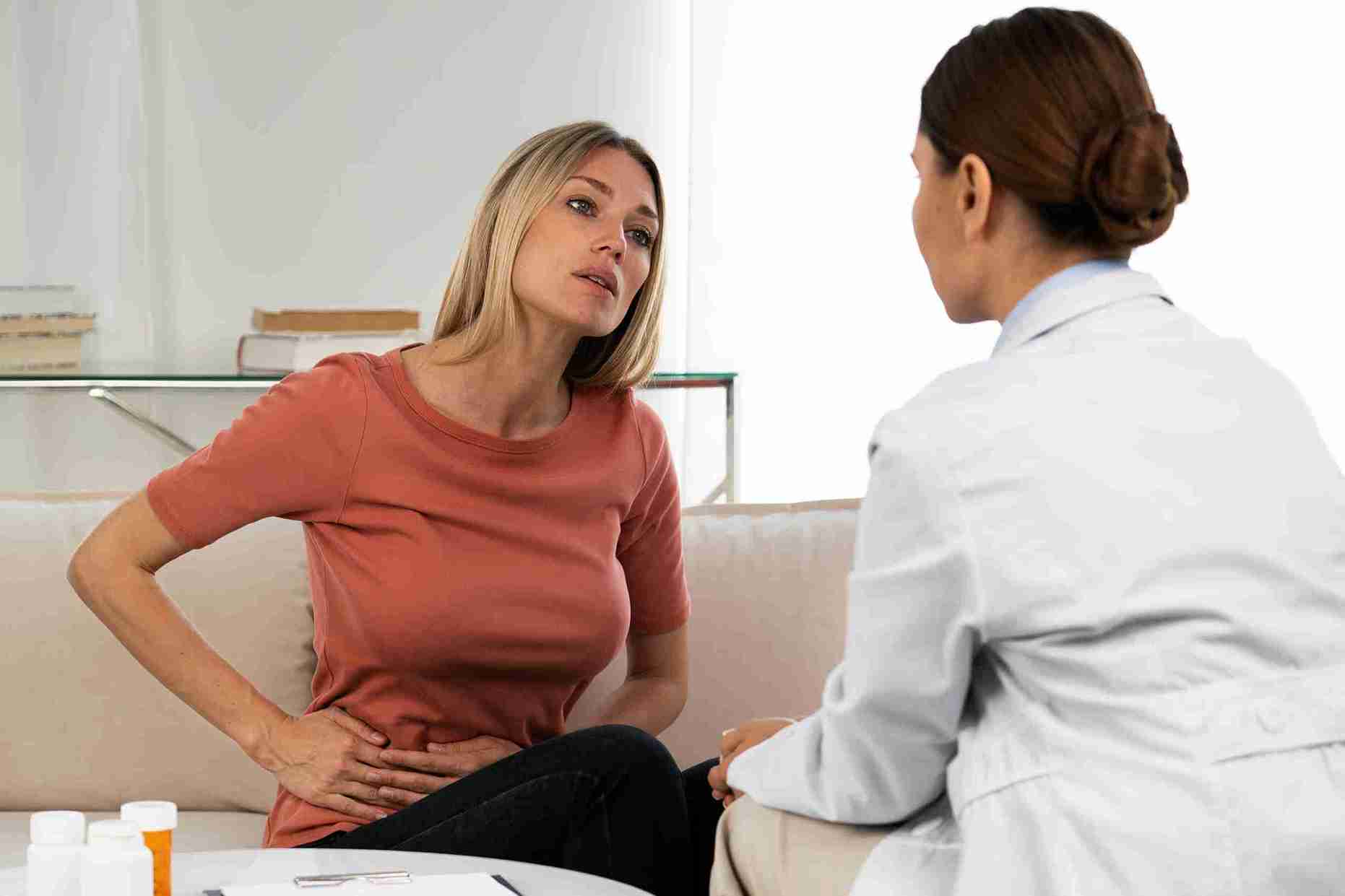
Ovarian Cyst and Lower Back Pain: What is Actually Causing it
October 1, 2026
Cloudnine
No items found.
Ovarian Cyst and Lower Back Pain: What is Actually Causing it
October 1, 2026
Cloudnine
No items found.
An ovarian cyst rarely causes lower back pain on its own. A cyst can add a dull ache across the lower back when it is already causing pelvic pain, because the pelvis and the lower back share a nerve supply. Back pain with no pelvic symptoms and no cycle pattern usually has another cause.
Can an ovarian cyst cause lower back pain?
The useful answer is a rule rather than a yes or no. Back pain alongside pelvic pain is plausible. Back pain instead of pelvic pain is not.
An ovarian cyst sits low in the pelvis, some distance forward of the spine. For it to be felt in the back at all, it has to be doing enough in the pelvis to be felt there first. Back pain arriving on its own, with a quiet pelvis, points away from the ovary rather than towards it.
The single most useful test costs nothing. Work out whether the back pain arrived before or after the cyst was found. Most cysts in India are picked up incidentally, on a routine health check scan or a master health package ultrasound arranged for something else. If your back has ached for months and a scan last week found a cyst, the chronology is doing the work for you. Long-standing back pain that predates the scan is seldom the cyst.
If the cyst were responsible, you would expect these alongside the back ache:
One-sided pelvic pain or a dragging heaviness low down on one side
Pelvic pressure or a sense of fullness in the lower abdomen
A cycle pattern, with symptoms worse in the days before a period
Bloating or needing to pass urine more often than usual
If none of that is present, the back pain deserves investigation in its own right rather than being filed under the cyst. For how cyst pain itself behaves, where it sits and how it differs from ovulation pain, see what ovarian cyst pain actually feels like and where.
Why can pelvic problems be felt in the lower back?
The mechanism is referred pain (pain felt in one part of the body when the source of the problem is somewhere else). The ovaries, the uterus and the lower back are served by nerves that enter the spinal cord at overlapping levels. The brain receives the signal but cannot always work out which structure sent it, so it registers the pain across a broad area instead of at a point.
Referred pain is real pain. It is not imagined or exaggerated. The tissue sending the signal is genuinely irritated. Only the location is misleading.
Referred pain is also diffused. Because the brain is effectively guessing at the source, it spreads the sensation across the lower back rather than pinning it to one spot. That is why women describe this kind of ache as broad and heavy, and why they usually cannot put a finger on a sore point. Pain you can locate precisely and pinpoint with pressure behaves differently, and that difference is one of the more useful things you can notice yourself.
When can an ovarian cyst genuinely cause back ache?
There are three situations where the answer becomes yes.
A large cyst. Once a cyst is big enough to exert mass effect (physical pressure on surrounding structures), it can cause a genuine backache. RCOG Green-Top Guideline No. 62 treats simple cysts under 50 mm as physiological, expecting them to resolve over two to three menstrual cycles without intervention, and reserves yearly ultrasound follow-up for those between 50 and 70 mm. Cysts big enough to press meaningfully on the pelvis sit well above that, commonly 8 to 10 cm and beyond, and they announce themselves with obvious pelvic symptoms long before backache.
An endometrioma. Where the cyst is an endometrioma (a cyst formed from endometriosis tissue on the ovary), it often sits alongside deeper endometriosis elsewhere in the pelvis. The ESHRE endometriosis guideline of 2022 recognises this deeply infiltrating pattern and the cyclical pain that travels with it, including painful bowel movements and rectal pain. Backache in this setting usually refers from the deeper disease rather than the cyst itself, which changes what needs investigating. Our guide to endometriosis and fertility has more.
Rupture or torsion. A cyst that bursts, or an ovary that twists on its stalk, can hurt severely and suddenly, and the pain radiates to the back. Size offers no protection. A small cyst can do this, and sudden severe pain is an emergency, whatever the last scan measured.
What does ovarian cyst related back pain feel like?
Dull, diffuse and low. It sits across the lower back rather than to one side of the spine, and reads as a heavy ache rather than a sharp point. It tends to be mild to moderate; it comes and goes, and it arrives with pelvic symptoms rather than on its own.
What it is not is just as useful. It is not sharp or stabbing. It does not shoot down the leg. It does not get clearly worse when you bend forward or lift something, and it does not reliably settle when you lie down or change position. There is no consistent pattern of it being worse at night. Pain character, sidedness, and cycle timing are covered in depth in what ovarian cyst pain actually feels like and where.
How do you tell ovarian cyst back pain from ordinary back pain?
Three features separate them more reliably than anything else: whether pelvic pain is present alongside the back pain, whether the pain follows your cycle, and whether it changes when you bend, lift or shift position. Referred pain from the pelvis largely ignores movement. Mechanical back pain is defined by it.
Pain from the uterus or ovaries can be felt in the lower back because these organs share nerve pathways with the back. This means pelvic pain and ordinary back strain can feel similar at first, even though their causes and treatment are very different. Paying attention to a few simple features of your pain can help tell the two apart. The table below compares how each type usually behaves, so you can describe your symptoms clearly to your doctor.
Feature
Pain from the pelvic organs
Pain from the muscles or spine
Where it is felt
Across the lower back, diffuse, hard to pinpoint
To one side of the spine, or a spot you can press on
Pain character
Dull, heavy, aching
Sharp, catching or shooting
Relationship to the cycle
Worse in the days before or during a period
No relationship to the cycle at all
Effect of bending and lifting
Largely unchanged
Clearly worse
Effect of rest and position change
Little difference
Usually eases with rest or a change of position
Pelvic pain present
Yes, almost always
No
Bowel or bladder symptoms
Pressure or urinary frequency may be present
Absent, unless there is leg weakness or loss of bladder control, which is urgent
How it started
Around the time pelvic symptoms began
Often after lifting or a new activity, or gradually with posture
What makes it worse
Cycle timing, sometimes intercourse
Movement, prolonged sitting, particular postures
These patterns are a guide rather than a diagnosis, and it is possible to have both types of pain at the same time. For example, someone with endometriosis may also strain a back muscle, which can make the pattern harder to read. If your pain mostly matches the first column, a gynaecology review is a sensible next step, and a pelvic ultrasound may be suggested. If it mostly matches the second column, a general doctor or physiotherapist is usually the right place to start. If you cannot tell which column fits, or your pain does not improve within a few weeks, a doctor can examine you and help work out the cause.
If your back pain seems to follow your periods, our specialists can assess whether a gynaecological cause is involved and advise on the right tests.
This table can't turn a cyst into a cause of sciatica. Pain shooting from the buttock down the back of the leg is a nerve root pattern coming from the spine. A very large pelvic mass can occasionally press on nerves and produce something similar, but it is uncommon and never the first explanation to reach for.
What else causes lower back pain in women?
Most lower back pain in women is not gynaecological. Among people who take back pain to a doctor, the large majority, commonly put at 85 to 95%, have non-specific low back pain (back pain with no single identifiable structural cause). It is muscular, postural and mechanical rather than a disease of any organ. That is the honest starting point, and the one most symptom lists skip.
Lower back pain is very common, and in most cases it comes from the muscles, joints, or posture rather than from the reproductive organs. When the pain follows your menstrual cycle, however, it can point to a gynaecological cause such as ovulation, painful periods, or endometriosis. Noticing when the pain starts, how long it lasts, and what comes with it can help you and your doctor narrow down the likely cause. The table below compares common causes by the pattern of pain and the other signs that help tell them apart.
Possible cause
How the pain feels
Other clues
What to do next
Non-specific back pain
Worse on movement, eases with rest, no cycle pattern
By far the commonest cause, and no pelvic symptoms at all
See a doctor
Ovulation
Brief ache mid cycle, may alternate sides
Arrives around day 14 and settles within a day or two
Linked below
Periods and dysmenorrhoea (painful periods)
Builds in the days before bleeding, eases once flow starts
Tracks the period precisely, cycle after cycle
Linked below
Endometriosis and endometrioma
Cyclical at first, can become constant over time
Painful periods, pain during sex, painful bowel movements
Linked below
Adenomyosis
Dragging pelvic ache with back involvement
Heavy periods with severe cramping
Linked below
Fibroids
Pressure-related ache, worse as they enlarge
Bulk symptoms such as heaviness and urinary frequency
Ask a gynaecologist
Pelvic inflammatory disease
Persistent ache with pelvic pain
Abnormal discharge, fever, pain during sex
Linked below
Urinary infection and kidney
Higher and further back, usually one side
Burning on passing urine, fever
Next section
Pregnancy
Postural ache that builds through the day
A positive pregnancy test, and one-sided pain needs same-day review
Next section
A simple way to spot a pattern is to note your back pain alongside your period dates for two or three cycles, including how severe it feels and any other symptoms such as pain during sex, bowel changes, or heavy bleeding. Bringing this record to your appointment can make the consultation more useful. Pain that follows your cycle is not always a sign of a problem, but pain that is getting worse over time, stops you from working or studying, or comes with difficulty conceiving is worth discussing with a gynaecologist.
Some symptoms need prompt medical attention whatever the cause. Seek care the same day if your back pain comes with fever, sudden severe pain on one side, numbness or weakness in the legs, loss of control of your bladder or bowels, or if there is a chance you could be pregnant.
If your back pain seems linked to your periods or does not fit any of these patterns, our specialists can help work out the cause and suggest the right tests or treatment.
The distinction is anatomical and simpler than most people expect. Kidney pain is felt high and well behind, in the loin (the area between the lowest rib and the top of the hip, either side of the spine). Ovarian pain is felt low and towards the front, on one side.
Where it is felt
Loin and flank, high and well back
Low in the pelvis, towards the front, on one side
Radiation
Round the side and down towards the groin
Across the lower back, occasionally the inner thigh
Urinary symptoms
Common: burning, urgency, cloudy urine
Uncommon, other than pressure or frequency
Fever
May be present, and is significant when it is
Not typical, unless there is infection or torsion
Character
Constant severe ache, or waves of intense pain (renal colic, the wave pattern a stone produces)
Dull and heavy, and more constant
What triggers it
No relationship to the menstrual cycle
Often follows cycle timing
Flank pain with fever, or with burning on passing urine, needs same-day assessment. That combination suggests infection travelling up towards the kidney, and it is time-sensitive. It is not a cyst question and should not wait for a gynaecology appointment.
Does back pain mean my ovarian cyst is serious or cancerous?
No. Back pain is not an early warning sign of ovarian cancer, and it is not a marker of how large a cyst has become. Those are two separate fears and deserve separate answers.
On cancer: NICE guideline NG12 sets out the symptoms that should prompt investigation. They are persistent abdominal distension, feeling full quickly or losing appetite, pelvic or abdominal pain, and passing urine more urgently or more often. Back pain is not among them, and that is not an oversight. It is so common in the general population that it carries almost no power to distinguish one cause from another.
On size: How much a cyst hurts depends on where it sits and how much tension is in it, not its diameter. A small cyst in an awkward position can sometimes cause more discomfort than a larger cyst that remains unnoticed. Increasing back pain does not tell you a cyst is growing. Only a repeat scan answers that.
Persistent unexplained symptoms of any kind still deserve assessment. The point is not that back pain never matters, but that it is not the signal we are looking for here.
When back pain with an ovarian cyst needs urgent care
Go to an emergency department the same day if you have any of the following:
Sudden severe pelvic pain spreading into the back.
Pain with vomiting, or pain escalating over hours rather than settling.
Fainting, dizziness or a racing pulse.
Pain at the tip of the shoulder alongside pelvic pain.
Fever together with pelvic or back pain.
One-sided pain with a positive pregnancy test, whatever the severity.
New back pain with weakness in the legs, numbness around the inner thighs or the area you sit on, or loss of control of the bladder or bowel.
The last of these is a spinal emergency rather than a gynaecological one. It needs a hospital, not a gynaecologist, and having a known cyst does not make it less urgent. A ruptured cyst and ovarian torsion are covered separately.
Will removing the ovarian cyst cure my back pain?
Usually not, and it's worth understanding why before anyone agrees to an operation. Two situations can cause back pain, with opposite outcomes.
Where the cyst was genuinely the cause. If a large cyst was exerting real pressure inside the pelvis, and the backache arrived with the pelvic symptoms and followed the same pattern, removing it relieves the ache it was causing.
Where the cyst was incidental. If the cyst was found on a scan arranged for another reason, and the back pain predates it, surgery removes the cyst and doesn't relieve the back pain. Women in this position are often more distressed afterwards than before, because they have undergone an operation but the original problem is unchanged.
Back pain alone is not an indication for cyst surgery. The reasons to operate are cyst size, an appearance on imaging that needs clarifying, features that raise concern about malignancy, and pelvic symptoms that are not settling. If back pain is your only symptom, a recommendation to operate on that basis alone is worth a second opinion.
Some discomfort in the days after any pelvic surgery is normal and is separate from the original back pain. Recovery is covered in its own guide.
What relieves back pain when you have an ovarian cyst?
Several things ease the ache. None of them affects the cyst. Those are two separate questions, and almost every remedy article runs them together.
Simple measures at home can often make period-related back pain easier to manage, especially when it is mild and follows a regular pattern. It helps to know that easing the pain is not the same as treating what is causing it. Measures such as heat and pain relief can make you more comfortable, but they do not change an underlying condition such as endometriosis. The table below compares common options by how much relief they offer and whether they address the cause.
What you can try
Does it ease the pain?
Does it treat the cause?
| Our advice |
Heat pack or hot water bottle
Yes, often noticeably
No
Worth doing, for comfort only
Simple pain relief
Yes
No
Reasonable, but check with a doctor or pharmacist first
Anti-inflammatory pain relief
Yes, often better for cramping pain
No
Not suitable for everyone, so ask before using it
Gentle movement and walking
Yes, usually
No
Helpful. A specific exercise programme should come from a doctor or physiotherapist
Rest
Briefly yes, prolonged rest no
No
Useful short term, not as a strategy
Seated support and posture
Yes, if you sit for long periods
No
Worth adjusting
Castor oil packs
Only through the warmth itself
No
The warmth may soothe. The pack adds nothing
Ayurvedic and herbal preparations
No reliable evidence
No
No preparation has been shown to shrink a cyst
Dietary change
No
No
No diet dissolves an ovarian cyst
Pain relief works best when taken early, at the first sign of pain or as your period starts, rather than waiting until the pain is severe. Always follow the dose on the pack or the advice of your doctor or pharmacist, and check before using anti-inflammatory medicines if you have asthma, stomach problems, kidney problems, or are trying to conceive. If you find you need pain relief every cycle to get through normal activities, or home measures are no longer helping, it is worth seeing a gynaecologist, as regular severe period pain can have a treatable cause.
If home measures are not giving you enough relief, our specialists can help find the cause of your pain and discuss treatment options that go beyond symptom relief.
Three beliefs are worth naming directly. Cold weather and cold foods do not cause or worsen an ovarian cyst, or the back ache that comes with it. No mechanism or evidence supports this. Stress does not cause either, although sustained stress and poor sleep generally lower pain tolerance, which is a different claim and does not make the cyst responsible. And no food or dietary pattern has been shown to shrink a cyst, which our complete guide to ovarian cysts covers in full.
Back pain with an ovarian cyst in pregnancy and after IVF
In early pregnancy, a corpus luteum cyst (the structure left behind after an egg is released, which persists to support the early weeks) is a normal scan finding and not a problem in itself. Lower back ache in pregnancy is very common and usually postural, caused by the changing load on the spine. One line does not bend: one-sided pain with a positive pregnancy test needs same-day assessment to rule out an ectopic pregnancy, whatever the severity. Mild pain does not make it safe to wait.
After IVF, backache in the days following an embryo transfer is common and is dealt with in our guide to back pain after embryo transfer. If you have had a transfer recently, start there rather than here.
Want to consult the Best Fertility in india? Please find the links below.
Rarely on its own. A cyst can add a dull ache across the lower back when it is already causing pelvic pain, because the pelvis and lower back share nerve supply. Back pain with no pelvic symptoms and no cycle pattern almost always has another cause.
How do I know if my back pain is from an ovarian cyst?
Three features point towards a cyst: pelvic pain alongside the back pain, a pattern that follows your cycle, and an ache that does not change when you bend or shift position. Back pain that worsens on bending and eases on rest is far more likely to be muscular or spinal.
Where is ovarian cyst back pain felt?
Low and across the lower back rather than to one side of the spine, as a diffuse ache rather than a point you can press on. It is felt alongside pelvic discomfort, never instead of it. Pain to one side of the spine that you can localise precisely suggests a muscular cause.
Can a small ovarian cyst cause back pain?
Not usually. Most cysts found on a scan are under 5 cm and are too small to press on anything that would refer pain to the back. Cysts large enough to cause genuine back ache are generally past 8 to 10 cm and cause clear pelvic symptoms too.
Schedule your consultation Today!
Book your consultation with our fertility experts the first step toward your parenthood journey.