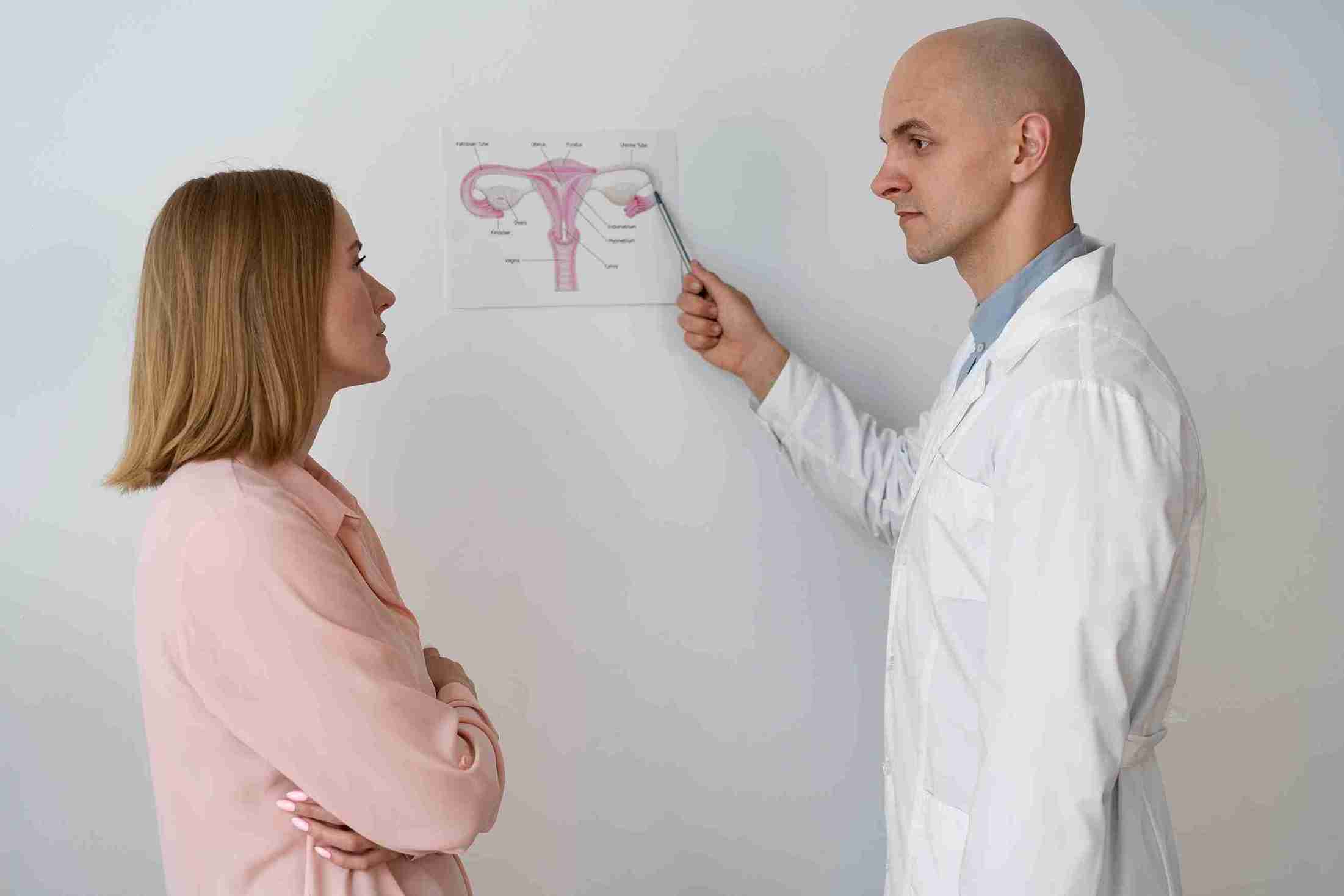
Uterine Septum and Mullerian Anomalies: How Your Womb's Shape Affects Fertility
November 5, 2026
Cloudnine
No items found.
Uterine Septum and Mullerian Anomalies: How Your Womb's Shape Affects Fertility
November 5, 2026
Cloudnine
No items found.
A septate uterus has a band of tissue, the septum, that runs from the top of the womb down, dividing its cavity while the outside shape remains normal. It is present from birth and is linked with miscarriage. Surgery is not automatic: ASRM advises offering it mainly after recurrent miscarriage (ASRM, 2024).
What is a Septate Uterus?
A septate uterus is a womb whose inner cavity is split by a wall of tissue, even though the outside of the womb looks normal. It forms before birth when the wall separating the two halves of the developing womb is not fully absorbed. It is a congenital condition, so nothing you did caused it (NICE HTG364).
Partial (subseptate) uterus. The septum extends partway down the cavity.
Complete septate uterus. The septum reaches the cervix, and sometimes continues as a septum in the vagina.
Many women with a septum have no symptoms at all. It is often found during a scan for something else, a fertility work-up, or after a miscarriage.
What are Mullerian Anomalies?
Mullerian Anomalies are differences in the shape of the womb, cervix, or vagina that develop before birth. The womb forms from two tubes, the Mullerian ducts, which normally join in the middle and then absorb the wall between them. If a duct does not form, the tubes do not join, or the wall is not absorbed, the result is one of several shapes.
Types of Mullerian anomaly and what they mean for pregnancy
Names follow the ASRM 2021 classification. Effects on pregnancy are general patterns; your own risk depends on the exact shape and your history.
Septate uterus
Normal outside; a septum divides the cavity
Higher miscarriage risk; baby more often lies in an unusual position
Higher risk of miscarriage, preterm birth and breech
Not for the womb itself; a small extra horn may need removal
Uterus didelphys
Two separate wombs, often two cervices
Higher risk of preterm birth and breech
Rarely
Mullerian agenesis (MRKH)
Womb and upper vagina did not form
Pregnancy not possible in the body; surrogacy or transplant options
Vaginal treatment for comfort and intercourse
ASRM finds no clear evidence that surgery improves outcomes for arcuate, bicornuate or unicornuate shapes (ASRM, 2026). Not every anomaly needs treatment (ReproductiveFacts).
How common are uterine anomalies?
A large review found uterine anomalies in 5.5% of women in the general population, 8.0% of women with infertility, 13.3% of women with a history of miscarriage, and 24.5% of women with both (Chan et al., 2011). The same review found the arcuate uterus most common in the general population and the septate uterus most common in women with fertility problems or miscarriage.
How doctors classify them
Doctors use two main systems. ASRM's 2021 classification sorts anomalies into nine categories and gives measurements: a septum is diagnosed when it is longer than 1 cm and its angle is under 90 degrees, while a bicornuate uterus has an outer dip of more than 1 cm (ASRM MAC2021). The ESHRE/ESGE system uses classes U0 to U6, with the septate uterus as U2 and the two-bodied (bicorporeal) uterus as U3 (ESHRE/ESGE, 2013). Reports from different centres may use either system.
How Does a Uterine Septum Affect Fertility and Pregnancy?
A uterine septum mainly raises the chance of miscarriage; whether it stops you getting pregnant in the first place is not proven. In a cohort quoted by ASRM, 42% of pregnancies in women with a septum ended in first-trimester miscarriage, compared with 12% without one (ASRM, 2024).
Miscarriage. Septate and bicornuate shapes are linked to higher first- and second-trimester losses (ASRM, 2026). The reason is not fully known; the septum may provide a poorer surface for implantation.
Infertility. ASRM makes no recommendation on whether a septum causes infertility, because the evidence is unclear (ASRM, 2024).
Later pregnancy. The baby may be more likely to lie breech or sideways, which can raise the chance of a caesarean, though high-quality data are limited (ASRM, 2024).
IVF and implantation. A septum is one of the aspects that a specialist checks for after repeated failed transfers; see recurrent implantation failure.
A septate uterus is best diagnosed with a 3D transvaginal ultrasound, with or without saline, which ASRM recommends as the first test (ASRM, 2024). It shows both the cavity and the outer shape, which separates a septum from a bicornuate uterus.
Tests for a uterine septum and what each can show
Based on ASRM 2024. Your specialist may not need every test.
3D transvaginal ultrasound
Inside and outside shape in one scan
Yes; first-line test
Saline infusion sonohysterogram
Cavity outline with saline; adds detail to the scan
Yes, when done as 3D
MRI
Detailed shape; useful when the scan is unclear or the anomaly is complex
Not on its own; needs a scan for the outside shape
Kidney ultrasound
Kidney differences that can come with some anomalies
Not applicable
Septate vs bicornuate: why it matters
The two can look alike on an HSG or from inside the womb, because both show two cavities. The difference is on the outside. A septate uterus has a normal outer outline, while a bicornuate uterus has a dip of more than 1 cm at the top (ASRM MAC2021). That matters because a septum can be cut from inside the womb, while a bicornuate uterus is the actual shape of the muscle and is usually left alone. Mullerian anomalies, as a group, are associated with kidney differences in about 11% to 30% of people, though a septate uterus alone is not (ASRM, 2024).
Should a Uterine Septum be Removed?
A uterine septum does not always need removal. ASRM recommends offering surgery to women with a septum and recurrent miscarriage, after a shared discussion of benefits and risks, but says the evidence is not strong enough to recommend it routinely for infertility or for a septum found by chance (ASRM, 2024).
Should the septum be removed? A guide by situation
No firm recommendation; surgery may be offered after discussion
Septum found by chance, not trying to conceive
Evidence insufficient to recommend surgery
Currently pregnant
Not covered by the guideline; septum surgery is not done in pregnancy, and your obstetrician will monitor you more closely
Small residual septum under 1 cm after surgery
Repeat surgery not recommended
The strongest evidence on surgery comes from the TRUST trial, the only randomised trial so far. Among 80 women with a septate uterus, 31% had a live birth after septum removal and 35% after no surgery, and one woman had a uterine perforation (Rikken et al., 2021). The authors concluded that removal did not improve outcomes. The trial was small, though, and ASRM still advises offering surgery after recurrent miscarriage, since observational studies show fewer losses after surgery (ASRM, 2026). Some websites quote much larger drops in miscarriage after surgery; those figures come from before-and-after studies with a high risk of bias.
What the operation involves
Hysteroscopic septum resection is done through the cervix with a thin camera, so there are no cuts on the abdomen. The surgeon divides the septum with fine scissors or an electric loop until the cavity is one space. NICE considers the evidence adequate for women with recurrent miscarriage, with standard arrangements for consent and audit (NICE HTG364). It is usually done as a day procedure, in the first half of the cycle. A laparoscopy is added only when the outer shape also needs to be checked.
Most women go home the same day and return to normal activity within a few days. Light bleeding or cramping for a short time is common. ASRM advises that you can usually start trying or resume fertility treatment 1 to 2 months after surgery, and that there is not enough evidence to recommend routine oestrogen tablets, balloons or coils after the operation (ASRM, 2024). Your doctor may check the result with a scan or a second-look hysteroscopy.
How Much Does Septum Uterus Treatment Cost in India?
At Cloudnine Fertility, a septum work-up typically costs Rs 1,000 to Rs 3,500 for the scan and Rs 15,000 to Rs 30,000 if a diagnostic hysteroscopy is needed (indicative); the operation itself is priced separately once your specialist confirms you need it.
Cost of septum tests and treatment at Cloudnine Fertility
These are indicative ranges supplied by Cloudnine Fertility. Final costs depend on the centre, anaesthesia and how many tests you need. Rows marked as placeholders are awaiting audited confirmation
Specialist consultation
Rs 800 to Rs 1,500
History and test plan
Pelvic or transvaginal ultrasound, 2D or 3D
Rs 1,000 to Rs 3,500
3D is the first-line test
Saline infusion sonohysterogram
Rs 3,000 to Rs 7,000
Cavity detail
HSG
Rs 5,000 to Rs 10,000
Tubes and cavity
Pelvic MRI
Rs 12,000 to Rs 19,000
Only if the scan is unclear
Kidney ultrasound
Rs. 2000 to Rs. 4000
For some anomaly types
Diagnostic hysteroscopy
Rs 15,000 to Rs 30,000
Direct view of the cavity
Hysteroscopic septum resection
Rs.25,000 to Rs. 60,000
Day procedure
Combined hysteroscopy and
laparoscopy
Rs.40,000 to Rs. 120,000
Only if the outer shape needs checking
Second-look hysteroscopy
Rs 15,000 to Rs 30,000
If advised after surgery
IVF, per cycle
Rs 1,50,000 to Rs 2,50,000
If other factors need it
Prices you see online for septum surgery in India vary widely and may not include anaesthesia or hospital stay. Ask for a written estimate once your plan is clear.
When should you see a fertility specialist?
See a fertility specialist if you have had two or more miscarriages, if a scan has suggested a uterine anomaly, or if you are not conceiving after 12 months (6 months if you are 35 or older) (ASRM, 2021). A septum found by chance is not an emergency, but it is worth discussing before you try to conceive.
When to book, and how soon
Match your situation to the timing. If you are unsure, book the earlier slot.
Two or more miscarriages
Book a consultation for a full work-up
A scan report mentions a septate, bicornuate or "double" uterus
Book a consultation and a 3D scan
Trying for 12 months (under 35) or 6 months (35 or older)
Book a fertility work-up for both partners
Repeated failed IVF transfers
Ask for a cavity check
Pregnant with a known anomaly
Tell your obstetrician early for closer monitoring
Very painful periods since your teens with a known anomaly
Ask about a blocked half of the womb or vagina
At Cloudnine Fertility, a specialist will confirm the shape with the right scan, explain whether surgery would help in your situation, and plan next steps. You can book a consultation at your nearest centre.
Can you get pregnant with a septate uterus?
Yes, many women with a septate uterus get pregnant and have healthy babies, with or without surgery. In the TRUST trial, about a third of women in each group had a live birth, whether or not the septum was removed (Rikken et al., 2021). The main risk is miscarriage, which is why women with repeated losses are offered surgery.
Your chances improve when your specialist gets the whole picture right. Your specialist will also look at ovulation, your tubes, your partner's semen and your age, because a septum is often not the only factor. If you have had losses, the truth about recurrent pregnancy loss explains the other tests worth doing. If IVF is needed, a septum is checked and, where advised, treated before transfer; see our IVF service and our guide to treatments for uterine-related infertility.
FAQs
Your questions, clearly answered
Find clear, trusted answers to the most common questions about IVF—designed to guide and support you every step of the way.
Can a woman with a septate uterus have a normal delivery?
Often, yes. Many women with a septate uterus have a vaginal delivery. The baby is more likely to lie breech or sideways, so a caesarean is needed more often, but the decision is made on the baby's position and the usual obstetric reasons, not the septum alone.
How serious is a septate uterus?
A septate uterus is not dangerous to your general health. Its main effect is a higher chance of miscarriage, and many women with a septum have healthy pregnancies without treatment. It becomes more important if you have had repeated miscarriages, when surgery may be offered.
What is the most common Mullerian anomaly?
It depends on who is studied. In the general population, the arcuate uterus is most common, and it is now treated as a normal variant. In women with infertility or miscarriage, the septate uterus is the most common anomaly.
Is a septate uterus hereditary?
Usually not. Most cases occur by chance during development before birth, and no single inherited cause has been identified. A few families have more than one woman with a uterine anomaly, so mention any family history to your doctor.
Can a uterine septum grow back after surgery?
The septum does not grow back, but a small part can remain after surgery. ASRM advises against a second operation for a remaining septum under 1 cm. Your doctor may check the cavity with a scan or hysteroscopy a few weeks after surgery.
Can I have IVF with a septate uterus?
Yes. Many women with a septum have IVF. Your specialist will check the cavity first, and they'll decide whether to remove the septum before transfer after discussing the evidence, which is not conclusive for IVF.
What is the rarest type of uterus?
Complete absence of the womb, called Mullerian agenesis or MRKH syndrome, is among the rarest. Complex combinations that do not fit one category are also uncommon. Pregnancy is not possible in the body with MRKH, though surrogacy can help.
What is a partial septate uterus?
A partial septate uterus has a septum that runs only partway down from the top of the cavity. We manage it the same way as a complete septum: treatment depends on your history, not just its length.
If a scan has shown a septum or another uterine shape, or you have had more than one miscarriage, a Cloudnine Fertility specialist can confirm the diagnosis and talk you through whether treatment would help. Book a consultation with a Cloudnine Fertility specialist and bring your scan reports.