Chocolate Cyst (Endometrioma): Symptoms, Fertility Impact and Treatment
September 28, 2026
Cloudnine
Fertility
Chocolate Cyst (Endometrioma): Symptoms, Fertility Impact and Treatment
September 28, 2026
Cloudnine
Fertility
A chocolate cyst is an ovarian cyst filled with old, dark brown blood, caused by endometriosis. Its medical name is ovarian endometrioma. It is benign, it does not clear up on its own, and it matters most because it can reduce ovarian reserve and make conceiving harder than it should be.
What is a chocolate cyst?
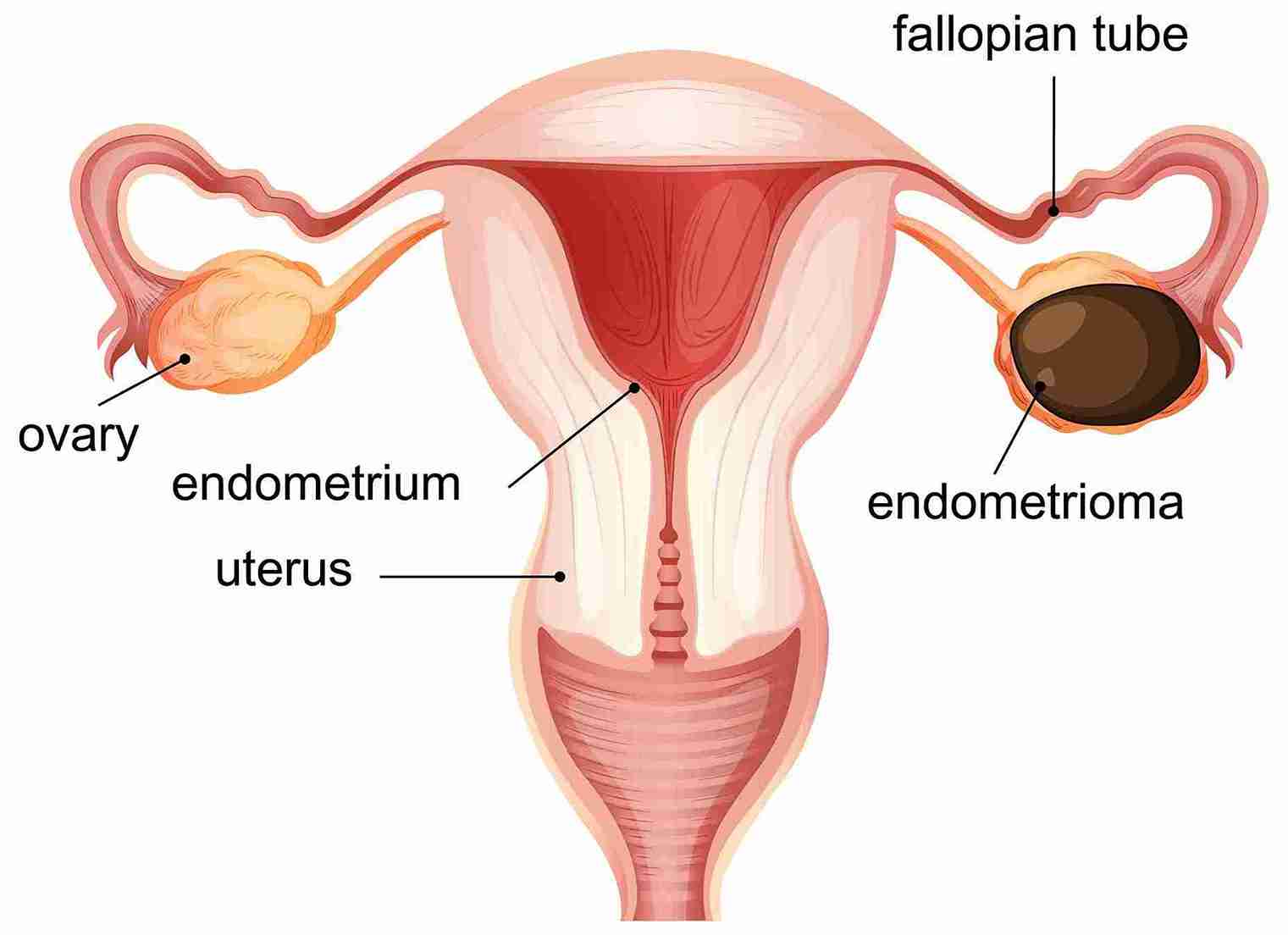
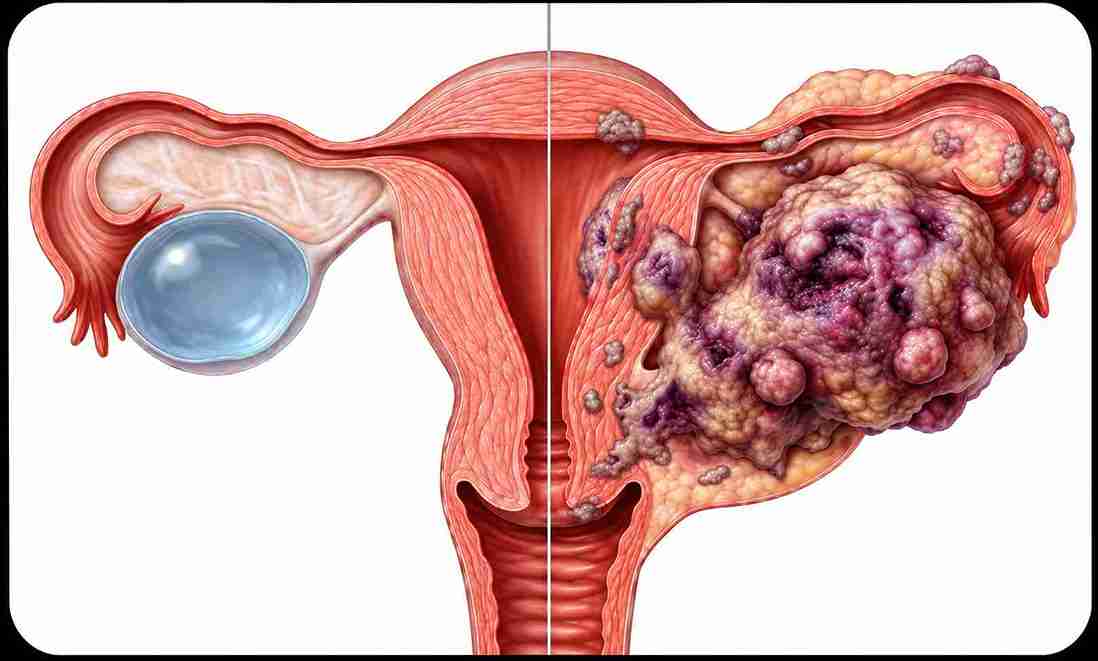
A chocolate cyst is a cyst that forms inside an ovary when endometrial-like tissue implants there and bleeds with every menstrual cycle. The blood has nowhere to drain, so it collects and thickens over months and years. The medical term is ovarian endometrioma. It is benign, meaning it is not cancer.
Many women in India search for this in Hindi as chocolate cyst kya hota hai; the answer is the same condition described here, an endometrioma sitting inside the ovary.
Feature
Chocolate Cyst (Ovarian Endometrioma)
Medical Name
Ovarian endometrioma
What Is Inside It
Old, degraded blood that is typically thick and dark brown.
Underlying Cause
Endometriosis affecting the ovary.
Is It Cancer?
No. An endometrioma is generally a benign ovarian cyst, although persistent or atypical findings should be assessed by a clinician.
Who It Affects
Most commonly affects women during the reproductive years.
Main Fertility Concern
It can be associated with reduced ovarian reserve and pelvic adhesions, which may affect fertility.
Does It Resolve on Its Own?
Unlike many functional ovarian cysts, an endometrioma generally does not resolve spontaneously.
First Test
Transvaginal ultrasound is commonly the first-line imaging test.
Is a chocolate cyst the same as an endometrioma?
Yes. Chocolate cyst and endometrioma are two names for the same thing: an ovarian cyst filled with old blood, caused by endometriosis. Chocolate cyst is the everyday term patients and many clinicians use in conversation. Endometrioma, or ovarian endometrioma, is what will be written on your scan report and your operation notes.
What is inside a chocolate cyst?
Old blood, and very little else. Each cycle, the endometrial-like tissue lining the cyst bleeds; the blood cannot escape, and over time the haemoglobin (the iron-carrying pigment in blood) breaks down into a thick, dark brown fluid. It is not pus, so it is not an infection. It is not tumour tissue either.
Why is it called a chocolate cyst?
The name describes what the fluid looks like when the cyst is opened during surgery: thick, dark brown and tar-like, closer to melted chocolate than to blood. Surgeons named it for the appearance, and the nickname stuck because it is far easier to say than endometrioma.
No. Eating chocolate has nothing to do with it. This is one of the most common questions asked in India, and the answer is a flat negative: there is no link between chocolate, sugar, or any other food and the formation of these cysts. The name is purely descriptive.
How a chocolate cyst relates to endometriosis
A chocolate cyst is one form of endometriosis, not a separate disease. Endometriosis is the condition in which tissue similar to the lining of the uterus grows outside it. When that tissue settles on or in an ovary and bleeds cyclically, it forms an endometrioma. Endometriosis can also affect the pelvic lining, the bowel, the bladder and the ligaments behind the uterus, and those forms are managed differently. Finding a chocolate cyst on a scan usually means endometriosis is present elsewhere in the pelvis too, even if the scan cannot see it. That is why the finding changes the fertility conversation, not just the ovarian one.
What are the symptoms of a chocolate cyst?
The commonest symptoms are severe period pain, ongoing pelvic pain, pain during sex and difficulty conceiving. Symptoms typically worsen in the days before and during a period. A significant number of women have no symptoms at all, and the cyst is found by chance on a scan.
Common symptoms:
Severe period pain (dysmenorrhoea) that is worse than it used to be, or worse than that of women around you
Pelvic pain between periods, often described as a deep, one-sided ache
Pain during or after sex (dyspareunia), typically felt deep rather than at the entrance
Heavy or prolonged periods, sometimes with spotting in between
Pain on passing stool or urine during your period specifically
Lower back or upper leg pain during menstruation, from referred pelvic pain
Bloating or abdominal fullness, which is common but is rarely caused by the cyst itself unless it is large
Difficulty conceiving, which is a presenting symptom in its own right and is often the reason the cyst is found
Symptoms that need urgent review:
Sudden, severe, one-sided pelvic pain, with or without vomiting
Pain with fever or feeling faint
Rapid abdominal swelling over days rather than months
What does chocolate cyst pain feel like?
It is usually a deep, dragging ache on one side of the pelvis that follows your cycle. It builds in the days before your period, peaks during bleeding, and eases afterward. That cyclical timing is the tell that separates it from a functional cyst, which tends to hurt unpredictably. Pain can radiate into the lower back or the top of the thigh, and it often does not respond well to ordinary painkillers.
Does a chocolate cyst cause heavy periods?
It can. Heavy bleeding, longer periods and spotting between periods are all reported by women with endometriomas, although the cyst is not always the direct cause. Endometriosis affects the whole pelvic environment, and other conditions such as adenomyosis or fibroids frequently coexist. If your periods have changed noticeably, that change is worth investigating on its own terms rather than being attributed to the cyst by default.
Does a chocolate cyst cause pain during intercourse?
Yes, and it is one of the most under-reported symptoms. The pain is typically deep rather than superficial, and worse in certain positions or at certain points in the cycle. It happens because adhesions (bands of internal scar tissue) can tether the ovary and the tissue behind the uterus, so movement pulls on structures that should slide freely. It is a clinical symptom, not something to tolerate quietly, and it is useful information for your gynaecologist.
Can you have a chocolate cyst with no symptoms?
Yes. Many chocolate cysts are found by accident, on a scan done for something else entirely. A large share are picked up during a fertility work-up, when a transvaginal ultrasound is done to count follicles and check the pelvis. Silent does not mean harmless: a cyst causing no pain can still be reducing ovarian reserve, which is precisely why it is worth acting on the finding rather than filing it away.
What a chocolate cyst does not cause
It does not cause weight gain. Bloating and abdominal fullness are common and can make clothes feel tighter, but that is fluid and distension, not fat, and it fluctuates through the cycle. The honest exception is treatment rather than the cyst: some hormonal medicines used to manage endometriosis can cause modest weight change. If you are gaining weight steadily, that deserves its own assessment rather than being written off as the cyst.
How is a chocolate cyst diagnosed?
A chocolate cyst is diagnosed on a transvaginal ultrasound in most cases. The scan appearance is distinctive enough that no further test is usually needed. MRI is reserved for uncertain or complex cases. Laparoscopy confirms the diagnosis but is not required simply to make it.
Clinical assessment. Your gynaecologist takes a symptom and menstrual history and performs a pelvic examination, which may reveal tenderness or a fixed, poorly mobile ovary.
Transvaginal ultrasound. The first-line test, and usually the only imaging needed. It shows the size, the internal pattern, and whether one or both ovaries are involved.
Repeat scan where needed. If the appearance could be a haemorrhagic cyst, a scan repeated after 6 to 12 weeks settles it.
MRI in selected cases. Used for atypical features, suspected deep endometriosis, or planning complex surgery.
Laparoscopy. Direct visualisation, usually done when surgery is already indicated rather than for diagnosis alone.
What does a chocolate cyst look like on ultrasound?
A classic endometrioma appears as a round, thick-walled cyst inside the ovary with a uniform, hazy internal texture that radiologists call ground glass. It usually has a single compartment, no solid growths inside it, and no blood flow within its contents on Doppler. Roughly seven to eight in ten endometriomas look like this, which is why ultrasound alone is usually enough to make the call.
Your scan report, translated
Scan reports are written for clinicians, not patients, and the phrases below cause a great deal of unnecessary alarm. Here is what each one actually means.
Phrase on Your Report
What It Means in Plain English
Does It Suggest an Endometrioma?
Ground-glass appearance
The fluid inside looks hazy and uniform rather than clear, because it is old, thick blood.
Yes. This is a classic ultrasound appearance of an endometrioma.
Homogeneous low-level internal echoes
The same haziness described technically; the contents scatter sound evenly throughout the cyst.
Yes. This describes the same typical finding using different wording.
Unilocular
One single compartment, with no internal walls dividing it.
Yes. This can be typical of an endometrioma.
Thick or echogenic wall
The cyst wall is denser than the wall of a simple cyst, which can reflect repeated bleeding and scarring.
Yes. It can support the diagnosis when considered with the other scan features.
Avascular / no internal vascularity
No blood flow is detected within the cyst contents on Doppler.
Yes. This is reassuring and argues against a vascular solid tumour within the cyst.
Septations
Thin walls dividing the cyst into separate compartments.
Not typical. Thin septations can occur, but thick septations may require further assessment.
Mural nodule with vascularity
A solid lump on the cyst wall that has its own blood supply.
No. This is not a typical endometrioma feature and warrants specialist review.
Reticular or fishnet pattern
A fine mesh of strands inside the cyst, usually caused by fibrin within a blood clot.
No. This pattern is more suggestive of a haemorrhagic cyst.
Kissing ovaries
Both ovaries are positioned close together behind the uterus and appear to be touching.
Yes. It can indicate pelvic endometriosis with adhesions.
Fixed / poorly mobile ovary
The ovary does not slide freely when gentle pressure is applied with the ultrasound probe.
Yes. It can suggest adhesions involving the ovary.
Do you need an MRI for a chocolate cyst?
Usually not. Ultrasound answers the question in most cases, and an MRI adds cost and delay without changing the plan. There are three situations where it genuinely helps: when the ultrasound findings are atypical and malignancy needs to be ruled out, when deep infiltrating endometriosis involving the bowel or bladder is suspected, and when a surgeon needs a detailed map before a complex operation.
Blood tests: what they can and cannot tell you
No blood test can diagnose a chocolate cyst. There is no marker that confirms or excludes one, and imaging is what makes the diagnosis. CA-125 is often mildly raised in endometriosis, and a raised result in this setting does not mean cancer; it is a marker of pelvic inflammation and is not diagnostic. An AMH test is a different matter and is genuinely worth doing, because it measures the ovarian reserve that the cyst may be eroding.
The commonest misread is a haemorrhagic cyst, because both contain blood. The difference is behaviour rather than appearance on a single scan. A haemorrhagic cyst is a bleed into a normal ovulation cyst and resolves by itself, usually within 6 to 12 weeks. A chocolate cyst persists unchanged. On the scan itself, a haemorrhagic cyst often shows a fine fishnet pattern of fibrin strands, whereas an endometrioma shows uniform ground-glass haze. If there is any doubt, the repeat scan is the answer, not a more expensive test.
Chocolate cyst size: what the numbers mean
Size alone does not decide whether a chocolate cyst is dangerous. Symptoms, ovarian reserve and your fertility plans matter more than the measurement. That said, size does shape the conversation, and the bands below reflect how most specialists approach it.
Size Band
What It Usually Means
Typical Action
Under 3 cm
Small, often asymptomatic, and frequently found incidentally.
Usually monitor when clinically appropriate; surgery is rarely indicated.
3 to 5 cm
A range where management is often guided by symptoms, cyst appearance, and fertility plans.
Assess ovarian reserve when relevant, discuss options, and consider monitoring or medical treatment depending on the diagnosis.
Over 5 cm
More likely to cause pain and, in some fertility-treatment settings, may interfere with access to follicles during egg retrieval.
Specialist review may be appropriate. Surgery can be discussed when indicated, but size alone does not automatically mean surgery is required.
Any Size, Atypical Features
Features such as a solid nodule with internal blood flow, rapid growth, or an unusual ultrasound appearance require closer assessment.
Prompt specialist assessment is appropriate regardless of cyst size.
Do chocolate cysts keep growing?
Some do, and some do not. Growth is estrogen-dependent and happens cycle by cycle, but the rate varies enormously between individuals. Plenty of endometriomas sit unchanged for years on repeat scanning. Others enlarge steadily. There is no way to predict which pattern you will have from a single scan, which is why interval scanning exists.
How fast does a chocolate cyst grow?
There is no reliable growth rate, and anyone quoting one is guessing. Growth is monitored by comparing measurements on repeat scans over 6 to 12 months, not calculated from a formula. What matters clinically is the trend, not a predicted millimetres-per-month figure.
Can a chocolate cyst shrink on its own?
No. Unlike functional cysts, which appear and disappear with the normal ovulation cycle, a chocolate cyst does not resolve spontaneously. Hormonal treatment can shrink it while you are taking it, sometimes considerably, but the cyst wall remains, and it typically returns once treatment stops. This contrast is the single most useful thing to understand: functional cysts go, endometriomas stay.
What size chocolate cyst needs surgery?
Size is one input, not a trigger. Cysts above 4 to 5 cm come up in surgical discussions more often, but ESHRE guidance is explicit that the decision to operate should not be based on cyst diameter alone. Pain that has not responded to medical treatment, suspicion of malignancy, and difficulty accessing follicles during egg retrieval are the reasons that actually justify surgery. Your ovarian reserve and how soon you want to conceive weigh at least as heavily as the measurement.
How a chocolate cyst affects fertility
A chocolate cyst reduces fertility through four separate mechanisms, and they act together. It is a genuine obstacle: many women with endometriomas conceive, some without any treatment at all.
Reduced ovarian reserve. The cyst displaces and damages healthy ovarian tissue, lowering the number of eggs available in the affected ovary.
Local inflammation. The environment around an endometrioma is inflammatory, which affects follicle development and the fluid the egg matures in.
Distorted pelvic anatomy. Adhesions tether the ovary and tube, so the tube cannot sweep freely to collect the released egg.
Ovulation disruption. A large cyst can physically interfere with normal follicle growth and release on that side.
Can you get pregnant naturally with a chocolate cyst?
Yes, many women do. A chocolate cyst reduces fertility, but it does not remove it. How much it matters in your case depends on the size of the cyst, whether one or both ovaries are involved, your age, your ovarian reserve, and how long you have already been trying. A woman of 29 with a 3 cm cyst on one ovary and a healthy AMH is in a very different position from a woman of 38 with cysts on both ovaries.
What a chocolate cyst does to the ovary
The damage is mechanical and chemical at the same time, and it happens gradually.
Iron deposition and oxidative stress. Repeated bleeding leaves iron in the surrounding tissue, which generates free radicals and damages nearby follicles.
Fibrosis of the ovarian cortex. The outer layer of the ovary, where the resting eggs live, becomes scarred and stiffened around the cyst.
Follicle loss. Studies of ovarian tissue next to endometriomas show reduced follicle density compared with a healthy ovary, so eggs are lost before any surgery takes place.
That last point is important and often missed: some of the reserve is already gone by the time the cyst is found. Surgery is not the only thing that costs you eggs.
Does a chocolate cyst affect egg quality?
The evidence on egg quality is genuinely mixed, and it is more honest to say so than to state it either way. What is much clearer is the effect on egg quantity: women with endometriomas consistently have lower antral follicle counts and lower AMH than women without them. In practice, fertilisation rates and embryo quality in IVF are broadly comparable, which suggests the eggs that are retrieved perform reasonably well. The problem is how many there are, not necessarily how good they are.
Does a chocolate cyst lower your AMH?
Yes. Women with endometriomas tend to have lower AMH (anti-Mullerian hormone, the blood test that estimates how many eggs you have left) than women of the same age without them. The second fact matters just as much: surgery to remove the cyst lowers AMH further, sometimes substantially. Systematic reviews report average falls of roughly a third after surgery on one ovary, and considerably more when both ovaries are operated on.
The practical takeaway is simple. Have an AMH test before any planned surgery, not after. It gives you a baseline, it informs whether egg freezing is worth considering first, and it changes the conversation from a vague one about risk to a specific one about your numbers.
Yes, and bilateral disease changes the counselling significantly. When both ovaries carry endometriomas, the reserve impact is roughly doubled, and the risk from surgery is much higher, because any operation is then removing tissue from both sides. Bilateral cysts are also a marker of more severe pelvic endometriosis, and are the situation in which specialists most often raise fertility preservation before any surgical decision is made.
Does a chocolate cyst block the fallopian tubes?
Not directly, and the distinction matters. The cyst sits inside the ovary and does not obstruct the tube itself. The problem is the adhesions that form around it: they tether the ovary, fix the tube in an abnormal position, and stop the fimbrial end from sweeping freely over the ovary to pick up the released egg. The tube may be perfectly open and still unable to do its job. This is why IVF works well here, because it bypasses the pelvis entirely.
Does a chocolate cyst cause permanent infertility?
No. A chocolate cyst reduces fertility, it does not end it. This is the assumption most women arrive with after a scan, and it is not correct. Many conceive naturally, many more conceive with treatment, and the presence of a cyst on a scan is a reason to plan sooner rather than a reason to stop planning. What is time-sensitive is the reserve, which is why acting early matters more here than in most fertility situations.
When should you see a fertility specialist?
See a fertility specialist after 12 months of trying if you are under 35, or after 6 months if you are 35 or over. Come sooner than that, without waiting out the full window, if you have endometriomas on both ovaries, if your AMH is already low, if you have had previous ovarian surgery, or if pain is stopping you from having regular intercourse.
How a chocolate cyst differs from other ovarian cysts
Not all ovarian cysts behave the same way, and the differences drive completely different plans. This comparison resolves most of the confusion.
Feature
Chocolate Cyst
Haemorrhagic Cyst
Dermoid Cyst
Functional Cyst
Origin
Associated with endometriosis affecting the ovary.
Bleeding into a functional ovarian cyst, often a corpus luteum cyst.
Usually present from birth and may contain tissues such as fat, hair, or other mature tissue.
Related to normal ovarian function and the menstrual cycle.
Scan Appearance
Typically shows homogeneous low-level internal echoes, often described as a “ground-glass” appearance.
May show a fishnet, reticular, or lace-like pattern caused by blood and fibrin.
May contain mixed solid and fatty components, sometimes with calcification.
Usually clear, thin-walled, and fluid-filled with no internal solid components.
Does It Resolve Alone?
Usually does not resolve spontaneously like a functional cyst.
Yes, many resolve spontaneously, often within about 6–12 weeks.
No. Dermoid cysts generally persist.
Yes, usually within about 2–3 menstrual cycles.
Fertility Impact
May affect fertility and can be associated with reduced ovarian reserve, particularly with extensive disease or some surgical treatments.
Usually no lasting effect on fertility once resolved.
Usually minimal unless it is large, affects ovarian tissue, or causes complications.
Usually no direct effect on fertility.
Typical Action
Management may include monitoring, medical treatment for symptoms, or selective surgery depending on symptoms, size, fertility plans, and other findings.
Usually observation and, when appropriate, a repeat scan to confirm resolution.
Monitoring or surgery depending on size, symptoms, growth, and scan characteristics.
Usually observation when the appearance is typical and symptoms are absent.
Chocolate cyst and PCOS are not related. In polycystic ovary syndrome the ovaries contain many small follicles, and those follicles are not cysts at all. The name is misleading. PCOS and endometriomas are separate conditions with separate causes and separate treatments, although a woman can have both.
Is a chocolate cyst simple or complex? It is classified as a complex cyst because it contains internal echoes rather than clear fluid. Complex in this context describes the appearance, not the level of danger, and a complex cyst is not the same as a suspicious one.
What causes a chocolate cyst?
Chocolate cysts are caused by endometriosis. Endometrial-like tissue settles on or within the ovary, responds to your cycle hormones, and bleeds every month with no route out. Why that tissue ends up there in the first place is still not fully settled, but several factors are consistently implicated.
Retrograde menstruation, where menstrual blood flows backward along the fallopian tubes into the pelvis, carrying endometrial cells with it
Genetic susceptibility, since endometriosis clusters in families
Immune factors, where the immune system fails to clear misplaced endometrial cells that most bodies remove
Estrogen dependence, because the tissue grows and bleeds in response to estrogen, which explains why the condition is confined to the reproductive years
Coelomic metaplasia, a theory that cells lining the pelvis transform into endometrial-like tissue
How a chocolate cyst forms, step by step
Implantation. Endometrial-like tissue lands on the surface of the ovary and takes hold.
Cyclical bleeding. That tissue responds to your hormones and bleeds each month, exactly as the uterine lining does.
No exit route. The blood cannot drain away, so it becomes trapped and pools within the ovary.
Accumulation and capsule formation. Repeated bleeding builds a thick-walled cavity of degraded blood, which is the chocolate cyst.
Who is more likely to get one?
A first-degree relative with endometriosis, which is the strongest single risk factor
Early onset of periods, meaning more lifetime menstrual cycles
Short menstrual cycles of under 27 days
Heavy or prolonged bleeding
Never having been pregnant
Being of reproductive age, most commonly between 25 and 40
Is a chocolate cyst hereditary?
There is a familial pattern, but it is not a directly inherited, single-gene condition. Having a mother or sister with endometriosis raises your risk several times over compared with the general population. That is meaningfully higher, and it is a good reason to seek assessment early rather than dismiss symptoms. It is not a guarantee, and it is not something that can be tested for genetically.
Can it develop at any age?
It develops during the reproductive years, and the reason is estrogen. The tissue that forms the cyst only grows and bleeds in response to cycling estrogen, so endometriomas are uncommon before periods begin and typically regress after menopause. Cases in adolescents do occur and are frequently dismissed as ordinary period pain for years, which is one reason diagnosis is often delayed.
What does not cause a chocolate cyst
Stress does not cause chocolate cysts. There is no causal link between stress and the formation of an endometrioma. What stress can genuinely do is amplify how much pain you feel, because pain perception is affected by sleep, mood and stress load. That is a real effect worth addressing, but it is about how you experience the condition, not about whether you develop it.
Will a chocolate cyst go away on its own?
No. A chocolate cyst does not resolve on its own. This is the clearest difference between an endometrioma and the functional cysts that appear and disappear with your cycle. Waiting does not remove it. What waiting can be, in the right circumstances, is a legitimate management choice, and that is a different thing from expecting it to disappear.
Can a chocolate cyst be treated without surgery?
Partly, and the distinction is important. Hormonal treatment can control pain, suppress the cyst and stop new lesions forming, and for many women that is enough. What it does not do is remove the cyst. Suppression is not removal. Once treatment stops, cycles resume, and the cyst typically returns to its previous behaviour.
Is there a permanent cure?
No. Endometriosis is a managed condition rather than a cured one. Surgery removes the cyst that is there now; it does not remove the underlying disease process, which is why recurrence is common. Menopause ends the estrogen supply that drives it, which is the only natural endpoint. Framing this honestly is more useful than promising a cure, because it leads to a long-term plan rather than a series of disappointments.
Medical treatment options
Medical treatment works by suppressing the menstrual cycle, which stops the cyclical bleeding that drives the cyst and the pain. The critical column in the table below is the last one, because nearly every option on this list works by preventing pregnancy.
Option
What It Does
Effect on the Cyst
Can You Conceive While Taking It?
Combined Oral Contraceptive Pill
Suppresses ovulation and the menstrual cycle, which can reduce pain.
May shrink while being taken, but does not remove the cyst.
No. It is a contraceptive.
Progestins (Dienogest is commonly used for endometriosis)
Thins endometrial-like tissue and suppresses menstrual cycles.
Can produce meaningful shrinkage, but the cyst may return after treatment is stopped.
No. It is generally not used while actively trying to conceive.
GnRH Agonists or Antagonists
Induce a temporary, reversible menopause-like hormonal state.
May shrink the cyst, but are generally used for limited periods.
No. Pregnancy is not expected while using these treatments.
Levonorgestrel-Releasing Intrauterine System
Provides local hormone delivery, mainly controlling bleeding and pain.
Has limited direct effect on an ovarian endometrioma.
No. It is a contraceptive method.
Anti-Inflammatory Painkillers
Provide pain relief but do not treat the underlying endometriosis.
No direct effect on the cyst.
Potentially, but discuss the specific medicine and timing with your specialist when trying to conceive.
Do birth control pills shrink a chocolate cyst?
They suppress it rather than remove it. The pill suppresses the cycle, which reduces the monthly bleeding into the cyst and can shrink it while you keep taking it. It controls pain well for many women and helps prevent new lesions. But the cyst wall stays where it is, and cysts commonly return to their previous size within months of stopping. Suppression is not removal, and it is worth being clear about which one is being offered.
What hormonal injections actually do
GnRH agonists create a temporary medical menopause by switching off ovarian hormone production. They shrink endometriomas effectively and reduce pain, but they cause menopausal side effects including hot flushes and bone density loss, so they are used for limited periods. Their genuine clinical role is short-term: settling severe pain, or shrinking disease before planned surgery. They are not a cure and they are not a long-term solution.
The problem if you are trying to conceive
Nearly every effective medical treatment for a chocolate cyst prevents pregnancy. This conflict is rarely stated plainly, and it is the single most important practical fact for anyone trying to conceive. You cannot suppress the disease and try for a baby at the same time. That means the real decision is not simply which treatment, but in what order: treat pain and shrink the cyst now and postpone conception, or prioritise conception now and manage pain with non-hormonal measures. Which of those makes sense depends on your age, your AMH and how long you have been trying, and it is a conversation worth having explicitly rather than by default.
Do painkillers help?
They help the pain and do nothing to the cyst. Anti-inflammatory painkillers taken around your period are a reasonable part of managing symptoms, particularly if hormonal options are off the table because you are trying to conceive. Pain that needs regular strong medication, or pain that is escalating, is a signal to review the plan rather than to increase the dose.
What does not work
No food dissolves a chocolate cyst. There is no diet, no fruit, no juice, and no combination of foods that shrinks or removes an endometrioma. An anti-inflammatory eating pattern may help some women feel better in terms of pain and general wellbeing, and that is a reasonable thing to pursue. It does not change the cyst on the scan, and it should not replace assessment.
Yoga and home remedies do not shrink it either. Gentle exercise, heat and stretching can genuinely ease pelvic pain, and there is no reason to avoid them. They are comfort measures, not treatment, and they should sit alongside a proper plan rather than instead of one.
Can ayurveda or homeopathy cure a chocolate cyst?
No. There is no evidence that ayurvedic or homeopathic treatment shrinks or removes a chocolate cyst. Many women in India try these routes first. The real harm is not usually the treatment itself; it is the delay: months or years spent on unproven approaches are months and years of ovarian reserve lost during the window when it matters most. If you are pursuing complementary treatment, do it alongside a gynaecologist who is monitoring the cyst, not instead of one.
Should a chocolate cyst be removed?
It depends, and it is genuinely not automatic. Four things drive the decision, in this order: how much pain you are in and whether medical treatment has controlled it, whether the scan shows anything suspicious, what your fertility plans and timeline are, and what your ovarian reserve is. ESHRE guidance is explicit that cyst diameter on its own should not be the deciding factor.
What the procedure involves
The operation is a laparoscopic ovarian cystectomy, done through keyhole incisions under general anaesthetic. The cyst wall is stripped away from the ovary and removed, with the aim of preserving as much healthy ovarian tissue as possible. Technique, recovery and cost are covered separately.
Will surgery improve your chances of conceiving?
It may improve them, and it may reduce them, which is the honest answer rather than an evasive one. Removing the cyst can improve natural conception in some women by reducing inflammation and freeing the pelvis. At the same time, the operation itself removes healthy ovarian tissue alongside the cyst wall and lowers ovarian reserve. Whether the trade favours you depends on your age, your AMH, whether one or both ovaries are involved, and whether you have had ovarian surgery before. Anyone presenting this as a straightforward benefit is not giving you the full picture.
The cost to your ovarian reserve
Yes, surgery lowers AMH. This is well established, and it is stated here plainly because it is frequently left out. The cyst wall is not a clean membrane that peels away; healthy ovarian cortex containing resting eggs comes with it, and the heat used to control bleeding damages more. Systematic reviews consistently show AMH falling after cystectomy, with larger falls after surgery on both ovaries, and the levels do not reliably recover.
Three practical consequences follow from that. Have an AMH test before surgery, not after. Ask specifically about the technique being used, because the method of controlling bleeding affects how much tissue is lost. And raise fertility preservation before you consent, particularly if both ovaries are involved.
Why draining alone does not work
Aspiration, meaning draining the cyst with a needle, does not work as a treatment. It empties the fluid but leaves the cyst lining behind, and that lining is the tissue that bleeds every month. So the cyst refills, usually within a few cycles. Recurrence rates after simple drainage are very high, which is why it is not offered as a definitive treatment.
Will a chocolate cyst come back after surgery?
It can, and often does. Recurrence is common within two to five years, because surgery removes the cyst rather than the underlying endometriosis. Long-term hormonal suppression after surgery reduces the recurrence rate and is recommended by ESHRE for women who are not trying to conceive. One caution deserves emphasis: repeat surgery on the same ovary is where ovarian reserve is most seriously lost, and a second cystectomy should be weighed far more carefully than the first.
Should a chocolate cyst be removed before IVF?
Not routinely. ESHRE guidance does not support removing an endometrioma simply to improve IVF outcomes, because the evidence does not show better live birth rates and the surgery costs you ovarian reserve at exactly the moment you need it. This runs against what many women are told, so it is worth stating clearly. Removal before IVF is considered in specific situations: severe pain that has not responded to treatment, features on the scan that raise concern about malignancy, or a cyst positioned so that it physically obstructs safe access to follicles during egg retrieval.
What happens if you do nothing?
Watchful waiting is a legitimate option. Some cysts remain stable for years with no meaningful change. Others enlarge, and reserve continues to decline in the affected ovary either way. Doing nothing is only reasonable when it is active monitoring rather than avoidance: repeat scans at agreed intervals, AMH tracked over time, symptoms reviewed, and a clear threshold agreed in advance for when the plan changes.
Chocolate cyst and IVF
Yes, you can have IVF with a chocolate cyst in place, and in most cases the cyst is deliberately left alone. The common assumption is that it must be removed first. For most women it does not need to be, and removing it can leave you with fewer eggs to work with.
Does a chocolate cyst lower your IVF success rate?
Women with endometriomas typically have fewer eggs retrieved per cycle, which is the clearest and most consistent finding. Once eggs are retrieved, fertilisation rates, embryo quality and implantation rates are broadly comparable to women without endometriomas, and live birth rates per embryo transfer are similar. The disadvantage is in quantity, not in what happens after retrieval. That distinction matters, because it means the plan is about maximising the number of eggs, not about accepting worse embryos.
No one can give you a number in advance, and a page that offers one is inventing it. What predicts your yield is measurable: your AMH, your antral follicle count on ultrasound, whether one or both ovaries are affected, your age, and whether you have had previous ovarian surgery. Those five variables together give your specialist a realistic expectation, and they are the reason a baseline assessment before starting is worth the time it takes.
Should you consider egg freezing?
It is worth a serious conversation in three specific situations: before any planned surgery on an endometrioma, when both ovaries are affected, and when your AMH is already declining and you are not in a position to try for a baby yet. Freezing eggs before surgery is the scenario most often missed, and it is the one where the timing genuinely cannot be recovered later. Once the tissue is removed, those eggs are gone.
IVF is usually the better route, and the reason is mechanical. IUI depends on the tube collecting the egg and on a functioning pelvis. When adhesions have tethered the ovary and fixed the tube, that pickup step is exactly what is compromised, so IUI is working against the specific problem the cyst has created. IVF bypasses the pelvis entirely: eggs are collected directly from the ovary and the embryo is placed in the uterus. IUI may still be reasonable in mild disease with open tubes and a younger patient, but it should be time-limited.
It can, and it is deliberately avoided. During egg collection, the needle passes through the vaginal wall into the ovary, and puncturing an endometrioma releases its contents into the pelvis or contaminates the follicular fluid, which carries a small risk of pelvic infection. Experienced units plan the retrieval route around the cyst specifically to avoid it, and antibiotic cover is commonly given where an endometrioma is present. It is a recognised, manageable risk rather than a reason to avoid IVF.
Chocolate cyst in pregnancy
Chocolate cysts usually behave well in pregnancy. The menstrual cycle stops, so the monthly bleeding that feeds the cyst stops with it, and many endometriomas shrink over the course of the pregnancy. A scan may describe decidualisation, which means the cyst lining has responded to pregnancy hormones and changed appearance. It can look alarming on a report and is usually a normal pregnancy change, though it is monitored because it can mimic more worrying features.
Does pregnancy cure endometriosis?
No. This is still repeated as advice in India, sometimes by clinicians, and it is not true. Pregnancy and breastfeeding pause the menstrual cycle, so symptoms often settle, and the cyst may shrink, which is where the myth comes from. Once cycles return, the disease returns with them. Pregnancy is not a treatment for endometriosis and should never be recommended as one.
Is a chocolate cyst risky during pregnancy?
In most pregnancies it causes no problems at all. The cyst is monitored on routine scans and usually needs nothing more than that. Rare complications include rupture and ovarian torsion, both of which present with sudden severe abdominal pain and need urgent assessment. Surgery during pregnancy is rarely required and is generally avoided unless there is a clear reason.
Can a chocolate cyst cause miscarriage?
No, there is no direct causal link between a chocolate cyst and miscarriage. The wider evidence on endometriosis and miscarriage risk is mixed, with some studies suggesting a modest association and others finding none, and it would be dishonest to offer firm reassurance where the data do not support it. What can be said clearly is that the cyst itself is not understood to cause pregnancy loss.
Complications of a chocolate cyst
Rupture
Rupture is uncommon but is a genuine emergency. The contents are highly irritant to the lining of the abdomen, so a rupture causes sudden, severe pelvic pain that does not settle. Seek urgent medical review if you have sudden severe one-sided pelvic pain, pain with vomiting or fever, or pain accompanied by dizziness or fainting. Do not wait to see whether it passes.
Torsion
Ovarian torsion, where the ovary twists on its blood supply, is less likely with an endometrioma than with a dermoid cyst. The reason is counterintuitive: the adhesions that cause so many other problems also anchor the ovary, so it has less freedom to twist. It remains possible and presents as sudden severe pain requiring urgent assessment.
Adhesions and the frozen pelvis
Adhesions are bands of internal scar tissue that stick pelvic organs to one another. In severe endometriosis, they can produce what surgeons call a frozen pelvis, where the uterus, ovaries, tubes and bowel are bound together and no longer move independently. A related finding is an obliterated pouch of Douglas, meaning the space behind the uterus has been sealed by scarring. Kissing ovaries, where both ovaries are pulled together behind the uterus, is another sign of the same process. These findings predict difficult surgery and are a strong argument for having any operation done by a surgeon who specialises in endometriosis.
Can a chocolate cyst turn into cancer?
No, a chocolate cyst is not cancer, and it almost never becomes cancer. That said, there is a small increase in the risk of two specific ovarian cancers, clear cell carcinoma and endometrioid carcinoma, in women with long-standing endometriomas. The absolute risk remains low, and it should not drive decisions on its own. It is higher after menopause, with rapidly growing cysts, and where scan features change, particularly a solid nodule with its own blood supply. This is why persistent cysts are monitored rather than ignored, and why any change in scan appearance is taken seriously.
So, is a chocolate cyst dangerous?
Usually not, in the sense most people mean. It is benign, and it is not life-threatening. Its real impact is on pain and on fertility, and those are the two things worth acting on. The situations that need urgent attention are sudden severe pain, which may signal rupture or torsion, and a change in scan appearance, which needs prompt specialist review. Everything else is a matter of planning rather than an emergency.
How much do chocolate cyst tests and pre-operative checks cost in India?
The figures below are indicative costs for the tests and pre-operative checks involved in assessing a chocolate cyst. Actual cost varies by city, by centre and by whether a test is done as part of a package. Not every item applies to every patient: MRI, tumour marker tests and pre-anaesthetic work-up are done only where specifically indicated.
Test or Assessment
Indicative Cost in India
When It Applies
Pelvic or Transvaginal Ultrasound
₹1,000–₹3,500
First-line assessment for most people; also used for repeat monitoring when appropriate.
AMH Blood Test
₹5,000–₹6,500
Assessment of ovarian reserve; may be particularly useful before planned ovarian surgery.
Pelvic MRI
₹12,000–₹19,000
Usually considered when ultrasound findings are uncertain or deep endometriosis is suspected.
Tumour Marker Panel
₹2,000–₹5,000
Generally considered only when imaging features are atypical or further assessment is clinically indicated.
Pre-Anaesthetic Assessment and Routine Pre-Operative Blood Tests
₹4,500–₹8,000
Applies when surgery is planned.
Histopathology of the Removed Cyst
₹1,500–₹4,000
Performed after surgical removal to examine the tissue and confirm the diagnosis.
Laparoscopic Ovarian Cystectomy
₹80,000–₹2,00,000
Considered only when surgery is clinically indicated.
What moves the cost: whether the procedure is done as day care or with an overnight stay, the anaesthetic used, how extensive the disease turns out to be at operation, and how much pre-operative assessment is needed. Monitoring costs are recurring rather than one-off, since repeat scans are usually done every 6 to 12 months.
When should you see a doctor about a chocolate cyst?
See a gynaecologist first. If you are trying to conceive, if your AMH is low, or if both ovaries are affected, ask to be seen by a fertility specialist rather than waiting, because the reserve question is time-sensitive and general gynaecological management does not always address it.
A chocolate cyst, also called an endometrioma, is a fluid-filled cyst that forms on the ovary when endometriosis tissue grows there. Some are found on a routine scan and cause no symptoms, while others can affect your periods, pain levels, or plans for pregnancy. How soon you need care depends on what you are experiencing and whether you are trying to conceive. The table below sets out common situations, the step to take in each, and a realistic timeframe, so you can plan your next step with more confidence.
You will see AMH mentioned in the table. AMH (anti-Müllerian hormone) is a blood test that gives an estimate of your egg reserve. It is worth checking early because both a chocolate cyst and its surgical removal can lower the number of eggs in the affected ovary.
Situation
What to Do
How Soon
Sudden severe one-sided pelvic pain, with or without vomiting
Attend emergency care.
Immediately
Period pain that stops you from working or studying
See a gynaecologist for assessment.
Within weeks
Scan has shown a chocolate cyst, with no symptoms
Book a review and ask whether AMH or other fertility assessment is appropriate.
Within a few weeks; not usually an emergency
Trying to conceive, under 35
See a fertility specialist.
After 12 months of trying, or sooner if both ovaries are affected or other fertility concerns are present
Trying to conceive, 35 or over
See a fertility specialist.
After 6 months of trying, or sooner if there are additional concerns
Surgery has been recommended
Consider an AMH test and discuss fertility-preservation options before consenting to surgery.
Before consenting
Scan appearance has changed
Arrange specialist review.
Promptly
If you are unsure which situation applies to you, our specialists can review your scan and symptoms and advise on the right timing for tests or treatment.
If your scan has just shown a chocolate cyst, it is almost never an emergency. It is a reason to plan the next scan, to test your ovarian reserve, and to have an honest conversation about your fertility timeline. A Cloudnine Fertility specialist can review your scan and your AMH together and set out what your options actually are.
What outcomes can you expect?
Outcomes depend far more on your ovarian reserve, your age and whether one or both ovaries are involved than on the size of the cyst itself. The table below sets out what typically happens in each route.
Route
What Typically Happens
What It Depends On
Monitoring Without Treatment
Many cysts remain stable for years. Pain may persist, and ovarian reserve can continue to decline gradually.
Cyst size, symptom burden, and AMH trend.
Hormonal Suppression
Can provide good pain control and often meaningful cyst shrinkage. The cyst usually returns after treatment is stopped.
Tolerance of side effects and whether you are trying to conceive.
Laparoscopic Cystectomy
Pain improves in many women, but AMH can fall after surgery. Recurrence can occur within 2–5 years.
Surgeon experience, surgical technique, and whether one or both ovaries are affected.
Natural Conception Attempt
Many women conceive naturally. Endometriosis may reduce the odds, but it does not necessarily prevent conception.
Age, AMH, whether both ovaries are affected, and duration of trying to conceive.
IVF With the Cyst Left in Place
Fewer eggs may sometimes be retrieved. Fertilisation and embryo outcomes can still be broadly comparable in appropriate cases.
AMH, antral follicle count, age, cyst characteristics, and previous surgery.
Want to consult the best fertility in india? Please find the links below.
Yes. Chocolate cyst is the everyday name, and endometrioma is the medical term for the same thing: an ovarian cyst filled with old blood from endometriosis.
Does a chocolate cyst go away on its own?
No. Unlike functional cysts, a chocolate cyst does not resolve on its own. Hormonal treatment can suppress it and control symptoms, but the cyst remains unless it is surgically removed.
Does eating chocolate cause chocolate cysts?
No. The name describes the thick dark brown fluid inside the cyst, which looks like melted chocolate at surgery. It has nothing to do with diet.
Can I get pregnant naturally with a chocolate cyst?
Yes, many women do. A chocolate cyst reduces fertility but does not remove it. How much it matters depends on cyst size, whether both ovaries are involved, your age, and your ovarian reserve.
Schedule your consultation Today!
Book your consultation with our fertility experts the first step toward your parenthood journey.





_11zon.jpg)