What is Ovulation? How Ovulation Works in a Woman's Body
October 27, 2026
Cloudnine
No items found.
What is Ovulation? How Ovulation Works in a Woman's Body
October 27, 2026
Cloudnine
No items found.
Ovulation is when one of a woman's ovaries releases a mature egg into the fallopian tube, where it can be fertilised by sperm for about 12 to 24 hours. It happens once per menstrual cycle, roughly two weeks before the next period, and not always on day 14.
Ovulation: key facts
Question
Answer
What ovulation is
The release of one mature egg from an ovary into the fallopian tube.
What triggers it
A surge of luteinising hormone (LH) from the pituitary gland at the base of the brain.
How often it happens
Once in most menstrual cycles, from the years after puberty until menopause, pausing during pregnancy.
How long the egg survives
About 12 to 24 hours after release.
How long the fertile window is
About six days, ending on the day of ovulation.
When it happens in the cycle
Usually about 12 to 16 days before the next period, so the cycle day varies from woman to woman.
How it is confirmed
A progesterone blood test in the second half of the cycle or a follicle-tracking ultrasound scan.
What is ovulation?
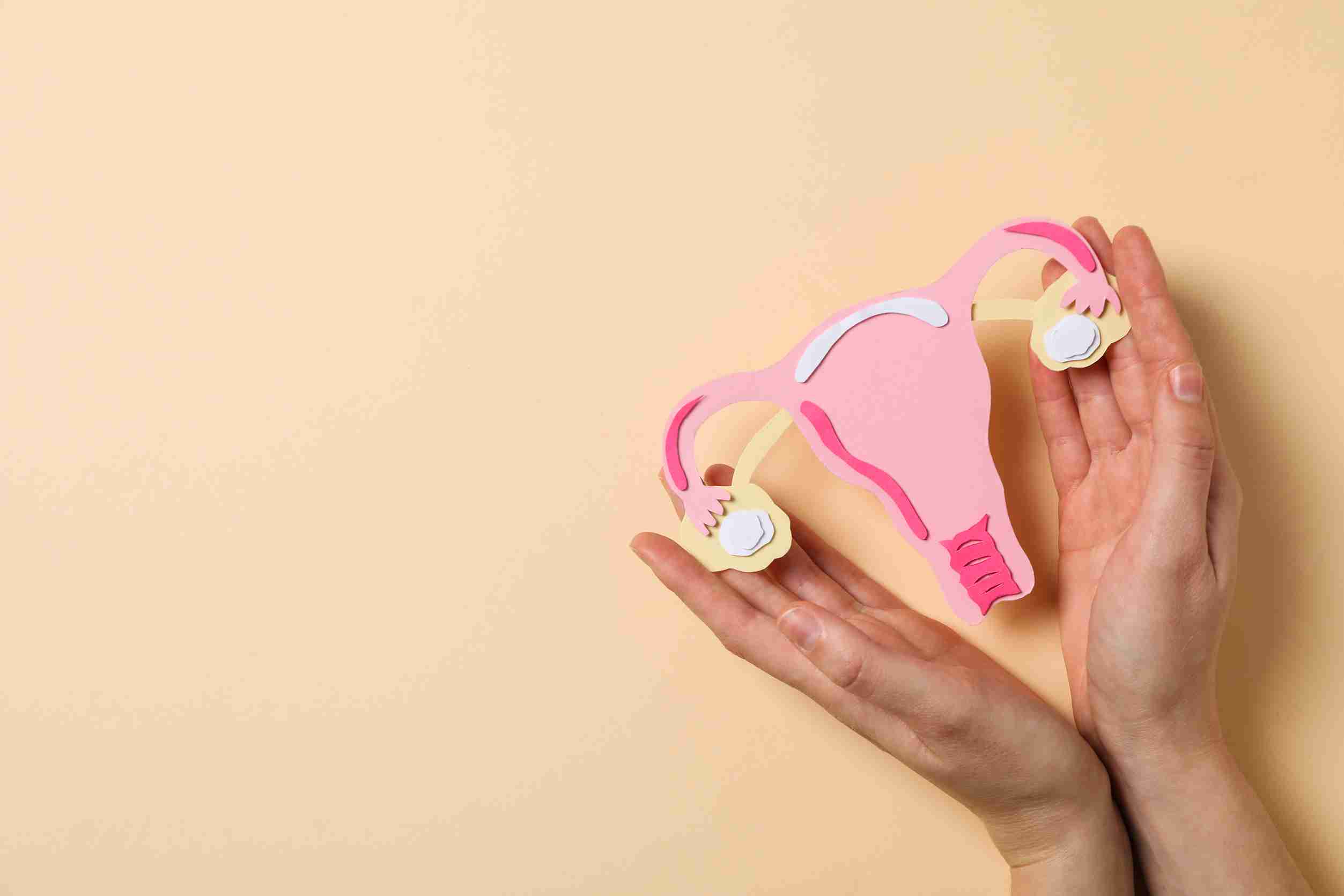
Ovulation is the moment in a woman's menstrual cycle when one of her two ovaries releases a mature egg (also called an ovum or oocyte). The egg grows inside a follicle, a small fluid-filled sac in the ovary, and is released when the follicle opens. The fallopian tube then carries the egg towards the womb, and fertilisation, if it happens, takes place inside the tube.
Most women release one egg per cycle. Occasionally two eggs are released in the same cycle, which is how non-identical twins can happen. Women are born with all the eggs they will ever have, yet they ovulate only a few hundred over a lifetime. The rest are naturally lost from follicles that start growing each month but never become the one that releases an egg.
Ovulation begins in the years after a girl's periods start, although early cycles are often irregular while the hormone system matures. It continues cycle after cycle until menopause, when the ovaries stop releasing eggs. It pauses during pregnancy, is often suppressed while breastfeeding, and is switched off by most hormonal contraception, which works mainly by preventing it.
Why does this matter? Put simply, no ovulation means no natural conception. A pregnancy needs an egg, and ovulation is the only way an egg reaches the sperm. That is why checking whether a woman is ovulating is one of the first steps in any fertility assessment, alongside checking the fallopian tubes and the partner's semen.
What happens during ovulation, step by step
Ovulation is the end point of a hormone sequence that runs through the first half of the cycle. In a woman's body, it unfolds in six steps.
Follicles are recruited. At the start of each cycle, follicle-stimulating hormone (FSH) from the pituitary gland prompts a group of ovarian follicles to start growing.
One follicle becomes dominant. Usually only one follicle keeps growing while the others stop, and this dominant follicle produces steadily rising estrogen. Our guide to the ovarian follicle and its role in fertility explains how follicles grow and what scan measurements mean.
Estrogen triggers the LH surge. Once estrogen stays high for long enough, the brain responds with a sharp surge of luteinising hormone (LH), the hormone that sets ovulation in motion.
The follicle releases the egg. About 24 to 36 hours after the LH surge begins, the follicle wall opens, and the mature egg is released with the fluid around it. The release is a single, quick event, not a process spread over days.
The fallopian tube picks up the egg. Finger-like projections at the end of the tube sweep the egg inside, where it can meet sperm that are already waiting or that arrive within the next day.
The empty follicle becomes the corpus luteum. What remains of the follicle becomes a temporary gland called the corpus luteum (a small yellowish structure on the ovary), which produces progesterone to prepare the womb lining for a possible pregnancy.
If the egg is not fertilised, it breaks down within about a day. After about two weeks, the corpus luteum shrinks, progesterone falls, and the womb lining is shed as a period. If an embryo does implant, the pregnancy hormone hCG (human chorionic gonadotrophin) keeps the corpus luteum working until the placenta takes over.
Some women feel nothing at all during these steps, while others notice a brief one-sided twinge or a change in vaginal discharge. Those signs, and what they can and cannot tell you, are covered further down this page.
Ovulation does not happen on day 14 for most women
No, day 14 is only the textbook average for a 28-day cycle, and most cycles are not 28 days long. In a study of more than 6,00,000 cycles recorded by women using a cycle-tracking app, only about 13 percent lasted exactly 28 days (Bull and colleagues, npj Digital Medicine, 2019). Even in 28-day cycles, ovulation happened, on average, a day or two after day 14.
Timing also shifts in women whose cycles feel regular. A prospective study that measured ovulation through hormone levels in 221 women planning a pregnancy found that only about 30 percent had their whole fertile window within days 10 to 17, the range often quoted in older guidance. Most reached it earlier, and some much later (Wilcox and colleagues, BMJ, 2000).
The more useful rule is this: ovulation usually happens about two weeks before the next period, commonly somewhere between 12 and 16 days before it. Because the part of the cycle after ovulation is steadier than the part before it, the day of ovulation moves with cycle length. A woman with a short cycle is likely to ovulate well before day 14, and a woman with a long cycle well after it.
This matters in practice. If you time intercourse only around day 14, you may miss your fertile days altogether.
How long does ovulation last? Ovulation, the ovulation period, and the fertile window
No, ovulation itself is not a several-day event. The egg is released in a single event, and once released, it survives for only about 12 to 24 hours. What most people mean by the ovulation period is really the fertile window: the six days in each cycle when sex can lead to pregnancy, ending on the day of ovulation. The window is longer than the egg's lifespan because sperm can survive in the female reproductive tract for up to five days (Wilcox and colleagues, New England Journal of Medicine, 1995).
The phrase ovulation period is used loosely online. Some pages use it for the hours the egg survives, some for the whole fertile window, and some for a vaguely defined stretch in the middle of the cycle. The table below separates the four ideas.
Term
What It Is
How Long It Lasts
Why It Matters
Ovulation
The release of a mature egg from the ovary.
A single event that occurs over a short period.
Marks the point from which the egg can be fertilised.
Egg lifespan
The time the released egg can be fertilised.
About 12 to 24 hours.
After this, the egg breaks down, and that cycle's opportunity for fertilisation has passed.
Fertile window
The days when sex can lead to pregnancy.
About six days: the five days before ovulation plus ovulation day.
The best time to try for a baby, as sex after the window is very unlikely to lead to pregnancy in that cycle.
Ovulatory phase
A general term for the days around ovulation in the middle of the cycle.
Not precisely defined; usually a few days.
Often what people mean by the ovulation period, but it is not a precise medical measurement.
So if you are trying to conceive, the days that matter most are the ones before ovulation, not after it. Chances are highest when sperm are already in place by the time the egg is released.
Where the ovulation phase sits in your menstrual cycle
Seen from the ovary's point of view, each menstrual cycle has three parts, with ovulation in the middle. Day 1 is the first day of your period.
Phase
What the Ovary Is Doing
Main Hormone
Typical Length and How Much It Varies
Follicular phase
Follicles grow, and one becomes dominant.
FSH, followed by rising oestrogen.
Varies widely, from about 10 days to more than three weeks; the most variable part of the cycle.
Ovulation
The dominant follicle releases its egg.
LH surge.
A single event; the egg then survives for about 12 to 24 hours.
Luteal phase
The corpus luteum produces progesterone.
Progesterone.
Around 12 to 13 days on average; steadier than the follicular phase, but not fixed at 14 days.
The follicular phase, the time before ovulation, is the main reason cycle lengths differ between women and from month to month. The luteal phase, the time after ovulation, is more consistent, which is why counting back from the next period gives a better estimate than counting forward from the last one. Even so, research tracking hundreds of thousands of cycles shows the luteal phase is not the same length for everyone (Bull and colleagues, 2019).
This page looks at the cycle from the ovary's side. The period itself and the monthly changes in the womb lining are part of the wider menstrual cycle, which is covered in its own guide.
How can you tell when you are ovulating?
Most methods predict ovulation; only two confirm it. That distinction matters because a sign that ovulation is coming is not proof that an egg has been released. Most women do not feel ovulation at all, and no app or calendar can confirm it. They can only estimate it from past cycles.
Ways to track ovulation, and whether each one predicts or confirms it
Method
What It Tells You
Predicts or Confirms
Where to Read More
Body signs
Some women notice a brief one-sided twinge, breast tenderness or a change in sex drive around mid-cycle.
If you have wondered whether you feel wetter around ovulation, for many women the answer is yes: rising oestrogen makes cervical mucus more plentiful and slippery in the days before the egg is released. Some women also report changes in mood or desire, but these are too variable to rely on. For a confident answer about whether you ovulate, a doctor can arrange one of the two confirmation tests.
Common beliefs about ovulation that are not true
Is ovulation always on day 14?
No. Day 14 is only the average for a textbook 28-day cycle, and most cycles are a different length. Even in regular cycles, ovulation can come several days earlier or later from one month to the next. The dependable rule is the one explained above: it usually happens about two weeks before your next period.
Do the ovaries take turns each month?
Not in a fixed pattern. Either ovary can release the egg in any cycle, and the same ovary can ovulate in consecutive months. In an ultrasound study that tracked the side of ovulation across 199 cycles, ovulation switched sides between one cycle and the next only about half the time, which is no more often than chance (Ecochard and Gougeon, Human Reproduction, 2000).
Is a positive ovulation test proof that you ovulated?
No. A test picks up the surge of luteinising hormone that usually comes a day or so before ovulation, not the release of the egg itself. Some women, including many with polycystic ovary syndrome (PCOS), can get positive results without ovulating. Our guide to using ovulation test kits explains how to read the results.
Does pain around ovulation mean something is wrong?
Usually not. A brief, mild, one-sided ache around the middle of the cycle is common and harmless, and it typically settles within hours or a day or two. Severe pain, pain that keeps going, or pain with fever, vomiting or fainting is not ordinary mid-cycle pain and needs prompt medical review. Our guide to sharp pelvic pain on one side explains how to tell the difference.
Can you have a period without ovulating, or ovulate without a period?
No, a period does not prove you ovulated. Ovulation and a period are two separate events, usually about two weeks apart. A true period follows ovulation: when no pregnancy occurs, progesterone from the corpus luteum falls, and the womb lining is shed.
In an anovulatory cycle (a cycle in which no egg is released), there is no corpus luteum and no progesterone, but estrogen can still thicken the womb lining until it breaks down and bleeds. That bleed can look just like a normal period. Anovulatory cycles are common in the first years after periods start, in the years before menopause, and in conditions such as PCOS, but they also occur in women with normal-length cycles. One population study that took a single blood test from more than 1,500 women with regular cycles found no sign of ovulation in about a third of them (Prior and colleagues, PLOS ONE, 2015), although studies of carefully screened healthy women find far lower rates.
The reverse is also true: yes, you can ovulate before a period arrives. Because ovulation comes before bleeding, the first ovulation after childbirth, while breastfeeding or after stopping hormonal contraception can happen before your periods return. Pregnancy is possible during that time, even if you have not yet had a period.
What can stop or delay ovulation?
Ovulation depends on a finely balanced conversation between the brain, the pituitary gland, and the ovaries. Anything that disrupts that conversation can delay ovulation or stop it for a while. The main causes fall into four groups.
Hormonal conditions. PCOS is the most common cause of irregular ovulation, and our PCOS and fertility guide explains how it affects conception. Thyroid disorders, whether underactive or overactive, and raised prolactin (a hormone normally linked with breastfeeding) can also interrupt ovulation.
Life stage. Ovulation stops during pregnancy, is often suppressed while breastfeeding and becomes less regular in the years leading up to menopause, known as perimenopause.
Body and lifestyle. Very low body weight, intense endurance training, significant weight gain or loss and prolonged stress can all switch off the signals that trigger ovulation. In many women, cycles return once the underlying pressure eases.
Medication. Hormonal contraception is designed to prevent ovulation. For most methods, ovulation returns soon after stopping, although it can take longer after the contraceptive injection. Other medicines can also affect ovulation, so tell your doctor everything you take.
Functional ovarian cysts, which form from a follicle or the corpus luteum, are a normal by-product of ovulation and usually settle on their own. When ovulation is absent or irregular, it is often treatable. Depending on the cause, a specialist may suggest lifestyle changes, treatment for a thyroid or prolactin problem, or ovulation induction, a carefully monitored treatment that uses hormone tablets or injections to help the ovaries release an egg.
If your cycles are irregular or you are not sure whether you ovulate, a Cloudnine Fertility specialist can help you find out why. Book a fertility consultation.
Ovulation and getting pregnant
Pregnancy needs an egg, so natural conception depends on ovulation. Your chances are highest when you have sex in the few days leading up to and including ovulation, because sperm are then already in place when the egg is released. In a landmark study of women trying to conceive, pregnancies happened only when sex took place in the six-day window ending on ovulation day (Wilcox and colleagues, 1995).
In India, the Indian Council of Medical Research lists ovulatory status as one of the core checks in its standard workflow for evaluating female infertility, alongside the fallopian tubes and the womb (ICMR Standard Treatment Workflow for Female Infertility, 2022). If ovulation is irregular or absent, it is usually one of the first things a specialist looks at, and one of the most treatable.
How much do ovulation tests cost in India?
Most women never need a clinic test to confirm ovulation. Home methods are enough to estimate the fertile window, and confirmation tests are usually arranged when cycles are irregular, when you have been trying for a while without success, or during fertility treatment. The table below shows indicative costs for the tests mentioned on this page. Prices vary by city, by centre and by what is included, such as the consultation or the number of scans in a monitoring cycle.
Test
What It Tells You
Indicative Cost in India
Ovulation test kit (home urine test)
Predicts approaching ovulation by detecting the LH surge.
Rs. 300 to Rs. 1,500
Progesterone blood test
Helps confirm ovulation when timed to the second half of the cycle.
Rs. 1,100 to Rs. 3,500
Single pelvic or transvaginal ultrasound scan
Shows the ovaries, follicles and womb lining on the day of the scan.
Rs. 1,000 to Rs. 3,500 (indicative)
Follicular monitoring (a series of scans in one cycle)
Tracks follicle growth and helps determine whether ovulation has occurred.
Rs. 3,000 to Rs. 6,050
When to see a doctor
See a doctor or fertility specialist if any of these apply
Your cycles are regularly shorter than 24 days or longer than 38 days.
Your periods have stopped for three months or more, and you are not pregnant.
You have been trying to conceive for 12 months, or for six months if you are 35 or older. If your periods are very irregular, you do not need to wait that long.
You have bleeding between periods.
Urgent: get emergency care for sudden, severe one-sided pelvic pain, especially with fever, vomiting or fainting.
These thresholds follow FIGO guidance on normal cycle length (2018) and ASRM guidance on when to seek a fertility assessment (2020), and match the 12-month and six-month timelines in the ICMR female infertility workflow. Book a consultation with a Cloudnine Fertility specialist.
FAQs
Your questions, clearly answered
Find clear, trusted answers to the most common questions about IVF—designed to guide and support you every step of the way.
What is ovulation?
Ovulation is when one of a woman's ovaries releases a mature egg into the fallopian tube. The egg can be fertilised by sperm for about 12 to 24 hours. Ovulation happens once in most menstrual cycles, roughly two weeks before the next period.
Does ovulation always happen on day 14?
No. Day 14 is only the average for a 28-day cycle, and most cycles are not exactly 28 days long. Ovulation usually happens about two weeks before your next period, so the day moves with your cycle length.
How long does ovulation last?
Egg release is a single event, and the egg survives for about 12 to 24 hours afterwards. What many people call the ovulation period is really the fertile window of about six days, ending on the day of ovulation.
Can you feel yourself ovulate?
Most women do not. Estimates suggest that between one in five and two in five women feel a brief one-sided pain around ovulation, and some notice clearer, stretchier cervical mucus. These signs suggest ovulation is near but cannot confirm it.
Does having a period mean you have ovulated?
No. Bleeding can happen in a cycle where no egg was released, which is called an anovulatory cycle. Regular cycles make ovulation likely, but only a progesterone blood test or an ultrasound scan can confirm it.
Can you ovulate without having a period?
Yes. Ovulation comes before a period, so the first ovulation after childbirth, while breastfeeding or after stopping hormonal contraception can happen before any bleeding returns. Pregnancy is possible during that time.
Can you get pregnant without ovulating?
Not naturally. A pregnancy needs an egg, and without ovulation, no egg reaches the fallopian tube. When ovulation is absent or irregular, it is often treatable, and a fertility specialist can help find the cause.
When should you see a doctor about ovulation?
See a doctor if your cycles are shorter than 24 days or longer than 38 days, your periods stop for three months or more without pregnancy, or you have been trying to conceive for 12 months, or six months if you are 35 or older.